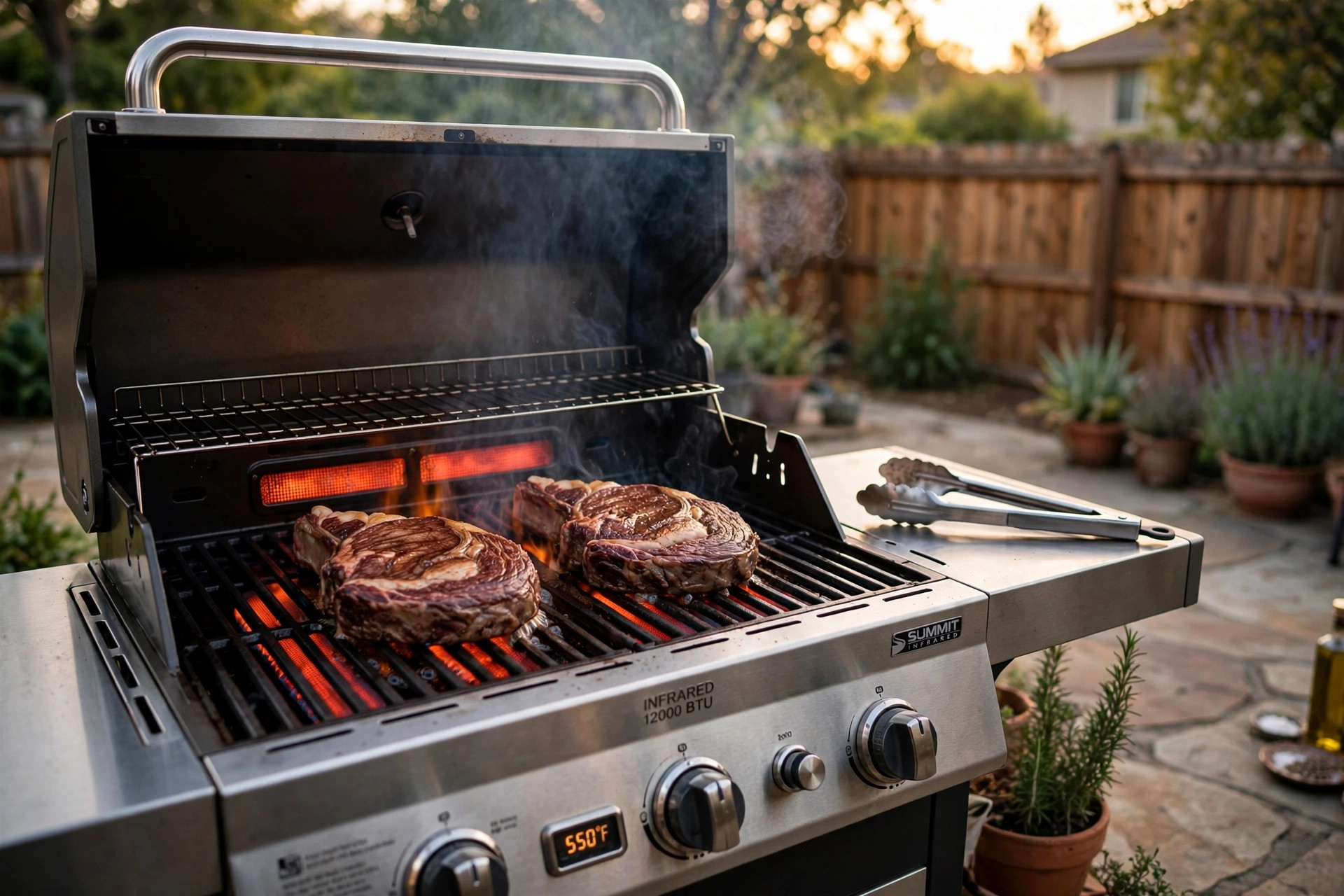

Ask any steak lover what makes a great steak and you will hear the same answer. A dark, crisp crust on the outside. A warm, juicy center on the inside. That crust is called a sear. When you read the best infrared grill for steaks reviews, you will see one word come up again and again. Sear. An infrared grill is built for this one job. It can reach very high heat in a very short time. That is why so many backyard cooks use one for steaks.
But not all infrared grills are the same. Some run hot and even. Some have weak burners that leave cold spots. Some are built to last for years. Others rust out in two seasons. Reviews can help you sort the good from the bad. You only need to know how to read them. This guide will walk you through how infrared grills work, what to look for, what they cost, and how to keep yours running well.
Why Infrared Grilling Matters for Steaks
A steak cooks best when the outside browns fast. This browning is called the Maillard reaction. It is what gives a steak its deep flavor and its dark crust. To get it right, you need high heat. Most standard gas grills reach about 500 to 600 degrees Fahrenheit. That is fine for many foods. But an infrared burner can reach 900 to 1,500 degrees. That is a big jump.
With that heat, you can sear a thick ribeye in about one minute per side. The crust forms before the inside overcooks. That is the secret of steakhouse flavor. Many cooks at home pair an infrared sear burner with a standard gas grill. They sear first, then move the steak to a cooler zone to finish. This two-zone method is a favorite among grill fans, and you will find it praised in many grilling guides written by serious testers.
Infrared heat is also direct. A normal gas burner heats the air first. Then the air heats the food. An infrared burner sends heat straight to the meat. That is why it works so fast. It is also why you must watch your steaks closely.
How an Infrared Grill Works: Best Infrared Grill for Steaks Reviews
An infrared grill uses a ceramic or metal plate with tiny holes. Gas flows through the holes and burns on the surface of the plate. The plate glows red or orange. As it glows, it gives off strong infrared heat. This heat cooks by radiation, not by hot air. The result is a wall of even, intense heat right above the grate.
A dedicated sear burner is common on full-size gas grills from brands like Weber and Napoleon. Full infrared grills, like many models from Char-Broil, use the system for the whole cook box.
The grates sit very close to the burner on many infrared models. This short distance is what makes the sear so strong. On a standard grill, the grates sit several inches above the flames. On an infrared grill, the gap can be as small as one inch. That is why the heat feels so fierce.
How to Choose the Right Infrared Grill
Reading the best infrared grill for steaks reviews is only half the job. You also need to know which details matter. Use this list as you shop.
Heat Output and Sear Zone
Look for the burner rating in BTUs. Higher is not always better. What matters is how well the grill turns those BTUs into real heat at the grate. Reviews that measure actual grate temperature with a thermometer are worth more than reviews that only quote the box. A good infrared sear burner should reach at least 900 degrees at the grate. Independent testers at Consumer Reports often publish real measured numbers, and those figures are more useful than marketing claims.
Cooking Area and Grill Size
Think about how many steaks you cook at once. A small sear burner may only fit one or two steaks. That is fine for a couple. A large family will need more room. Check the size of the infrared zone, not just the total grill size. Some grills advertise a big cooking area but only give you a small infrared section.
Build Quality and Materials
Heat breaks cheap grills fast. Look for stainless steel burners, heavy grates, and a sturdy lid. Cast iron grates hold heat well and give great sear marks. Stainless steel grates resist rust and are easy to clean. Read the review sections about warranty length. A long burner warranty often tells you the maker trusts its own design.
Ignition and Controls
A good grill should light fast every time. Battery or electric igniters are common. Some grills have a separate knob for the infrared burner. That lets you run the sear burner on high while the rest of the grill stays low. This setup is ideal for thick steaks. You sear first, then finish low and slow.
Portability and Fuel
Most infrared grills run on propane or natural gas. Propane tanks are easy to find and swap. Natural gas hooks into your home line, so you never run out mid-cook. Portable infrared grills are great for tailgates and small patios. Full-size carts are better for daily backyard use. Retailers like The Home Depot list both fuel types, so check the product page before you buy.
Types of Infrared Grills
You will meet three main styles in reviews. Each has its place.
Gas Grills with an Infrared Sear Burner
This is the most common style. It is a normal gas grill with one extra infrared burner, often built into the side or the main box. You cook burgers and chicken on the normal burners. You sear steaks on the infrared zone. This is a smart pick if you want one grill that does it all. Beginners often start here before they learn more about the best gas grill under 500 for beginners.
Full Infrared Grills
These grills use infrared burners across the entire cooking surface. They heat up very fast and cook very evenly. They use less gas than many standard grills because the heat is so direct. The trade-off is less room for slow, low cooking. They shine for steaks, chops, and seafood.
Tabletop and Salamander-Style Infrared Broilers
These are small, box-shaped units that blast heat from above. Some reach 1,500 degrees. They are made for one job only: a hard, fast sear. You finish the steak in an oven or on another grill. They are popular with serious steak fans who want steakhouse results at home. They take up little space, but they cannot replace a full grill.
How to Read Reviews the Smart Way
Not every review is honest. Some sites earn money when you click and buy. That does not make them useless, but it means you should read with care. Here is how to get the most from the best infrared grill for steaks reviews.
First, look for tested facts. A good review tells you the grate temperature, the sear time, and the thickness of the steaks used. Vague praise like “great sear” tells you nothing. Numbers tell you everything.
Second, check more than one source. One review might praise a grill that three others fault for rust. Cooking sites like The Spruce Eats often run hands-on tests with clear methods. Compare their findings with lab-style tests and user reviews.
Third, read the bad reviews. Look for patterns. If ten owners mention the same ignition problem, believe them. If one owner complains about shipping damage, that is not the grill’s fault.
Fourth, match the review to your needs. A reviewer who cooks for two may love a small grill that would frustrate a family of six. Think about your own backyard, your own budget, and your own cooking style. A pellet grill owner might weigh the pellet grill vs gas grill pros cons before adding infrared to the mix, and that is a fair comparison to make.
Cost and Price
Infrared grills cover a wide price range. A small tabletop infrared sear unit can cost under 200 dollars. A mid-size gas grill with an infrared sear burner often runs 400 to 900 dollars. High-end full infrared grills and built-in outdoor kitchen units can pass 2,000 dollars.
Price does not always match quality. Some budget models sear very well but use thin steel that rusts fast. Some pricey models charge extra for features you may never use. Set your budget first. Then look for the best sear performance inside that budget.
Do not forget the running costs. Infrared grills can use more gas per minute than standard burners, but they cook faster. Many owners find their total gas use stays about the same. Replacement parts are the other cost to watch. Burners, grates, and igniters wear out over time. Before you buy, check that parts are easy to find. A simple gas grill parts replacement guide can show you what to expect when a burner finally gives out.
Big-box stores and grill makers run sales in spring and around major holidays. If you can wait, you may save a good sum on last year’s model.
Care and Upkeep
An infrared grill rewards simple care. The ceramic plates are the heart of the system. They are tough but not unbreakable. Never poke them with sharp tools. Never spray cold water on a hot plate. Let the grill cool before you clean it.
After each cook, run the infrared burner on high for five to ten minutes. This burns off grease and drips. Then brush the grates with a stiff grill brush. Wipe the outside with a damp cloth once it is cool. Empty the grease tray often. Built-up grease is a fire risk on any grill, and infrared models run hot enough that you should never skip this step.
Once a season, check the burner for cracks. Look at the gas lines for wear. Test the igniter. Tighten any loose screws on the cart. Cover the grill when it is not in use. A good cover adds years to the life of the steel. With this basic care, a well-made infrared grill can serve you for a decade or more.
If your sear starts to weaken, the burner may be clogged. Spiders and insects love to nest in gas tubes. A soft brush and a pipe cleaner can clear most blockages. If the ceramic plate is cracked, replace it. Do not cook on a damaged burner.
Safety
High heat demands respect. Always grill outdoors in open air. Never use a gas grill in a garage, even with the door open. Keep the grill at least ten feet from the house, from railings, and from anything that can burn.
Light the grill with the lid open. If the burner does not light in five seconds, turn the gas off. Wait five minutes. Then try again. This lets built-up gas clear out. Keep a spray bottle of water nearby for small flare-ups, and keep the lid handy to smother larger ones.
Use long-handled tools. The heat above an infrared burner is fierce. Wear heat-proof gloves when you move grates. Keep kids and pets well away from the hot grill. Let the grill cool fully before you cover it or move it.
Check your propane tank and hose before each season. Rub soapy water on the connections. If you see bubbles, you have a leak. Do not use the grill until the leak is fixed. When in doubt, call a pro.
Frequently Asked Questions
What is an infrared grill?
An infrared grill is a grill that cooks with radiant heat from a glowing ceramic or metal plate. Gas burns across the plate, and the plate sends strong, direct heat to the food. This gives faster cooking and a harder sear than hot air alone.
Are infrared grills good for steaks?
Yes. They are one of the best tools for steaks. The intense heat builds a dark crust in about a minute per side. That keeps the inside juicy. Many steak lovers use an infrared sear burner to start, then finish the steak on lower heat.
Do infrared grills use more gas than regular grills?
They can burn more gas per minute, but they cook food faster. Most owners report that total gas use is about the same as a standard grill. Shorter cook times make up for the higher burn rate.
How hot does an infrared grill get?
Most infrared burners reach 900 to 1,500 degrees Fahrenheit at the grate. That is much hotter than the 500 to 600 degrees of a standard gas burner. This is why you must watch food closely and use long tools.
Can I cook other foods on an infrared grill?
Yes, but with care. Thin foods like fish fillets and vegetables can burn fast. Use lower settings or keep food moving. Many cooks use the infrared zone for searing and the standard burners for everything else. Pellet grill makers like Traeger and kamado makers like Big Green Egg take a slower approach, which suits some foods better.
How long should an infrared grill last?
A well-built model with basic care can last eight to twelve years. The ceramic burner may need replacement sooner. Cheap models with thin steel may rust in two to four years. A cover and regular cleaning make a big difference.
A Final Word
The best infrared grill for steaks reviews all point to the same truth. High, direct heat makes a better steak. But the right grill for you depends on your space, your budget, and how you cook. Read reviews that give real numbers. Check more than one source. Take care of the burner, and it will take care of your steaks. Your next backyard steak night can taste like the steakhouse. All it takes is the right sear.
References
AmazingRibs.com. (n.d.). Barbecue and grilling science. https://www.amazingribs.com Big Green Egg. (n.d.). Kamado grills and outdoor cooking. https://www.biggreenegg.com Char-Broil. (n.d.). Gas and charcoal grills. https://www.charbroil.com Consumer Reports. (n.d.). Product reviews and ratings. https://www.consumerreports.org Napoleon. (n.d.). Fireplaces, grills, and heating products. https://www.napoleon.com The Home Depot. (n.d.). Home improvement products. https://www.homedepot.com The Spruce Eats. (n.d.). Recipes and cooking guides. https://www.thespruceeats.com Traeger. (n.d.). Wood pellet grills. https://www.traeger.com Weber. (n.d.). Grills and outdoor cooking. https://www.weber.com
Was this guide helpful?

About Robert Taylor
The My Garden US editorial team writes practical, in-depth home and garden guides for American homeowners — tested advice, no fluff.
You May Also Like

Charcoal Grill for Beginners Guide: Everything a First-Time Griller Needs to Know
July 16, 2026 0 views
Best BBQ for Labor Day Cookout: A Plain Guide to Picking the Right Grill
July 28, 2026 0 views
How to Smoke Cheese on Pellet Grill: A Plain Guide for Home Cooks
August 10, 2026 0 views