
The search for the best outdoor cookware set for camping starts with a simple question: what will you cook, and for how many people? A couple eating oatmeal from one pot needs far less than a family of six making pancakes, bacon, and coffee at dawn. The right set makes camp meals easy and quick. The wrong set weighs down your pack, scorches your food, and falls apart after one season. This guide walks through the materials, sizes, types, prices, and care rules that matter, so you can choose with confidence.
Why Good Camp Cookware Matters
Cooking at camp is not like cooking at home. Your heat source is a small stove, a fire, or coals. Wind steals heat. Space is tight. Water for washing is scarce. A good set is built for these hard conditions.
Cheap thin pots heat unevenly. Food burns in the center while the edges stay raw. Thin handles get hot and bend. Lids that do not fit let heat escape, and fuel runs out faster. A well-made set heats evenly, holds heat, packs small, and lasts for years of trips.
Good cookware also saves weight. Backpackers count every ounce. Car campers want fewer boxes to haul. Either way, a nesting set that fits inside itself solves the space problem. You carry one compact bundle instead of five loose pots.
What to Look for in the Best Outdoor Cookware Set for Camping
Five points decide most purchases. Work through them in order.
Material: Aluminum, Steel, or Titanium
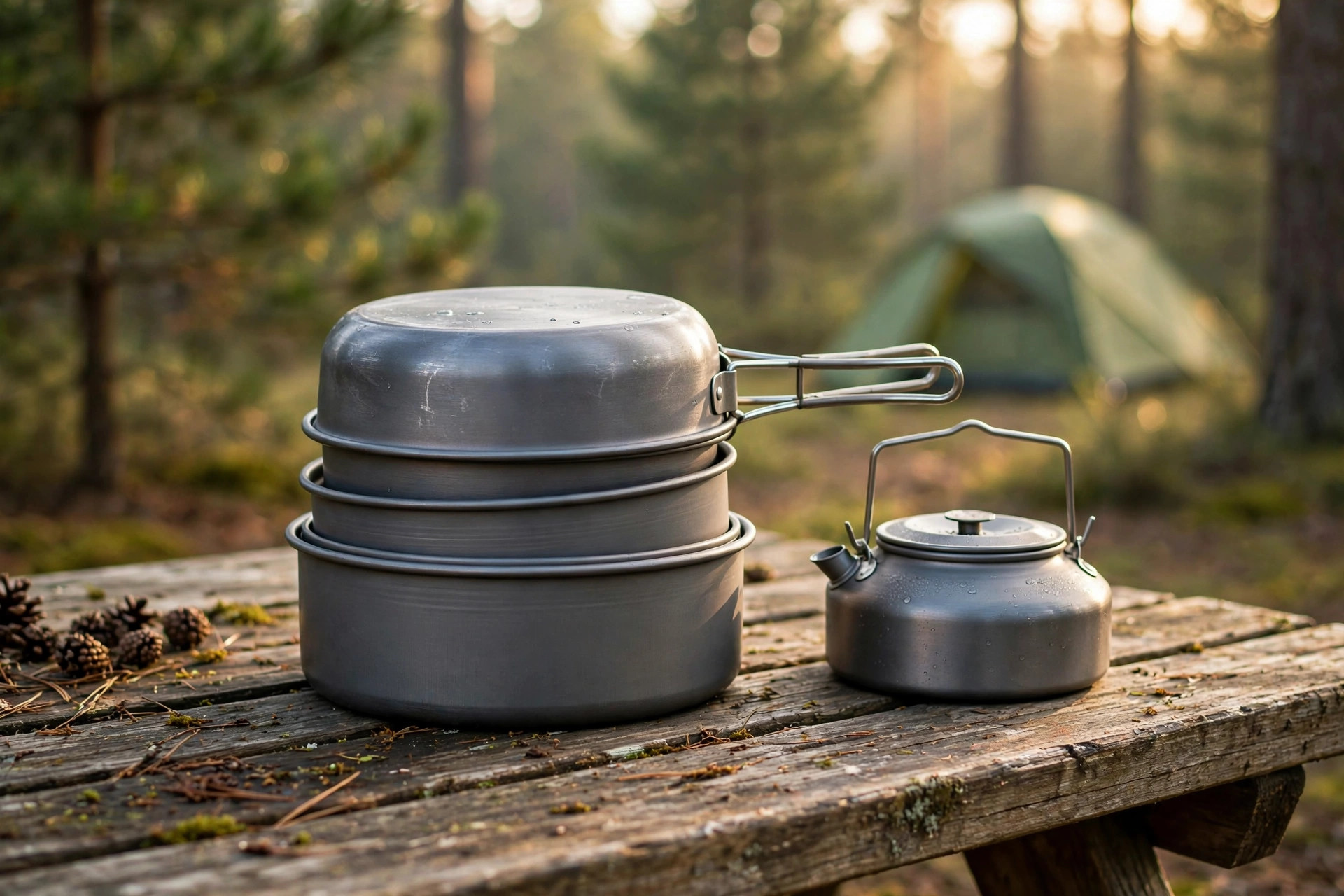
Hard-anodized aluminum is the most common choice. It is light, heats fast, and resists scratches better than plain aluminum. Most mid-range sets use it. It works well on camp stoves and can handle an open flame for short periods.
Stainless steel is heavier but far tougher. It does not dent easily. It works on any heat source, including a hot campfire. Food sticks to it more than to aluminum, so expect more scrubbing. Car campers who drive to their site often prefer steel because weight matters less.
Titanium is the lightest option. Backpackers love it for long hikes. It costs much more, and it conducts heat poorly, so hot spots form. It suits simple meals like boiling water and soup, not frying eggs.
Cast iron is a special case. Nothing holds heat like it. Nothing sears meat like it. But a single cast iron skillet can weigh eight pounds. It belongs to car camping and truck camping, not the backcountry.
Size and Piece Count
Most sets serve two to four people and include four to ten pieces: a large pot, a smaller pot, a frying pan, lids, and sometimes bowls or a kettle. For solo trips, a one-pot mess kit is enough. For a family, look for a set with at least a two-liter pot and a ten-inch pan.
Check the printed capacities before you buy. A “10-piece set” with tiny bowls may cook less food than an “6-piece set” with big pots. Piece count is a selling point. Pot volume is what feeds people.
Weight and Pack Size
Read the total weight in the specs. A set under three pounds suits backpacking. Three to five pounds works for short hikes and canoe trips. Car campers can go heavier.
Also check the packed size. Good sets nest: the small pot fits inside the large pot, and the pan doubles as a lid. Measure the space in your pack or camp box against the listed dimensions.
Handles and Lids
Folding or locking handles keep fingers away from heat. Insulated grips help, but plastic grips can melt over a fire. Simple wire bail handles on kettles are safe over flames.
Lids matter more than people think. A tight lid cuts boil time in half and saves fuel. Some pan lids double as plates, which is a fine bonus.
Nonstick Versus Bare Metal
Nonstick coatings make cooking and cleaning easy. They demand care: no metal tools, no high dry heat, and they scratch over time. Bare metal lasts longer and takes abuse, but food sticks. Many campers pick nonstick for eggs and bare metal for boiling.
Types of Camping Cookware Sets
Nesting Pot Sets
The classic choice. Pots, a pan, and lids stack into one bundle. Most brands sell sets for two, four, or six campers. Hard-anodized aluminum nesting sets dominate this group and offer the best balance of weight, price, and performance.
Mess Kits and Solo Sets
A mess kit is one pot, one lid that doubles as a pan, and often a cup. Solo hikers and motorcycle campers live on these. They boil water, heat soup, and cook simple meals. If you travel light and eat simple food, start here.
Cast Iron for Campfire Cooking
A cast iron skillet or Dutch oven turns a campfire into a real kitchen. Dutch ovens bake bread, roast meat, and make stews with coals on the lid. The price is weight and slow heating. Keep cast iron dry and oiled between trips, and it will serve for decades.
Complete Group Sets
Large sets add kettles, cutting boards, bowls, and serving spoons. They suit family car camping and scout groups. They cost more and weigh more, but one purchase covers the whole camp kitchen.
Matching Cookware to Your Heat Source
Your stove or fire decides what cookware works.
Canister stoves are light and simple. They heat fast but concentrate flame in a small spot. Wide thin pots scorch on them. Look for pots with heat-spreader bases, and cook on low.
Liquid fuel stoves burn hot and run long. They suit larger pots and group cooking. Stainless steel and cast iron handle their heat well.
Campfires are the roughest heat source. Use steel, cast iron, or plain aluminum. Keep nonstick coatings away from direct flames. A grill grate over the fire makes cooking easier; if you already own a best portable grill for camping reviews, its grate habits carry over to fire cooking.
Pellet grills at the campsite are a growing trend. Tailgaters and RV campers bring small pellet grills to the site. A portable pellet grill for tailgating can roast and smoke while your cookware handles side dishes. Keep cookware off the pellet grill itself and use it on a side burner or stove instead.
Cost and Price
Prices follow material and brand.
Under 40 dollars: Basic aluminum mess kits and small nesting sets. Fine for beginners and short trips. Expect thinner walls and simple handles.
40 to 100 dollars: The sweet spot. Good hard-anodized aluminum sets for two to four people live here. Most campers never need to spend more.
100 to 200 dollars: Larger group sets, titanium sets, and premium brands. You pay for lighter weight, better coatings, and extra pieces like kettles.
Over 200 dollars: Full cast iron collections, large Dutch oven sets, and ultralight titanium for serious backpackers. Buy here only when you know exactly what you need.
Watch for sales at big outdoor retailers. A set that costs 120 dollars in spring may cost 80 in the fall. Also compare the cost per piece against buying pots one by one. Sets almost always win on price.
Independent testers publish side-by-side results each year. Reading a few Consumer Reports ratings before you buy can show which sets hold up after heavy use.
Care and Upkeep at Camp and at Home
Good care doubles the life of your cookware.
Wash soon after cooking. Food that sits overnight turns to cement. At camp, wipe pots with a paper towel first, then wash with hot water and a small amount of soap. Sand or gravel scratch coatings, so use a soft sponge.
Dry every piece before packing. Trapped water causes rust on steel and spots on aluminum. Leave lids off for a few minutes so air reaches every surface.
At home, check handles and folding joints twice a year. Tighten loose rivets. If a nonstick coating flakes or peels, replace the piece. Flaked coating is not worth the risk.
Store sets with a paper towel or cloth between nested pieces. This stops scratches and keeps bare metal from reacting with coatings. Keep cast iron lightly oiled and stored where air moves. Never stack wet cookware.
Bring a small repair kit on long trips: a spare stove O-ring, a tube of food-safe silicone, and a strip of aluminum tape. These fix most field problems in minutes.
Safety Rules for Outdoor Cooking
Fire and hot metal cause most camp injuries. A few rules prevent them.
Never leave a stove or fire unattended while cookware sits on it. Wind can tip a stove in seconds. Set stoves on flat ground, away from tent walls and dry grass.
Use the right tool for hot handles. Potholders, leather gloves, or pliers all work. Folding handles on cheap sets can slip; test yours before the trip. A stainless steel bbq tool set adds long tongs and turners that keep hands clear of flames.
Let grease cool before you move a pan. Hot grease spills cause bad burns. Keep a small fire extinguisher or a bucket of sand near a campfire kitchen.
Store fuel away from heat and flame. Never refill a liquid fuel stove near a lit burner. Read your stove manual once; most accidents come from skipping that step.
Keep children and pets back from the cooking area. A simple rope or a line of chairs marks a safe boundary.
Frequently Asked Questions
Can I use my camping cookware on a home stove?
Yes, in most cases. Aluminum, steel, and cast iron work on gas and electric home burners. Check the maker rules before using a set on an induction cooktop; many camp sets lack the magnetic base induction needs.
What is the best material for campfire cooking?
Stainless steel and cast iron take direct flame best. Hard-anodized aluminum works for short periods over a fire but can warp in very high heat. Keep nonstick coatings and plastic handles off the fire.
How many pieces do I really need?
Two people need one large pot, one small pot or pan, and a lid. That is it. Bowls, kettles, and serving pieces are nice but optional. Start small and add pieces after a few trips show what you miss.
Is titanium worth the high price?
For long backpacking trips, yes. Titanium cuts ounces that matter over ten miles. For car camping or short hikes, no. Aluminum costs far less and cooks better.
Can I put camping pots in the dishwasher?
Plain steel and cast iron, no. Dishwasher detergent harms nonstick coatings and strips seasoning from cast iron. Hand wash all camp cookware to make it last.
How do I stop food from sticking without nonstick?
Heat the pan first, then add oil, then add food. This simple order works on steel and aluminum. Keep the heat moderate; high heat bonds food to metal fast.
Where to Learn More
Retailers and makers publish useful buying guides. Weber and Traeger cover outdoor cooking gear in depth, while Char-Broil and Napoleon explain heat control for camp stoves and grills. For recipes that fit small camp pots, The Spruce Eats offers hundreds of simple one-pot meals, and AmazingRibs teaches fire management that applies to any outdoor cooking. Big Green Egg and Broil King show how heavy cookware behaves over live fire, and Home Depot lists specs side by side so you can compare weights and sizes before you buy.
A Final Word
The best outdoor cookware set for camping is the one that fits your trip. A solo hiker needs a featherweight mess kit. A family at a drive-up site needs big pots and a sturdy pan. Match the material to your heat source, size the pots to your party, and spend in the middle range where value is strongest. Then get outside and cook. The food always tastes better under the sky.
References
AmazingRibs.com. (n.d.). Barbecue and grilling science. https://www.amazingribs.com Big Green Egg. (n.d.). Kamado grills and outdoor cooking. https://www.biggreenegg.com Broil King. (n.d.). Gas and charcoal grills. https://www.broilkingbbq.com Char-Broil. (n.d.). Gas and charcoal grills. https://www.charbroil.com Consumer Reports. (n.d.). Product reviews and ratings. https://www.consumerreports.org Napoleon. (n.d.). Fireplaces, grills, and heating products. https://www.napoleon.com The Home Depot. (n.d.). Home improvement products. https://www.homedepot.com The Spruce Eats. (n.d.). Recipes and cooking guides. https://www.thespruceeats.com Traeger. (n.d.). Wood pellet grills. https://www.traeger.com Weber. (n.d.). Grills and outdoor cooking. https://www.weber.com
Was this guide helpful?

About Jennifer Lee
The My Garden US editorial team writes practical, in-depth home and garden guides for American homeowners — tested advice, no fluff.
You May Also Like
Best Outdoor Ice Chest for Parties: How to Choose and Use One
March 6, 2026 0 views
The Best BBQ for Super Bowl Party: A Complete Guide
April 17, 2026 0 views
The Best BBQ Injector for Brisket Reviews: What Real Cooks Look For
February 18, 2026 0 views