
Every parent knows the scene. Toys spread across the floor. Clothes piled on the bed. A closet door that can barely close. A kids room organizer for closet and shelves brings order back to the room. It gives each thing a home. It also helps children learn to put things away on their own. This guide explains what to buy, what to look for, and how to keep it working for years.
Why an Organizer Matters
A child’s room is small, but it holds a lot. Clothes, shoes, toys, books, art supplies, and games all share one space. Without a system, the room fills up fast. Mess grows each day. Parents spend time tidying instead of playing.
A good organizer changes the daily routine. When shelves and bins have clear places, a child can find toys without emptying every box. Mornings run smoother because clothes are easy to reach. Bedtime cleanup takes ten minutes instead of one hour.
There is also a learning benefit. Children who can see where things belong learn to sort and put things back. This builds habits that last into school years. Studies on child development note that orderly play spaces help children focus on one activity at a time. A site like HealthyChildren.org offers guidance on healthy home habits for families.
An organizer also protects the room itself. Piles on the floor scratch floors and hide spills. Heavy bins stacked in a corner can fall and break. Proper shelf units spread the weight and keep things off the ground.
What to Look for When You Shop: Kids Room Organizer for Closet and Shelves
Size and Fit
Measure the closet before you buy anything. Note the height, width, and depth of the closet. Note the height of the hanging rod. Check door clearances. An organizer that is one inch too wide is useless.
For open shelves, measure the wall space you plan to use. Small rooms do well with tall, narrow units. Wide rooms can take a low, long unit that also works as a bench. Draw a simple sketch on paper before shopping. Many retailers, such as IKEA, list exact measurements for every storage product.
Materials
Wood is strong and long lasting. It holds heavy books and bins. Solid wood costs more, but it can move with the child from room to room. Engineered wood is lighter and cheaper. It works well for light loads.
Fabric bins are soft and safe. They fit into cube shelves. Children can pull them out without hurting themselves. Plastic bins are easy to wash. They suit art supplies and outdoor gear.
Metal frames are thin and strong. They leave more room inside each shelf. Look for smooth edges and a finish that will not flake.
Style and Color
Children live in their rooms. Let them pick the bin colors. A child who picks the colors takes pride in the shelves. White and wood tones suit most decor. Bright bins add fun to a plain unit. Stick to two or three colors so the room does not look busy. A calm room helps a child sleep and study.
Age of Your Child
A toddler cannot reach a high shelf. Place daily items at the child’s eye level or lower. Store less used items up high. As the child grows, you can move things up.
For a nursery that will grow with the child, pick units you can adjust. A nursery dresser changing table combo for small space pairs well with open shelves that later hold toys instead of diapers.
Types of Closet and Shelf Organizers
Hanging Closet Organizers
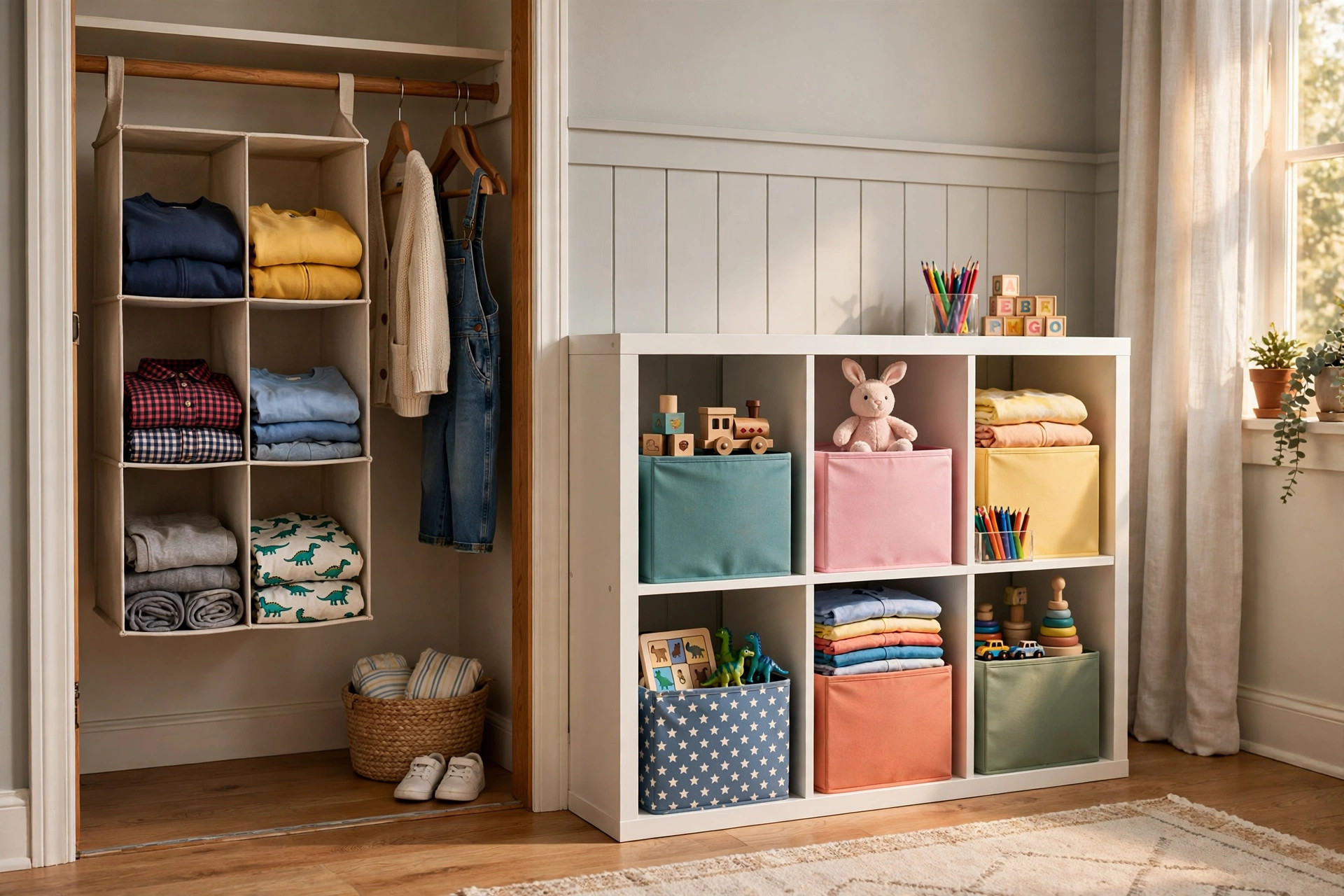
These hang from the closet rod. They have open cubbies for folded clothes, shoes, or toys. They cost little and set up in minutes. They work best in deep closets with a strong rod. They are not ideal for very heavy items.
Cube Shelves with Fabric Bins
Cube shelves are the most popular choice for kids rooms. Each square holds a fabric bin or shows toys on display. You can stack them or set them side by side. Many stores sell them in sets with bins included. Target and Walmart both carry wide ranges of cube storage at low prices.
Drawer Units and Stackable Boxes
Small drawer units sit on closet floors or inside wardrobe sections. They hold socks, underwear, and small toys. Clear boxes let a child see what is inside. Label each drawer with a picture for children who cannot read yet.
Over-Door Racks
The back of a closet door is free space. Over-door racks hold shoes, belts, or small toys in clear pockets. They cost very little. Make sure the door still closes fully. Check that the rack does not scratch the door.
Shelf Dividers and Bookends
Simple dividers keep stacks of folded clothes neat on a shelf. Bookends hold picture books upright. These small parts make a plain shelf work much harder. Amazon sells many low cost sets of dividers and bookends.
Cost and Price Ranges
Prices vary with size and material. A simple hanging closet organizer costs about fifteen to thirty dollars. A basic cube shelf with four cubes costs about thirty to sixty dollars. Larger units with eight or nine cubes run sixty to one hundred twenty dollars.
Wooden shelf units cost more. A solid wood bookcase sized for a child’s room can cost one hundred to three hundred dollars. Custom closet systems cost the most, often three hundred dollars and up. These are built to fit one closet exactly.
You do not need to buy everything at once. Start with the one problem area. If clothes are the mess, start with the closet. If toys are the mess, start with open shelves. Add more pieces over time. Shopping guides from Wayfair and Pottery Barn Kids can help you compare styles and prices across many brands.
Second hand stores also carry sturdy shelf units for a fraction of the price. Check that used items have no broken parts and no peeling paint.
Care and Upkeep
Keep the organizer clean and it will last for years. Dust shelves once a week with a dry cloth. Wipe plastic bins with a damp cloth when they get sticky. Wash fabric bins in the machine when the label allows it.
Check screws and bolts every few months. Children pull and climb on furniture. A loose shelf can tip. Tighten all fasteners with a simple screwdriver.
Teach the one in, one out rule. When a new toy comes in, an old one goes out to storage or donation. This keeps shelves from filling up again. Do a quick sort once a month. Move outgrown clothes and broken toys.
For rooms that also need restful sleep, a best blackout curtains for nursery windows usa can make nap time easier while the new shelves keep the room tidy.
Safety Notes
Safety comes first in any child’s room. Anchor tall shelf units to the wall with the straps or brackets that come in the box. Do not skip this step. Furniture tip over is a real danger for small children. The U.S. Consumer Product Safety Commission warns about unsecured furniture and offers free guidance on anchoring.
Keep heavy items on low shelves. Light items go up high. This lowers the center of gravity and makes tipping less likely.
Check for sharp corners. Rounded edges are best for toddler rooms. You can add soft corner guards to wooden units.
Look at paint and finish labels. Choose products with low or zero volatile organic compounds. Avoid strong chemical smells when you open the box. Let new units air out in a garage or open room for a day before use.
Make sure bins and baskets are light enough for the child to lift. A heavy bin full of toys can fall on small fingers. Teach children to pull bins out slowly and set them on the floor.
For families setting up a first big kid room, a toddler bed with guard rails for first bed pairs well with low, stable shelves that the child can reach on their own.
Room Layout Ideas That Work
Small rooms need smart plans. Put the closet organizer on one wall and open shelves on another. Keep the play area in the middle clear. A child needs floor space more than storage space. Do not let shelves take over the room.
In a long narrow room, place a low cube shelf along the longest wall. It acts as a room divider and a storage unit at the same time. Put the dresser under the window. Keep the closet door free to open wide.
In a square room, use the corners. A corner shelf unit holds a lot without eating floor space. Place a small reading chair next to it. This makes a cozy book corner that children love.
Leave one shelf empty on purpose. Children like to display art projects and prizes. An empty shelf invites them to choose what goes there. It also gives the room air to breathe.
Frequently Asked Questions
What size organizer fits a standard closet?
A standard reach in closet is about twenty four inches deep and five to eight feet wide. Measure your own closet first. Most hanging organizers fit rods that are at least twenty inches deep. Leave room for the door to close.
How many bins does a child need?
Start with one bin per toy type. Blocks in one. Cars in one. Dolls in one. Books on the shelf itself. Six to nine bins suit most children. More bins often mean more clutter, not less.
Are fabric bins or plastic bins better?
Both work well. Fabric bins are soft, light, and safe for small children. Plastic bins are easy to wash and show what is inside if they are clear. Many families use fabric for toys and plastic for art supplies.
Can I use an organizer in a shared kids room?
Yes. Give each child their own color of bins. Label shelves with each child’s name or picture. This cuts down on fights about whose toy is whose. The Spruce home site has ideas for shared rooms that keep both children happy.
How do I keep the shelves tidy long term?
Do a five minute cleanup each night. Make it part of the bedtime routine. Play music and clean together. Review the bins once a month. Move out what the child no longer uses. Parenting resources like What to Expect suggest making cleanup a game for young children.
Should I bolt the shelves to the wall?
Yes, always. Every tall unit must be anchored to the wall. This is the single most important safety step. The hardware comes in the box with most new units. It takes ten minutes to install.
How often should I redo the closet?
Go through the closet with your child twice a year. Spring and fall work well. Pull out clothes that no longer fit. Check for toys that moved in by mistake. Rehang what fell. A seasonal reset keeps the system working all year.
A Final Word
A kids room organizer for closet and shelves is a simple purchase with a big effect. The room stays cleaner. Mornings run easier. Children learn to care for their own things. Measure first, choose safe materials, anchor every tall unit, and start small. You can always add more pieces as your child grows. The goal is not a perfect room. The goal is a room that works for the family every day. A child who grows up with order learns to keep order. That lesson is worth more than any shelf.
References
Amazon. (n.d.). Online shopping. https://www.amazon.com American Academy of Pediatrics. (n.d.). HealthyChildren.org. https://www.healthychildren.org IKEA. (n.d.). Home furnishings. https://www.ikea.com Pottery Barn Kids. (n.d.). Kids furniture and decor. https://www.potterybarnkids.com Target. (n.d.). Retail store. https://www.target.com The Spruce. (n.d.). Home and garden advice. https://www.thespruce.com U.S. Consumer Product Safety Commission. (n.d.). Product safety information. https://www.cpsc.gov Walmart. (n.d.). Everyday low prices. https://www.walmart.com Wayfair. (n.d.). Furniture and home goods. https://www.wayfair.com What to Expect. (n.d.). Pregnancy and parenting guidance. https://www.whattoexpect.com
Was this guide helpful?

About Sarah Mitchell
The My Garden US editorial team writes practical, in-depth home and garden guides for American homeowners — tested advice, no fluff.
You May Also Like
Kids Bookshelf Corner Unit for Small Bedroom: A Simple Buying Guide
September 13, 2026 0 views
Kids Desk Lamp with USB Port for Homework: A Parent’s Guide
February 28, 2026 0 views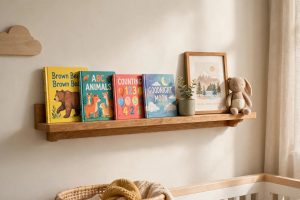
A Nursery Wall Shelf for Books and Decor: A Complete Buying Guide
May 10, 2026 0 views