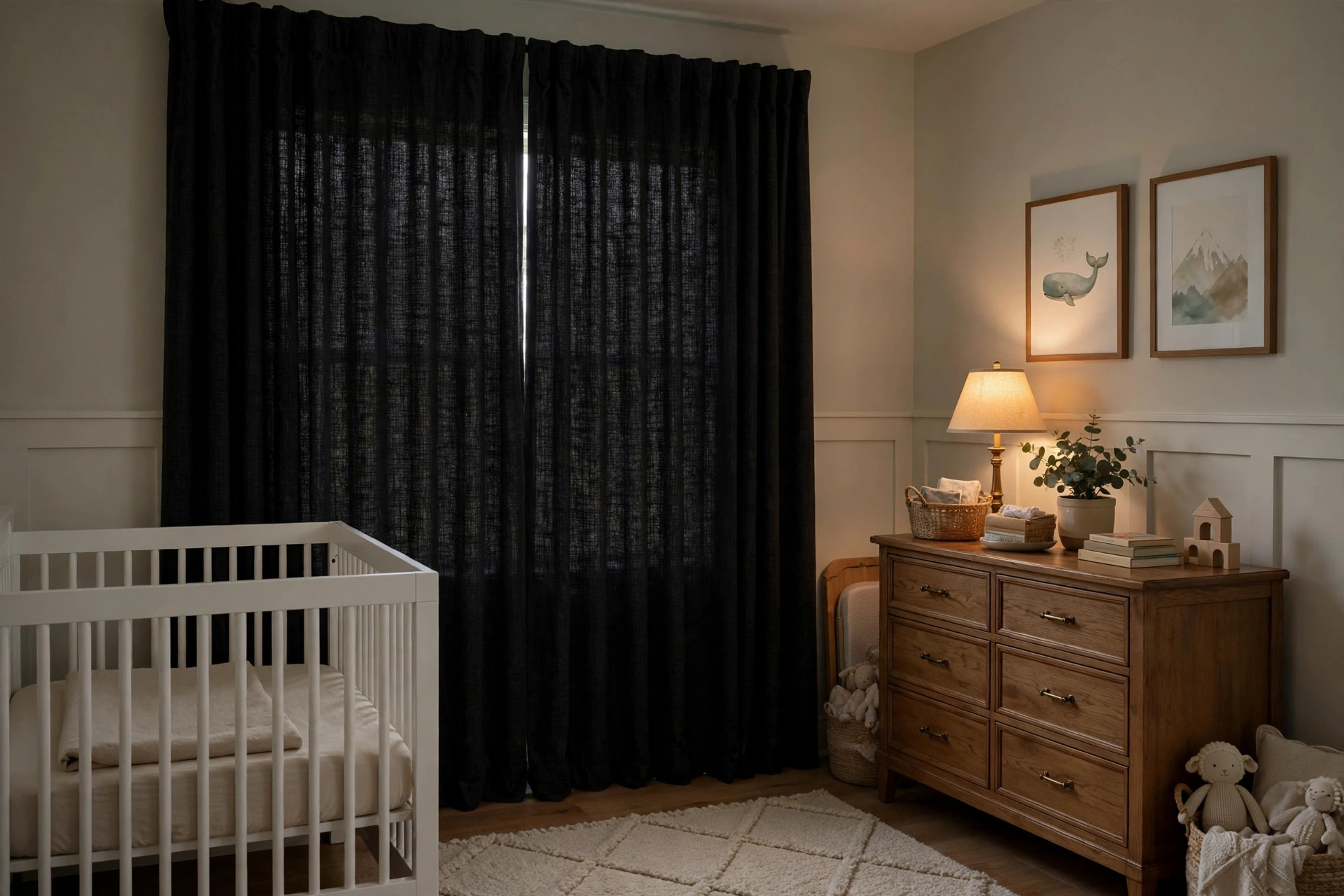

A baby sleeps best in a dark room. Parents who search for the best nursery curtains for light blocking naps want one thing. They want the room to stay dark when the sun is high. Light wakes a baby. Dark keeps a baby asleep. The right curtain makes nap time longer and bedtime easier. This guide explains what to look for, what types exist, what they cost, and how to hang them safely.
Why Light Blocking Matters for Baby Naps
Newborns sleep many hours each day. Daytime sleep is broken into short naps. Bright light tells the brain it is morning. The brain then fights sleep. A dark room tells the brain it is night. This helps the baby fall asleep fast and stay asleep longer.
Many babies wake after one sleep cycle, about 45 minutes. A dark room helps them slide into the next cycle. Parents often report naps grow from 30 minutes to two hours after they darken the room. Better naps mean a happier baby and a calmer house.
Darkness also helps set a steady body clock. A baby’s body clock learns from light and dark. A bright room at noon confuses it. A dark room at nap time trains it. Over weeks, the baby starts to expect sleep at the same hour each day. The routine gets easier to keep.
The best nursery curtains for light blocking naps do more than dim the room. They also reduce glare on the crib area. They soften street light at night. They give privacy from neighbors. Some even cut street noise and help hold the room temperature steady. A room that stays cool and quiet supports deeper sleep. Parents who feed or rock the baby in the room also rest better in soft dim light than under harsh sun.
What to Look for When Choosing Curtains: Best Nursery Curtains for Light Blocking Naps
Shopping for light blocking curtains can confuse a new parent. Many labels use loose words like “dimout” or “room darkening.” Look past the label. Check the facts below.
True Blackout Fabric
True blackout curtains block 99 to 100 percent of outside light. The fabric often has three layers. The middle layer is a dense foam or woven core that stops light. Hold the fabric up to a lamp in the store. If you see the bulb through it, it is not true blackout.
Some makers rate their panels by a percent of light blocked. Look for 99 percent or 100 percent. Panels that block 90 to 95 percent are called “room darkening.” They help, but they leave a glow around the edges and through the fabric on bright days.
Guides from home experts at The Spruce often note that edge light is the real problem. The center of the curtain may block light well. The sides, top, and bottom may leak. A wrap-around rod fixes this.
Size and Coverage
Measure the window before you shop. A curtain rod should extend four to six inches past each side of the window frame. The panel should be twice as wide as the window when flat. This gives deep folds that trap light.
Length matters too. For full blocking, the curtain should run from above the frame to below the sill or to the floor. Short curtains let light in under the hem. Buyers on Wayfair often post photos that show this gap problem. A longer panel solves it.
Rod Type
A standard rod leaves gaps at the sides. A wrap-around rod bends back to the wall. This closes the side gaps. A cornice box does the same job and hides the rod. For top light, mount the rod four to six inches above the frame. Wide, full panels work best with simple, sturdy rods. Avoid thin spring rods for heavy blackout panels. They sag in the middle and let light spill over the top.
Grommet, Pocket, or Back Tab
The top style changes how light leaks. Grommet tops leave small holes around each ring. Rod pockets gather the fabric tight with no holes. Back tabs hide the rod behind the fabric. For the darkest result, rod pocket or back tab panels beat grommets. The difference is small, but it shows on a bright day.
Types of Nursery Curtains That Block Light
Most products sold as blackout curtains for nursery windows fall into a few clear types. Each blocks light in a different way.
Triple-Weave Blackout Panels
Triple-weave panels are the most common choice. Three yarn layers are woven together. No foam coating is used. They are soft, washable, and hang like normal drapes. They block nearly all light. Many come in nursery colors and patterns.
Foam-Backed Blackout Panels
Foam-backed panels have a white or silver coating on the back. The coating stops light cold. These are very effective and often cheaper. The back can crack after many washes. Handle them gently. Let them air dry if you can.
Thermal Blackout Curtains
Thermal curtains add a heat-blocking layer. They keep the nursery cooler in summer and warmer in winter. The American Academy of Pediatrics notes on HealthyChildren.org that a stable, cool room helps safe sleep. A cooler room also means less air conditioning use.
Layered Treatments
Some parents pair curtains with other shades. A blackout roller shade sits inside the frame. The curtain panel hangs over it. This double layer stops almost every ray. It also looks neat. Retailers like IKEA sell simple roller blinds that work well as the inner layer.
Portable blackout shades are another option. They stick to the window with suction cups. They help in rentals where you cannot drill. They also travel well for naps at a grandparent’s house.
Blackout Liners
A blackout liner is a plain white panel that hangs behind your main curtain. It adds blocking power to curtains you already own. Liners cost less than new drapes. They attach with hooks or rings. They are a smart fix if you love the look of your current curtains but need a darker room.
When to Hang Them
Hang the curtains before the baby moves into the room if you can. Test them at midday. Sit in the room with the lights off. Look for light leaks around the edges. Fix them now, not during a tired first week home.
If the baby is already napping, hang the new curtains during a wake window. A short nap in a brighter room will not hurt. The payoff over months of naps is worth it.
Seasonal change matters too. Summer sun is stronger and rises earlier. A room that felt dark in winter may glow in June. Check the room again when the seasons change. You may need to adjust the panels or add a shade layer.
Color, Style, and Nursery Look
Dark colors block light best, but you do not need a black curtain. A cream triple-weave panel with a dense core can block just as much light as a navy one. The core does the work, not the color.
Soft patterns fit a nursery better than plain dark panels. Stars, moons, clouds, and animals are popular. Solid panels in warm white, sage, or blush look calm. The shops at Pottery Barn Kids show how blackout function can sit inside a soft nursery style.
Match the curtain to the rest of the room. If you have a nursery glider chair with ottoman for breastfeeding, choose a fabric that suits it. The curtain is the largest fabric in the room. It sets the tone.
Cost and Price
Light blocking curtains for a nursery do not have to cost much. Price depends on size, brand, and fabric type.
– Budget panels: $15 to $35 per panel. Foam-backed or thin triple-weave. Good for small windows. – Mid-range panels: $35 to $70 per panel. Better triple-weave or thermal styles. Most parents land here. – Premium panels: $70 to $150 or more per panel. Designer brands, lined drapes, or custom sizes.
A normal nursery window needs two panels. Add the rod, which runs $20 to $60. A full window treatment often lands between $60 and $200. A roller shade plus curtain layer costs more, $120 to $300, but it blocks the most light.
Buy one test panel first if you are unsure. Hang it. Check the room at noon. If it works, buy the second. This saves waste.
Care and Upkeep
Dust builds up on curtains fast. In a nursery, clean fabric matters. Dust can bother a baby’s nose and lungs.
Vacuum the panels each month with a soft brush head. Most triple-weave panels can go in the washing machine on a gentle cycle. Use mild soap and cold water. Foam-backed panels do better with a damp cloth wipe and air drying. Heat from a dryer can crack the coating.
Check the hardware twice a year. Tighten loose brackets. Make sure the rod holds firm when you pull the curtain. A falling rod in a nursery is a hazard.
Steam out wrinkles after washing. A smooth panel hangs straight and blocks edge light better. Many new parents find care tips in family home guides such as Good Housekeeping.
Safety First
Safety comes before style in a baby’s room. Curtains carry real risks. Handle them with care.
Cords are the top danger. Long cords can wrap around a small child. The U.S. Consumer Product Safety Commission warns about corded window coverings on CPSC.gov. Choose cordless panels. If your shade has cords, keep them short and out of reach. Better yet, replace corded shades with cordless ones.
Keep the crib away from the window. The crib should stand at least three feet from curtains and cords. Babies pull on fabric as they grow. Heavy panels can topple a light rod if a toddler tugs hard. Anchor the rod brackets into wall studs, not just drywall.
Check for fire safety too. Keep curtains away from heaters, radiators, and lamps. Fabric near heat is a fire risk. Parenting guides at What to Expect remind parents to check the whole room for hazards, not just the crib.
Buy from known sellers. Cheap imports may carry strong chemical smells. Air new curtains out for a day before hanging them in the nursery. Look for labels that state low chemical emissions.
FAQ
How dark should a nursery be for naps?
Very dark. Aim for a room where you cannot read a book with the lights off. Most light should be blocked. A small night light is fine for checks and feeding. If you can see clear shapes across the room, add another layer or seal the edges.
Do blackout curtains help babies sleep through the night?
They can help. Light is one cause of early waking. A dark room helps morning sleep last longer. They do not fix hunger, noise, or illness. They solve the light problem only.
What is the difference between blackout and room darkening?
Blackout blocks 99 to 100 percent of light. Room darkening blocks 85 to 95 percent. Room darkening leaves a soft glow. For naps, true blackout works better.
Can I use blackout curtains in a rental?
Yes. Use tension rods inside the frame or portable suction-cup shades. Command-style hooks can hold a light rod without holes. Check your lease first.
How do I stop light leaking around the edges?
Use a wrap-around rod. Mount the rod wide and high. Let the panels fall below the sill. A second layer, like a roller shade, closes the last gaps.
Are blackout curtains safe for newborns?
The curtains are safe if hung well. Keep cords out of reach. Keep the crib away from the window. Air out new panels before use. Home design advice at HGTV often pairs blackout function with these same safety steps.
A Short Final Word
The best nursery curtains for light blocking naps are simple to choose. Pick true blackout fabric. Measure wide and long. Hang them high and tight to the wall. Keep cords away and the crib clear. A dark room gives your baby longer naps. Longer naps give you rest too. Independent testing groups such as Consumer Reports rate window treatments on blocking power and safety, which can help you compare brands with confidence.
References
American Academy of Pediatrics. (n.d.). HealthyChildren.org. https://www.healthychildren.org Consumer Reports. (n.d.). Product reviews and ratings. https://www.consumerreports.org Good Housekeeping. (n.d.). Product reviews and home advice. https://www.goodhousekeeping.com HGTV. (n.d.). Home and garden ideas. https://www.hgtv.com IKEA. (n.d.). Home furnishings. https://www.ikea.com Pottery Barn Kids. (n.d.). Kids furniture and decor. https://www.potterybarnkids.com The Spruce. (n.d.). Home and garden advice. https://www.thespruce.com U.S. Consumer Product Safety Commission. (n.d.). Product safety information. https://www.cpsc.gov Wayfair. (n.d.). Furniture and home goods. https://www.wayfair.com What to Expect. (n.d.). Pregnancy and parenting guidance. https://www.whattoexpect.com
Was this guide helpful?

About Emily Rodriguez
The My Garden US editorial team writes practical, in-depth home and garden guides for American homeowners — tested advice, no fluff.
You May Also Like
Kids Vanity Table with Stool for Makeup: A Simple Buying Guide
September 21, 2026 0 views
Nursery Storage Baskets for Diapers and Wipes: A Plain Guide for New Parents
September 18, 2026 0 views
The Best Nursery Bedding Set for Baby Girl: A Simple Buying Guide
April 22, 2026 0 views