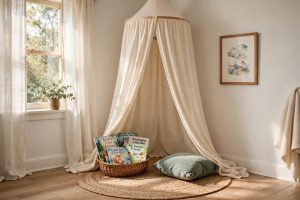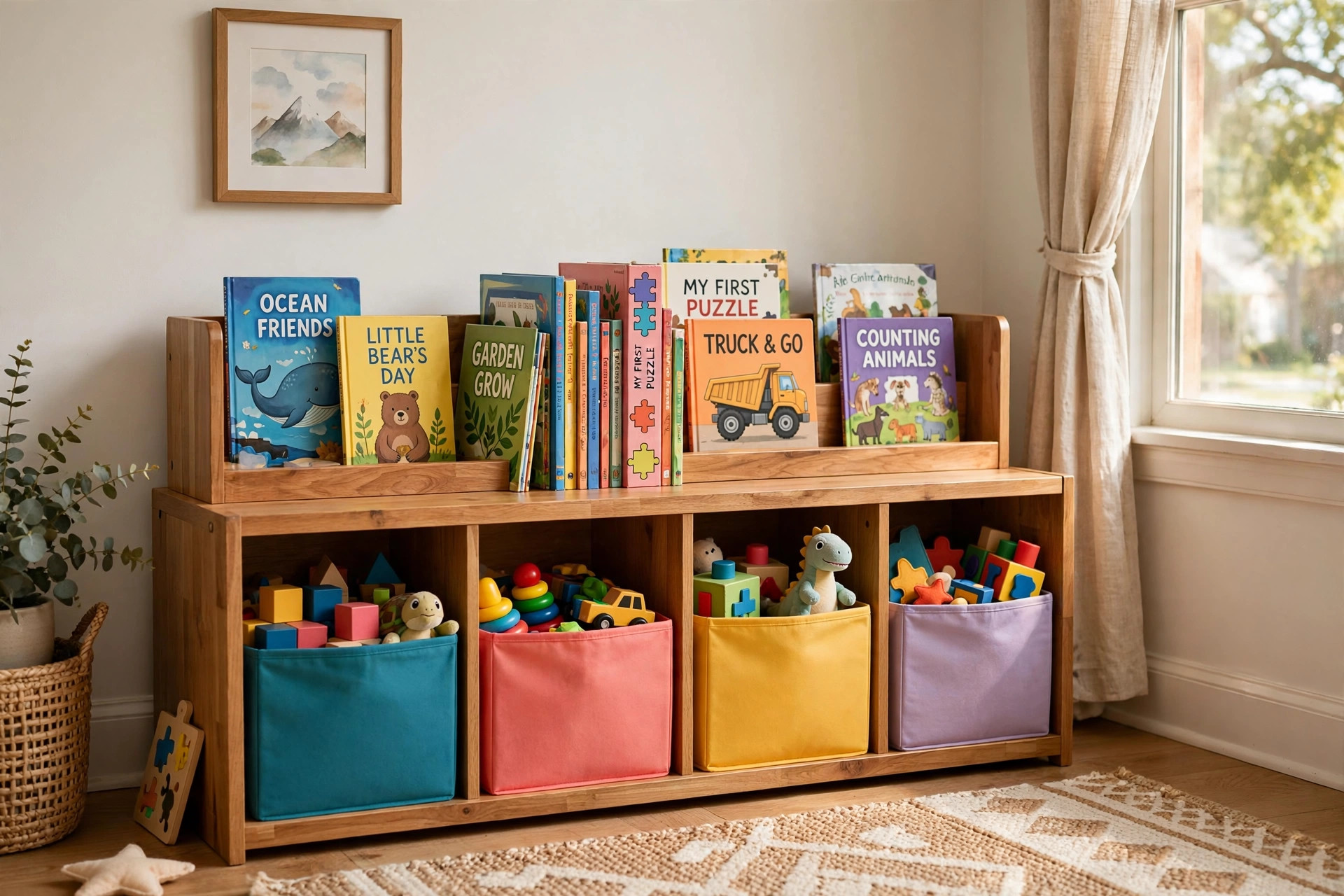

A kids bookshelf with toy bins combo unit is one piece of furniture that holds books on shelves and toys in pull out bins. Many families buy one because a child room stays neat when books and toys each have a clear home. This guide explains what to look for, how much to pay, and how to keep the unit safe for daily use.
Why This Piece of Furniture Matters
A child room can turn messy in one afternoon. Blocks land on the floor. Picture books slide behind the bed. A parent then spends the evening picking things up. A kids bookshelf with toy bins combo unit cuts this work down because everything has a place and the place is low and easy to reach.
Children learn to clean up when the task is simple. Open bins take less effort than boxes with lids. Low shelves let a small child slide a book back without help. When cleanup is quick, it becomes a habit. Teachers and parents have seen this for years. A tidy room also gives a child more room to play, which matters in a small bedroom.
Books deserve a special spot. A child who sees books at eye level picks them up more often. The American Academy of Pediatrics notes on healthychildren.org that reading to young children builds strong minds, and a visible home for books supports that daily habit. The combo unit makes the book shelf a part of the room, not an afterthought.
Toy bins bring their own value. Big toys, dolls, cars, and craft supplies go into deep bins. Small pieces can go into smaller bins. Labels or picture cards on each bin help a child who cannot read yet. This simple system works well for toddlers and for school age children alike.
How to Choose the Right Unit: Kids Bookshelf with Toy Bins Combo Unit
Size comes first. Measure the wall where the unit will stand. Leave space for the door to swing and for a child to pull bins out fully. A unit that is too wide crowds the room. A unit that is too small fills up fast and the mess returns. Many units are about three feet wide and two and a half feet tall, which fits most child rooms.
Height matters for safety and for reach. The shelves should sit low enough that a young child can reach the top shelf while standing. A very tall unit tips more easily and tempts a child to climb. Look for a low and wide design when the user is a toddler. Older children can handle a taller unit, but it should still be fixed to the wall.
Materials and Build Quality
Solid wood units cost more and last the longest. Pine is a common choice because it is light and cheap. Hardwood like maple or birch holds up to years of hard use. Engineered wood, also called MDF, is common in budget models. It looks fine but chips when it gets wet, so keep drinks away from it.
Check the joints before you buy. The shelves should feel firm and not bend in the middle. The back panel should be thick enough to hold screws. A unit that wobbles in the store will wobble more at home. If you shop online, read reviews that mention sturdiness. Sites like thespruce.com often test how kids furniture holds up over time.
Bins come in many styles. Fabric bins are light and soft, which is good for toddlers. Plastic bins wipe clean, which helps with craft supplies and snacks. Open wooden cubbies hold bigger items. Make sure the bins slide in and out with ease. A bin that sticks will frustrate a small child and the cleanup habit will die.
Bin Count and Shelf Layout
Most combo units have two to six shelves and four to twelve bins. Think about what your child owns. A reader needs more shelves. A builder needs more bins. Many families find that a mix works best. Books stand on the shelves and toys hide in the bins, so the room looks tidy even when the bins are full.
Adjustable shelves add value. As a child grows, books get bigger and toy sets change. A shelf that moves up or down keeps the unit useful for years.
Types and Options
The most common design is a low bookcase with cubbies on the bottom and shelves on top. Bins slide into the cubbies. Books stand on the open shelves. This layout is simple and safe, and it is the best choice for toddlers and preschool children.
A tall tower design places shelves above and bins below in a narrow frame. It saves floor space in a small room. The narrow base means it must be fixed to the wall with the kit that comes in the box. Do not skip this step.
Some units have a desk or bench top. A child can sit at the unit to read or draw. This two in one design suits a small bedroom where every inch counts. Make sure the work surface is at the right height for your child.
Corner units fit into a room corner and use space that often goes to waste. They hold fewer items than a straight unit but they keep a small room open. They work well in a shared bedroom where two children need storage.
Theme designs come in shapes like a dollhouse, a fire truck, or a castle. They look fun but they cost more and the child may outgrow the theme. A plain unit with bright bins gives the same joy for less money, and you can change the bins as tastes change.
For a related look, some families pair the combo unit with a kids bookshelf with bins for toy storage style piece in a second room, or add a kids bean bag chair for reading corner nearby to make a full reading spot.
Cost and Price
Prices range from about forty dollars to over three hundred dollars. Budget units under eighty dollars use engineered wood and fabric bins. They work well for a first unit and last two to three years with gentle use.
Mid range units from eighty to one hundred eighty dollars use thicker panels and sturdier bins. Many of the best sellers on wayfair.com and target.com fall in this range. They often include a wall anchor kit and adjustable shelves.
High end units above one hundred eighty dollars use solid wood and feel like real furniture. Shops such as potterybarnkids.com sell models that last through more than one child. The finish is smooth, the edges are rounded, and the colors hold up to sun and cleaning.
Watch for sales. Kids furniture drops in price during back to school season and after the winter holidays. Always check what is in the box. Some units ship without bins, and bins bought alone can add thirty to fifty dollars.
Think about cost per year. A sixty dollar unit that lasts two years costs thirty dollars a year. A two hundred dollar unit that lasts eight years costs twenty five dollars a year. The dearer unit often wins over time, as noted by buying guides on parents.com that compare furniture value over the years a child uses it.
Setting Up the Unit
Put the unit together on a soft rug so the panels do not scratch. Follow the steps in order and do not tighten screws until the end. This keeps the frame square. One adult can build most units in about an hour.
Fix the unit to the wall. This is the most important step in the whole job. Furniture tip over is a real danger for small children. The cpsc.gov site warns that unanchored bookcases cause serious harm each year. Use the strap or bracket in the box and drive it into a wall stud. If you cannot find a stud, use a proper wall anchor rated for the weight.
Place heavy items low. Books are heavy, so put the fullest shelves near the floor. This lowers the center of mass and makes tip over less likely. Put light toys in the upper bins. Never let a child climb the shelves like a ladder.
Sort items with your child. Let the child choose which bin holds cars and which holds dolls. This small choice builds ownership. The child will then want to put things back. Take a photo of each sorted shelf so the child has a picture guide for cleanup time.
Care and Upkeep
Dust the shelves once a week with a dry cloth. Wipe spills at once, since water soaks into engineered wood and leaves marks. Use a mild soap and water mix for sticky spots. Dry the surface right after.
Wash fabric bins in the machine on a gentle cycle when they get dirty. Air dry them so they keep their shape. Wipe plastic bins with a damp cloth. Check wooden bins for splinters twice a year and sand any rough spot with fine sandpaper.
Tighten screws every six months. Kids furniture takes daily bumps and the joints loosen over time. A quick check with a screwdriver keeps the unit firm. While you are at it, check the wall anchor. Pull the unit gently to make sure it does not move.
Rotate the items on the shelves each season. Put away some books and toys and bring out others. A small change feels new to a child and cuts the urge to buy more. Donate books and toys the child has outgrown. A unit that is not stuffed works better and looks better.
If the finish chips, touch it up with matching paint. ikea.com and other large furniture sellers often stock touch up markers for their lines. A small fix keeps the unit looking new and stops chips from spreading.
Safety
Safety starts with the build. Only buy units that meet current United States safety standards. Look for labels that mention ASTM standards for children furniture. Avoid old second hand units with peeling paint, since paint made before 1978 may hold lead. The zerotothree.org site offers guidance on safe room setups for babies and toddlers.
Watch for small parts. Bin handles, knobs, and label holders should be fixed tight. A loose knob is a choking risk for a child under three. If a part breaks, remove it or fix it at once. Do not leave a broken piece on the unit.
Check the gaps. The space between shelves and the space between bin edges should not trap little fingers. Rounded edges are safer than sharp corners. Corner guards help on units with square edges, though a well made unit should not need them.
Mind the weight on top. Never place a television or a heavy lamp on a kids storage unit. The unit is not built for that load and the weight raises the tip over risk. Keep the top clear or use it for light books only.
Teach safe habits early. Show the child how to pull a bin straight out and push it back. Explain that climbing is not allowed. Praise the child each time cleanup goes well. Good habits at age three become good habits at age ten. Parenting sites like whattoexpect.com share simple ways to teach these routines without stress.
FAQ
What age is a kids bookshelf with toy bins combo unit best for?
It suits children from about eighteen months to ten years. Toddlers use the low bins. Older children use the shelves for chapter books and school items. Pick a model with adjustable shelves so it grows with the child.
How many bins do I need?
Four to six bins suit most children. That count covers the main toy groups such as blocks, dolls, cars, and crafts. More than eight bins can confuse a small child. Start with fewer bins and add more if the child needs them.
Is solid wood worth the extra cost?
Yes, if you plan to use the unit for many years or for more than one child. Solid wood resists dents and holds screws better. For a short term need, such as a rental home, a budget engineered wood unit is fine.
Can I use the unit in a playroom instead of a bedroom?
Yes. The combo unit works well in any room where a child plays. In a playroom, a wider unit with more bins helps because toys gather there. Anchor it to the wall just as you would in a bedroom. A kids toy chest with safety hinge lid can sit beside it for large toys that do not fit in bins.
How do I stop the bins from sliding out too far?
Some bins have a small stop tab at the back. If yours do not, add felt pads or a thin strip of wood at the back of each cubby. This small fix stops bins from falling out when a child pulls hard.
What should I do if the unit starts to wobble?
First check that all screws are tight. Then check that the unit sits level on the floor. A folded piece of cardboard under one foot can fix a wobble on an uneven floor. If it still wobbles, check the wall anchor. A firm anchor hides small wobbles, but a loose anchor is a safety problem, so fix it at once.
A Short Final Word
A kids bookshelf with toy bins combo unit is a simple buy that pays off every day. It teaches order, keeps books in sight, and gives toys a home. Measure your space, pick a sturdy build, anchor it to the wall, and let your child help sort what goes where. The room will stay tidier, and reading time will come more often. That is a good return on one piece of furniture.
References
American Academy of Pediatrics. (n.d.). HealthyChildren.org. https://www.healthychildren.org IKEA. (n.d.). Home furnishings. https://www.ikea.com Parents. (n.d.). Parenting advice and family life. https://www.parents.com Pottery Barn Kids. (n.d.). Kids furniture and decor. https://www.potterybarnkids.com Target. (n.d.). Retail store. https://www.target.com The Spruce. (n.d.). Home and garden advice. https://www.thespruce.com U.S. Consumer Product Safety Commission. (n.d.). Product safety information. https://www.cpsc.gov Wayfair. (n.d.). Furniture and home goods. https://www.wayfair.com What to Expect. (n.d.). Pregnancy and parenting guidance. https://www.whattoexpect.com ZERO TO THREE. (n.d.). Early childhood development resources. https://www.zerotothree.org
Was this guide helpful?

About Robert Taylor
The My Garden US editorial team writes practical, in-depth home and garden guides for American homeowners — tested advice, no fluff.
You May Also Like
Kids Bedroom Rug for Girls Pink Decor: A Parent’s Complete Guide
September 15, 2026 0 views
Kids Study Desk With Chair Set Adjustable: A Complete Buying Guide
February 8, 2026 0 views
Nursery Closet Dividers for Organizing Sizes: A Simple Guide for New Parents
August 15, 2026 0 views