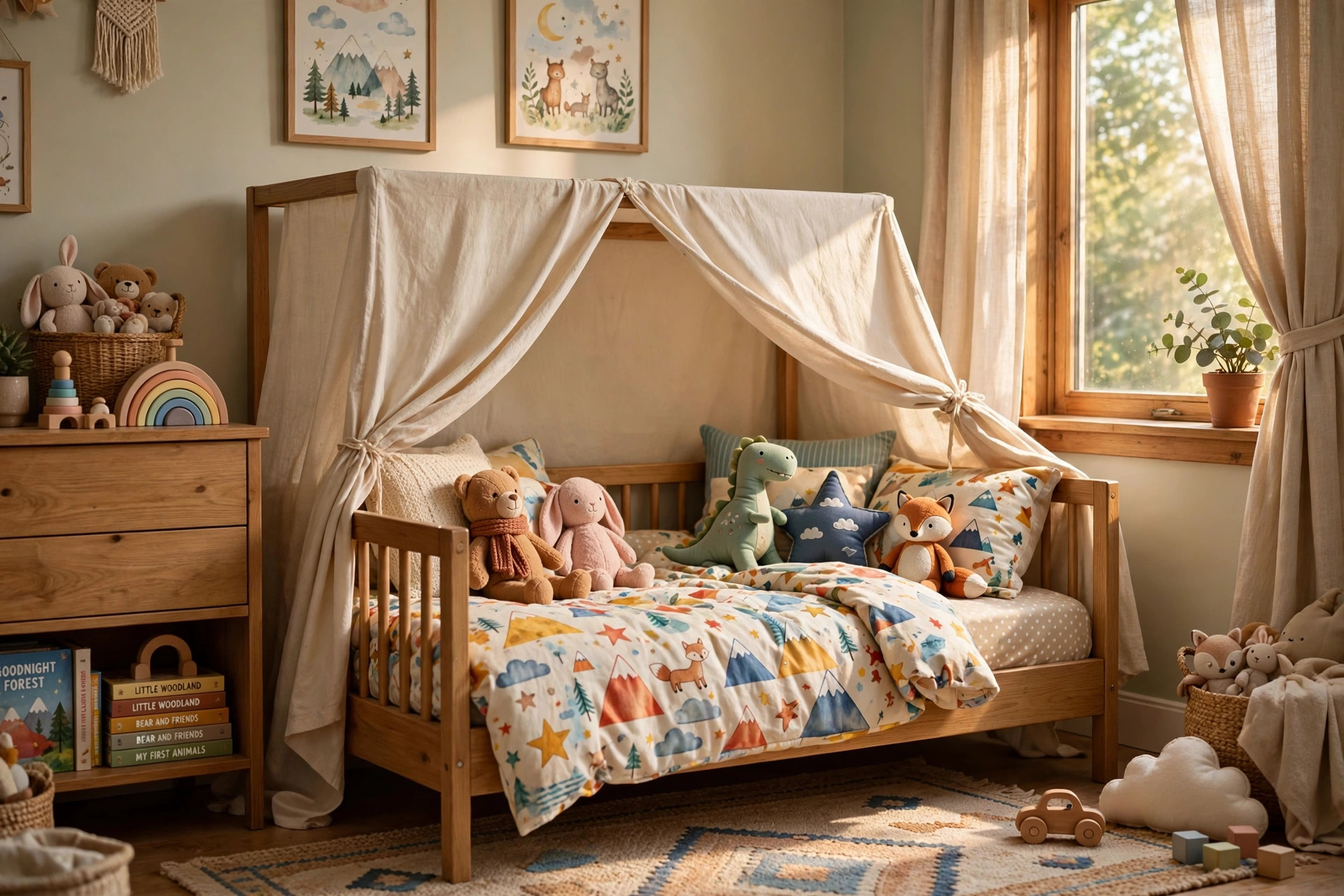

Many parents want bedtime to be calm. They also want their child to love the bedroom. A toddler bed with tent canopy for imagination does both things at once. It is a low bed made for small children. It has a fabric canopy shaped like a tent. The canopy turns an ordinary bed into a play space. A child can read inside it. A child can pretend it is a fort. A child can fall asleep in a small private world. This guide explains what to look for, the main types, what they cost, how to keep them clean, and how to use them safely.
Why It Matters
Moving from a crib to a bed is a big change for a toddler. The child gains freedom. That freedom can feel scary. A tent canopy makes the new bed feel safe. The fabric walls form a small room. Many children sleep better in a small space. They feel hidden and warm.
Imaginative play is important for young children. It helps the brain grow. A tent bed gives play a home. One day the tent is a castle. The next day it is a boat. The next day it is a camping tent in the woods. The bed itself invites stories. Parents do not need extra toys to start this play. The bed does the work.
A tent canopy also helps with light. Many bedrooms have bright windows or bright lamps. The canopy blocks some light. This helps at nap time. It also helps early in the evening. Some children fall asleep faster with less light around the bed. The canopy works like soft curtains.
A best convertible toddler bed with safety rail is a good first bed, but it looks plain. A tent canopy bed adds the fun that a plain bed cannot give. It keeps the same low height. It keeps the same safety rails. It only adds the fabric tent on top. For many families, that extra touch is worth the price.
What to Look For When You Choose: Toddler Bed with Tent Canopy for Imagination
A good tent bed is safe first and fun second. The rules below help you choose well.
Frame Strength
The frame should feel solid. Shake it in the store if you can. It should not wobble. A wood frame is strong and heavy. A metal frame is light and also strong. Both work well. Check that the bolts are tight. Loose bolts make noise and make the bed weak.
Mattress Size
Most toddler beds take a crib mattress. This is handy. You can move the old crib mattress to the new bed. Check the size before you buy. The mattress should fit tight. There should be no wide gaps at the edges. A gap is a safety risk for small children.
Canopy Fabric
The canopy should be light and soft. Cotton is a good choice. It breathes well and washes well. Thin polyester also works. It dries fast. Stay away from heavy fabric. Heavy fabric can pull the frame down. It can also trap heat inside the tent. The child should feel air flow while inside.
Openings and Doors
Look at how the child gets in and out. A tent canopy usually has a front opening. It should be wide and easy to use. The child should be able to leave the bed in the dark without help. Avoid tents with zips that a small child cannot open. Avoid designs with no door at all.
Fire Safety
Ask if the fabric meets fire safety rules. Many children products carry a label. The label tells you the fabric was tested. You can read the safety rules from the CPSC to know what to expect. Keep the tent away from lamps and heaters. Fabric and heat do not mix well.
Types and Options
Not all tent beds look the same. The main types are described below.
Tent Canopy Over a Toddler Bed Frame
This is the most common type. It is a standard toddler bed. The tent canopy fits over the top like a shell. It often ties to the headboard and footboard. You can take it off and wash it. You can also remove it when the child grows bored of it. The bed then looks like a normal toddler bed. This type is easy to clean and easy to store.
Full Play Tent Bed
Some beds have a larger tent. The tent covers the whole bed and more. It may have windows with mesh. It may have pockets for books. These beds feel like real camping tents. They cost more. They take more room. They work best in a large bedroom or a playroom.
Canopy Frame With Sheer Drapes
This type uses a light frame with thin sheer fabric. It looks soft and pretty. It is less like a tent and more like a canopy. It gives less privacy. It also gives more air flow. It suits children who do not like dark closed spaces. Many bedroom ideas at Wayfair show this soft style.
DIY Canopy on a Regular Toddler Bed
Some parents buy a plain toddler bed and add a canopy. Canopy frames and fabric kits are sold apart. This costs less than a full tent bed. It also lets you pick the fabric you like. Make sure the canopy frame fits the bed. A poor fit can tip over. If you want a simple strong bed first, a best toddler bed with storage for toys pairs well with a separate canopy kit.
Cost and Price
Prices change by type, brand, and store. As a rough guide, simple tent canopy beds start near sixty dollars. These have thin fabric and a simple metal frame. Mid range beds cost between one hundred and two hundred dollars. They have wood frames and thicker fabric. They last longer. High end play tent beds can cost three hundred dollars or more. They have extra features like mesh windows and storage pockets. Before you buy, read product reviews at Consumer Reports to compare models side by side.
You can find a wide range at Amazon and everyday finds at Target. These stores often run sales. Watch for holiday sales. Prices drop near the end of the year. Also check the cost of a replacement canopy. Some brands sell the fabric alone. That is cheaper than buying a whole new bed when the fabric wears out.
Do not forget the mattress. Most toddler beds need a crib mattress. If you already have one, the cost stays low. If you need a new one, add forty to one hundred dollars. A toddler bedding dinosaur theme for boys or other fun sheets can make the tent bed even more inviting for little cost.
Care and Upkeep
A tent bed needs simple care. Most canopies come off the frame. Wash the fabric on a gentle cycle. Use mild soap. Let it air dry. A dryer can shrink the fabric. Shrunken fabric may not fit the frame again. Wash the canopy every few months. Wash it more often if the child eats or drinks in bed.
Wipe the frame with a damp cloth. Check the bolts every few months. Children climb and shake their beds. Bolts come loose with time. Tighten them with a wrench. Listen for squeaks. A squeak often means a loose joint.
Air out the inside of the tent. Open the front flap during the day. Fresh air stops musty smells. If the fabric gets a stain, spot clean it fast. Rubbing alcohol on a cloth can lift small marks. Test it on a hidden corner first. The guides at The Spruce have useful advice on cleaning child bedroom fabrics without harsh chemicals.
Safety
Safety comes first with any child bed. Follow these rules.
Keep the bed low to the floor. A toddler bed is already low. Do not add a thick mattress that raises the child high. The child should be able to climb in and out safely.
Make sure the child can leave the tent fast. In an emergency, the child must get out alone. The front opening should stay clear. Do not block it with pillows or toys.
Check the fabric for loose strings. Long cords are a danger for small children. Tie cords short or cut them. The same rule applies to window blinds near the bed.
Do not hang lights inside the tent. Fairy lights look pretty. They can also get hot. A hot bulb near fabric is a fire risk. If you want light inside, use a small battery lamp. Keep it away from the fabric.
Watch the weight limit. Most toddler beds hold up to fifty pounds. A tent canopy is not a climbing frame. Teach the child not to hang from the top. The safety rules from the CPSC and children’s sleep advice at What to Expect both stress that the bed is for sleeping, not for rough play.
Keep the room clear around the bed. Leave space at the front for the child to step out. Do not place the bed under a window with cords. Do not place it next to a heater. A nursery checklist at Pottery Barn Kids is a good place to double check room layout.
Frequently Asked Questions
At what age can a child use a tent canopy bed?
Most children are ready between eighteen months and three years. The child should be able to climb in and out alone. The child should also understand simple safety rules. Every child is different. Watch your child and decide. A child who climbs a lot may need to wait longer.
Will the tent make the bed too hot?
It can, if the fabric is thick. Choose light cotton or mesh. Keep the front flap open during warm months. Move the bed away from heat vents. A small fan in the room helps air flow. If the child sweats at night, remove the canopy until the weather cools.
Can I wash the canopy in a machine?
Most canopies are machine washable. Use cold water and a gentle cycle. Air dry the fabric. Read the label first. Some fabrics need hand washing. If the label is gone, hand washing is the safe choice.
Does the tent help children who fear the dark?
Many parents say yes. The small space feels like a hiding place. It feels safe rather than dark. Add a small battery night light. The soft glow inside the tent can calm a fearful child. If fear stays strong, talk with your doctor. The children’s health guidance at healthychildren.org covers sleep fears in toddlers.
How long will a tent canopy bed last?
A good one lasts two to four years. The child will outgrow the toddler size by age five. The frame may last longer than the fabric. Replacement canopies extend the life. When the child moves to a twin bed, some brands sell larger tents. Furniture designs from IKEA often include grow-with-me options.
Are tent canopy beds good for small rooms?
Yes. A toddler bed is small. The tent goes up, not out. It adds no floor space. That helps in a small room. For very small rooms, home projects at Lowe’s suggest keeping the rest of the furniture light and low so the room feels open.
A Short Final Word
A toddler bed with tent canopy for imagination is more than furniture. It is a stage for play and a safe place for sleep. Choose a strong frame. Choose light washable fabric. Keep safety rules in mind. Then let the child lead. One night it is a castle. The next night it is a ship at sea. The stories will come on their own. Bedtime may become the best part of the day.
References
Amazon. (n.d.). Online shopping. https://www.amazon.com American Academy of Pediatrics. (n.d.). HealthyChildren.org. https://www.healthychildren.org Consumer Reports. (n.d.). Product reviews and ratings. https://www.consumerreports.org IKEA. (n.d.). Home furnishings. https://www.ikea.com Lowe’s. (n.d.). Home improvement products. https://www.lowes.com Pottery Barn Kids. (n.d.). Kids furniture and decor. https://www.potterybarnkids.com Target. (n.d.). Retail store. https://www.target.com The Spruce. (n.d.). Home and garden advice. https://www.thespruce.com U.S. Consumer Product Safety Commission. (n.d.). Product safety information. https://www.cpsc.gov Wayfair. (n.d.). Furniture and home goods. https://www.wayfair.com What to Expect. (n.d.). Pregnancy and parenting guidance. https://www.whattoexpect.com
Was this guide helpful?

About Robert Taylor
The My Garden US editorial team writes practical, in-depth home and garden guides for American homeowners — tested advice, no fluff.
You May Also Like
The Best Kids Bed with Slide for a Playroom Bedroom
April 14, 2026 0 views
Best Kids Room Humidifier for Dry Air: A Parent’s Buying Guide
February 5, 2026 0 views
The Best Kids Bookshelf Rotating for Small Room Spaces
May 10, 2026 0 views