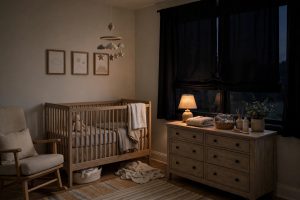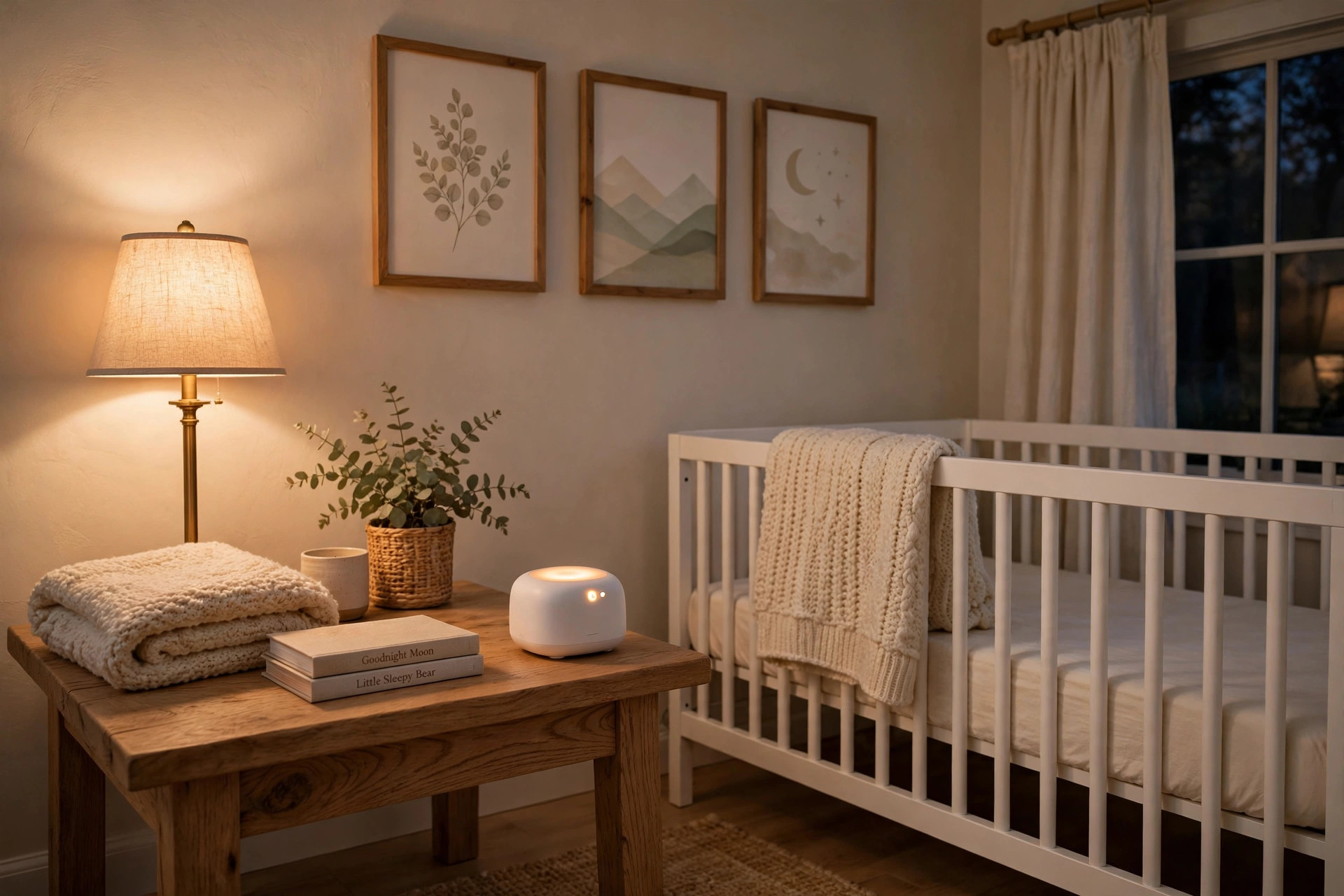

A nursery sound machine for baby sleep aid is one of the simplest tools a new parent can bring home. It is a small device that plays steady, gentle sounds such as white noise, soft rain, or a quiet lullaby. Many parents place it on a shelf or a side table in the nursery. They turn it on at bedtime and let it run through the night. The soft hum helps the baby fall asleep and stay asleep.
Sleep is hard in the first months. Newborns wake often. Household sounds startle them awake. A door closes. A dog barks. A sibling shouts down the hall. A nursery sound machine for baby sleep aid covers these sharp noises with a smooth blanket of sound. It does not make the baby sleep longer by magic. It simply keeps small sounds from breaking the sleep that the baby already found.
Why It Matters
The first year of a baby’s life brings many night wakings. This is normal. A baby’s sleep runs in short cycles. Between cycles, the baby may stir. If the room is quiet and then a sudden noise breaks the calm, the baby wakes fully. A nursery sound machine for baby sleep aid keeps the sound level even. The brain hears no sudden change, so the baby drifts back to sleep on their own.
Many parents say the machine helped them too. Parents sleep lighter when a new baby is in the house. The soft hum masks small creaks and street sounds that might wake a tired mother or father. The whole home feels calmer. This is one reason the device has become a fixture in the modern nursery, alongside best blackout curtains for nursery windows usa that keep the room dark.
Doctors who study infant sleep often speak of the womb. In the womb, the baby hears a constant rush of sound. The mother’s blood and breath move in a steady flow. It is never silent. After birth, a silent room can feel strange to a newborn. A nursery sound machine for baby sleep aid gives back some of that steady sound. It makes the crib feel safe and known.
What to Look for When You Choose One: Nursery Sound Machine for Baby Sleep Aid
Shops and web sites sell dozens of models. The boxes all promise calm nights. It helps to know which features truly matter and which are only decoration.
Sound types
Most machines offer white noise, pink noise, and brown noise. White noise is a bright hiss, like a running fan. Pink noise is softer and deeper, like steady rain. Brown noise is the deepest, like a low rumble of thunder far away. Many parents find pink or brown noise gentler for a nursery. A good nursery sound machine for baby sleep aid should offer at least a few steady options so you can find the one your baby likes.
Some models add nature sounds. Rain on leaves. Soft waves. A light breeze. These can work well. Songs and lullabies are also common. A melody that repeats for hours may tire the parent, so steady sounds often win in the long run. Guidance for parents on the Healthy Children web site notes that simple, steady background sounds are a common choice in many homes.
Volume control
Look for fine volume steps. The sound should reach the crib at a level no louder than a soft shower. Experts often name fifty decibels as a safe upper line for long play. A machine with a wide dial or many small steps makes it easy to set the right level. A nursery sound machine for baby sleep aid that jumps from too soft to too loud in one step is a poor buy.
Continuous play
Some machines switch off after thirty or sixty minutes. The baby then wakes in silence and cries out. Choose a model that plays without end. Continuous play carries the baby through the light patches between sleep cycles. A sleep timer can still be useful for naps, but the machine should also run all night.
Power and portability
Most machines plug into the wall. Some also run on batteries. A battery option helps on trips or in a power cut. A small, light machine can move from the nursery to the living room for day naps. Parents who shop at stores like Target or Amazon will find many compact models that weigh less than a cup of water.
Ease of use in the dark
You will use this machine at three in the morning, half asleep. Buttons should be large and easy to find by touch. A dim night light built into the machine can help you check on the baby without turning on the room light. The light should be warm and very dim, and it should switch off fully. Bright lights can wake a sleeping baby, so the built-in glow should stay faint.
Types of Sound Machines
Tabletop machines
These are the classic choice. They sit on a dresser or shelf. They have a speaker, a set of buttons, and a power cord. They often give the best sound for the price. A tabletop nursery sound machine for baby sleep aid suits a fixed nursery where the crib stays in one room.
Portable machines
Portable machines are small and clip to a stroller, a car seat, or a travel crib. They run on batteries or a charged cell. They help the baby sleep away from home. They are useful on holiday and at grandparents’ houses. The sound is thinner than a tabletop model, but it still does the job for naps.
App based sound
Phones and tablets can play white noise through a free app. This costs nothing. It works in a pinch. It is not ideal as a nightly habit. A phone call or a low battery can stop the sound in the middle of the night. A dedicated machine is more steady. Still, an app is a fine backup.
Two in one machines
Some products join a sound machine with a night light or a projector. The projector throws soft stars on the ceiling. These can be sweet for toddlers. For newborns, simple is better. Bright moving lights can wake a small baby instead of settling them. Pick the two in one only if you can switch the light off and keep the sound.
Cost and Price
A nursery sound machine for baby sleep aid costs less than most nursery gear. Simple models sell for about twenty to thirty dollars at large stores such as Walmart. Mid-range machines with better speakers and more sounds run thirty to sixty dollars. High-end models with smart controls and phone apps can reach one hundred dollars or more.
The price does not always match the quality. A twenty-five dollar machine with a good speaker and continuous play can serve a family for years. Read the label. Check the sound list, the timer options, and the power type. Online reviews on sites such as Consumer Reports and Babylist give honest parent views. Decorative nurseries often add wall pieces such as nursery wall art safari animals for gender neutral, and the machine should blend in just as quietly.
How to Set It Up
Place the machine at least seven feet from the baby’s head. A dresser across the room works well. Never hang the machine on the crib rail or place it inside the crib. The crib should hold only the baby and a fitted sheet. Safety groups such as the Consumer Product Safety Commission stress a bare crib for safe sleep, and small items like a crib rail guard fabric for chewing protection should also be used with care and kept clear of the sleep space.
Set the volume low. Stand by the crib and listen. If you must raise your voice to speak over the sound, it is too loud. The sound should feel like a soft fan in the corner of the room.
Start the machine before the baby falls asleep. This links the sound with the sleep routine. Feed, diaper, story or song, then lights low and the machine on. The baby learns that the hum means sleep time. Keep the routine the same each night. Babies love sameness.
Let the machine run all night. Do not switch it off once the baby sleeps. The sound does its best work between sleep cycles, when the baby stirs a little. A steady hum carries the baby back down without a full waking.
Care and Upkeep
A sound machine asks for little care. Dust the speaker grille once a month with a dry cloth. Dust can dull the sound and make the hiss sound harsh. Wipe the case with a damp cloth if it gets sticky. Keep liquids far from the power cord and the speaker.
Check the cord each year. Look for frays or cracks. A worn cord should be replaced at once. If the machine runs on batteries, swap them when the sound grows weak or warbles. Rechargeable models should sit on the charger for a full night after long use.
Store the machine in a dry place when it is not in use. A damp basement or a hot attic can harm the speaker. If you pack it for travel, wrap it in a soft cloth so the buttons do not press and drain the battery.
Safety Notes
Use the machine with care and it is a safe nursery tool. Keep the volume at or below a soft shower. Keep the machine well away from the crib. Do not let the cord dangle where a toddler can reach it once the crib becomes a bed.
Sound machines are not a treatment for sleep problems. If a baby wakes in pain, struggles to breathe, or cannot settle night after night, speak to the doctor. No device can take the place of medical care. Parents can find plain sleep guidance at Healthy Children, which is run by child doctors.
One more caution. The baby should not grow so used to the sound that they cannot sleep without it for one night. In truth, most children drop the habit on their own as they grow. A toddler in a new room often accepts silence or a quiet fan. There is no harm in slow change.
Frequently Asked Questions
At what age can I start using a nursery sound machine for baby sleep aid?
From the first week home. Newborns know steady sound from the womb. Place the machine across the room, keep the volume low, and let it play during sleep. There is no need to wait for a certain month.
How loud is safe?
Keep it at or under fifty decibels at the crib. That is about the level of a soft shower or a quiet talk. If you can hear the machine clearly from the next room, turn it down.
Should it run all night or on a timer?
All night is best for most babies. Babies stir between sleep cycles. Continuous sound keeps those stirs from turning into full wakings. Use a timer only for short naps if you wish.
White noise or lullabies, which is better?
Steady noise usually works better than songs. A song repeats, and the brain may listen for the pattern. White, pink, or brown noise has no pattern to catch the ear. Many parents start with rain or fan sounds and never look back.
Can a sound machine harm my baby’s hearing?
At low volume and across the room, no. Harm comes from loud sound close to the ear for long hours. Keep the level soft and the distance wide, and the risk falls away. This is why placement matters as much as price.
Will my child become dependent on it?
Most children do not. The machine is a sleep cue, like a dark room or a warm blanket. As the child grows, the cue matters less. Many families stop using it between the second and third year with no trouble at all.
A Short Final Word
A nursery sound machine for baby sleep aid is a small purchase with a large effect on tired homes. It hides the sharp sounds of the house. It gives the baby a steady hum that recalls the womb. It asks only a shelf, a plug, and a soft touch on the volume. Choose a simple model with good sound, continuous play, and fine volume control. Set it up with care. Keep the room dark with best blackout curtains for nursery windows usa and the crib clear. Then let the quiet hum do its gentle work while your family sleeps. Home guides such as The Spruce and Wayfair often list nursery gear that pairs well with a sound machine for a calm, complete nursery.
References
Amazon. (n.d.). Online shopping. https://www.amazon.com American Academy of Pediatrics. (n.d.). HealthyChildren.org. https://www.healthychildren.org Babylist. (n.d.). Baby registry and gear guides. https://www.babylist.com Consumer Reports. (n.d.). Product reviews and ratings. https://www.consumerreports.org Target. (n.d.). Retail store. https://www.target.com The Spruce. (n.d.). Home and garden advice. https://www.thespruce.com U.S. Consumer Product Safety Commission. (n.d.). Product safety information. https://www.cpsc.gov Walmart. (n.d.). Everyday low prices. https://www.walmart.com Wayfair. (n.d.). Furniture and home goods. https://www.wayfair.com
Was this guide helpful?

About Michael Thompson
The My Garden US editorial team writes practical, in-depth home and garden guides for American homeowners — tested advice, no fluff.
You May Also Like
Kids Loft Bed With Slide for Fun Bedroom: A Parent’s Guide
August 3, 2026 0 views
The Best Kids Dresser for Shared Sibling Room: A Practical Buying Guide
March 14, 2026 0 views
Nursery Wall Sconce for Soft Ambient Light: A Parent’s Guide
June 11, 2026 0 views