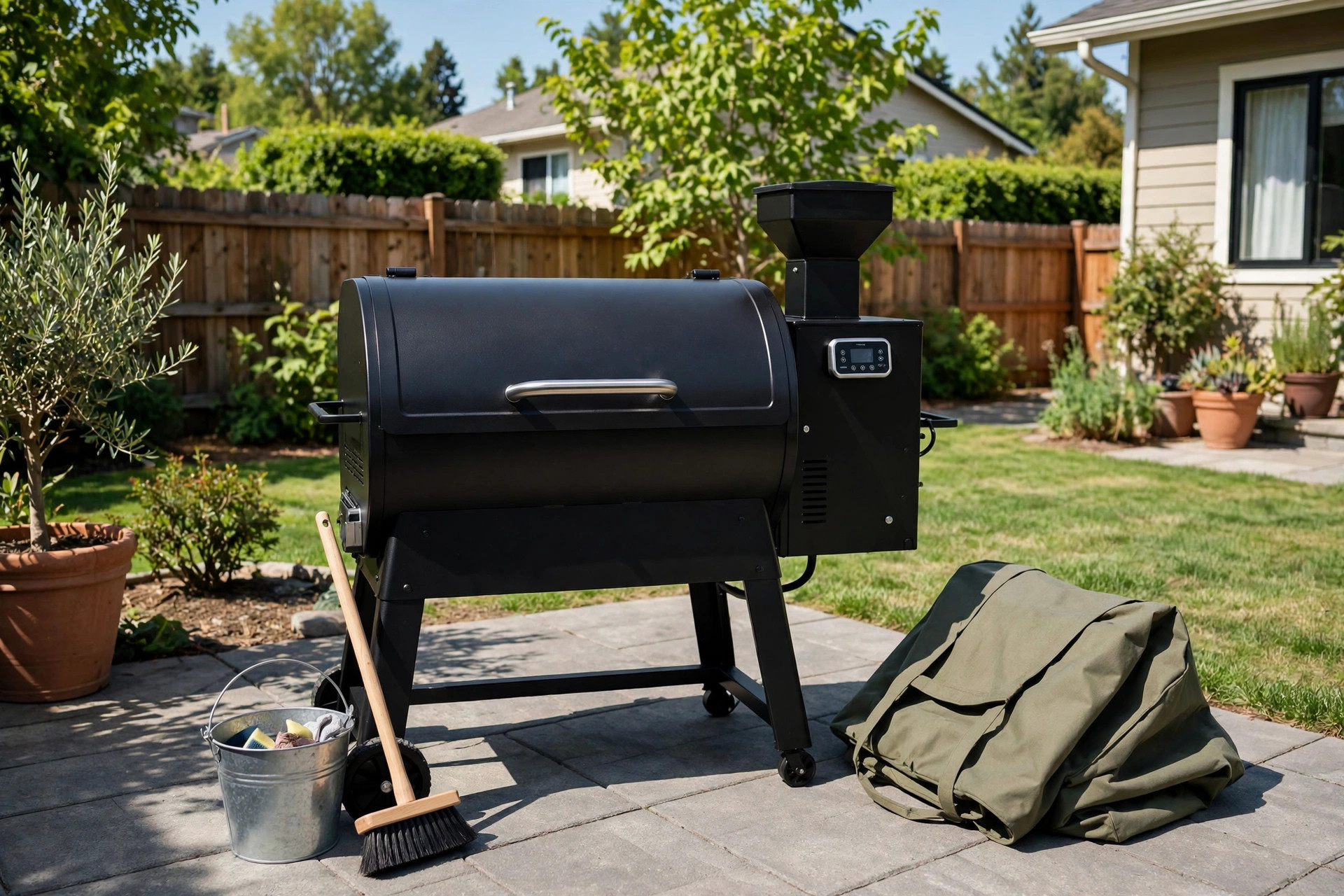

A pellet grill is one of the easiest ways to cook with real wood smoke. It feeds wood pellets into a fire pot, and a fan keeps the heat steady. You set the temperature, and the grill does the rest. But like any machine with fire and moving parts, it needs care. These pellet grill maintenance tips for beginners will help you keep your grill clean, safe, and in good working order. The steps are simple. Most take only a few minutes. If you follow them, your grill will last many years and your food will taste better too.
Why Maintenance Matters
A dirty pellet grill is not just ugly. It can cause real problems. Ash builds up in the burn pot. Grease collects on the heat shield. Old pellets turn to dust and jam the auger. When these things happen, the grill may not light. It may burn uneven. In the worst case, built-up grease can catch fire.
Good care also keeps your food tasting right. Old ash gives off a bitter smell. Rancid grease leaves a bad taste on meat. A clean grill cooks cleaner and gives you the true wood flavor you paid for. Many new owners learn this the hard way after a few cooks. A small habit of care after each cook will save you from big trouble later.
If you are still deciding what to buy, it helps to read a pellet grill vs gas grill pros cons guide first. Pellet grills need a little more upkeep than gas grills. The reward is easy smoke flavor. Either choice works well when you care for it.
What You Will Need: Pellet Grill Maintenance Tips for Beginners
You do not need fancy tools. A basic kit will cover most jobs. Here is what to keep near your grill.
– A stiff wire brush for the grates – A plastic scraper or putty knife for grease – A shop vacuum or small ash vacuum – A soft brush or paintbrush for dust – Food-safe degreaser or a vinegar and water mix – A drip bucket liner or foil for the grease bucket – A good grill cover
Major grill brands such as Traeger sell cleaning kits made for pellet grills. Big box stores like Home Depot also carry grill brushes, covers, and vacuums in one trip. A good resource for cook techniques, AmazingRibs, explains why a clean cooker is the first step to good barbecue. Independent test groups like Consumer Reports also note that regular cleaning is one of the main factors in how long a grill lasts.
Know the Main Parts of Your Pellet Grill
Before you clean, learn the parts. There are five areas to know.
1. The hopper. This is the box that holds the wood pellets. It feeds them down into the auger. 2. The auger. This is a long screw that turns and pushes pellets into the fire pot. 3. The burn pot (fire pot). This is where the pellets burn. Ash collects here. 4. The heat shield and drip tray. These sit above the fire. They spread heat and catch grease. 5. The grease bucket. This hangs on the side and collects drippings.
Once you can name each part, the care steps will make sense. A manual from a maker like Weber or Napoleon will show a diagram of these parts. Keep your manual in a dry place.
After Every Cook: The Quick Clean
This is the most important habit. It takes about ten minutes. Do it while the grill is still warm, not hot.
1. Turn the grill to its shutdown cycle. Most pellet grills have one. It burns off extra pellets. 2. When the grates are warm, brush them with the wire brush. Use long, even strokes. 3. Scrape the drip tray lightly with the plastic scraper. Push loose grease toward the bucket. 4. Empty the grease bucket if it is more than half full. Wipe the rim clean. 5. Close the lid and let the grill cool.
A food writer at The Spruce Eats points out that warm grates clean much faster than cold ones. Make this quick clean a habit, and the deeper cleans will be easy. This is the single best piece of pellet grill maintenance advice for beginners.
Every Few Cooks: Cleaning the Burn Pot
Ash builds up in the burn pot after each cook. Too much ash chokes the fire. The grill may fail to light, or the temperature may swing up and down.
Wait until the grill is fully cool. Lift out the grates, the drip tray, and the heat shield. Scoop the ash from the burn pot. A shop vacuum makes this fast. A small brush works fine too. Look into the auger tube. If you see dust or broken pellets, brush them out. Put the parts back in place.
How often? About every three to five cooks for most grills. If you cook long smokes, like a full brisket, clean the pot after each long cook. Readers who plan to try long cooks may like this guide on how to smoke brisket on a pellet grill. A clean burn pot is what keeps a twelve-hour cook steady.
Hopper Care and Pellet Storage
Pellets do not like water. Wet pellets swell, crumble, and turn into a paste that jams the auger. This is one of the most common beginner mistakes.
Keep your hopper dry. If rain is coming, cover the grill. Do not leave pellets in the hopper for weeks in damp weather. Many owners empty the hopper after each cook in humid months. Store pellets in a sealed bucket with a lid. Keep the bucket in a dry garage or shed.
Once a month, run the hopper low and vacuum out the dust at the bottom. Pellet dust feeds jams. Quality brands, from Char-Broil to Big Green Egg, all warn against damp pellets in their manuals. Dry pellets flow well. Damp pellets cause trouble.
Types of Cleaning: Quick, Deep, and Seasonal
It helps to think of care in three levels.
Quick clean. After every cook. Brush the grates, scrape the tray, check the grease bucket. Ten minutes.
Deep clean. Every month or so, or every five to ten cooks. Vacuum the burn pot, wipe the inside walls, clean the temperature probe, wash the grates with warm soapy water. An hour at most.
Seasonal check. At the start and end of the grilling season. Inspect the power cord, the auger, the fan, and the igniter rod. Tighten loose screws. Check the gasket around the lid. Oil any bare metal spots if your manual calls for it.
Some owners write these dates on a card and tape it inside the hopper lid. A simple schedule beats a perfect memory. The Broil King site also notes that seasonal checks catch small wear before it becomes a repair bill.
Cost and Price of Upkeep
Pellet grill care is not costly. A wire brush costs a few dollars. A small shop vacuum can be bought for the price of two bags of pellets. Grill covers range from low cost to high cost, but even a basic cover protects your grill from rain and sun.
Pellets are the main running cost. A twenty-pound bag is the common size. How fast you use it depends on the temperature. Low and slow smoking uses fewer pellets than high heat grilling. Buying pellets in bulk can cut the price per pound. Store brands and premium brands both work, but avoid old bags that feel soft or crumbly.
Budget a little each year for wear parts. Igniter rods and temperature probes wear out over time. They are not costly, and most are easy to replace with a screwdriver. Keeping spare drip bucket liners on hand saves many small messes.
Care and Upkeep Through the Year
Spring. Start the season with a full deep clean. Check the auger for old pellets left from last year. Old pellets may have gone soft over winter. Clear them out and start fresh.
Summer. This is peak season. Keep up the quick cleans. Empty the grease bucket often in hot weather, since grease goes rancid faster in heat. Keep the grill covered between cooks.
Fall. Leaves and dust blow into open grills. Cover the grill when not in use. Do a deep clean before the cold sets in.
Winter. If you grill in winter, keep pellets extra dry. Cold air holds dampness. If you store the grill for winter, empty the hopper fully, clean the burn pot, and cover the grill well. A grill stored dirty in winter is a grill with problems in spring.
Safety Rules Every Beginner Must Know
Fire safety comes first. Pellet grills are safe when used right, but they are still fire.
– Place the grill on a flat, non-flammable surface. Keep it away from wood decks rails, siding, and overhangs. – Never leave a lit grill fully unattended for long stretches. – Keep a fire extinguisher or a box of baking soda nearby. Never use water on a grease fire. – Let the grill cool fully before covering it. A cover on a hot grill traps heat. – Keep children and pets away from the hot grill. – If you see thick black smoke or flames outside the fire pot, shut the grill down and let it cool. Clean it before the next cook.
Grease fires are rare in clean grills. They are much more common in dirty ones. This is another reason the quick clean matters so much. A related guide on how to clean gas grill burners properly shows how grease causes trouble in gas grills too. The lesson is the same across all grill types: clean grills are safe grills.
Common Beginner Mistakes
Watch out for these errors. Almost every new owner makes at least one.
– Skipping the shutdown cycle. The shutdown cycle burns leftover pellets safely. Skipping it leaves fuel in the pot. – Using wet or old pellets. They jam the auger and make thick, bitter smoke. – Never vacuuming the burn pot. Ash builds up until the grill will not light. – Letting the grease bucket overflow. Old grease is a fire risk and tastes bad. – Covering a hot grill. Trapped heat can warp parts and melt the cover. – Ignoring the temperature probe. A dirty probe reads wrong. Wipe it clean each month.
Fix these six, and you are ahead of most beginners.
FAQ
How often should I clean my pellet grill? Do a quick clean after every cook. Vacuum the burn pot every three to five cooks. Do a full deep clean once a month in grilling season. A seasonal check at spring and fall keeps parts in good shape.
Can I leave pellets in the hopper between cooks? Yes, if the weather is dry and you cook often. In damp or humid weather, it is safer to empty the hopper after each cook. Always store extra pellets in a sealed, dry container.
What causes a pellet grill to stop lighting? The most common cause is ash in the burn pot. The second most common is damp pellets or a jammed auger. Clean the pot, check that pellets are dry and flowing, and try again. If the igniter rod is worn out, it may need replacement.
Is it safe to use a shop vacuum on grill ash? Yes, once the ash is fully cool. Never vacuum warm ash. Make sure the vacuum has a clean filter. Some owners buy a small ash vacuum made for grills and fireplaces. It handles fine ash well.
How do I stop grease fires in my pellet grill? Keep the drip tray scraped and the grease bucket emptied. Line the bucket with foil for easy cleanup. Cook fatty meats with a drip pan when you can. If a grease fire starts, shut the grill down, keep the lid closed, and never pour water on it.
How long should a pellet grill last? With good care, a quality pellet grill can last five to ten years or more. The parts that wear out first are usually the igniter rod and the temperature probe. Both are replaceable. Regular cleaning is the biggest factor in a long life.
A Short Final Word
A pellet grill rewards simple habits. Brush the grates. Empty the pot. Keep pellets dry. Watch the grease. None of this is hard. Each step takes minutes. Together they keep your grill safe, your food tasting clean, and your machine running for years. Start with the quick clean after your next cook. Make it a habit. The rest will follow.
References
AmazingRibs.com. (n.d.). Barbecue and grilling science. https://www.amazingribs.com Big Green Egg. (n.d.). Kamado grills and outdoor cooking. https://www.biggreenegg.com Broil King. (n.d.). Gas and charcoal grills. https://www.broilkingbbq.com Char-Broil. (n.d.). Gas and charcoal grills. https://www.charbroil.com Consumer Reports. (n.d.). Product reviews and ratings. https://www.consumerreports.org Napoleon. (n.d.). Fireplaces, grills, and heating products. https://www.napoleon.com The Home Depot. (n.d.). Home improvement products. https://www.homedepot.com The Spruce Eats. (n.d.). Recipes and cooking guides. https://www.thespruceeats.com Traeger. (n.d.). Wood pellet grills. https://www.traeger.com Weber. (n.d.). Grills and outdoor cooking. https://www.weber.com
Was this guide helpful?

About David Wilson
The My Garden US editorial team writes practical, in-depth home and garden guides for American homeowners — tested advice, no fluff.
You May Also Like
How to Smoke Cheese on Pellet Grill: A Plain Guide for Home Cooks
August 10, 2026 0 views
How to Store Your Grill for Winter Outdoors
March 10, 2026 0 views
Best Grill for Small Patio Reviews: How to Pick a Compact Grill That Cooks Well
April 2, 2026 0 views