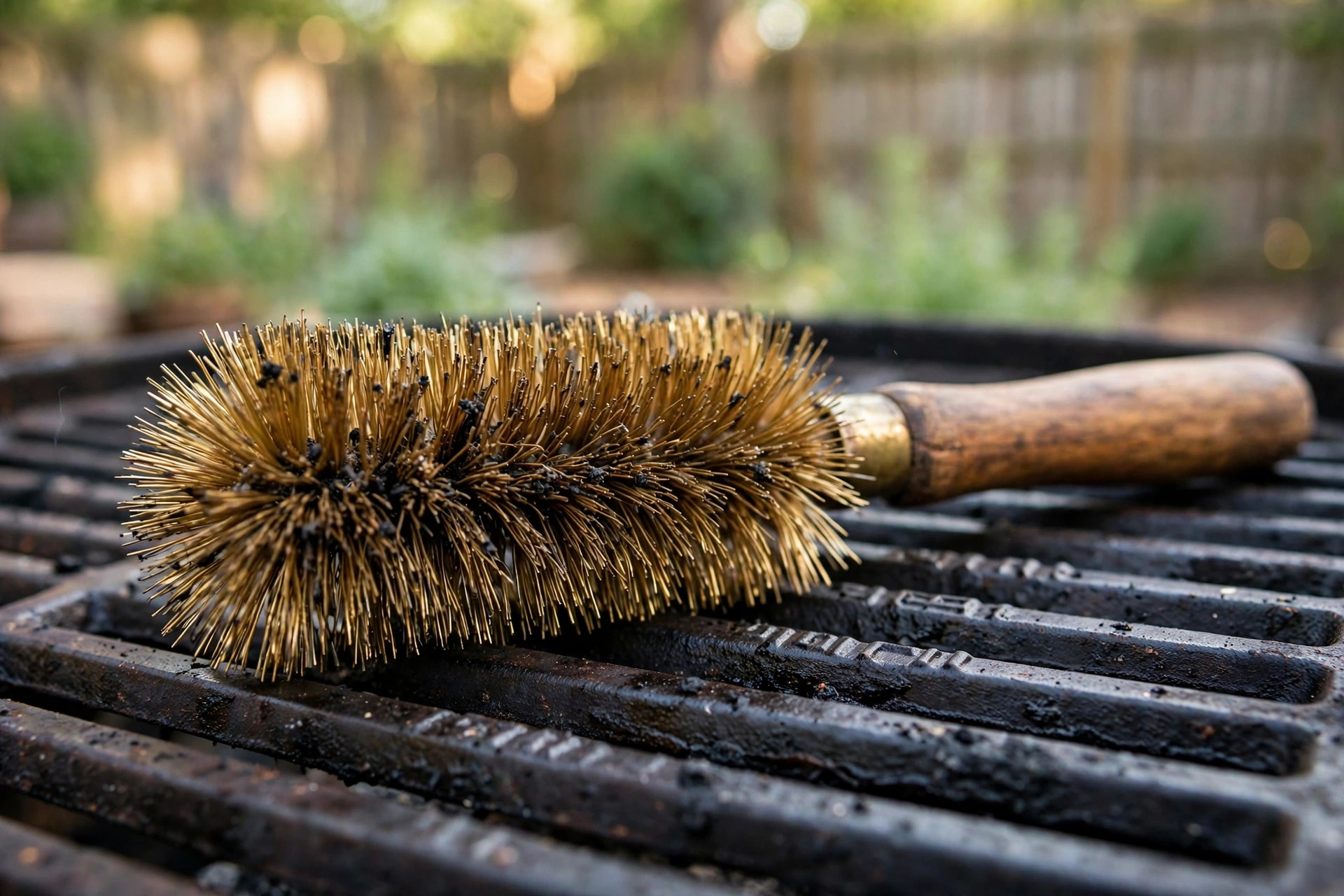

A clean grate is the start of a good cookout. Old grease, burnt food, and black flakes build up on cast iron grates every time a grill is used. Left alone, this crust can stick to fresh food and give it a bitter taste. That is why so many grill owners search for the best grill brush for cast iron grates. The right brush takes the hard work out of cleaning, protects the seasoning on the iron, and keeps every meal tasting the way it should.
Why a Good Brush Matters
Cast iron grates are prized for the dark sear marks they give steaks and burgers. The iron holds heat well and spreads it in an even way. But the same rough surface that makes great sear marks also grabs food. Grease seeps into the pores of the metal. Sauce burns onto the bars. Without regular scrubbing, the grate grows a thick layer of carbon that no quick wipe can remove.
A proper brush reaches into the grooves between the bars. It knocks loose the stuck bits while the grate is still warm. A weak brush bends or sheds its bristles. A strong brush cuts through the crust with a few firm strokes. Over time, good brushing even helps the seasoning. Each clean leaves the surface smooth, so the next coat of oil bonds well and food sticks less.
There is also a health angle. Old grease that sits on a grate can smoke heavily on the next cook, coating fresh food in bitter soot. Flakes of burnt crust can break free and land on the meat. Regular brushing keeps the cooking surface clean and makes every meal start fresh.
Types of Grill Brushes: Best Grill Brush for Cast Iron Grates
Not all brushes clean the same way. Each type has its strengths and its limits. Knowing the main types helps a buyer choose the best grill brush for cast iron grates with confidence.
Wire Bristle Brushes
The classic grill brush uses stiff metal bristles held in a wooden or metal head. Brass bristles are softer than steel and suit cast iron well, since they are less likely to scratch the seasoned surface. Steel bristles cut harder but can wear the seasoning thin if used with too much force. Look for bristles set thick and tight, so they do not pull out under pressure.
Bristle-Free Brushes
A newer design replaces wire with a coil or mesh of metal. The looped metal scrapes the grate much like a grill stone but with finer control. Many cooks favor these because there is no risk of a loose bristle ending up in food. They clean well, though they can cost more than a plain wire brush.
Grill Stones
Pumice-style grill stones are simple blocks that grind away burnt crust. They shape themselves to the bars as they are used. They work on heavy buildup, but they leave dust and crumble with use. They suit an occasional deep clean more than daily brushing.
Wooden Scrape Paddles
A flat wooden paddle chars over time to match the exact shape of the grate bars. Once worn in, it fits the grooves like a key in a lock. It has no bristles at all, so there is nothing to shed. The wood wears down slowly and must be replaced after a season or two of hard use.
What to Look For
Several points separate a good brush from a poor one. Consider each before buying.
Bristle strength and safety. Bristles should be firm, even, and set deep in the head. A quick test in the store helps: press the head against the palm of the hand and twist. Loose bristles will show themselves at once. Many grillers now prefer bristle-free heads for safety, and guides on safe grilling practices explain why loose wire has become a real concern.
Handle length. A handle of 12 to 18 inches keeps hands clear of the heat. Longer handles suit large grills and hot fires. Shorter ones give more control on small grills. A hanging loop is a small but useful touch, since it lets the brush live on a hook beside the grill.
Head width. A wide head covers more grate per stroke. A narrow head reaches into tight corners and between narrow bars. Cast iron grates with thick round bars clean well with a brush whose head is shaped to grip the bar from both sides.
Heat tolerance. Brushes are used on hot grates, often above 400 degrees. Wooden handles can char but stand up well to heat. Plastic parts may soften, so a brush with metal fittings tends to last longer near a live fire.
Fit for the grate style. Cast iron grates come with round bars, flat bars, or porcelain coating over iron. The best grill brush for cast iron grates should match the bar shape. Round-bar grates clean best with a brush that wraps the curve. Flat-bar grates need a broad, flat scrubbing face.
For more on how grill makers design their grates, the Weber grill care library offers clear advice on brush choice and grate upkeep.
Cost and Price
Grill brushes span a wide price range. A simple wire brush with a wooden handle often sells for five to ten dollars. Mid-range brushes with thicker bristles or shaped heads run from ten to twenty dollars. Bristle-free coil brushes and premium models from known grill brands can reach twenty to thirty dollars or more.
Price is not the whole story. A cheap brush that sheds bristles after a month is a poor bargain. A well-made brush that lasts two or three seasons costs less per use. Replacement heads are worth a look too: some brands sell the head alone, so the long handle need not be thrown away when the bristles wear down.
Bundles are another smart buy. Some makers sell a brush with a grill stone and a grease scraper in one box. Buying the set costs less than buying each tool alone, and the tools work well together on a neglected grate. For owners of several grills, one long-handled brush can serve them all, since the same cleaning method works on gas, charcoal, and pellet grills alike.
How to Clean Cast Iron Grates the Right Way
The right method matters as much as the right brush. Follow these steps after each cook.
First, leave the grill closed and the heat on for ten minutes after the food comes off. The heat burns loose food to ash. Next, open the lid and scrape the warm grates with firm, even strokes along the bars, not across them. A long stroke in the direction of the bar cleans the grooves best.
Then wipe the bars with a cloth or paper towel held in tongs, dipped in a light coat of cooking oil. This feeds the seasoning while the iron is still warm. Some cooks prefer to brush again after oiling to work the oil into the pores. Guidance from Big Green Egg grilling tips follows this same warm-grate routine for cast iron.
Deep cleans come a few times a season. For thick crust, a grill stone or a long soak in hot soapy water may be needed. Dry the grates at once on a warm grill so rust never gets a start.
Care and Upkeep of the Brush Itself
A brush needs its own care. Rinse it after use to wash out grease and ash. Shake it dry and hang it by its loop. Never leave it lying on a damp shelf, since wood swells and metal rusts in damp air.
Check the bristles now and then. Pull the head gently with a gloved hand. If bristles come free, replace the brush. A worn head also tells its own story: when the bristles splay outward or wear to stubs, cleaning power is gone. Stores like The Home Depot grill department stock replacement heads and new brushes for every grate style.
With care, a good brush serves for years. Keep it dry, hang it up, and it will be ready for the next cookout.
Safety
Safety comes first at the grill, and the brush plays a part. Loose wire bristles have caused real injuries when they break off and end up in food. To lower the risk, inspect the brush before each use and replace it at the first sign of shedding. Bristle-free designs remove the risk entirely and are worth the extra cost for cooks with children.
Heat burns are the other common risk. Always wear a heat glove on the brushing hand. Keep the handle dry, since a wet wooden handle can steam and burn. Brush only when the fire is under control and the grill stands on level ground. More safety reading is available in the Char-Broil grill safety guides.
Cleaning Your Grill Between Cooks
A clean brush pairs with a clean grill. Grease trays, drip pans, and burner covers all gather grime that can smoke and flare. Empty the ash from charcoal grills after each use, and check gas lines and burners at the start of each season.
A full outdoor cooking setup may include more than a brush. Home cooks building out their patio often read small patio grill reviews and natural gas grill guides to match their gear to their space, while steak lovers check infrared grill reviews for steaks before settling on a grill type. Pairing the right grill with the best grill brush for cast iron grates makes upkeep simple.
FAQ
How often should I replace my grill brush?
Most wire brushes last one to three seasons with regular use. Replace the brush when bristles loosen, splay, or wear short. A bristle-free brush often lasts longer, since it has no bristles to shed.
Can a wire brush damage cast iron grates?
It can if used with heavy force on soft brass-free seasoning. Use firm but even strokes and let the heat do most of the work. Brass bristles are gentler on cast iron than steel. Bristle-free and wooden tools are gentlest of all.
Should I clean the grates hot or cold?
Hot cleaning works best. Heat turns stuck food to ash and softens grease. Brush the grates while they are hot, then oil them while warm. Cold grates need far more force and leave more behind.
What is the safest type of grill brush?
A bristle-free brush or a wooden scrape paddle carries no risk of loose wire. Both clean well once worn in. If using a wire brush, inspect it before every cook and replace it at once if bristles loosen.
Does oiling the grates after brushing really help?
Yes. A light coat of oil on warm iron feeds the seasoning and keeps food from sticking. Wipe it on thin with a cloth held in tongs. Too much oil can go rancid, so a thin coat is best.
Where can I learn more about grill care?
Grill makers publish helpful guides. The Napoleon grill care pages and the Traeger grilling resources both cover brush choice, and AmazingRibs offers deep dives into grill science for the curious cook.
A Short Final Word
Choosing the best grill brush for cast iron grates is a small task with a big payoff. A strong, safe brush keeps grates clean, protects seasoning, and guards the flavor of every meal. Pick a design that fits the grate, mind the safety rules, and brush while the iron is warm. The grill will thank you with better food for years to come.
References
AmazingRibs.com. (n.d.). Barbecue and grilling science. https://www.amazingribs.com Big Green Egg. (n.d.). Kamado grills and outdoor cooking. https://www.biggreenegg.com Char-Broil. (n.d.). Gas and charcoal grills. https://www.charbroil.com Consumer Reports. (n.d.). Product reviews and ratings. https://www.consumerreports.org Napoleon. (n.d.). Fireplaces, grills, and heating products. https://www.napoleon.com The Home Depot. (n.d.). Home improvement products. https://www.homedepot.com Traeger. (n.d.). Wood pellet grills. https://www.traeger.com Weber. (n.d.). Grills and outdoor cooking. https://www.weber.com
Was this guide helpful?

About Jennifer Lee
The My Garden US editorial team writes practical, in-depth home and garden guides for American homeowners — tested advice, no fluff.
You May Also Like

Pellet Grill Sale Near Me Deals: A Smart Buyer Guide
January 11, 2026 0 views
Best Infrared Grill for Steaks Reviews: How to Find Your Perfect Sear
May 7, 2026 0 views
The Best BBQ for Birthday Party Backyard Cookouts
January 5, 2026 0 views