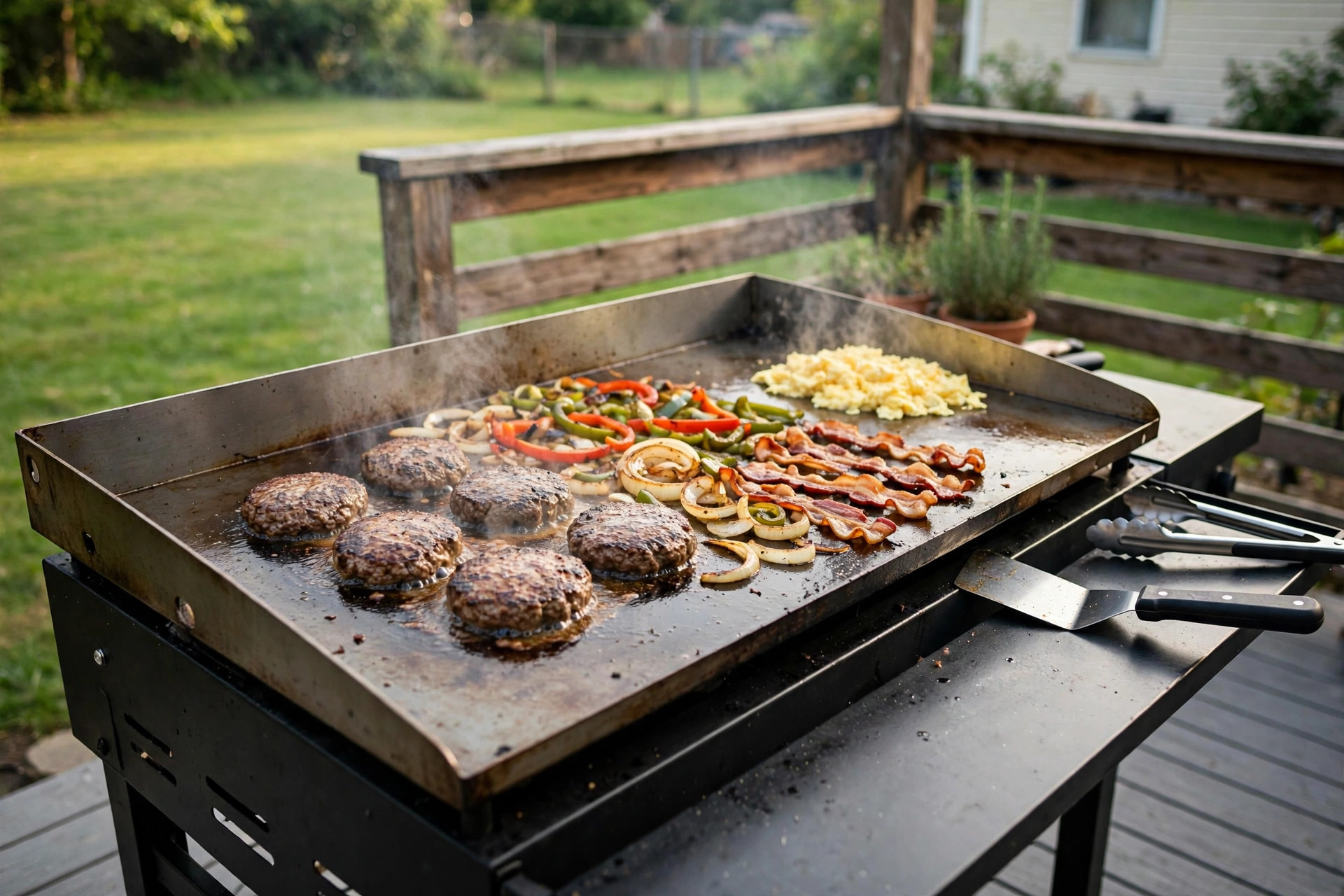
An outdoor griddle is a flat sheet of hot steel set over gas burners. It works like the giant grill top you see in a diner kitchen, but it sits in your own backyard. For a new cook, outdoor griddle recipes for beginners are the fastest way to learn real heat control. Food does not fall through grates. Flames do not flare up and burn the meal. You can see everything, move everything, and fix mistakes while they happen.
This guide covers the basics. You will learn how to pick your first griddle, how to season it, and how to cook ten simple meals that rarely go wrong. Each recipe uses short steps and common groceries. By the end, you will know enough to feed a family on a Saturday afternoon without stress.
Why Cooking on a Griddle Matters for New Cooks
A regular grill cooks with open flame and thin metal grates. Food must be thick or firm or it slips through. A griddle cooks with a solid steel plate. Heat spreads evenly across the whole surface. This one change makes cooking far more forgiving.
Small foods stay put. Diced potatoes, sliced onions, and shrimp cook fine on steel. Eggs fry flat and even. Rice crisps at the edges. You can cook a full breakfast at once: bacon on the left, eggs in the middle, and hash browns on the right. Few other outdoor cookers can do that.
The surface also holds oil and juices. Food browns well instead of drying out. A smash burger forms a crisp, dark crust in about three minutes. Chicken strips stay juicy because the heat is steady. For a beginner, steady heat is the best teacher. You learn what done looks like without fighting hot spots.
Cleanup is simple too. After cooking, you scrape the plate, wipe it with oil, and it is ready for the next meal. There are no grates to scrub and no ash to dump.
What to Look for in Your First Outdoor Griddle: Outdoor Griddle Recipes for Beginners
You do not need the largest or most costly model to start. A simple four-burner unit or a griddle top that fits an existing gas grill will serve you well. Focus on a few key points before you buy.
Size and Burners
A 28-inch griddle fits most families. It gives you enough room for two zones: a hot side and a cooler side. Two-burner models are smaller and cheaper, but they heat less evenly. Four burners give the best control. Read griddle reviews and compare griddle models before you decide. If you want a full setup built into your patio, read our guide on the best flat top grill for outdoor kitchen to see which layouts work best.
Surface and Seasoning
Most griddles use cold-rolled steel or cast iron. Both need seasoning. Seasoning is a thin layer of baked-on oil that stops rust and keeps food from sticking. Many new griddles arrive pre-seasoned. Even so, a few extra layers at home make the surface far better. If you already own cast iron gear, the steps are close to those in our guide on how to season cast iron grill grates.
Useful Accessories
Buy two long spatulas, one with a straight edge and one with a beveled edge. Add a bench scraper, a pair of long tongs, and a squeeze bottle for oil and water. A simple dome lid helps melt cheese and steam vegetables. Check griddle accessories for the full set of tools.
Getting Ready: Seasoning and First Heat
Seasoning takes about an hour, and it is the most important first task. Wash the cold griddle with warm water and a little soap. Dry it fully with towels. Heat it on high until the steel turns slightly dark. Turn the burners down to medium.
Pour a tablespoon of high-heat oil on the plate. Flaxseed oil works well, and so does canola or vegetable oil. Spread a thin, even layer with paper towels held in tongs. Let it smoke for fifteen minutes. Repeat this four or five times. The surface will turn brown, then dark bronze, then near black. That color means the seasoning is building.
For your first cook, start simple. Heat the griddle for ten minutes on medium. Flick a few drops of water on the steel. If they dance and vanish, the plate is ready. If they sit and boil slowly, give it more time. Beginners often cook on heat that is too low, which steams food instead of browning it. Learn from flat top griddle tips and griddle cooking guides to get the feel right faster.
Easy Outdoor Griddle Recipes for Beginners
These ten recipes are listed from simplest to hardest. Each uses basic skills: oil, heat, salt, and timing. Master them in order and you will handle most griddle cooking.
1. Grilled Cheese Sandwiches
Butter the outside of two bread slices. Place cheese between them. Cook on medium heat for two minutes per side. The bread turns golden and crisp. This recipe teaches you how heat moves across the plate.
2. Breakfast Bacon and Eggs
Lay bacon strips on medium-high heat. Cook for three minutes, then flip. Push the bacon to the cool side. Crack eggs into the hot bacon fat. Fry two minutes for runny yolks or four for firm. Serve with toast made on the same plate.
3. Smash Burgers
Form loose balls of ground beef, about four ounces each. Heat the griddle to high. Place a ball on the plate and smash it flat with a heavy spatula. Season with salt and pepper. Cook two minutes, flip, add cheese, and cook one more minute. The crust is thin and crisp. For extra flavor, toss on a pinch of a best bbq rub for ribs homemade blend before the flip. Serve on toasted buns with pickles.
4. Chicken and Vegetable Stir Fry
Cut chicken breast into thin strips. Slice bell peppers, onions, and zucchini. Heat oil on high. Cook the chicken for four minutes, stirring often. Move it to the cool side. Cook the vegetables on the hot side for three minutes. Mix everything together and add soy sauce. Serve over rice.
5. Quesadillas
Place a flour tortilla on medium heat. Cover half with shredded cheese and cooked chicken or beans. Fold the tortilla over. Cook two minutes per side until the cheese melts and the outside crisps. Cut into wedges.
6. Philly Cheesesteak
Freeze a ribeye steak for 30 minutes so it slices thin. Cut it into thin strips. Cook sliced onions and peppers on high heat for four minutes. Push them aside and cook the steak strips for two minutes. Pile the meat and vegetables together, top with provolone, and cover with a dome lid for one minute to melt. Scoop into a hoagie roll.
7. Fried Rice
Day-old rice works best because it is dry. Heat oil on high. Cook diced carrots and peas for two minutes. Push them aside. Scramble two eggs on the plate. Add the rice and press it flat. Let it sit one minute so the bottom crisps. Stir in soy sauce and the vegetables. This recipe teaches patience: do not stir too much.
8. Steak Tips with Onions
Cut sirloin into one-inch cubes. Heat the griddle to high. Sear the cubes for two minutes, then turn them. Add thick onion rings and cook three more minutes. Season with salt, pepper, and garlic powder. The outside browns deep while the inside stays pink.
9. Blackened Shrimp Tacos
Toss peeled shrimp with oil and blackening spice. Cook on high heat for two minutes per side. The shrimp curl and turn pink with dark edges. Serve in warm tortillas with slaw and lime. Small and fast, this recipe rewards bold heat.
10. Breakfast Hash with Potatoes and Peppers
Dice potatoes small so they cook through. Cook them on medium heat in oil for eight minutes, turning rarely. Add diced peppers and onions and cook five more minutes. Make wells in the hash and crack an egg into each. Cover with a dome lid and cook three minutes. This is the hardest recipe here, but it feeds a crowd from one plate.
Browse step-by-step recipes and outdoor cooking ideas for more dishes to try as your skills grow.
Heat Zones and Timing Basics
A griddle is not one temperature. The center runs hottest. The edges run cooler. Use this to your advantage. Sear meat in the middle. Keep finished food warm at the edges. Resting food there stays hot without overcooking.
Learn the hand test for a quick read. Hold your palm six inches above the plate. If you pull away in two seconds, the heat is high. Four seconds means medium. Six seconds means low. A temperature guidance chart from a barbecue site can help you match foods to heat levels.
Preheat for a full ten minutes. Cold steel sticks. Hot steel sears. Oil the plate just before food goes down, not during preheat. Thin oil, hot plate, dry food: those three rules fix most sticking problems.
Timing matters more than recipe books suggest. Write down your times for each meal. A notebook by the griddle is worth more than any app. After ten cooks, you will feel the timing without looking.
Cost and Price
A beginner griddle setup costs less than many people expect. A solid four-burner flat top unit runs between 250 and 450 dollars. Smaller two-burner models cost 150 to 250 dollars. A griddle top that converts an existing gas grill costs 80 to 180 dollars.
Accessories add 50 to 100 dollars for the full tool set. Propane is the main running cost. A standard 20-pound tank lasts about eight to twelve cooking sessions.
Grocery costs stay low because these recipes use plain ingredients. Ground beef, chicken, potatoes, and tortillas are cheap. Your first ten cooks will cost far less than eating out ten times. Compare prices at flat top cooking retailers and read griddle buying advice before you shop.
Care and Upkeep
Clean the griddle while it is still warm. Scrape food bits into the grease tray with the flat spatula. Pour a little water on stubborn spots and scrape again. Wipe the plate with a thin layer of oil to stop rust. Never soak a steel griddle and never leave it wet overnight.
Store the unit with its cover on. Wind and rain cause rust faster than cooking does. Check the propane hose for cracks once a season. Tighten loose burner knobs. Empty the grease tray after every cook so it does not overflow.
Re-season when food starts to stick in patches. One fresh layer of oil, heated until it smokes, usually fixes it. A well-kept griddle lasts ten years or more. The plate gets better with age as the seasoning builds.
Safety
A griddle reaches 500 degrees or more. Treat it with respect. Keep children and pets at least three feet away. Use long tools so your hands stay clear of the heat. Wear closed shoes, not sandals, when you cook.
Set the griddle on a flat, stable surface away from walls and railings. Never use it under a low roof or inside a garage. Propane needs open air. Check connections with soapy water: bubbles mean a leak. Turn off the tank first, then the burners, when you finish cooking.
Grease fires are rare on a griddle but possible. If flames rise, turn off the burners and cover the food with the dome lid. Never throw water on a grease fire. Keep a small fire extinguisher rated for grease within reach of your cooking area.
Frequently Asked Questions
Do I need to season a new griddle before the first cook? Yes. Even pre-seasoned models cook better with two or three extra layers of oil baked on at home. Seasoning stops rust and keeps food from sticking. It takes about an hour and you only do the full job once.
What oil is best for griddle cooking? Use oils with a high smoke point. Canola, vegetable, avocado, and flaxseed oil all work well. Olive oil burns too fast for high-heat searing. Save it for finishing or low-heat cooking.
Why does food stick to my griddle? Three causes cover most cases. The plate was not hot enough. The surface needs more seasoning. Or the food was wet when it hit the steel. Pat meat dry, preheat ten minutes, and oil the plate just before cooking.
Can I cook fish on an outdoor griddle? Yes, and it is easier than on grates. Firm fish like salmon and tuna sear well on a hot, oiled plate. Delicate white fish benefits from a little extra oil. Cook skin-side down first and flip only once.
How do I stop my griddle from rusting? Oil the plate lightly after every cook while it is still warm. Keep the cover on between uses. Store it in a dry spot. If rust spots appear, scrub them with a grill stone and re-season that area.
Is a griddle better than a grill for beginners? For most new cooks, yes. A flat steel plate is more forgiving than open grates. Food stays put, heat is even, and cleanup is simpler. Many cooks keep both, but a griddle is the easier place to start.
A Final Word
An outdoor griddle rewards simple habits. Heat it well. Oil it lightly. Keep your food moving. These three habits cover almost every meal in this guide. Start with grilled cheese and work your way to the breakfast hash. Each cook builds your feel for the steel.
Outdoor griddle recipes for beginners are not about fancy technique. They are about feeding people good food outside, on a warm evening, with smoke in the air and a full plate in front of them. Light the burners, pick one recipe, and start cooking.
References
AmazingRibs.com. (n.d.). Barbecue and grilling science. https://www.amazingribs.com Big Green Egg. (n.d.). Kamado grills and outdoor cooking. https://www.biggreenegg.com Broil King. (n.d.). Gas and charcoal grills. https://www.broilkingbbq.com Char-Broil. (n.d.). Gas and charcoal grills. https://www.charbroil.com Consumer Reports. (n.d.). Product reviews and ratings. https://www.consumerreports.org Napoleon. (n.d.). Fireplaces, grills, and heating products. https://www.napoleon.com The Home Depot. (n.d.). Home improvement products. https://www.homedepot.com The Spruce Eats. (n.d.). Recipes and cooking guides. https://www.thespruceeats.com Traeger. (n.d.). Wood pellet grills. https://www.traeger.com Weber. (n.d.). Grills and outdoor cooking. https://www.weber.com
Was this guide helpful?

About Michael Thompson
The My Garden US editorial team writes practical, in-depth home and garden guides for American homeowners — tested advice, no fluff.