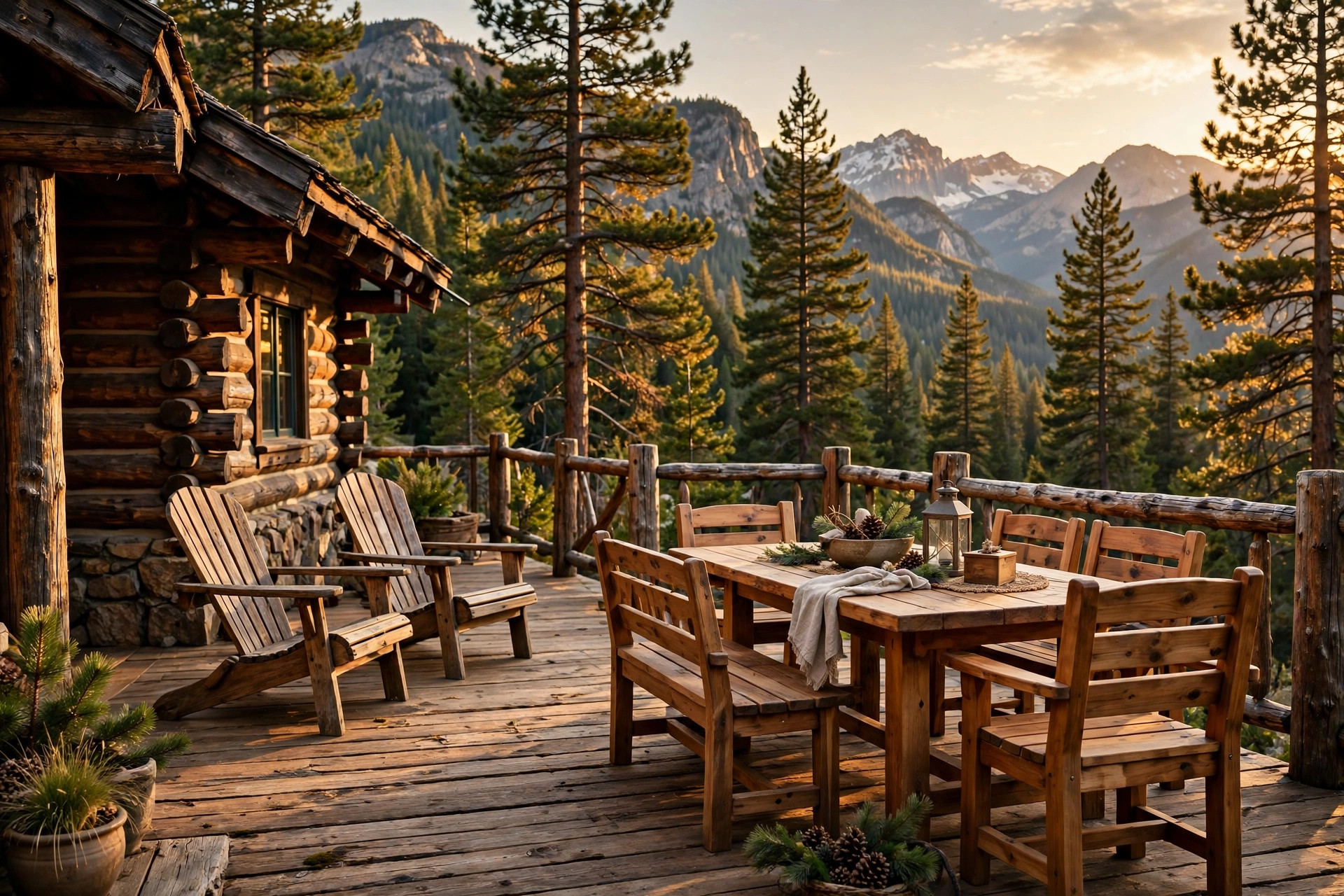

A mountain cabin is a place for quiet mornings and cool nights. The best outdoor furniture for mountain cabin living must handle rough weather and rough ground. Snow, wind, rain, and strong sun all hit a cabin deck hard. Soft city furniture will not last there. You need pieces built for mountain life.
This guide explains what to buy, what to avoid, and how to care for it. It covers decks, porches, fire pits, and patios. It gives real price ranges. It answers common questions. By the end, you will know exactly how to pick the best outdoor furniture for mountain cabin use.
Why Mountain Cabin Furniture Is Different
A cabin sits high up. The weather there is harder than in town. Snow piles deep in winter. Ice forms on decks. Summer sun is strong at high altitude. Rain comes fast and hard. Wind can knock light chairs over.
Cabin life is also rough on furniture in daily use. Guests drag chairs across rough wood decks. Dogs jump on cushions. Fire pit sparks land on tables. Muddy boots scrape legs and arms.
The best outdoor furniture for mountain cabin settings stands up to all of this. It is heavy. It is weatherproof. It is easy to clean. It looks right next to log walls and stone chimneys.
Many owners make one big mistake. They buy the cheapest set they can find. The set breaks in two years. Then they buy again. In the end they spend more than if they had bought good furniture once. Buy well the first time.
What to Look for When Choosing Cabin Furniture: Best Outdoor Furniture for Mountain Cabin
Weight and Stability
Mountain wind is no joke. A gust can blow across a ridge at fifty miles per hour or more. Light aluminum chairs will tip over or fly off a deck. That is dangerous and costly.
Pick heavy pieces. Teak, cedar, and thick steel weigh enough to stay put. A solid Adirondack chair can weigh forty pounds. That weight is your friend on a windy ridge.
Check how each piece sits on the ground. Wide legs are more stable than thin ones. Rockers need a flat deck surface to work well. Test each chair by sitting in it if you can.
Weather Resistance
Every material handles mountain weather a little differently. You should know the main options before you shop.
Wood is the classic cabin choice. Cedar and teak resist rot and insects. They age to a soft gray color if you leave them alone. Cedar is light and smells nice. Teak is heavier and lasts longer. Both do well in snow and rain.
Metal can work if you pick the right kind. Powder-coated steel and aluminum do not rust fast. Wrought iron is very heavy and very strong, but it can rust if the coating chips. Keep a small can of touch-up paint for chips.
Plastic lumber, sometimes called poly lumber, is made from recycled plastic. It looks like wood but never rots. Brands like Polywood make Adirondack chairs and tables from it. It handles snow, sun, and rain with almost no care.
Wicker and rattan look nice but need more care in the mountains. Real wicker can crack in dry cold. Resin wicker does better. It costs more but lasts longer.
Comfort for Long Sits
Cabin evenings are long. You will sit by a fire for hours. You will drink coffee on the porch at dawn. Furniture must be easy to sit in for a long time.
Look for deep seats and good back support. Adirondack chairs are the classic cabin seat for a reason. Their sloped back and wide arms fit long evenings. For dining, pick chairs with a seat height near eighteen inches.
Cushions add comfort but add work. If you use cushions at a cabin, buy outdoor-rated ones with quick-dry foam. Bring them inside when snow is coming. A best porch swing for two people can be the most loved seat at any cabin if the porch roof is strong enough to hold it.
Style That Fits the Cabin
A cabin has a look. Log walls, stone, rough timber, big views. Furniture should match that feel. Rustic wood, dark metal, and earth colors work best.
You do not need to match every piece. In fact, mixed pieces often look better at a cabin. A wood table with metal chairs feels natural and lived-in. Keep colors simple: brown, green, gray, and black all blend with the trees.
Types of Outdoor Furniture That Suit a Mountain Cabin
Adirondack Chairs
The Adirondack chair is the king of cabin seating. It is wide, low, and comfortable. It suits a fire pit, a deck edge, or a porch corner. Classic wood versions cost one hundred to three hundred dollars each. Poly lumber versions cost two hundred to five hundred but last for decades.
If you are tall, seat depth matters more. A chair that is too shallow will dig into your legs. Our guide to the best Adirondack chair for tall people covers models with deeper seats and higher backs.
Dining Sets
Many cabins have an outdoor dining spot. It may be a deck table or a covered porch table. Pick a table that seats at least six. Guests bring friends. Family grows.
Wood tables are warm and sturdy. Metal tables are easy to wipe clean. A table with an umbrella hole is nice for sunny afternoons, but check that the umbrella can stand up to mountain wind. Many cabin owners skip the umbrella and use a fixed shade sail instead.
Budget three hundred to eight hundred dollars for a good wood dining set. High-end teak sets run one thousand to three thousand.
Porch Swings and Rockers
Nothing says cabin like a porch swing. A swing turns a plain porch into the favorite room of the house. A good swing costs one hundred fifty to four hundred dollars. It must hang from strong beams, not from thin porch boards. Have a carpenter check the supports first.
Rockers are simpler. They need no hanging hardware. They work on any flat deck. Wood rockers cost one hundred to three hundred dollars each.
Fire Pit Seating
A fire pit is the heart of many cabins. Ring it with low, sturdy chairs. Adirondack chairs work well here. So do log stumps and heavy wood benches. Keep fabric away from the pit. Sparks will burn holes in cushions.
Leave at least three feet of space between chairs and the fire ring. Make sure chairs face both the fire and the view when you can. A fire pit bench with storage can hold firewood and blankets.
Benches and Loungers
A backless bench fits well along a cabin wall or deck rail. It seats guests without blocking the view. Cedar and teak benches cost one hundred fifty to four hundred dollars.
Loungers and chaise chairs are nice for sunny decks. Pick ones with wheels if you plan to move them. Make sure they fold or stack for winter storage.
Cost and Price Ranges
Prices vary a lot. Here is what most cabin owners spend:
– Basic wood Adirondack chair: $100 to $250 – Poly lumber Adirondack chair: $200 to $500 – Wood dining set for six: $300 to $900 – Teak dining set for six: $1,000 to $3,000 – Porch swing: $150 to $400 – Rocking chair: $100 to $300 – Fire pit bench: $150 to $350 – Full cabin deck set (dining plus four chairs): $600 to $2,000
The best outdoor furniture for mountain cabin use is not always the most costly. A mid-range cedar set can serve you for fifteen years. The key is good material and solid joints, not a fancy brand name.
Check big retailers for deals. Home Depot and Lowe’s carry cabin-style lines every spring. Wayfair often has lower prices but check the reviews for quality. Frontgate sells high-end pieces that last. Test the big pieces in a store if you can.
Care and Upkeep Through the Seasons
Spring: Inspect and Clean
Walk the deck in spring. Check each piece for damage from winter. Look for cracks, loose screws, and rust spots. Tighten bolts. Sand rough spots. Wash everything with mild soap and water. A soft brush works better than a pressure washer, which can tear wood fibers.
Summer: Protect from Sun
High-altitude sun is strong. It fades fabric and dries out wood. Move cushions into the shade when you are not using them. Oil teak and cedar once a year if you want to keep the rich color. If you like the silver-gray look, leave the wood alone. It will weather on its own.
Fall: Prepare for Winter
Fall is the most important season for cabin furniture. Cover what you can. Stack chairs under the porch roof. Store cushions indoors. Drain any water that can freeze in hollow metal legs. A weatherproof patio furniture covers heavy duty guide can help you pick covers that survive a mountain winter.
For wood furniture, a good guide like the teak patio set maintenance tips guide walks through oiling, sanding, and sealing step by step.
Winter: Cover or Store
If you cannot store furniture indoors, use heavy covers. Tie them down so wind does not lift them. Brush snow off covers after storms so the weight does not bend frames. Do not let furniture sit in pooled water when snow melts.
Safety Tips for Cabin Decks
Safety matters more in the mountains. Help can be far away.
– Anchor tall pieces. A tall shelf or umbrella can fall in wind. Secure it to the deck rail. – Keep the fire pit clear. No low fabric, no dry cushions, no plastic near open flame. – Check deck railings. Loose rails plus heavy furniture is a bad mix. – Use outdoor-rated lighting. Dark decks cause trips and falls at night. – Store fuel safely. Grill tanks and firewood stay away from the house wall. – Check product test results. Consumer Reports rates many outdoor lines, and guides from Bob Vila cover outdoor safety basics worth reading.
For style ideas and how-to advice, The Spruce and Article offer solid cabin decorating guides. IKEA has budget options if your cabin is a starter property.
Frequently Asked Questions
What is the best wood for mountain cabin outdoor furniture?
Teak is the top pick for strength and long life. It resists rot, bugs, and water. Cedar is a close second and costs less. Both age well. Avoid pine unless it is pressure-treated, because plain pine rots fast in wet mountain air.
Can I leave outdoor furniture out all winter at a cabin?
Some pieces can stay out. Poly lumber, teak, and powder-coated metal handle winter fine if covered. Cushions should always come inside. Light resin wicker may crack in deep cold, so store it or cover it well.
How much should I spend on cabin patio furniture?
A good starter set runs six hundred to one thousand dollars. That buys a dining table with four to six chairs or four quality Adirondack chairs. Spend more on the pieces you use daily. Save on side tables and extras.
Is poly lumber furniture worth the extra cost?
For most cabin owners, yes. It costs more up front but needs almost no care. It will not rot, crack, or fade for twenty years or more. If you visit the cabin only on weekends, low care is a big win.
What colors work best for a mountain cabin?
Earth tones fit best. Brown, forest green, charcoal gray, and black all match log walls and trees. Bright colors can look fine as small accents, like a red cushion or a blue side table, but keep the big pieces natural.
Do I need covers for cabin furniture?
Yes, if the furniture sits out in winter. Good covers keep snow and ice off frames and joints. Buy covers made for your exact piece size. Cheap thin covers tear in mountain wind. Look for heavy fabric with tie-down straps.
A Short Final Word
The best outdoor furniture for mountain cabin life is heavy, simple, and tough. Pick cedar, teak, or poly lumber. Skip light, flimsy sets. Spend a little more now and skip the yearly replacements. Care for the pieces each fall and they will serve your family for years.
A cabin is for rest. Good furniture lets you sit back, watch the trees, and enjoy the quiet. That is what mountain life is all about.
References
Article. (n.d.). Modern furniture. https://www.article.com Bob Vila. (n.d.). Home improvement advice. https://www.bobvila.com Consumer Reports. (n.d.). Product reviews and ratings. https://www.consumerreports.org Frontgate. (n.d.). Outdoor furniture and decor. https://www.frontgate.com IKEA. (n.d.). Home furnishings. https://www.ikea.com Lowe’s. (n.d.). Home improvement products. https://www.lowes.com Polywood. (n.d.). Outdoor furniture. https://www.polywood.com The Home Depot. (n.d.). Home improvement products. https://www.homedepot.com The Spruce. (n.d.). Home and garden advice. https://www.thespruce.com Wayfair. (n.d.). Furniture and home goods. https://www.wayfair.com
Was this guide helpful?

About Michael Thompson
The My Garden US editorial team writes practical, in-depth home and garden guides for American homeowners — tested advice, no fluff.
You May Also Like
Best Patio Umbrella for Wind Reviews: A Plain Guide to a Shade That Stays Put
August 6, 2026 0 views
Best Zero Gravity Lounge Chairs Outdoor
June 20, 2026 0 views
How to Secure Patio Umbrella in Wind
February 4, 2026 0 views