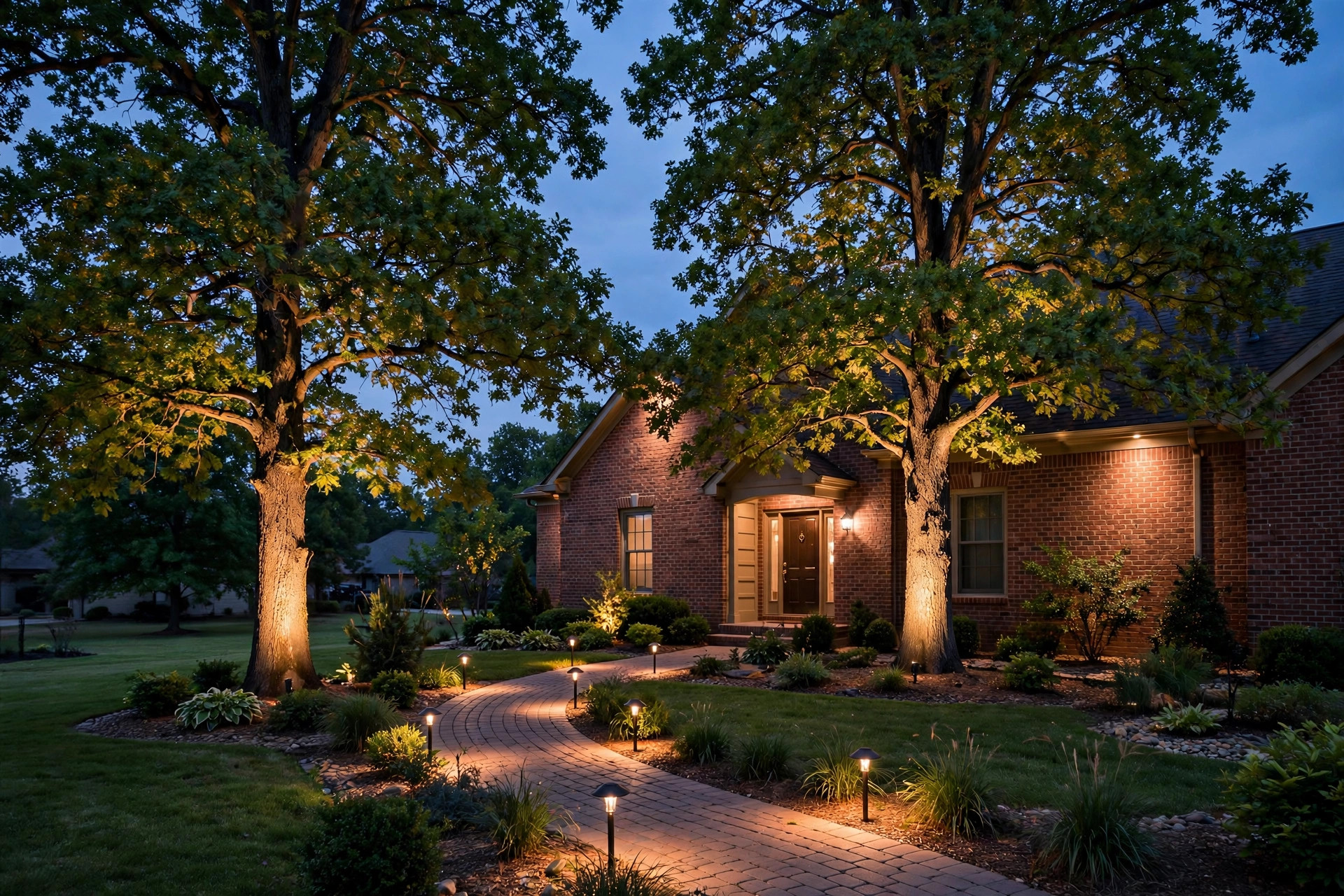

Many homeowners search for affordable landscape lighting installation near me and wonder where to begin. The idea is simple. A few well placed lights can change the look of a yard after dark. The hard part is finding a contractor who does good work at a fair price. This guide explains what landscape lighting is, what it costs, how to choose a professional, and how to keep the system in good shape for years.
Why Landscape Lighting Matters
Light does more than make a yard pretty. It makes a home safer. A dark walkway is a trip hazard. A dark corner of the lot is an invitation to trouble. Lights along paths, steps, and driveways cut down on falls. Lights near doors and windows discourage break-ins. Many police departments say that a well lit property is less likely to be targeted by thieves.
Light also adds to the value of a home. Real estate agents often point out that curb appeal sells houses. A yard that looks good at night stands out to buyers. Even if you do not plan to sell, the evening hours are part of your time at home. A glowing garden, a lit tree, a warm pool of light on the patio all make the house feel larger and more welcoming.
There is a third reason, and it is the simplest one. People enjoy their yards more when they can see them at night. A deck that sits in the dark after dinner gets little use. The same deck with soft light becomes a place to sit, talk, and relax. For a modest cost, lighting extends the living space of the home into the evening.
What to Look for When You Choose a Contractor: Affordable Landscape Lighting Installation near Me
Hiring a lighting installer is like hiring any tradesman. The work varies in quality, and the price varies too. A good contractor listens first. He or she walks the property with you, asks how you use the yard, and finds out which areas matter most. A bad contractor quotes a price from the truck window and pushes the most expensive package.
Questions to Ask Before You Hire
Ask for references, and call them. Ask how long the contractor has been doing lighting work. Ask whether the workers are employees or day labor. Ask what brand of fixtures and wire the installer uses. Ask about the warranty on both labor and parts. A solid firm stands behind its work for at least a year, often two or more.
Ask for a written quote that lists the fixtures, the number of lights, the wattage or lumen output, and the cost of labor separately. A lump sum number tells you nothing. A detailed quote lets you compare two bids side by side. Be wary of anyone who demands full payment before the work starts. A small deposit is normal. The balance is due when the job is done and you have walked the yard at night to see the result.
Local knowledge counts. A contractor who works in your town knows the soil, the weather, and the common plants. Search phrases like affordable landscape lighting installation near me work best when you read the reviews that come with them. Look for recent reviews that mention specific work, not vague praise. Three stars with a detailed comment can teach you more than fifty five-star ratings with no words.
Licenses, Insurance, and Permits
In most states, a contractor who does low-voltage lighting does not need an electrician license, because the systems run on twelve volts. Rules differ by town, so ask the contractor what rules apply. At a minimum, the firm should carry general liability insurance. Ask to see the certificate. If a worker is hurt on your property, you do not want to be the one who pays.
Some towns require permits for outdoor electrical work, even at low voltage. A good installer handles the paperwork. If the contractor tells you permits do not matter, find out for yourself at the town office. It takes one phone call.
Types of Landscape Lights
Not all lights do the same job. Most residential systems use a mix of four or five types.
Path lights are the short posts that line walkways and driveways. They throw light down in a soft circle. They are the workhorses of most plans. Well lights sit flush in the ground and shine straight up. They are good for lighting tree trunks and tall shrubs. Uplights are small fixtures set in the ground at an angle. They graze light up a wall, a fence, or a specimen plant.
Spotlights are the brightest of the group. They pick out a flagpole, a fountain, or the front of the house. Floodlights cover wide areas such as a back yard or a parking pad. Deck and step lights are small units built into stairs and railings. They mark the edges so no one misses a step in the dark.
The technology matters too. Older systems used halogen bulbs. New systems use LED. LED fixtures cost more at the start but use far less power and last for years. A typical LED landscape bulb can run for twenty thousand hours or more. Over the life of the system, LED is almost always the cheaper choice. If a contractor still sells only halogen, ask why. There may be a reason, but in most cases LED is the better buy.
For small budgets, solar path lights are an option. They cost little and need no wiring. But they are dim, and they fade on cloudy days. Many buyers learn that solar landscape lights that actually work are harder to find than the ads suggest. Solar lights can fill gaps, but they do not replace a wired system.
Cost and Price
This is the question most people ask first. What does affordable landscape lighting installation near me really cost? The honest answer is that it depends on the size of the yard and the number of lights. Still, there are useful ranges.
A small starter job, with six to ten LED path and accent lights around the front of the house, often runs between five hundred and fifteen hundred dollars installed. A full front yard with twenty to thirty lights, including uplights on trees and spots on the house, usually lands between two thousand and five thousand dollars. Large properties with extensive beds, water features, and long driveways can reach ten thousand dollars or more.
Labor is the biggest part of the bill. Digging shallow trenches, running cable, and setting fixtures takes time. Materials come second. The fixtures themselves range from twenty dollars for a basic path light to over two hundred for a heavy brass uplight.
Several factors push the price up or down. Rocky soil takes longer to trench. Long wire runs need thicker cable, which costs more. A transformer that powers the system must be sized to the load, and larger transformers cost more. Learning how to install a landscape lighting transformer yourself can save money if you are handy, but most homeowners hire the whole job out.
To keep costs down, start small. Light the front walk and the front door first. These are the areas that matter most for safety and looks. Add zones later as the budget allows. A good contractor designs the system so it can grow. Ask for the plan on paper so a later phase can pick up where the first one left off.
Another way to save is to do the easy parts yourself. You can clear brush, mark bed lines, and even dig trenches while the contractor handles the wiring and fixtures. Some firms offer a discount if the homeowner does the prep work. It never hurts to ask.
Get three written bids. This is old advice and it still works. When the bids come back, do not pick the cheapest one without reading it. One bid may use twice as many lights as another. Compare the fixture count, the brands, and the warranty. The middle bid is often the best value.
Care and Upkeep
A landscape lighting system needs little care, but it needs some. Twice a year, walk the yard at night and look at every light. Bulbs burn out. Fixtures get knocked over by mowers. Plants grow and block the light. A quick check each spring and fall catches most problems.
Keep the lenses clean. Dirt, mulch dust, and hard water spots dim the light. Wipe each lens with a damp cloth. Trim plants that have grown into the beam. If a fixture is buried in mulch, raise it or move it out a few inches.
Check the wiring where it comes out of the ground. Rodents and lawn equipment can nick the cable. Most damage shows up as one zone going dark. If a whole section stops working, look at the transformer first. Check the timer and the photo sensor that turns the system on at dusk. Sensors fail more often than bulbs.
Most homeowners can handle these small jobs. If you are planning the layout yourself, a cheap landscape design consultation online can help you place lights where they do the most good before you call the installer.
Safety
Low-voltage lighting is safe by design. The transformer drops household current down to twelve volts. You can touch the wire without a shock. That does not mean the job is free of risk.
Keep fixtures and wiring away from standing water unless they are rated for wet locations. Pond and fountain lights must carry the right rating. Do not run low-voltage cable through the same trench as a gas line. Keep the transformer in a dry spot, off the ground if the area floods.
Outdoor power tools come with their own hazards. If you do any digging yourself, call the local utility marking service first. In most of the country, the number is 811. The service marks buried gas, electric, and cable lines for free. Hitting a gas line with a shovel is a mistake you make only once.
If your yard has a pool or spa, extra care is needed around water. The Consumer Product Safety Commission publishes guidance on electrical safety near pools and spas. Follow it, and make sure your contractor does too.
Product quality matters as well. Independent testing groups like Consumer Reports review outdoor lighting fixtures and can help you tell solid gear from junk. Equipment makers such as Toro and Briggs and Stratton also publish guides on outdoor power equipment and yard care that are worth a read before you start a project.
Frequently Asked Questions
How much does landscape lighting installation cost on average? For a typical suburban front yard, most homeowners pay between two thousand and five thousand dollars for a professionally installed LED system with twenty to thirty lights. Small jobs can cost under a thousand dollars, and large estates can run far higher.
How long does installation take? A small job takes half a day. A full front and back yard usually takes one to three days, depending on soil, weather, and the number of fixtures.
Do I need an electrician to install landscape lighting? In most places, no. Low-voltage systems run on twelve volts and do not require a licensed electrician. Check your local rules, because some towns have their own requirements.
Will landscape lights raise my electric bill? Very little. A system of twenty LED lights uses less power than one old hundred-watt porch bulb. Most homeowners see an increase of a few dollars a month.
Can I add more lights later? Yes, if the system is planned for it. Ask the contractor to size the transformer with room to grow and to leave the wiring map with you. Adding a zone later is then a simple job.
How long do LED landscape lights last? The bulbs often last fifteen to twenty thousand hours, which is many years of nightly use. The fixtures themselves can last decades if they are made of brass or copper rather than thin plastic.
A Final Word
A yard that is dark at night is a yard you only half use. A few lights along the walk, a soft glow on the trees, and a warm wash on the front of the house change everything. The work does not have to cost a fortune. Start with the areas that matter most, get three written bids, and pick a contractor with real references. Do that, and your search for affordable landscape lighting installation near me will end with a yard you can enjoy long after sunset.
References
Toro. (n.d.). Outdoor power equipment and yard care. https://www.toro.com Briggs & Stratton. (n.d.). Outdoor power equipment. https://www.briggsandstratton.com Consumer Reports. (n.d.). Product reviews and buying guides. https://www.consumerreports.org U.S. Consumer Product Safety Commission. (n.d.). Home and outdoor safety. https://www.cpsc.gov
Was this guide helpful?

About Emily Rodriguez
The My Garden US editorial team writes practical, in-depth home and garden guides for American homeowners — tested advice, no fluff.
You May Also Like
Sprinkler Winterization Blowout Service Cost: A Fall Guide for Homeowners
March 24, 2026 0 views
Landscape Curbing Cost Per Foot in the USA: A Plain Guide to Prices
July 29, 2026 0 views
Paver Walkway Installation Cost Near Me: A Simple Guide
June 23, 2026 0 views