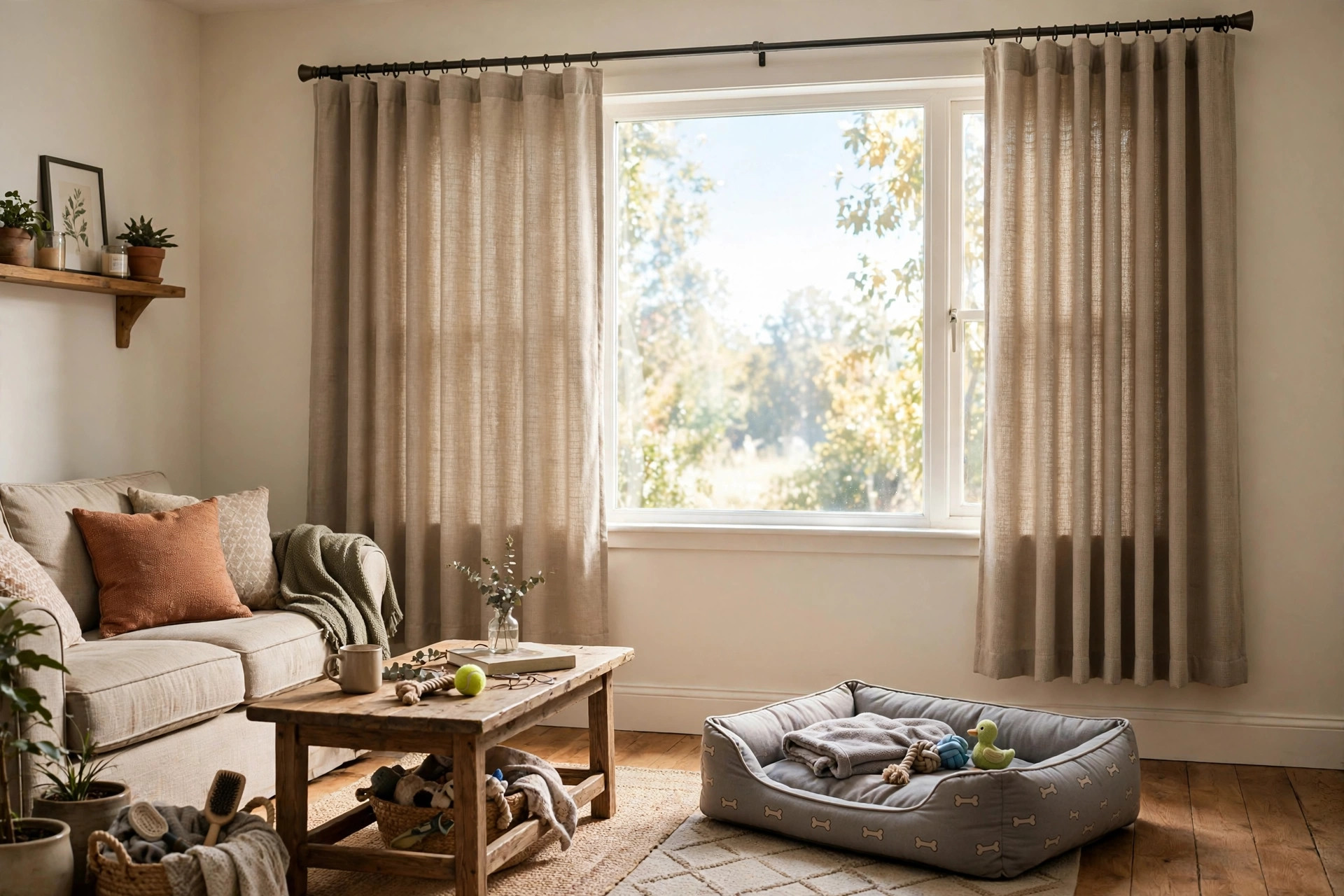

A budget friendly pet friendly curtains buying guide is worth reading before you spend a single dollar. Pet owners learn fast that ordinary curtains do not survive cats and dogs. Claws snag delicate weaves. Muddy paws leave marks. Dogs lean against window panels when they bark at the mail carrier. Cats climb anything that hangs. The good news is that you do not need a big budget to solve this. You need the right fabric, the right length, and a few plain habits. This guide walks through all of it in plain language.
Why Pet Friendly Curtains Matter
Window coverings take more abuse than most things in a home. A sofa sits against a wall. A rug lies flat. But curtains hang in the path of pets. They sway when a dog brushes past. They tempt cats as climbing ropes. Sunlight hits them all day, which weakens cheap fabric over time. For a pet owner, curtains are not just decoration. They are a working part of the house.
Money matters here too. Many people buy thin, cheap panels because the price looks right. Then the panels snag, stain, or tear within months. They buy again. And again. The true cost of cheap curtains can pass the cost of good ones in a single year. A budget friendly pet friendly curtains buying guide should not tell you to buy the most expensive option. It should help you buy the smart one the first time.
Comfort matters as well. Dogs sleep near windows. Cats perch on sills to watch birds. The curtain behind them shapes their rest area. Heavy, noisy fabric startles some animals. Stiff polyester can irritate skin when a dog rubs against it. Soft, washable fabric keeps both pets and people at ease.
What Makes a Curtain Pet Friendly: Budget Friendly Pet Friendly Curtains Buying Guide
A pet friendly curtain has four traits. First, it resists snags. Tight weaves beat loose ones every time. A cat claw slides off a tight weave but hooks into an open one. Second, it hides hair. Mid-tone fabrics with texture hide pet hair far better than flat black or white cloth. Third, it washes well. If you cannot toss it in the washer, you will regret the purchase after the first muddy-paw season. Fourth, it lacks cords or has safe hardware, because cords can harm curious pets.
These traits do not cost much. Many budget fabrics meet all four. You do not need designer labels. You need to read the fabric tag and understand what it tells you.
Fabrics That Hold Up Against Pets
Microfiber is a strong pick for pet homes. It is soft, tight-woven, and cheap. Hair brushes off it with a damp cloth. Most microfiber panels survive the washer without fuss. Polyester blends run close behind. They resist stains and keep their shape after many washes. Canvas and duck cloth are heavier options. They cost a bit more but stand up to rough dogs.
Avoid linen with a loose weave, raw silk, and chenille. These fabrics look lovely in a catalog. In a pet home they catch claws, hold stains, and cost more to clean. Some shoppers also skip velvet. It hides hair poorly and shows every paw print. Plain budget fabrics simply serve pets better.
Length and Hanging Choices
Floor-length curtains pool on the floor. Cats hide behind them. Dogs step on them. Puppies chew the hems. For pet homes, sill length or just-above-floor length works best. Panels that end an inch above the floor stay cleaner and snag less.
Hang panels on sturdy rods with strong brackets. A dog leaning on a curtain can pull a weak rod down. Use metal rods rather than thin plastic ones. Ring clips also help. They let you remove panels fast for washing. Some owners hang cordless cellular shades for their windows instead of long panels in rooms where pets are most active. That is a fair choice when curtains feel too risky.
Types of Budget Curtains for Pet Homes
Rod pocket panels are the cheapest common type. They slide onto a rod with no hardware fuss. They wash well and suit casual rooms. Grommet-top panels cost a bit more but slide smooth and hold up on strong rods. Tab-top panels look relaxed and are easy to remove for the laundry.
Thermal or blackout curtains help in bedrooms and TV rooms. They block light and cut drafts. Many budget blackout panels now use a foam backing. Check whether the backing cracks in the dryer. Some must hang dry. Sheer panels are risky with cats. One good claw swipe can run a tear across the whole panel. If you want light, pair short sheers with a sturdy blind instead.
Many shoppers compare their options against top rated pet friendly curtains for usa homes to see which fabrics other pet owners trust. Reviews from fellow pet owners carry more weight than store ads. Look for mentions of washing, claw marks, and hair. A review that says “survived two huskies” tells you more than any label.
Cost and Price Ranges
Budget curtains for pet homes run from about ten to fifty dollars per panel. Two-packs are common and cut the per-panel price. Microfiber two-packs often land near twenty-five dollars for a standard window. Polyester blackout two-packs run thirty to fifty. Canvas panels sit at the top of the budget range.
Watch for hidden costs. Cheap panels sometimes need a liner to look right, which adds ten to fifteen dollars. Rod upgrades cost more. A strong metal rod with brackets runs fifteen to thirty dollars. If you plan to wash panels often, buy one extra set. Rotating two sets doubles their life and costs less than replacing worn ones.
Sales help a lot. Home stores run curtain sales each season. Clearance bins hold solid panels in odd colors. Mid-tone beige, gray, and tan hide hair best, and they often sit in clearance. You can check stock and prices at large retailers such as Www.homedepot.com or Lowe’s before you drive to the store. Both sites list panel sizes and fabric details online.
Do not forget the cost of cleaning. A curtain cleaning services cost guide usa shows that professional cleaning runs several dollars per panel each visit. Washable curtains pay for themselves fast when pets are in the house. Machine wash beats dry clean every time for pet owners.
Care and Upkeep With Pets Around
Wash panels every four to six weeks in a pet home. Use cold water and a gentle cycle. Skip fabric softener. It leaves a film that traps hair. Tumble dry on low or hang dry. Shake panels outdoors before washing. This removes loose hair and keeps your washer drain clear.
Vacuum curtains weekly with an upholstery tool. A quick pass takes two minutes per window. It stops hair from working deep into the weave. Lint rollers handle touch-ups between washes. Keep one near each window your pets favor.
Trim cat claws on a schedule. Blunt claws snag less. This one habit can double the life of your curtains. For dogs, wipe paws after walks in wet weather. A small towel by the door saves the hem of every panel in the house. Some owners hang a short valance or café panel in rooms where dogs press against glass. Less fabric near the floor means less to clean.
Stains need fast action. Blot fresh mud with a damp cloth. Do not rub. Rubbing pushes dirt into the weave. For old stains, soak the panel in cool water with a mild detergent before a normal wash. Skip bleach on colored fabric. It weakens fibers and can leave pale spots.
Good care habits also keep the room looking tidy. Apartment Therapy and Www.thespruce.com both run simple guides on washing window treatments without damage. Their advice lines up with what washer makers print in the manual. This Old House and the Family Handyman site offer step-by-step care tips that fit a busy pet owner.
Safety for Cats and Dogs
Cords are the main danger. Loop cords on blinds and shades can trap a curious cat or small dog. Choose cordless panels or cordless shades wherever pets roam. If you must keep corded blinds, use cord cleats or tension devices. Mount them high, well out of reach. The Www.cpsc.gov warns that window cords pose a real risk to young children and pets. Take that warning to heart.
Weight matters too. Heavy panels on weak rods can fall. A falling rod can strike a pet sleeping under the window. Mount brackets into studs or use strong wall anchors. Test the rod with a firm pull before you hang the panels. If it shifts, remount it.
Some fabrics carry flame-retardant treatments. Check the label if you have a chewer. A puppy that gnaws hems can ingest coating chemicals. Plain, untreated fabric is the safer pick. Wash new panels once before hanging them. This rinses out factory dust and sizing that can irritate pet noses.
Sunlight safety counts as well. Dark panels in a sunny window can get hot. A dog that naps against a hot panel can feel discomfort. Light or mid-tone colors stay cooler. If a window gets strong afternoon sun, consider a shade behind the curtain to cut the heat.
Shopping Tips on a Budget
Measure twice. A panel that is too short looks wrong and a panel that is too wide bunches up and gathers hair. Measure the rod width and the drop from rod to the spot where you want the hem to end. Write the numbers down before you shop.
Buy one panel first when you try a new brand. Wash it. See how it holds up for a month. Then buy the rest. This test costs little and saves big mistakes. Keep receipts. Many stores allow returns within a month or more.
Look beyond the curtain aisle. Www.ikea.com sells simple, washable panels at low prices, and the store lists full fabric details online. Www.wayfair.com carries hundreds of budget two-packs with buyer reviews you can filter by pet mentions. Www.blinds.com is worth a look if you decide to mix shades with curtains. Www.hgtv.com and Country Living publish room photos that show how budget panels look in real homes.
Independent testing also helps. Consumer Reports rates home products with lab tests, and their curtain and fabric notes can guide a careful buyer. Free shipping cuts cost too. Many online stores ship curtain orders free above a set amount. Two windows at once often clears that bar.
FAQ
Can cats really destroy curtains?
Yes, they can. A bored cat can shred a loose-weave panel in weeks. But most cats leave tight-weave microfiber or canvas alone. Give cats a scratching post near the window. Trim claws. Choose the right fabric. Most owners solve the problem with these three steps.
Are blackout curtains safe for pets?
They are safe as long as they are cordless and hung well. Some have foam backings that flake over time. Check the backing now and then. If it crumbles, replace the panel. Washable polyester blackout panels are the easiest kind for pet homes.
How often should I wash curtains with dogs?
Every four to six weeks is a good rule. Heavy shedders may need washing every three weeks. Vacuum weekly between washes. A quick shake outdoors each month keeps hair from building up in the washer.
Do pet friendly curtains cost more?
Not always. Microfiber and polyester panels cost the same as or less than delicate fashion fabrics. The savings show up over time. One set of tough panels outlasts three sets of thin ones. Washable curtains also skip dry cleaning bills.
What length works best with pets?
Panels that end at the sill or an inch above the floor work best. Floor-pooling hems collect hair, dust, and chew marks. Short panels stay cleaner and dry faster after washing.
Should I skip curtains and use shades instead?
Shades are a fair choice in rooms where pets are rough. Cordless shades keep the window covered with less fabric to grab. Many owners use shades in the living room and curtains in the bedroom. There is no rule. Pick what fits each room and each pet.
A Short Final Word
A budget friendly pet friendly curtains buying guide comes down to a few plain rules. Pick tight, washable fabric. Hang panels above the floor. Mount rods strong. Go cordless. Wash on a schedule. None of this costs much. A pet home can look tidy and feel calm without big spending. Measure your windows, test one panel first, and buy with a clear head. Your curtains will last longer, your pets will rest easy, and your wallet will stay full.
References
Apartment Therapy. (n.d.). Home design ideas and inspiration. https://www.apartmenttherapy.com Blinds.com. (n.d.). Window blinds, shades, and shutters. https://www.blinds.com Family Handyman. (n.d.). DIY home repair and maintenance. https://www.familyhandyman.com HGTV. (n.d.). Home and garden ideas. https://www.hgtv.com IKEA. (n.d.). Home furnishings. https://www.ikea.com Lowe’s. (n.d.). Home improvement products. https://www.lowes.com The Home Depot. (n.d.). Home improvement products. https://www.homedepot.com The Spruce. (n.d.). Home and garden advice. https://www.thespruce.com This Old House. (n.d.). Home renovation guidance. https://www.thisoldhouse.com U.S. Consumer Product Safety Commission. (n.d.). Product safety information. https://www.cpsc.gov Wayfair. (n.d.). Furniture and home goods. https://www.wayfair.com Www. (n.d.). Home and garden information. https://www
Was this guide helpful?

About Robert Taylor
The My Garden US editorial team writes practical, in-depth home and garden guides for American homeowners — tested advice, no fluff.
You May Also Like
Best Nursery Room Darkening Shades for Sale: A Parent’s Guide
July 31, 2026 0 views
Noise Reducing Bamboo Roman Shades for Texas Homes
January 15, 2026 0 views
The Best Decorative Window Film for Midwest Homes: A Plain Guide
June 3, 2026 0 views