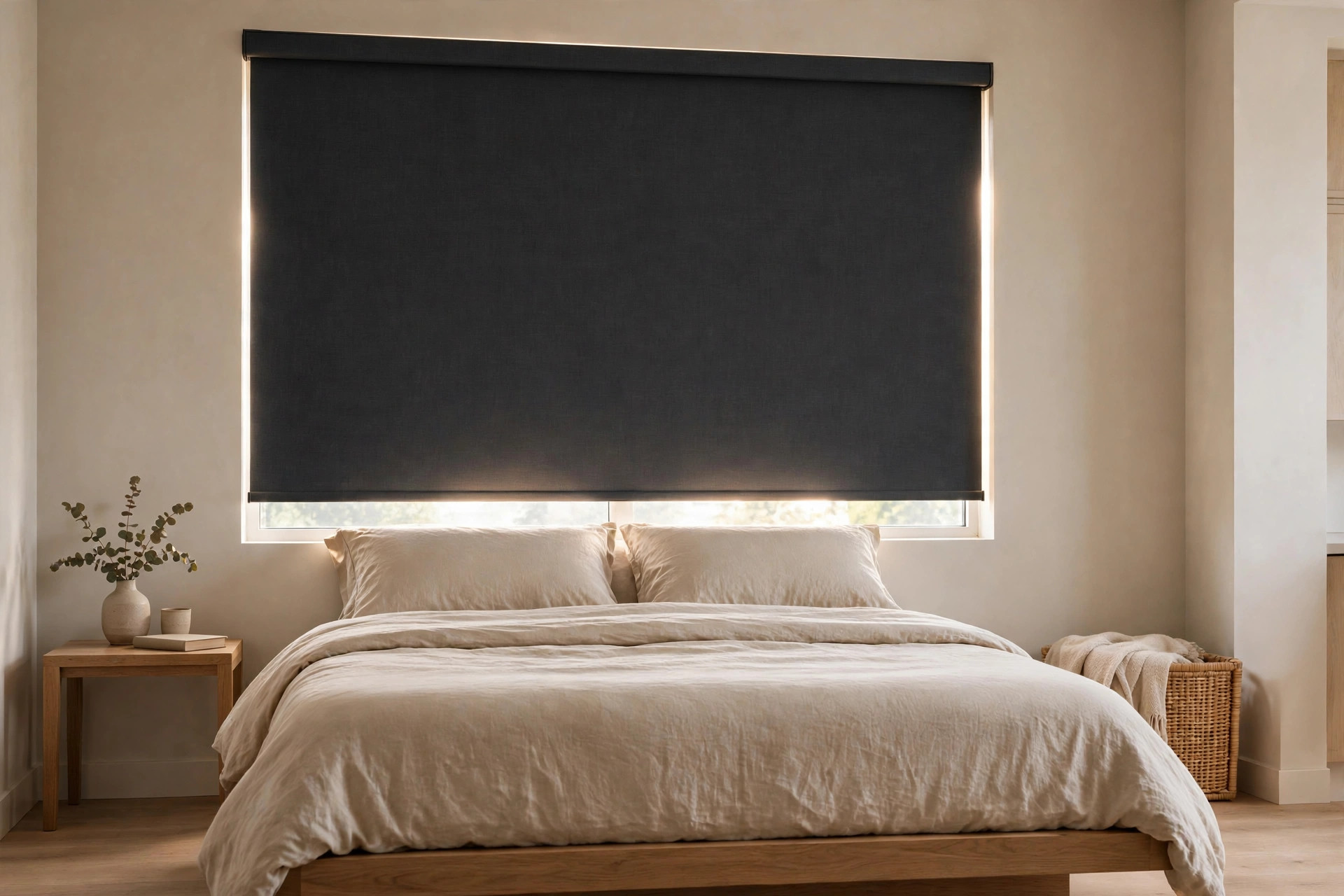

A bedroom that stays dark and quiet is worth more than almost any other comfort in a home. Street noise, barking dogs, and early morning light all break sleep the same way. The right window covering can solve both problems at once. This noise reducing blackout roller shades buying guide explains what to look for, what to skip, and how to get a good result without paying for features that do not matter.
Why Noise Reducing Shades Matter
Light and sound enter a room through the same weak point. The window is the thinnest part of the wall. A plain sheet of glass stops almost no sound and no light at night. Heavy window coverings change that.
Blackout roller shades use thick, light-proof fabric. When the shade is down, the room goes dark at noon. The same thick fabric slows sound waves. It will not make a room silent. But it can soften the sharp edge of traffic, voices, and rain. Many buyers notice the room feels calmer the first day the shades go up. Better sleep is the main reason people buy them. A dark, quieter bedroom helps shift workers, light sleepers, and children.
Noise reduction from window shades is modest compared to new windows. Set your hopes at the right level. A heavy shade may cut perceived noise by a small but real amount. It works best against steady, low-to-mid sounds such as traffic hum and wind. It does less against sharp, sudden sounds such as car horns.
How Blackout Roller Shades Reduce Noise: Noise Reducing Blackout Roller Shades Buying Guide
Sound travels in waves through air. When a wave hits the window glass, most of it passes into the room. A thick fabric shade adds mass in the path of the wave. Mass is what slows sound down. The heavier and denser the fabric, the more it slows.
The shade also breaks up the hard flat surface of the glass. Bare glass bounces sound around a room. Soft fabric absorbs some of that echo. So the room feels quieter in two ways: less sound comes in, and less of the sound that does enter bounces off the walls.
An air gap between the shade and the glass helps too. Shades mounted with a few inches of space from the window trap a layer of dead air. Still air is a poor carrier of sound. That is the same reason double-pane windows work. The shade is not a second pane, but the trapped air still adds a small buffer.
Some brands sell shades labeled as acoustic or soundproof. Read these claims with care. There is no standard test that all makers use for home shades. A shade that truly blocked most sound would weigh far too much to roll up by hand. The best shades soften noise. They do not stop it.
What to Look For When Buying
Start with the fabric. Look for three or four layers, or one thick coated layer. Common materials are fiberglass, vinyl-coated polyester, and triple-weave cloth. Triple-weave fabric has a black yarn woven into the middle of the cloth. It blocks light without a rubber coating. It also hangs flat and looks like normal fabric on the front.
Check the edges. Light leaks around the sides of a shade. Noise leaks there too. Shades with side channels or a cassette headrail close off the edges. A cassette is a covered box at the top that hides the roll. It stops light and sound from sneaking over the top. Side channels are tracks on each side of the window frame. The fabric slides inside them. Together, a cassette and side channels give the tightest seal.
Look at the mounting hardware. Inside-mount shades fit within the window frame. They look neat. Outside-mount shades sit on the wall above and beside the frame. They cover the whole frame plus some wall. For noise and light, outside mounts usually win. They leave no gaps at the edges.
Decide on the lift system. Cordless shades lift with a gentle push or pull on the bottom bar. They are the safest choice for homes with small children and pets. Loose cords have caused injury, and safety groups urge families to choose cordless window coverings. Motorized shades open and close with a remote or a phone app. They are pleasant to use but cost more. Standard corded shades are the cheapest and still common.
Check the fabric weight. Heavier shades hang straighter and resist curling at the bottom. A weighted bottom bar keeps the shade flat against the sill. A flat shade seals better than one that curls.
Types and Options
Standard blackout roller shades are one fabric roll on a tube. Simple, cheap, and effective for a first purchase.
Cellular or honeycomb roller shades have a folded, honeycomb-shaped fabric. The pockets trap air. That trapped air adds a small amount of sound softening beyond a flat shade. They fold up into a slim stack and look tidy when open.
Dual or day-night shades have two fabric layers on one roller. One layer is sheer, one is blackout. You turn a bead chain to switch between them. They are a good pick for living rooms where you want daylight sometimes and full darkness at night.
Motorized blackout roller shades run on batteries or house power. They fit into a smart home setup. Many can close on a timer at night and open at dawn. For noise, the benefit is the same as a manual shade of the same fabric. The lift system does not change how much sound the fabric stops.
Side-channel blackout systems are the most complete. They combine a cassette top with side tracks and a sealed bottom bar. They look like a finished unit and give the best light seal of all roller options. They cost more and need careful measuring.
Cost and Price
Prices run wide. A basic off-the-shelf blackout roller shade in a standard size may cost thirty to sixty dollars. A custom-size cordless shade often runs eighty to one hundred fifty dollars. A motorized custom shade may cost two hundred to four hundred dollars. Side-channel systems with a cassette can run three hundred to six hundred dollars per window.
Custom sizes cost more than stock sizes. Custom colors and patterns add a little. Motorization adds the most.
Do not overpay for the word acoustic on the box. Compare fabric weight and layer count instead. Two shades at similar prices with similar fabric will perform alike. A side channel kit matters more than a brand name.
Measure windows twice before you order custom shades. For inside mounts, measure the width in three places and use the smallest number. For outside mounts, add three to four inches of width on each side of the frame. A shade that is too narrow leaves light and sound gaps. A shade that is too wide will not roll smoothly.
Care and Upkeep
Blackout roller shades need little care. Dust them with a dry cloth or a soft brush every month or two. A vacuum with a brush head works well for the fabric.
For spots, wipe with a damp cloth and a small amount of mild soap. Do not soak the fabric. Coated fabrics can take a damp wipe, but water can damage the light-blocking layer if it soaks through. Dry the shade with the fabric down so no damp spots sit against the roll.
Roll shades up and down slowly. A hard yank can stretch the spring or damage the motor. Keep the bottom bar clean. Dirt on the bar can mark the fabric when it rolls.
Check the side channels once a year. Dust builds up inside the tracks and can slow the fabric. A dry cloth along the track keeps it smooth.
Safety
Cord safety is the first concern. Loose beaded and pull cords have harmed children and pets. Federal safety groups recommend cordless window coverings in homes with young children. Choose cordless or motorized shades for bedrooms and playrooms. If you keep a corded shade, use the cord cleat to wrap the cord high and tight.
Mounting strength matters for heavy shades. A blackout shade with a cassette can weigh several pounds. Use the right anchors for your wall type. Drywall needs plastic or metal anchors. Plaster needs care when drilling. A shade that falls can hurt someone and damage the wall.
Fire safety is a smaller point. Keep shades away from open flames, heaters, and hot lamps. Most shade fabrics are not rated as fireproof.
FAQ
Do blackout roller shades really block noise?
They soften noise but do not block it. Thick fabric with a tight seal can make traffic and steady sounds less sharp. Expect a modest drop, not silence. New windows or added wall insulation do far more for sound. Shades are best as one part of a quiet-room plan.
What is the best mount for noise reduction?
An outside mount is usually better. It covers the window frame and part of the wall, so less sound slips past the edges. Adding a cassette headrail and side channels seals the gaps even more. An inside mount leaves small gaps at the sides and top.
Are cellular shades better than flat blackout shades for noise?
Cellular shades have a small edge. Their honeycomb pockets trap air, and trapped air slows sound. The difference is not huge. A flat blackout shade with side channels can beat a cellular shade with no side channels. The seal matters more than the fabric shape.
How much do noise reducing blackout roller shades cost?
Plan on thirty to sixty dollars for a basic stock size. Custom cordless shades often run eighty to one hundred fifty dollars. Motorized or side-channel systems run two hundred to six hundred dollars per window. Custom sizes and smart features raise the price.
Can I install them myself?
Yes, in most cases. Basic roller shades need only a drill, a level, and the brackets in the box. Side-channel systems take longer and need exact measuring. Motorized shades may need a nearby outlet or battery charging. If you are unsure, hire a local installer for custom units.
Will they work with my curtains?
Yes. Many homes pair blackout roller shades with curtains. The shade handles the light and adds some sound softening. Heavy curtains over the shade add another layer of mass and close off more edge gaps. This pairing gives one of the best quiet-room results without new windows.
Final Word
Noise reducing blackout roller shades are a simple, low-cost way to make a room darker and calmer. Buy for fabric weight, a tight seal, and safe cordless lifting. Outside mounts and side channels matter more than brand names. Measure with care, clean with a light touch, and pair the shade with heavy curtains if you want the quietest room possible.
For more ideas on darkening a skylight, see our skylight blackout blinds reviews and buying guide. If you want large panel styles instead of a roll, read our custom sliding panel track blinds with free shipping guide. And when curtains get dusty, our premium curtain cleaning services near me page can help you find local help.
For general advice on choosing window treatments, the team at The Spruce keeps a large library of buying guides. Blinds.com offers a wide range of made-to-measure shades in many fabrics. Big-box stores like Home Depot and Lowe’s carry stock sizes you can pick up the same day. For room ideas, Wayfair and IKEA show shades styled in real rooms. Design inspiration is easy to find at HGTV. Independent test results appear at Consumer Reports. And for cord safety guidance, check the window covering pages at the U.S. Consumer Product Safety Commission.
References
Blinds.com. (n.d.). Window blinds, shades, and shutters. https://www.blinds.com Consumer Reports. (n.d.). Product reviews and ratings. https://www.consumerreports.org HGTV. (n.d.). Home and garden ideas. https://www.hgtv.com IKEA. (n.d.). Home furnishings. https://www.ikea.com Lowe’s. (n.d.). Home improvement products. https://www.lowes.com The Home Depot. (n.d.). Home improvement products. https://www.homedepot.com The Spruce. (n.d.). Home and garden advice. https://www.thespruce.com U.S. Consumer Product Safety Commission. (n.d.). Product safety information. https://www.cpsc.gov Wayfair. (n.d.). Furniture and home goods. https://www.wayfair.com
Was this guide helpful?

About David Wilson
The My Garden US editorial team writes practical, in-depth home and garden guides for American homeowners — tested advice, no fluff.
You May Also Like
Buy Skylight Blackout Blinds Online in Florida: A Complete Guide
January 14, 2026 0 views
Bay Window Curtain Rods Reviews and Buying Guide
September 20, 2026 0 views
Bamboo Roman Shades Price Comparison USA: A Plain Guide to What They Cost
February 11, 2026 0 views