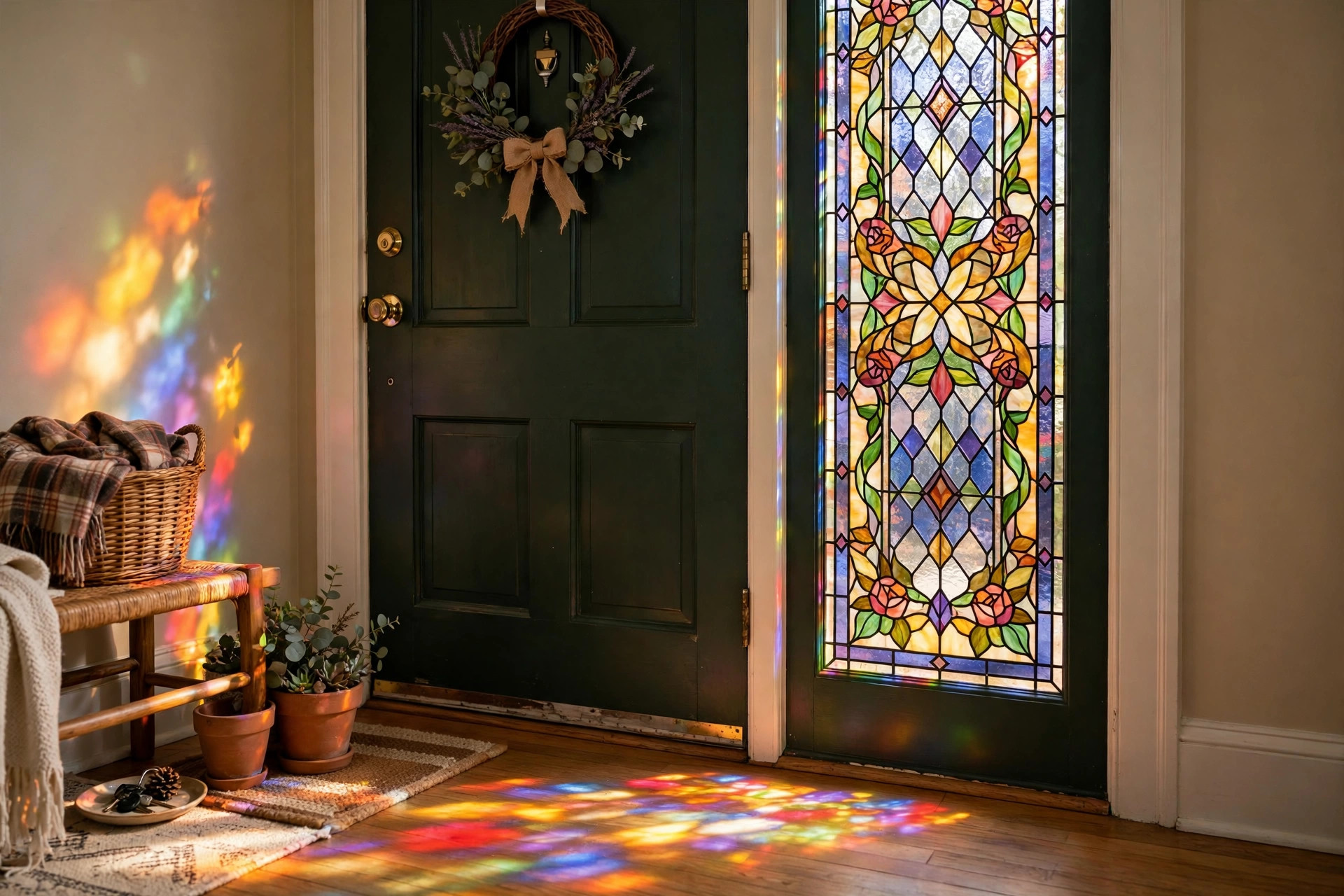

Stained glass windows have a charm that few other things in a home can match. They throw color on the floor in the morning. They give an old house a warm feel. They make a new house feel lived in. The trouble is price. Real stained glass costs a great deal of money. It takes a craftsman. It takes lead, solder, and glass cut by hand. Most of us will never pay for that.
This is where affordable stained glass window film with free shipping comes in. It is a thin sheet of plastic. It sticks to plain glass with water, not glue. It looks, from a few feet away, much like real stained glass. It costs a small fraction of the price. It ships to your door at no extra charge. You can put it up on a Saturday afternoon.
This guide will help you pick a good one. It covers what the film is, how to choose it, the main types, the price, how to put it up, how to clean it, and how to keep your home safe. The words are simple. The advice is honest.
Why Stained Glass Film Matters
Windows are the eyes of a house. A plain sheet of glass lets in light but shows little else. It shows the street. It shows the neighbor’s fence. It shows the world as it is. Stained glass film changes that. It turns a plain window into a picture.
Many people buy it for beauty. A bathroom window looks better with a frosted floral pattern. A front door sidelight looks better with a border of colored panes. The film also serves a purpose. It blocks the view from the street. You can see out through the light, but a passerby cannot see in. This gives you privacy without curtains.
There is a money reason too. Real stained glass panels can cost several hundred dollars each. A roll of stained glass window film costs less than twenty dollars in most cases. The free shipping offer that many sellers run makes the deal even better. You pay the price on the page and nothing more. For a renter or a young family, that is a fair bargain.
People who write about home decor often point to small changes that make a big difference. A good decor idea site will tell you that windows are among the first things guests notice.
What to Look for When You Buy: Affordable Stained Glass Window Film with Free Shipping
Not all film is the same. Here is what to check before you order.
Thickness. Film is sold in mils. A mil is one-thousandth of an inch. Good film is about 5 to 8 mils thick. Thin film tears and wrinkles. Thick film lasts longer and feels like real glass from a touch away.
Static cling or glue. The best kind for most people is static cling. You spray the glass with water. You lay the film on. You smooth out the bubbles. It holds by itself. You can peel it off later and move it. Glue-backed film sticks harder but is hard to remove. If you rent your home, choose static cling.
Light type. Some film is see-through. It lets shapes show through in soft color. Some film is frosted. It blurs shapes but lets light pass. Think about the room. A bathroom needs frosted film. A living room can take see-through film.
UV block. Many films block most of the sun’s ultraviolet rays. This keeps your rug and sofa from fading. It also keeps the room cooler. Look for a film that says it blocks 90 percent or more of UV light.
Pattern quality. Cheap film has blurry print and dull colors. Good film has sharp lines and rich color. Read the buyer reviews. Look at the photos that buyers post. A consumer testing group notes that what you see on the store page is often shot under perfect light. Buyer photos tell the truer story.
Size. Measure your window first. Measure the glass only, not the frame. Add one inch to each side so you can trim it clean. Most rolls are 17 or 24 inches wide and several feet long. One roll covers one or two windows.
Free shipping terms. Read the small print. Some sellers ship free over a certain amount. Some ship free always. Check how many days it takes. Check whether the film comes rolled or folded. Rolled film is better. Folded film has creases that never quite leave.
The Main Types and Options
Stained glass window film comes in a few broad kinds.
Printed static film. This is the most common. The pattern is printed on vinyl. It looks like painted glass. It comes in hundreds of patterns: flowers, birds, borders, old church windows, and simple grids of color. It is the cheapest kind. Most of what you find under affordable stained glass window film with free shipping will be this type.
Textured film. This film has a real raised surface. It bends the light the way old hand-made glass does. It costs more than printed film. It looks more real up close. It is a good choice for a window people will stand near.
Etched or frosted film. This kind looks like frosted glass with a pattern cut out. It is plain and calm. It fits modern homes. It gives strong privacy.
Perforated or part-color film. Some film has color only in the border. The middle stays clear. This keeps your view but frames it in color. It works well on tall narrow windows by a front door.
Patterns have names that help you shop. “Tiffany style” means many small bright panes, like the lamps of the early 1900s. “Victorian” means flowers and vines in dark lines. “Mission” means plain squares of amber and green. “Cathedral” means tall pointed arches. Pick the style that fits your house.
If you are dressing more than one window, you may want other coverings too. Many shoppers pair film with affordable outdoor patio curtains with free shipping for a full look on a porch, or add top rated blackout curtains for bedrooms for sale where real darkness matters for sleep.
Cost and Price
This is the good news. Stained glass window film is one of the cheapest upgrades in the home.
A standard roll of printed static film costs between 10 and 25 dollars. A large roll can cost 30 to 45 dollars. Textured film costs more, often 25 to 60 dollars a roll. Compared with real stained glass, which starts at several hundred dollars a panel, the film is a steal.
Free shipping makes it sweeter. Many home stores ship rolls for free. A big home improvement store often ships rolls for free with any order. Another large hardware chain does the same on many window products. Watch for the shipping line at checkout. It should say zero.
There are other costs to think of. You will need a spray bottle, a plastic squeegee or old credit card, a sharp knife, and a ruler. Most homes have these already. If not, a small kit costs under ten dollars. Water is free.
One hidden cost is your time. Plan about thirty minutes per window for the first one. After you learn the steps, each window takes about fifteen minutes. That is still far less time than hanging curtains or fitting blinds.
How to Put It Up
This job is easy. Anyone can do it. Here are the steps.
1. Clean the glass. Wash it well with soap and water. Dry it. Then spray it again with clean water. Do this step well. Dust makes bubbles. 2. Cut the film. Unroll it on a table. Cut a piece about one inch larger than the glass on every side. 3. Wet the glass. Spray a fine mist of water over the whole pane. The water lets you move the film into place. 4. Peel and place. Peel the clear backing off the film. Press the film onto the wet glass. Slide it until the edges line up. 5. Smooth it. Start at the center. Push the water and air out to the edges with the squeegee. Work slow. Pop no bubbles with a pin yet; most will move out on their own. 6. Trim. Lay the ruler along each edge. Cut off the extra film with the sharp knife. A clean edge looks like real glass. 7. Final smooth. Go over the whole pane once more. Let it dry for a day. The hold gets stronger as the water leaves.
Tips from long practice: work in the shade, not in hot sun. Hot glass dries the water too fast. If a corner lifts, spray a little water under it and press it down again. If you get a wrinkle, peel that part back and lay it flat. The film forgives small mistakes.
A do-it-yourself home site reminds readers to keep the knife blade fresh. A dull blade tears the film edge. A new blade gives a line as clean as glass. Another home repair guide says the same about soap: use plain dish soap, no lotions, no scents.
Care and Upkeep
Stained glass film needs little care. That is part of its charm.
Clean it with water and a soft cloth. Wipe light. Do not use harsh cleaners. Do not use ammonia-based glass sprays. They can dull the printed colors over time. A drop of dish soap in water is enough for grime.
Do not scrub. The pattern sits on the surface. Hard scrubbing can wear it off. If a spot will not come off, spray it, wait a minute, and wipe again.
Check the edges once a year. If a corner starts to lift, wet it and press it down. In a bathroom, where steam is heavy, edges lift sooner. Run the fan when you shower. This helps the film and the paint.
For rooms where privacy and light control matter more, some buyers later upgrade. A window covering specialist sells real blinds and shades for that step. A home ideas network has photo galleries if you want to see how others styled their windows before you buy.
Safety
Window film is safe, but a few rules matter.
Glass breakage. Film does not make glass shatterproof. A thrown rock will still break a window. Do not count on the film for security. If you need real protection, look at security film, which is thicker.
Heat. Some films absorb heat. On a south-facing window, the glass gets hot. This is fine on most double-pane glass. But check with your window maker first. Some window warranties bar films that trap heat. A home improvement magazine warns that dark film on cheap plastic-frame windows can warp the frame in strong sun.
Fire safety. Film does not burn easily, but it is plastic. Keep it away from open flame. Do not use it on a fireplace screen or a lamp shade.
Corded coverings. If you pair film with real blinds, mind the cords. The consumer safety agency warns that blind cords are a danger to small children and pets. Use cordless blinds where a child can reach them.
For those comparing with fabric coverings, a curtain review guide can help you weigh film against heavy velvet drapes in rooms where you want both beauty and darkness.
FAQ
How long does stained glass window film last? Good film lasts five to eight years indoors. Sun-facing windows wear it faster. Bathroom windows with much steam wear it faster too. When it fades or lifts, peel it off and put up a new piece. The job is quick.
Can I put it on a car window? It is made for house glass. Car windows curve and bake in the sun. The film will not hold well and may blur your view. Use film made for cars on cars.
Will it keep the room dark at night? No. Stained glass film lets light through. At night, with the lights on, people outside can see shapes and movement. For night privacy, add blinds or curtains. For the bedroom, top rated blackout curtains for bedrooms for sale are the right tool.
Does it block heat from the sun? Some kinds block a fair amount of heat. Look for film that lists a solar heat figure. Light-colored film blocks less. Darker film blocks more but can heat the glass. In hot rooms, film helps but will not replace shade or air conditioning.
Can I reuse a piece after I peel it off? Sometimes. If it comes off clean and whole, you can wet it and stick it again. Dust and bent edges make it hard to reuse. Many people keep old pieces for craft projects and buy fresh film for windows.
Is it hard to cut around a muntin or grille? A window with small panes takes more time. Cut one piece per small pane. Work pane by pane. It is slow but the result looks sharp.
A Final Word
A home does not need much money to feel loved. A clean window with color in it tells a story. It tells of care. Affordable stained glass window film with free shipping gives that story for the price of a pizza. You measure, you spray, you smooth, you trim. By evening, the light in your room has changed.
Start with one window. A bathroom or a front door sidelight is best. Learn the steps. See how it looks in morning light. Then do the next one. If you want a layered look, a furniture and decor retailer carries affordable sheers that pair well with film-covered glass.
References
Apartment Therapy. (n.d.). Home design ideas and inspiration. https://www.apartmenttherapy.com Blinds.com. (n.d.). Window blinds, shades, and shutters. https://www.blinds.com Bob Vila. (n.d.). Home improvement advice. https://www.bobvila.com Consumer Reports. (n.d.). Product reviews and ratings. https://www.consumerreports.org HGTV. (n.d.). Home and garden ideas. https://www.hgtv.com IKEA. (n.d.). Home furnishings. https://www.ikea.com Lowe’s. (n.d.). Home improvement products. https://www.lowes.com The Home Depot. (n.d.). Home improvement products. https://www.homedepot.com The Spruce. (n.d.). Home and garden advice. https://www.thespruce.com This Old House. (n.d.). Home renovation guidance. https://www.thisoldhouse.com U.S. Consumer Product Safety Commission. (n.d.). Product safety information. https://www.cpsc.gov Wayfair. (n.d.). Furniture and home goods. https://www.wayfair.com
Was this guide helpful?

About David Wilson
The My Garden US editorial team writes practical, in-depth home and garden guides for American homeowners — tested advice, no fluff.
You May Also Like

How to Buy Moroccan Pattern Curtains Online in the USA
January 27, 2026 0 views
Affordable Real Wood Blinds Buying Guide for American Homes
February 20, 2026 0 views
Custom Curtain Tiebacks and Holdbacks Buying Guide
April 23, 2026 0 views