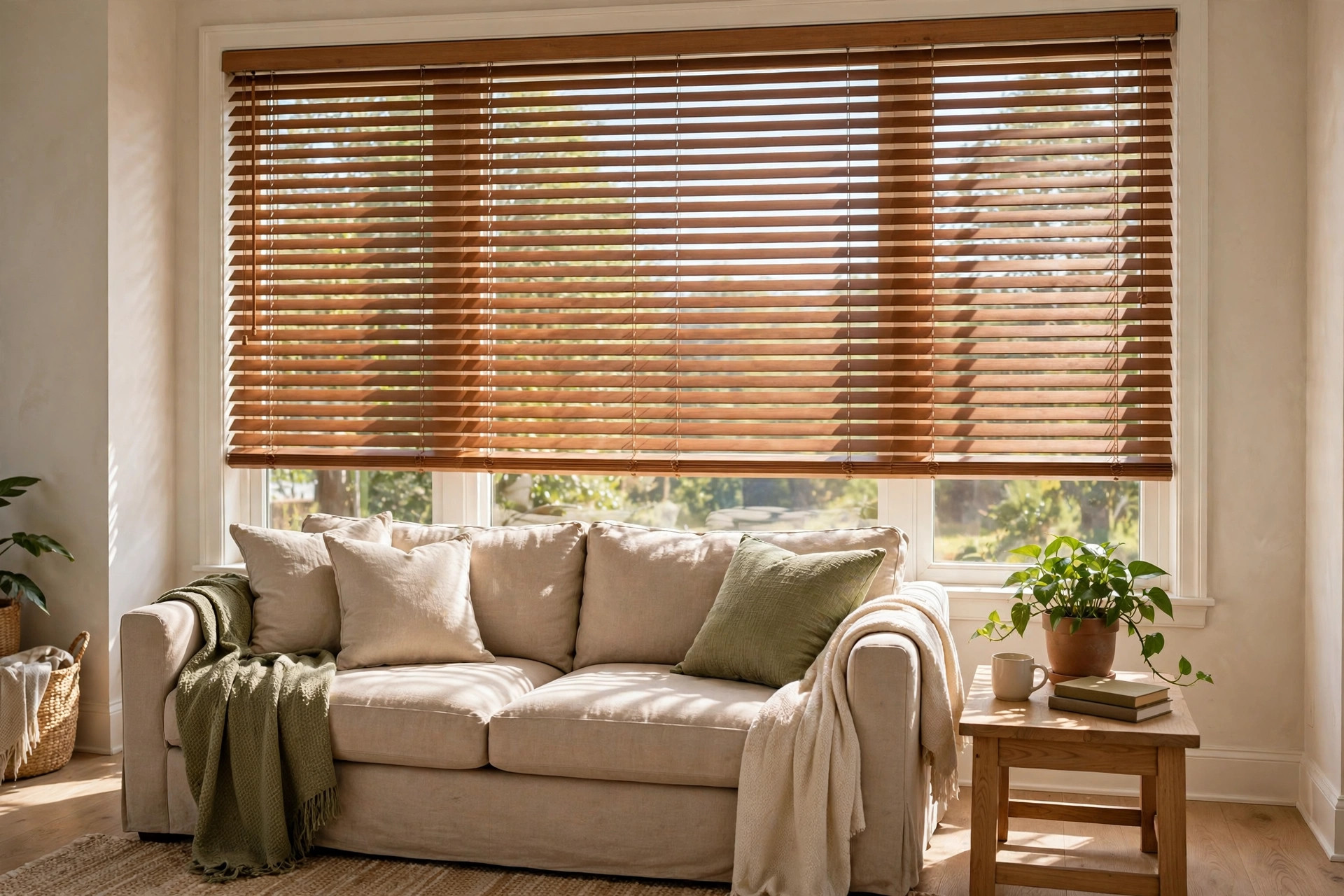

Why This Affordable Real Wood Blinds Buying Guide Matters
Most buyers think real wood blinds cost too much. They look at custom showroom prices and walk away. That is a mistake. An affordable real wood blinds buying guide shows how prices have changed. Mills now sell solid basswood and poplar blinds through large stores at prices far below custom work. You can cover a normal window for the price of a few meals out.
Real wood looks different from plastic and vinyl. It has grain. It has small knots and color shifts that no mold can copy. When sun hits the slats, the wood glows. Decor magazines often show wood blinds in rooms that feel warm and finished. They work in colonials, ranch homes, cottages, and new builds.
This guide walks through each step. It covers wood types, slat sizes, stains, cords, measuring, and price. It also covers care and safety. By the end, you will know how to buy good wood blinds without paying custom prices. If you prefer a fabric look, our affordable bamboo roman shades buying guide covers a close cousin of the wood blind.
What Makes a Wood Blind “Real Wood”: Affordable Real Wood Blinds Buying Guide
Real wood blinds use solid wood slats. The common woods are basswood, poplar, and sometimes oak or cedar. Basswood is the workhorse. It is light, straight, and takes stain well. Poplar costs a little more. It has a tighter grain and holds crisp edges.
The headrail and bottom rail are wood too. Valances match the slats. A real wood blind feels heavy in the hand. Tap a slat and you hear wood, not plastic.
Some stores sell “wood look” blinds made of vinyl or composite. They are cheaper. They do not have this guide’s topic. When a label says “faux wood,” it is not real wood. Faux blinds bend in strong heat. Real wood holds its shape near sunny windows, though it can still warp if soaked. Home improvement guides note that real wood handles dry heat better than vinyl.
Watch for thin stock blinds that claim to be wood. Check the cut edge at the rail. Real wood shows grain at the edge. Plastic shows a flat, solid core.
How to Choose Affordable Real Wood Blinds
Slat Width
Two-inch slats are the classic choice. They fit most windows and give a clean view when tilted open. Two-and-a-half-inch slats suit large windows. They open wider for more view. Narrower slats, around one and one-quarter inches, fit older trim and shallow sills.
Wider slats need fewer ladders and fewer tilt cords. That means less clutter in front of the glass. Pick the size that matches your window depth. A deep sill can hold a wide slat. A shallow frame should take a narrower one.
Wood Type and Stain
Basswood blinds sit at the low end of real wood prices. They stain evenly. White and off-white painted finishes hide the grain and match trim. Natural stains show the grain. Medium stains like chestnut and walnut suit rooms with dark furniture. Light stains like maple and honey suit airy rooms.
Buy all blinds for one room at the same time. Wood takes stain in lots. Two batches of the same color can differ slightly. One order keeps the match clean.
Ladder Tape vs. Ladder Cord
Plain ladder cords run between the slats. Ladder tape is a fabric strip, about one and a half inches wide. Tape covers the cord holes. It blocks a little more light. It also looks softer and more finished. Tape adds some cost. Many shoppers choose it for living rooms and bedrooms, and plain cord for back rooms.
Tilt: Cord or Wand
Cord tilt uses two cords to tip the slats. Wand tilt uses a plastic rod. The wand is safer and easier. Safety guidance warns that loose cords can harm small children and pets. Many makers now sell cordless lift as standard. A cordless blind lifts with a gentle push. It costs more, but it removes the main hazard. If the home has young children, choose cordless or wand tilt. Our top rated cordless cellular shades for american homes looks at another safe option.
Inside Mount or Outside Mount
An inside mount sits within the window frame. It looks built in. It needs a frame at least two inches deep for a full mount, or about one inch for a partial mount. An outside mount hangs on the wall or trim around the window. It covers the whole frame and hides old, rough trim. It also blocks more light at the edges.
Renters often pick outside mounts. They hide uneven frames and need only small holes in the wall.
Measure Twice, Order Once
Measuring is the step where money gets lost. A blind cut one inch too narrow cannot be fixed. Take your time.
For an inside mount, measure the width in three places: top, middle, and bottom. Use the smallest number. Measure the height at left, center, and right. Use the largest number. Write each number down in inches to the nearest eighth.
For an outside mount, measure the window opening, then add three to four inches to the width and three inches to the height. This gives overlap that blocks light.
Steel tape works best. Cloth tape can stretch and lie. Measure twice and write both sets of numbers. Many large retailers sell stock sizes that fit common windows. If your window matches a stock size, you can skip custom ordering and save a lot.
Types and Options on a Budget
Stock Sizes
Stock blinds come in fixed widths, usually in two-inch steps. They hang in standard lengths. They cost far less than custom. If your window is close to a stock width, an outside mount can cover the gap. Check stock first. It is the fastest path to an affordable price.
Cut-to-Width in Store
Some big stores cut stock blinds to your width while you wait. You bring the exact measurement. The saw trims the slats and rails. This gives a near-custom fit at stock prices. It works only for widths smaller than the stock size. It cannot add width.
Made-to-Measure Online
Online blind shops cut each blind to your numbers. They cost more than stock but less than a local showroom. Delivery takes one to three weeks. Read the return policy before you order. Many shops will remake a blind if their cut was wrong, but not if your numbers were wrong.
Motorized Lift
Motorized wood blinds run on small batteries or house current. A remote or phone app lifts them. They cost two to three times a manual blind. For one hard-to-reach window, they earn their keep. For a whole house on a budget, skip them.
Cost and Price: What to Expect
Real wood blinds cost more than vinyl and less than shutters. A stock basswood blind for a normal thirty-six by sixty-four inch window often sells between forty and ninety dollars. Cut-to-width stock lands in the same range. Made-to-measure online usually runs eighty to one hundred sixty dollars for that size. Local custom work can reach two hundred dollars or more per window.
Ways to keep the price down:
– Buy stock sizes when they fit. – Choose basswood over poplar or oak. – Pick painted white instead of rich dark stains. – Skip ladder tape and motorized lift. – Order all blinds in one shipment to save on freight. – Watch for seasonal sales in spring and fall.
Compare the full price, not the blind price alone. Add shipping, mounting hardware, and any cutting fee. A cheap blind with high shipping can cost more than a store blind you carry home. Price comparison sites remind buyers to read the fine print on freight and returns.
A full house of ten windows might run four hundred to nine hundred dollars in stock basswood. That is real money, but it is far less than custom drapery. Good blinds last fifteen to twenty years with care. Spread over that time, the yearly cost is small.
Care and Upkeep
Wood blinds hate water. Never soak them. Dust them once a month. Close the slats flat and wipe with a dry cloth or a lamb’s wool duster. Work from top to bottom. Flip the slats and dust the other side.
For sticky spots, dampen a cloth and wring it almost dry. Wipe the spot, then dry it at once with a second cloth. Standing water raises the grain and can leave pale marks.
Keep blinds out of steamy rooms. A bathroom with no fan will warp wood slats over time. Kitchens near the stove can leave a grease film. Wipe kitchen blinds more often with a dry cloth.
Check the cords each year. Look for fraying at the bottom rail and at the tilt gears. Replace worn cords before they snap. A snapped lift cord lets the blind crash down. Spare cord kits cost little and take minutes to thread. Repair guides show the steps with clear photos.
Sun fades stain slowly. Rotate tilt direction now and then so one side does not take all the light. A south-facing window fades fastest. If fading bothers you, choose a lighter stain that shows less change.
Safety in Homes With Children and Pets
Loose cords are the one real danger of blinds. Federal safety guidance has pushed the industry toward cordless designs. The safest blind has no looped cord at all.
Practical steps:
– Choose cordless lift or wand tilt where you can. – Move cribs, beds, and play areas away from window cords. – Cut looped cords and fit tassels, or use cord cleats mounted high on the frame. – Never tie cords together within a child’s reach. – Check rented homes too. Old blinds in rentals often have long looped cords.
Pets chew cords and bat at tilt wands. Cordless blinds remove the temptation. If a dog or cat sleeps in the window, pick a tough painted finish that wipes clean.
Where to Buy Without Overpaying
Big home stores carry stock basswood blinds in common sizes. You can see the stain and feel the weight before you buy. Staff will cut width in the store at many locations. Prices run low because volume is high. Store sites list stock by size so you can check fit before you drive over.
Online blind shops offer more stains and free samples. Order sample slats first. Screen colors lie. A five-dollar sample can save a two-hundred-dollar mistake. Look for shops with clear measuring guides and a remake promise.
Marketplace sites sell simple wood-look and solid options at sharp prices, though stain choice is narrow. For deep reading on styles and room ideas, browse design articles before you shop. Our best real wood blinds for american homes compares top-rated models side by side.
Avoid door-to-door blind sellers and high-pressure in-home pitches. Get three written quotes if you hire an installer. A normal blind install takes about fifteen minutes per window. Handymen charge far less than showroom installers.
FAQ
Are affordable real wood blinds really solid wood?
Most budget wood blinds use solid basswood slats. Check the label. It should say solid wood or basswood. If it says composite, engineered, or faux, it is not solid wood. The rails and valance should match the slats.
Do wood blinds work in humid rooms?
They work best in dry rooms. Light steam is fine if the room vents well. Do not hang them in a shower area or over a stove with no hood. In damp climates, painted finishes resist moisture better than raw stains.
How long do real wood blinds last?
With dry dusting and gentle use, fifteen to twenty years is common. Cords wear first. Stain fades next. The wood itself lasts decades. Cheap tilt gears can fail sooner, so test the mechanism in the store if you can.
Can I paint wood blinds myself?
Yes. Light sanding, a bonding primer, and two coats of trim paint work well. Remove the blinds and lay them flat. Spray gives the smoothest coat. Brushing works if you keep coats thin. Painted blinds resist moisture a little better than stained ones.
What is the cheapest way to cover many windows?
Stock basswood blinds in white, bought during a sale, cost least per window. Outside mounts let one size fit slightly uneven openings. Cut-to-width service in the store bridges small gaps. Order everything at once to save trips.
Do wood blinds help with energy bills?
They help a little. Closed slats trap a thin layer of air at the glass. Light-colored slats reflect summer sun. They are not insulation like cellular shades. Do not buy them mainly to cut heating bills.
A Short Final Word
Real wood blinds do not have to cost a fortune. Stock sizes, basswood, and simple cords keep the price low. Measure with care, pick a stain that suits the room, and choose cordless where children or pets are near. Dust them dry and they will serve for many years. Work through the steps in this guide, compare three sellers, and buy once. A well-chosen blind looks rich, feels solid, and costs far less than most people expect.
References
Blinds.com. (n.d.). Window blinds, shades, and shutters. https://www.blinds.com Consumer Reports. (n.d.). Product reviews and ratings. https://www.consumerreports.org HGTV. (n.d.). Home and garden ideas. https://www.hgtv.com IKEA. (n.d.). Home furnishings. https://www.ikea.com Lowe’s. (n.d.). Home improvement products. https://www.lowes.com The Home Depot. (n.d.). Home improvement products. https://www.homedepot.com The Spruce. (n.d.). Home and garden advice. https://www.thespruce.com This Old House. (n.d.). Home renovation guidance. https://www.thisoldhouse.com U.S. Consumer Product Safety Commission. (n.d.). Product safety information. https://www.cpsc.gov Wayfair. (n.d.). Furniture and home goods. https://www.wayfair.com
Was this guide helpful?

About Lisa Anderson
The My Garden US editorial team writes practical, in-depth home and garden guides for American homeowners — tested advice, no fluff.
You May Also Like

Stained Glass Window Film Reviews and Buying Guide
May 13, 2026 0 views
Best Curtain Cleaning Services Near Me: A Plain Guide
March 29, 2026 0 views
How to Find the Best Blinds Installation Companies Near Me
May 16, 2026 0 views