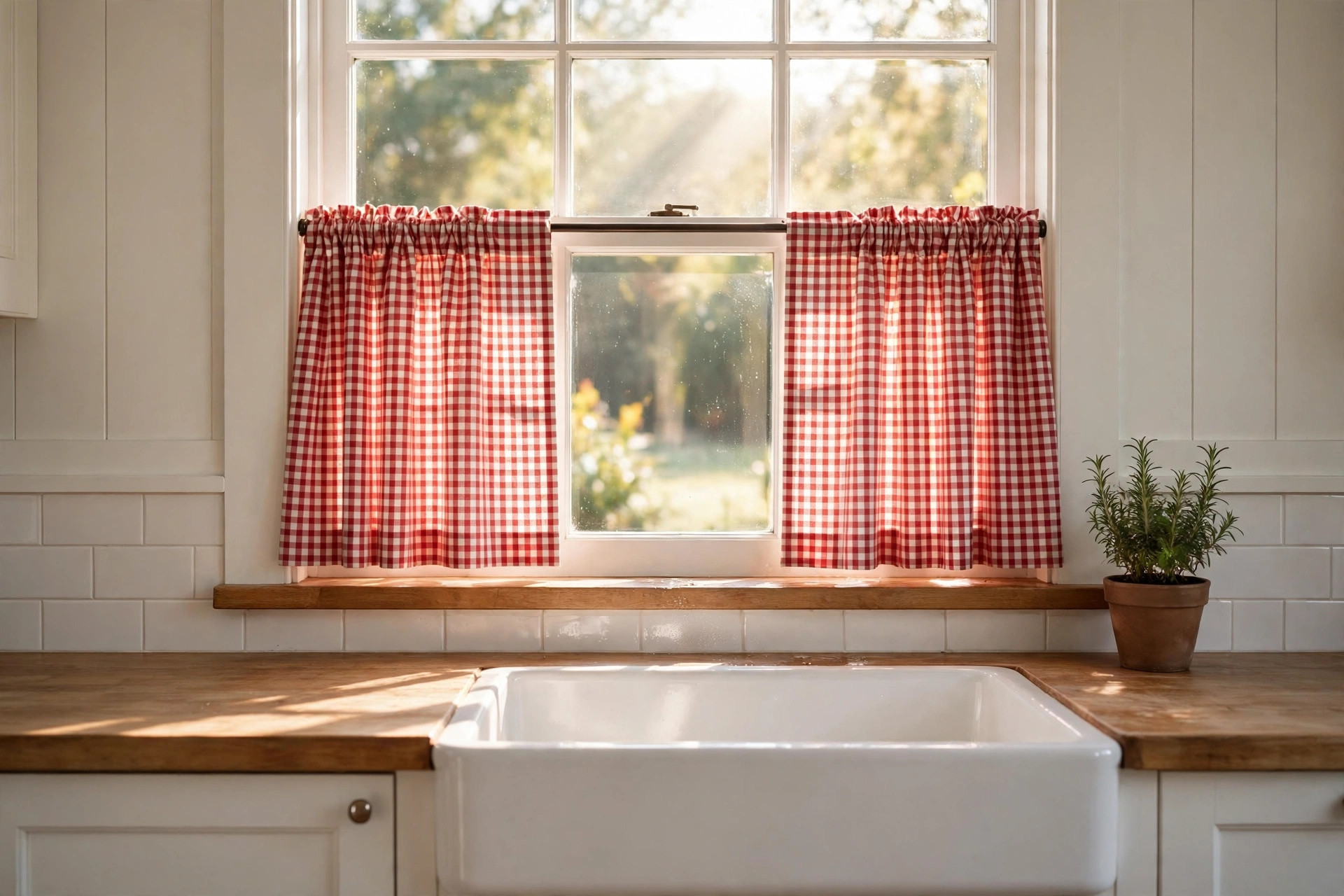

Cafe curtains have dressed kitchen windows for more than a century. They cover only the lower half of the window, which lets daylight pour in from the top while still giving the room a measure of privacy. When shoppers look for custom cafe curtains for kitchens for sale, they are usually after one simple thing: a pair that fits their own windows, matches their kitchen, and lasts through years of cooking steam and sunlight. Ready-made panels come in fixed widths and drops. Custom panels are cut to the exact measurements of your window. This guide walks through everything a buyer needs to know, from fabric and hardware to price and care, so the purchase turns out right the first time.
Why Cafe Curtains Suit the Kitchen
The kitchen is the hardest working room in the house. It fills with heat, grease, and moisture every day. Full-length drapes hang too close to stoves and counters, and they soak up odors. Cafe curtains avoid these problems. They hang from a rod set at the midpoint of the window, so they stay clear of the work surfaces below. Their short length also means they dry faster after washing and are less likely to catch on a passing elbow.
Light is the second reason. Most kitchens face the back of the house, and owners want every bit of daylight they can get. A full curtain blocks the top of the window, where the brightest light enters. A cafe curtain leaves that top half open. The result is a room that feels bright and open, yet the lower half of the window still hides the view of the sink, the counters, and anyone standing at them. Neighbors see charm, not clutter.
There is also the matter of style. Cafe curtains carry a warm, old-fashioned feeling that suits farmhouses, cottages, and country kitchens. A checked gingham pair over a garden window reads friendly and settled. A plain linen pair in white reads clean and modern. Because the panels are small, the fabric cost stays low, so changing them with the seasons is a habit many owners enjoy. Shoppers who want to buy cafe curtains for kitchens online in Arizona often pick light cottons that breathe in desert heat, while buyers who buy cafe curtains for kitchens online in Florida tend to favor moisture-friendly blends that hold up in humid air.
How to Choose the Right Pair: Custom Cafe Curtains for Kitchens for Sale
Choosing well comes down to three decisions: the size, the fabric, and the rod. Each one shapes how the finished curtains will look and how long they will serve.
Measure the Window First
Never order before measuring. Start with the width of the window frame, measuring from the outer edge of the trim on one side to the outer edge of the trim on the other. Write the number down. For a gathered look, the curtain panels should measure one and a half to two times the width of the rod when flat. This fullness gives the fabric its soft ripples. A flat panel with no fullness looks limp and cheap.
Next, decide where the rod will sit. The classic cafe rod mounts at the vertical midpoint of the window, or a little above it. Measure from the planned rod position down to where you want the curtain to end. Most cafe curtains end at the window sill, just above it, or just below it. A sill-length panel is the safest choice in a kitchen, because it stays clear of counters and appliances.
Also measure the depth of any window hardware. If the window has a crank handle or a deep sill, note how far it sticks out into the room. The curtain should clear it. Detailed measuring advice appears in many places, including the custom sizing tools at Blinds.com and the measuring guides published by Bob Vila.
Pick the Rod and Hardware
Cafe curtains hang from a slim rod, usually a tension rod, a sash rod, or a small decorative rod with simple finials. Tension rods fit inside the window frame with no screws, which makes them a favorite of renters. They work best on narrow windows, generally under 48 inches wide. For wider windows, a mounted rod with center support brackets holds the weight better.
Match the finish of the rod to the kitchen. Brushed nickel and chrome suit modern kitchens. Oil-rubbed bronze and matte black suit farmhouse and rustic rooms. Brass pairs well with traditional cabinetry. The rod should extend a few inches past the window trim on each side, so the panels can stack back and let in full light when you want it. Stores such as Home Depot and Lowe’s stock a wide range of these small rods in their curtain hardware aisles, and their staff can help match brackets to your wall type.
Fabrics and Styles to Know
Fabric decides how the curtains hang, how much light they filter, and how often they need washing. Kitchens demand fabrics that forgive.
Classic Cotton and Gingham
Cotton is the workhorse of kitchen curtains. It washes well, presses easily, and comes in every pattern imaginable. Gingham checks, stripes, and small florals are the classic choices. A medium-weight cotton holds its shape on the rod and gathers into even folds. Look for pre-shrunk fabric if you plan to wash the panels often, because cotton can shrink by several percent in a hot dryer.
Linen and Sheers
Linen brings a relaxed, natural texture that softens a modern kitchen. Pure linen wrinkles, which many owners accept as part of its charm. Linen blends with cotton or polyester resist wrinkles better and cost less. Sheer panels in voile or lace let in the most light and suit windows that need only a light screen. They do little for privacy at night, so pair them with a blind if the kitchen faces a street.
Patterns That Age Well
Bold novelty prints can feel dated within a few years. Checks, stripes, ticking, and small-scale florals have stayed in style for decades. Solid colors in white, cream, sage, and soft blue also age gracefully. If you want the curtains to last a decade, pick a pattern you would still enjoy in five years. Decorators at Apartment Therapy often advise choosing a quiet pattern for the curtains and letting a rug or wall art carry the bolder color.
For shoppers who prefer ready-made over custom, large retailers carry extensive ready-made cafe curtain collections. Browsing Wayfair or the huge marketplace at Amazon can give a good sense of current styles and prices before committing to a custom order.
What Custom Cafe Curtains for Kitchens Cost
Custom work costs more than off-the-shelf panels, but the gap is smaller than many people expect. A pair of ready-made cotton cafe curtains typically sells for 15 to 40 dollars. Custom panels made to your exact measurements usually start around 50 dollars a pair for simple cotton and rise to 150 dollars or more for premium linen, lined panels, or hand-finished hems.
Several factors move the price. Fabric choice is the largest: linen and specialty prints cost more per yard than basic cotton. Lining adds 20 to 40 percent to the bill but protects the fabric from sun damage and gives a fuller look from the street. Special details such as scalloped hems, embroidery, or contrasting trim add labor cost. Rush orders cost more than standard lead times, which usually run two to four weeks.
To keep costs down, order panels in standard widths that come close to your needs and accept a slightly fuller gather. Choose a mid-weight cotton rather than linen. Skip the lining on windows that face away from harsh afternoon sun. And compare quotes: prices vary widely between workrooms. Reading current buying guides, such as the curtain hanging advice at The Spruce, helps set a realistic budget before you contact a maker.
Buyers who need insulation as well as looks may want to compare their options with custom thermal insulated curtains for small apartments, which use heavier lined fabrics to cut drafts around windows.
Care and Upkeep
Kitchen curtains need washing more often than curtains in any other room. Cooking grease settles on fabric as a fine film, and sunlight slowly fades colors. Plan to wash cotton cafe curtains every one to three months, depending on how much frying you do. Remove the panels from the rod, shake out dust, and wash in warm water with a mild detergent. Avoid chlorine bleach on colored prints; use an oxygen-based whitener for whites that have yellowed.
Dry on low heat and remove the panels while they are still slightly damp. Hang them back on the rod and smooth the gathers by hand. The warmth of the room will finish the job, and most wrinkles will fall out on their own. Iron only if needed, using the setting suited to the fabric.
Inspect the rod brackets once a year. Steam loosens screws over time, and a sagging rod will drag the panels against the window frame. Tighten or replace brackets before they fail. If the fabric has faded badly on the sun side, consider rotating the panels or adding a simple liner to extend their life.
A Note on Safety
Kitchen windows sit near stoves, toasters, and other heat sources. Keep curtains well clear of open flames and heating elements. Never let a panel rest against a gas burner or a toaster oven. Choose fabrics labeled flame-resistant or treated for kitchen use if the window is close to the cooktop.
Cord safety matters too. Many kitchen windows also carry blinds or shades with cords. The Consumer Product Safety Commission warns that corded window coverings pose a strangulation risk to small children and pets. If your kitchen window has both a shade and cafe curtains, consider replacing corded shades with cordless models or installing cord cleats high on the frame, well out of reach.
Frequently Asked Questions
How long should cafe curtains be? Most cafe curtains end at the sill, just above it, or just below it. Sill length is the most practical in a kitchen because it keeps the fabric clear of counters and appliances. Measure from your rod position to the desired end point before ordering.
Do cafe curtains provide privacy at night? They provide partial privacy. Because they cover only the lower half of the window, they hide the lower part of the room but leave the top open. With interior lights on at night, people outside can see through the uncovered top half. Pair them with a shade or blind for full nighttime privacy.
Can I use cafe curtains on a wide window? Yes. Order enough panels to cover one and a half to two times the rod width for proper fullness. On windows wider than about 60 inches, use a mounted rod with a center support bracket rather than a tension rod, so the rod does not sag in the middle.
What is the difference between custom and ready-made cafe curtains? Ready-made panels come in fixed sizes and patterns. Custom panels are cut to your exact width and length, and you choose the fabric, hem style, and details. Custom costs more and takes two to four weeks, but the fit is exact and the choices are wider.
How do I keep white cafe curtains from yellowing? Wash them regularly in warm water with a mild detergent and an oxygen-based whitener. Avoid chlorine bleach, which can weaken cotton fibers. Hang them to finish drying in fresh air when possible, and rotate the panels so both sides get equal sun exposure.
Are cafe curtains hard to install? No. Most installations need only a tape measure, a level, and a screwdriver. Tension rods need no tools at all. Mounted rods need two brackets screwed into the wall or window trim. A single window usually takes less than half an hour.
A Final Word
Custom cafe curtains for kitchens for sale give owners what ready-made panels often cannot: an exact fit, a chosen fabric, and details that match the room. Measure with care, pick a fabric that forgives kitchen life, and mount the hardware solidly. With those steps done, the curtains will do their quiet work for years, softening the light, screening the sink, and giving the kitchen its finished look.
References
Amazon. (n.d.). Online shopping. https://www.amazon.com Apartment Therapy. (n.d.). Home design ideas and inspiration. https://www.apartmenttherapy.com Blinds.com. (n.d.). Window blinds, shades, and shutters. https://www.blinds.com Bob Vila. (n.d.). Home improvement advice. https://www.bobvila.com Lowe’s. (n.d.). Home improvement products. https://www.lowes.com The Home Depot. (n.d.). Home improvement products. https://www.homedepot.com The Spruce. (n.d.). Home and garden advice. https://www.thespruce.com U.S. Consumer Product Safety Commission. (n.d.). Product safety information. https://www.cpsc.gov Wayfair. (n.d.). Furniture and home goods. https://www.wayfair.com
Was this guide helpful?

About Jennifer Lee
The My Garden US editorial team writes practical, in-depth home and garden guides for American homeowners — tested advice, no fluff.
You May Also Like

A Practical Guide to Window Treatment Installation Services Cost in the USA
February 12, 2026 0 views
How to Buy Arched Window Shades Online in California
April 17, 2026 0 views
Machine Washable Bay Window Curtain Rods for Sale: A Full Buying Guide
July 28, 2026 0 views