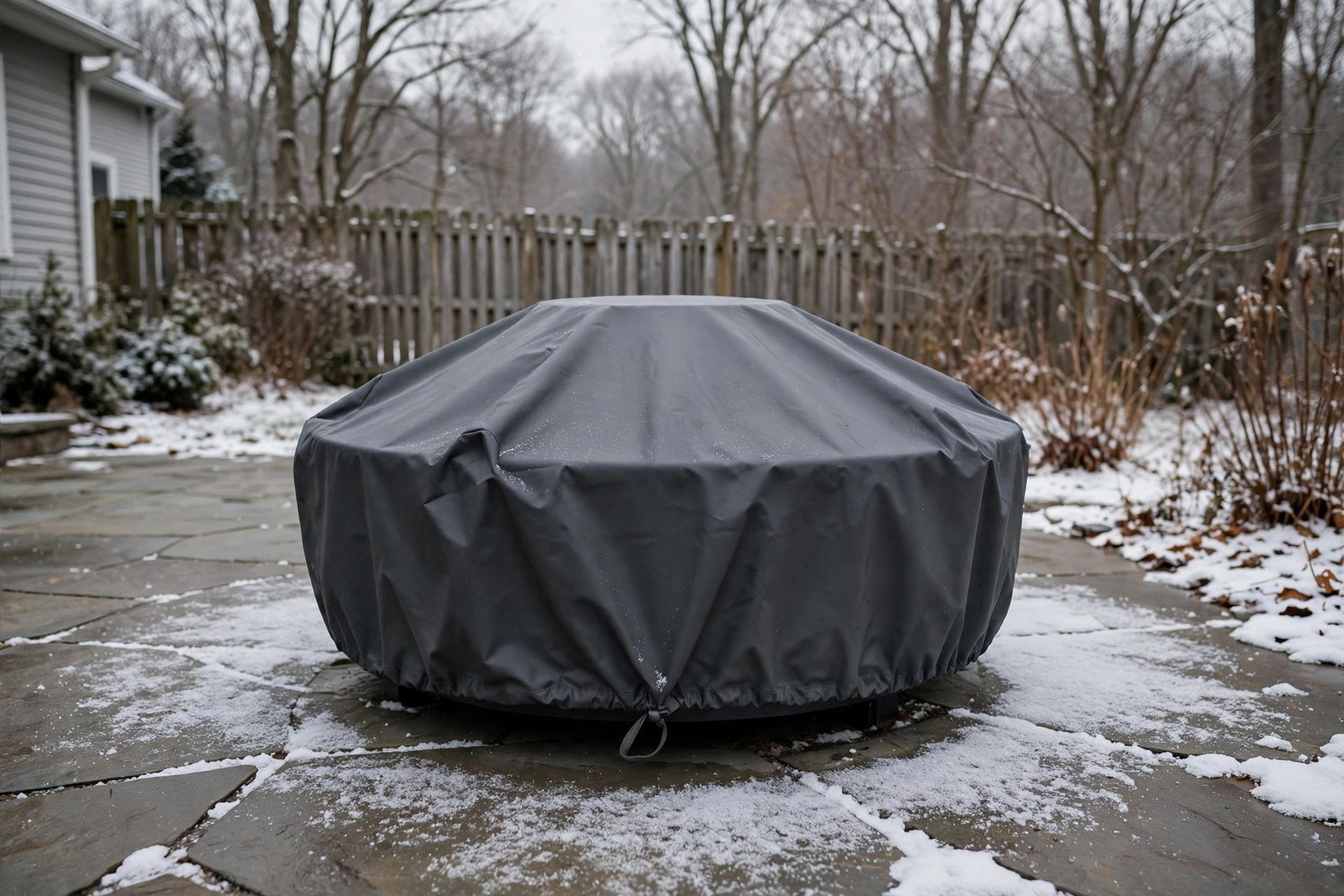

A gas fire pit is one of the great joys of a backyard. On cool autumn nights it warms the patio and draws the family outside. But when winter comes, snow, ice, and freezing rain can damage the burner, the ignition, and the finish. If you want to know how to winterize a gas fire pit, the answer is simple: clean it, shut it down, protect the gas supply, and cover it well. The whole job takes about an hour. Do it before the first hard freeze, and your fire pit will light up again in the spring.
Why Winterizing Matters
Water is the main enemy. Rain and snow find their way into every crack, and when water freezes inside a burner it expands. That expansion can crack the metal, block the gas ports, and ruin the ignition system. A repair in the spring costs far more than a good cover costs now.
Salt is another problem. In cold regions, salt spread on patios and walks lands on metal and starts rust. Aluminum and stainless steel hold up better than plain steel, but no fire pit is safe from months of wet, salty air.
Animals cause trouble too. Mice and insects look for warm, dry shelter in the fall, and the inside of a fire pit is a fine hiding place. They chew wires and build nests in the burner pan. A quick winterizing job keeps them out.
Finally, there is the gas itself. A propane tank left open to the weather can develop a rusty valve, and a natural gas line left unprotected can let moisture creep back toward the house. Shutting down the fuel supply is a safety step as well as a care step.
What You Will Need: How to Winterize Gas Fire Pit
Gather your tools before you start: a soft brush, a bucket of warm soapy water, a soft cloth, a small vacuum, and a wrench that fits your gas line. You will also need a quality fire pit cover, and propane owners may want a separate cover or bag for the tank. A can of compressed air helps blow dust from the burner ports. You do not need special skills. Any home owner can do this job.
How to Choose a Gas Fire Pit Winter Cover
The cover is the heart of winterizing. A thin plastic tarp is not enough: tarps trap moisture underneath, blow away in wind, and tear on sharp edges. A fitted gas fire pit winter cover is far better. Look for heavy, weatherproof fabric labeled waterproof, not just water resistant, with vents or mesh panels that let air move. Without vents, condensation builds up inside and rusts the metal anyway.
Measure the width, depth, and height of your fire pit before you buy. A cover that is too tight will strain at the seams, and one that is too loose will catch the wind. Many covers come with drawstrings or buckles at the base that keep them in place through storms. Check the return policy so you can swap the size if the fit is wrong.
The same rules of heavy fabric and good vents apply to the rest of your patio. Read our guide to weatherproof patio furniture covers before you shop.
Step by Step: Winterizing a Natural Gas Fire Pit
A natural gas fire pit hooks to a gas line that runs into your house. The process is simple, but take it in order.
First, turn off the fire pit with the key valve or the control knob. Then find the gas shutoff valve for the line, often near the pit or on the side of the house, and turn it to the closed position. If you are not sure where the shutoff is, call a plumber or your gas company. Do not guess with gas.
Second, let the fire pit cool fully. If you used it the night before, wait until the next day, since the burner and the media hold heat for a long time.
Third, remove the media: the lava rock, fire glass, or ceramic logs in the burner pan. Wash them in warm soapy water to remove ash and grease. Rinse well and dry in the sun. Store them in a dry bag or a lidded bucket in the garage. Clean media lasts longer and burns cleaner in the spring.
Fourth, clean the burner. Brush loose ash and leaves from the burner pan, and vacuum dust from around the burner ring. Look at the small holes in the burner: these are the gas ports. If they are clogged, blow them clear with compressed air or poke them gently with a soft wire. Never use a hard metal pick that could widen the holes.
Fifth, wipe down the outside with warm soapy water and a soft cloth, then rinse and dry. On painted steel, touch up chips with high-heat paint before winter so rust cannot start. On stone or tile, check the grout lines for cracks.
Sixth, protect the key valve. Many natural gas fire pits have a small key valve that sits in the open. Cover it with the cap that came with the unit, or wrap it in a plastic bag tied with a rubber band. Water in the valve will freeze and jam it.
Seventh, put the cover on. Make sure the inside is fully dry first, then pull the cover over the pit and tighten the drawstring or fasten the buckles. Check that the cover reaches the ground or the base all around.
Step by Step: Winterizing a Propane Fire Pit
Propane fire pits have one extra part: the tank. The rest of the steps match the natural gas list above, so follow the same cleaning routine. Here is what is different.
Turn off the gas at the tank valve by turning the knob clockwise until it stops. Then disconnect the hose with your wrench, turning gently. A little hiss of gas may escape when the seal breaks. That is normal, and it will stop in a second.
Store the tank outside, never in a garage or shed. Propane tanks must stay in open air so a small leak cannot build up gas in a closed space. Set the tank upright on a flat surface, a few feet from the house wall if you can. Cover the valve on top with a small plastic cap or bag from any hardware store. This keeps rain and insects out of the valve threads.
Check the tank for rust before you store it. A little surface rust is fine, but deep rust around the valve or the collar is a warning sign. If the tank looks bad, exchange it for a fresh one in the spring. Many stores run tank exchange programs all year.
For rules on propane tank storage in your area, your local fire department is a good source. Retailers like Lowe’s also print tank safety guides at the store.
The hose and regulator can stay attached to the fire pit, but coil the hose neatly under the cover and inspect it for cracks. Rubber hoses age in the sun. If the hose feels stiff or shows splits, plan to replace it before spring: a new hose and regulator is a cheap part and an easy fix.
Where to Store Your Fire Pit for Winter
Small fire pits can move indoors. A tabletop model can spend the winter in a garage or shed, but clean it first and cover it even indoors. Dust and mice are everywhere.
Most large fire pits must stay outside, and a good cover is all they need. But choose the spot with care. Move a portable pit a few feet from the house. This keeps falling ice from the roof from landing on it, and it keeps snow from piling up against the house and the pit together.
Do not store a fire pit under a deck or an overhang where water drips in one spot. A steady drip will find the one weak seam in any cover. Flat, open ground with good drainage is best. If your patio holds puddles, set the pit on a few bricks so water flows under it instead of sitting in the base.
Our article on patio furniture storage ideas for winter has more tips on choosing dry spots. For bins and boxes to hold cushions and small parts, IKEA carries simple outdoor storage options.
Cost and Price of Winterizing
Winterizing a gas fire pit is a cheap job. A quality fitted cover costs between thirty and eighty dollars for most models, and large fire table covers can run to one hundred dollars or more. That is the main cost. Everything else is labor and a bucket of soapy water.
A bag or cap for the propane tank valve costs a few dollars. High-heat touch-up paint and compressed air each cost under ten dollars. A replacement hose and regulator, if you need one, costs between twenty and forty dollars.
Compare that to repairs: a new burner ring runs fifty to one hundred dollars, a new ignition system eighty to one hundred fifty, and a full burner pan replacement can pass two hundred dollars. Labor for a technician visit adds more. Spending fifty dollars on a cover in the fall is the better deal.
If you are shopping for a new fire pit next spring, retailers like Wayfair and Frontgate carry models with covers included. Some outdoor coffee table fire pit designs now come with fitted covers in the box.
Care and Upkeep Through the Winter
Winterizing is not a one-time job. Check the fire pit once a month during the cold season. Pull the cover off, look underneath, and feel for dampness. If the inside is wet, dry it with a cloth and leave the cover off for a sunny afternoon before putting it back on.
Brush snow off the cover after each storm with a soft broom, never a metal shovel, since a heavy load can press the cover onto sharp edges and tear it. Check the buckles and drawstrings too: wind loosens them, and a flapping cover wears through at the corners.
If you get a warm spell in midwinter, it is tempting to uncover the pit and light it. That is fine, since gas fire pits work in winter. Just dry everything before you relight it, and re-cover the pit when the cold returns. Moisture left inside after a winter fire will freeze overnight.
Safety Notes
Gas safety comes first. Never store a propane tank indoors, in a basement, a garage, or a shed. Tanks belong outside in open air. This is a fire code rule in most towns.
Never cover a fire pit that is still warm. The cover can melt, and trapped heat can ignite nearby dry leaves. Wait a full day after the last fire.
Keep the gas shutoff valve closed all winter, and tape a small note on the control knob that says the valve is off. This reminds you in the spring to open the supply valve before you try to light the pit, and it saves you a confusing ten minutes.
If you smell gas at any point, stop. Do not light a match or turn on a light switch near the smell. Go outside and call your gas company. Gas leaks are rare, but they are serious, so teach every adult in the house where the shutoff valve is.
For general home safety guides, Consumer Reports and The Spruce publish plain-language checklists for home owners.
Frequently Asked Questions
Do I need to winterize a gas fire pit in a mild climate?
Yes, but the job is lighter. In places where it never freezes, skip the deep protection steps. Still clean the pit, shut off the gas, and use a cover. Rain and salt air damage fire pits even where snow never falls.
Can I leave the propane tank connected all winter?
It is better to disconnect it. A connected tank leaves the hose and regulator under pressure all winter, and cold makes rubber hoses brittle. Disconnect the hose, cap the tank valve, and store the tank upright outside.
What if my fire pit is built into the patio?
Built-in fire pits cannot move, so the cover matters even more. Buy a fitted cover with a weighted or strapped base, and make sure the gas shutoff valve is easy to reach. Some owners add a small waterproof box over the key valve. The cleaning steps are the same.
How do I know if the burner is damaged?
In the spring, reconnect the gas and light the pit, then watch the flame. It should be even all around the burner ring. Yellow, lazy flames or gaps with no flame mean clogged or damaged ports, so clean the ports first. If the flame is still uneven, the burner may need a new ring.
Can I use a generic tarp instead of a fitted cover?
You can, but it is a poor choice. Tarps trap moisture, blow loose, and offer no vents. A fitted cover with vents costs a little more and lasts for years. If you must use a tarp, tent it over the pit so air flows under the edges, tie it down, and check it after every windstorm.
Should I bring the fire glass or lava rock inside?
Yes. Bag it and store it in a dry place. Fire glass and lava rock are porous and soak up water over the winter. In the spring, trapped water turns to steam when the burner heats up, and wet lava rock can even pop and crack. Dry storage avoids the whole problem.
A Final Word
A gas fire pit is an investment in your home and your time outdoors. Winter is hard on it, but the fix is easy: clean it well, shut off the gas, store the media dry, put on a fitted cover, and check it once a month. That is the whole method of how to winterize a gas fire pit. An hour of work in the fall buys you a fast, clean first fire in the spring. For more seasonal patio care, browse the outdoor living guides at HGTV and the step-by-step home projects at Bob Vila. For background on weather-resistant outdoor furniture materials, see Polywood.
References
Bob Vila. (n.d.). Home improvement advice. https://www.bobvila.com Consumer Reports. (n.d.). Product reviews and ratings. https://www.consumerreports.org Frontgate. (n.d.). Outdoor furniture and decor. https://www.frontgate.com HGTV. (n.d.). Home and garden ideas. https://www.hgtv.com IKEA. (n.d.). Home furnishings. https://www.ikea.com Lowe’s. (n.d.). Home improvement products. https://www.lowes.com Polywood. (n.d.). Outdoor furniture. https://www.polywood.com The Home Depot. (n.d.). Home improvement products. https://www.homedepot.com The Spruce. (n.d.). Home and garden advice. https://www.thespruce.com Wayfair. (n.d.). Furniture and home goods. https://www.wayfair.com
Was this guide helpful?

About Lisa Anderson
The My Garden US editorial team writes practical, in-depth home and garden guides for American homeowners — tested advice, no fluff.
You May Also Like

Best Electric Patio Heater for Balcony: A Buyer’s Guide
February 19, 2026 0 views
Outdoor Rug for Deck Waterproof Reviews: What Shoppers Should Know
August 22, 2026 0 views
Affordable Outdoor Dining Table for Eight: A Plain Guide to Buying Well and Paying Less
February 27, 2026 0 views