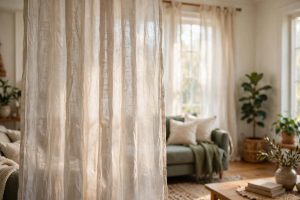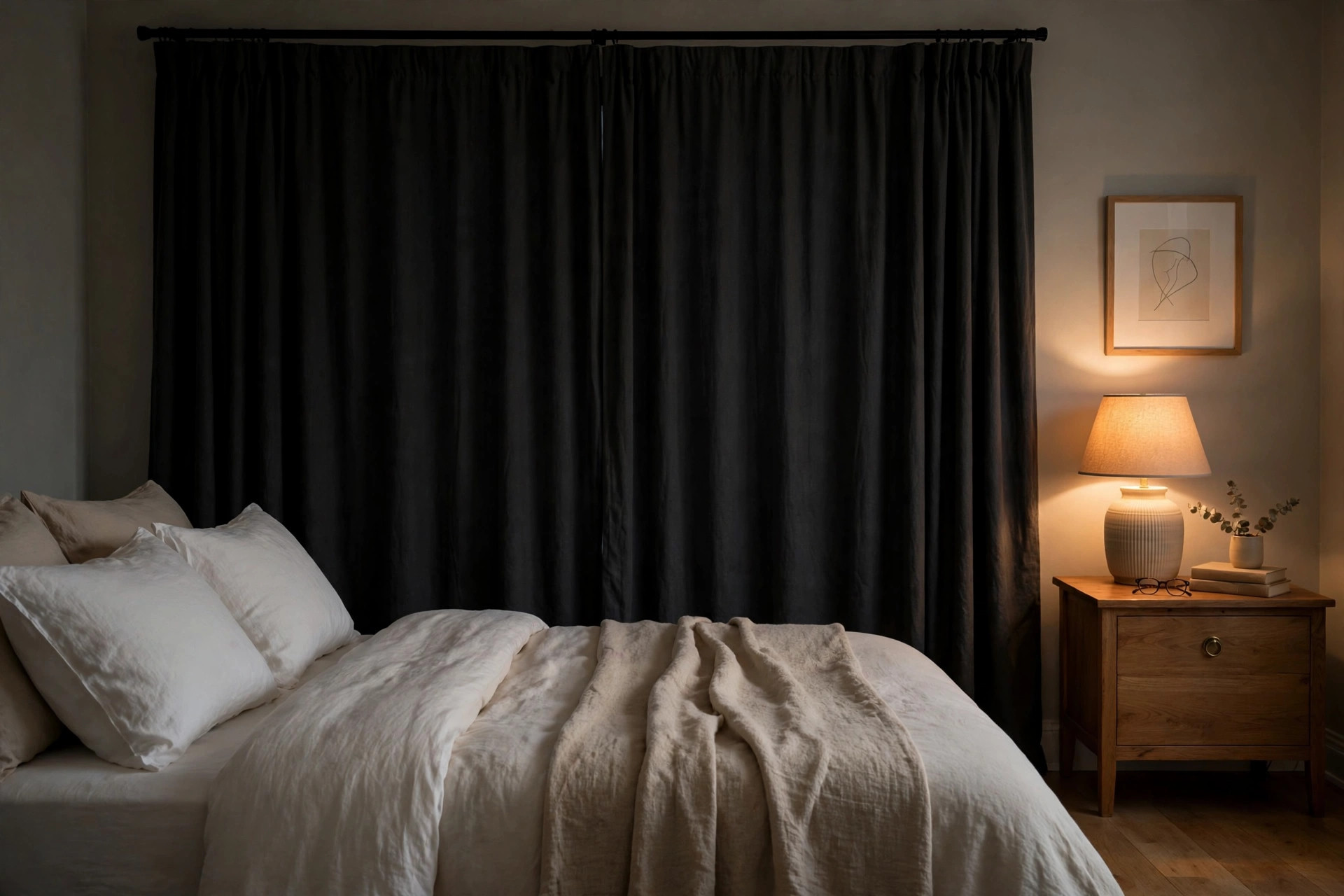

Many people search for top rated blackout curtains for bedrooms for sale because they want real darkness. A bedroom that stays dark in the morning helps the body rest. Street lights, car headlights, and the early sun all steal sleep from tired people. Heavy curtains with a true blackout lining stop most of that light. This guide explains what to buy, how to hang it, and what it costs. Every point below comes from plain facts about home goods. Read it through once, and you will know exactly what to look for in the store or online.
Why Blackout Curtains Matter for the Bedroom
Light controls the body clock. When the eyes sense light, the brain cuts back on melatonin, the hormone that tells the body it is time to sleep. Even small amounts of light through thin curtains can wake a light sleeper. Blackout curtains block that light and keep the room dark for longer.
Darkness is not the only gain. A thick blackout curtain adds a layer of insulation over the glass. In winter it slows heat loss. In summer it keeps hot sun from warming the room. Many owners also note that the room feels quieter, since heavy fabric dampens street noise a little.
Shift workers gain the most. People who work at night and sleep during the day need full darkness at noon. Parents of small children gain, too, since a dark room can help a child nap longer. Anyone who sleeps facing the sunrise will feel the change on the first morning.
What to Look for When You Shop: Top Rated Blackout Curtains for Bedrooms for Sale
Ratings matter, but they do not tell the whole story. A top rated panel on one major home retailer may use a different test standard than a top rated panel on another large home goods store. Look past the stars and check the facts below.
Fabric and Lining
The lining does the real work. Many blackout curtains use a triple-weave fabric, where dark threads are woven into the middle layer. Others use a rubber or foam coating on the back. Coated backings block light well but can stiffen the drape and may need care when washing.
Check the stated light-blocking level. Good panels block 95 to 100 percent of incoming light. Panels that claim “room darkening” are weaker and are not true blackout curtains. Read the product page or the package for the exact words.
Fabric on the front is mostly a matter of taste and price. Polyester is the most common choice. It holds its shape, resists wrinkles, and costs less than silk or linen blends. Microfiber panels feel soft and hang with clean folds. Velvet blackout curtains look rich but are heavy and cost more. If you want luxury blackout curtains for bedrooms, velvet or thick woven panels give a more finished look.
Fit and Coverage
Fit matters more than price. Light leaks in at the edges, so the curtain must be wider and taller than the glass. A good rule is to add four to six inches on each side and four inches above the frame. Panels should meet or overlap in the middle when closed.
Measure the window before you shop. Use a steel tape and write down the width and the drop. Many shoppers skip this step and buy panels that are too short. A panel that hangs below the sill but above the floor looks short and lets light in under the hem.
A wrap-around rod helps a great deal. These rods curve back toward the wall at each end, so the curtain edges sit close to the wall. Light gaps at the sides shrink to almost nothing. For wide windows, two or three panels per side work better than one thin panel.
Color and Style
The lining blocks the light, so the front color is your choice. Dark colors hide stains and give a cozy look. Light colors brighten the room during the day when the curtains are open. Gray, navy, and beige are steady sellers because they match most walls.
Look at the header style. Grommet tops slide on the rod and are easy to pull. Rod pockets look tidy but are hard to move. Back tabs hide the rod and give a tailored line. Pinch pleat headers look formal and need hooks and rings. Design sites often show these styles in real rooms, which helps you picture them in your own home.
Main Types of Blackout Curtains
Not all blackout panels are the same. The types below cover most of what you will find for sale.
Triple-weave panels. Three layers of fabric woven together, with dark threads in the center. They are soft, drape well, and usually wash at home. Many top rated listings today use this build.
Coated or foam-back panels. A foam layer is bonded to the back of the fabric. They block light well and cost less. The coating can wear over time and may need gentler washing.
Thermal insulated blackout curtains. These add a thick insulating layer, sometimes with a reflective backing. They cut heat gain and loss through the glass. Shoppers in small flats often look for custom thermal insulated curtains for small apartments to pair with standard panels.
Curtain plus liner sets. A decorative face fabric with a separate blackout liner sewn behind it. This gives the best look of the group, since the front can be any fabric. It also lets you replace the liner alone if it wears out.
Portable blackout panels. Suction-cup or hook-and-loop panels that stick to the glass. They suit renters who cannot drill rods. They do not look as neat, but they work well for travel and nursery use.
Cost and Price
Blackout curtain prices run from about fifteen dollars to well over two hundred dollars per panel. The wide range comes from fabric, size, brand, and lining quality.
Budget panels in polyester with a basic coating run fifteen to forty dollars per panel. Mid-range triple-weave panels run forty to ninety dollars per panel. Premium panels in velvet or with sewn liners run ninety to two hundred dollars and more per panel.
A standard bedroom window usually needs two panels. So a full window treatment often costs thirty to four hundred dollars before the rod and hardware. Rods add ten to fifty dollars. Ring sets and tiebacks add a little more.
Watch for bundle sales. Many stores sell matching pairs or room sets that cut the per-panel cost. Online marketplaces and warehouse-style stores often run home textile sales in January and July. Compare the panel count, not just the price, since some listings show one panel and others show two.
Shipping and returns matter for online buys. Curtains look different in person than on a screen. Buy from stores with free returns so you can check the true darkness in your own room. One national furniture chain and one Swedish home goods retailer both carry wide ranges of blackout options with clear return terms.
Care and Upkeep
Blackout curtains last longer with gentle care. Read the care label before you wash anything.
Most triple-weave polyester panels can be machine washed in cold water on a gentle cycle. Use mild soap and skip the bleach. Tumble dry on low or hang to dry. Foam-backed panels need more care. Heat can crack the coating, so wash cold and line dry.
Vacuum the panels now and then with an upholstery brush to keep dust down. Sun-facing panels fade over time. Turn them or swap sides once a year if they hang in strong sun. Steam out wrinkles with a hand steamer held a few inches from the fabric.
If the lining starts to crack or peel, the panel loses its blackout power. You can add a clip-on liner behind it rather than replacing the whole curtain. Liners are cheap and extend the life of good panels by years.
Safety Around the Windows
Heavy curtains need sturdy rods and brackets. A panel that falls can hurt a child or damage the sill. Use wall anchors in drywall and drive screws into studs where you can. Follow the weight rating on the rod.
Keep cords away from children. Loose pull cords are a known hazard in homes with small children. Choose cordless or wand-draw panels for the nursery and any child bedroom. The federal safety site posts clear guidance on window covering safety. Cordless options are easy to find now and cost little more.
Check clearance above radiators and heaters. Thick curtains can trap heat or drape onto hot surfaces. Keep the fabric a few inches clear of any heat source. This is basic fire sense and applies to all window coverings, not just blackout types.
In a rental home, use tension rods or adhesive hooks if the lease forbids drilling. Test the hold before you hang heavy panels. A slow sag is a warning sign. Move the brackets closer together or switch to lighter panels.
Layering Blackout Panels with Other Window Treatments
Many people pair blackout curtains with a light layer. Sheer panels behind the blackout drapes let soft light in during the day and give privacy at night. Shoppers who like this layered look sometimes start with top rated sheer linen curtains for usa homes as the day layer.
A double rod makes layering simple. The inner rod holds the sheer, the outer rod holds the blackout panel. Pull the heavy panel shut at night and leave the sheer drawn by day. This gives the room two moods without extra hardware.
For a cleaner look, mount the blackout panel inside the frame as a roller shade and hang curtains outside for style. Specialist window treatment retailers show both approaches with photos. Either way, keep the blackout layer wide enough to cover the glass edges.
Frequently Asked Questions
Do blackout curtains make the room fully dark? Good panels block 95 to 100 percent of light, but small gaps at the edges still let light in. A wrap-around rod and panels that overlap in the middle cut those gaps down. Some light may still show at the top and bottom.
Can I wash blackout curtains at home? Most polyester triple-weave panels wash fine in cold water on gentle. Foam-backed panels need gentler care and should be line dried. Always read the care label first. When in doubt, wash one panel and check the backing before washing the rest.
Will blackout curtains help with noise? They help a little. Heavy fabric dampens sound, but it will not block traffic or loud neighbors. They work best as one part of a quieter room, along with sealed windows and soft furnishings.
Are blackout curtains worth it for a rental? Yes, especially portable panels or tension-rod setups. They need no drilling and move with you. Good sleep is worth the small cost. Take them down and pack them flat when you leave.
How do I know the curtains are true blackout and not just room darkening? Check the product wording. True blackout panels state a blocking level near 100 percent or use the word “blackout” on the package. “Room darkening” means less blocking. Hold the fabric to a bright lamp in the store. If much light passes through, it is not a full blackout.
What color works best for a bedroom? Any color works, since the lining does the blocking. Dark tones hide marks. Light tones keep the room bright by day. Match the wall and bedding. Neutral shades are the safest choice if you plan to redecorate later.
A Short Final Word
The best blackout curtains are the ones that fit your window, match your room, and truly block the light. Measure first. Buy from a store with easy returns. Hang them wide and high. Then test them at noon with the lights off. When the room falls dark, you will know the purchase was worth it. Browse home improvement guides for hanging tips and style ideas before you start. Good curtains and a dark room make better sleep a habit, not a wish.
References
Blinds.com. (n.d.). Window blinds, shades, and shutters. https://www.blinds.com HGTV. (n.d.). Home and garden ideas. https://www.hgtv.com IKEA. (n.d.). Home furnishings. https://www.ikea.com Lowe’s. (n.d.). Home improvement products. https://www.lowes.com Pottery Barn. (n.d.). Furniture and home decor. https://www.potterybarn.com Target. (n.d.). Retail store. https://www.target.com The Home Depot. (n.d.). Home improvement products. https://www.homedepot.com The Spruce. (n.d.). Home and garden advice. https://www.thespruce.com U.S. Consumer Product Safety Commission. (n.d.). Product safety information. https://www.cpsc.gov Wayfair. (n.d.). Furniture and home goods. https://www.wayfair.com
Was this guide helpful?

About Lisa Anderson
The My Garden US editorial team writes practical, in-depth home and garden guides for American homeowners — tested advice, no fluff.
You May Also Like

Top Rated Modern Geometric Curtains for Small Apartments
June 27, 2026 0 views
Affordable Light Filtering Roller Shades Buying Guide
April 11, 2026 0 views
Where to Buy Machine Washable Curtains in Florida
August 3, 2026 0 views