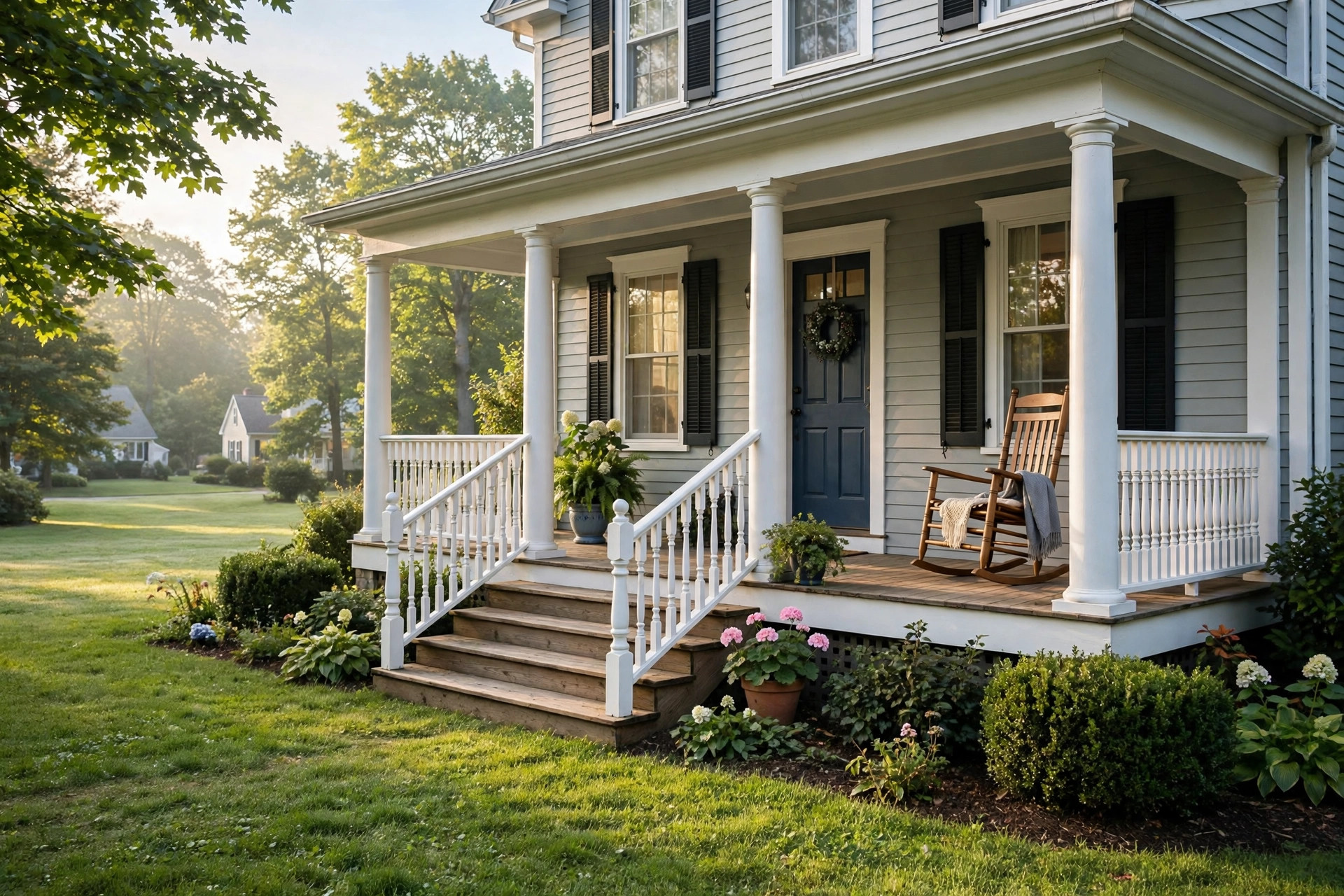

A front porch is the face of a house. It is where guests arrive, where mail is left, and where neighbors wave on summer evenings. The railing that frames it does more than look nice. It keeps children and older visitors from falling, and it sets the tone for the whole exterior. For that reason, many homeowners take care when they search for the best front porch railings for usa homes. The choice covers safety, style, cost, and the amount of work the railing will need in years to come.
Porch railings in America come in many forms. Wood rails are common on older houses. Vinyl and composite rails are popular on newer ones. Metal rails, from plain steel to turned aluminum, suit both old and new styles. Each material has strengths. Each has limits. This guide walks through the main points in plain terms so that a homeowner can compare options with confidence.
Why Porch Railings Matter
Safety comes first. A porch floor often sits two to four feet above the ground. A fall from that height can break a bone, and a loose rail can give way under a hand that trusts it. Local building rules set the minimum height and strength for a reason. A strong rail also helps older people and small children use the steps with care. It gives them something solid to hold.
Looks come next. A rail runs across the whole front of the house. It is one of the first things a visitor sees. A sagging or peeling rail makes a fine house look tired. A straight, clean rail makes even a plain house look cared for. When a home goes on the market, a neat porch can lift its value. Buyers notice the entry first.
Weather is the third reason. In the United States, porches face sun, rain, snow, and salt air depending on the region. A rail that suits a dry climate may rot in a wet one. A rail that holds paint well in mild weather may peel under harsh sun. The material must fit the local climate or it will cost money and labor sooner than it should.
What to Look For When You Choose: Best Front Porch Railings for Usa Homes
Start with strength. A rail should hold the weight of a grown person leaning on it. Ask the seller or the contractor how the rail is rated. Wood rails gain strength from thick posts and solid rails. Metal rails gain strength from welded joints and thick walls. Vinyl rails often rely on a metal core inside, and that core does most of the real work.
Next, look at the height and the spacing. Most local codes call for a rail between 34 and 38 inches high on a porch. They also call for small gaps between balusters, usually no more than four inches. That gap rule exists so a small child cannot slip through or get a head caught. Check the rules in your own town before you buy. A local hardware store can often point to the right code book.
Then consider upkeep. Paint on wood lasts a few years at best. Stain lasts a bit longer. Vinyl needs only soap and water. Metal needs little work unless the paint chips. Ask yourself how much time you will give the rail each year. Be honest. A rail that needs paint every three years is a poor buy for a busy owner.
Match the style to the house. A colonial home suits turned balusters and a wide top rail. A ranch or modern home suits simple square balusters or horizontal rails. A farmhouse can carry either. Walk your street and note which rails please your eye. That is the fastest way to learn what fits your block.
Finally, weigh the price against the life of the rail. A cheap rail that fails in ten years costs more than a dear rail that lasts thirty. Add the price of paint, stain, and your own hours when you compare. A guide to exterior projects can help you frame the long view.
Types and Options
Wood remains the classic choice. Cedar and redwood resist rot on their own. Pressure treated pine costs less and lasts well if it is sealed. Turned wood balusters give a traditional look that suits older homes. Wood takes paint in any color, so it matches the house trim with ease. The weak point is care. Wood needs paint or stain every three to five years, and it can rot where water sits. In the damp South or the wet Northwest, inspect wood rails each spring.
Vinyl railings have grown popular for good reason. They never need paint. They do not rot. They wash clean with a garden hose. Most systems use a metal tube inside the top rail for strength, so the rail feels solid. White is the standard color, though tan and gray appear as well. The weak point is looks. Some owners find vinyl plain next to fine woodwork. Heat can also soften cheap vinyl, so buy from a known maker and check the warranty.
Composite railings blend wood fiber and plastic. They look more like wood than vinyl does. They resist rot, insects, and mold. They need no paint. Many brands match composite deck boards, so the porch and deck read as one. The price runs higher than vinyl. Dark colors can grow warm in strong sun. Look for a reputable manufacturer line with a long written warranty.
Metal railings cover steel, aluminum, and wrought iron. Steel and iron look strong and classic. They suit brick and stone houses well. They need paint to stop rust, though powder coated rails hold their finish for years. Aluminum costs more but never rusts, and it weighs less, which helps on older porches. Metal rails come in panels that a contractor can set in a day. Simple tools and a step by step project guide make the work clear for handy owners.
Cable and glass rails suit modern homes. Thin steel cables or clear panels keep the view open. They cost more and need clean hands to stay neat. Check the local code first, since some towns limit these systems on porches. A design ideas gallery shows how they look on real houses.
Cost and Price
Prices vary by region and by who does the work. As a rough guide, wood rails run about 25 to 60 dollars per linear foot for materials, and about twice that with labor. Vinyl rails run about 40 to 80 dollars per foot for materials. Composite rails run about 60 to 120 dollars per foot for materials. Metal rails range widely, from 50 dollars per foot for plain aluminum panels to well over 150 for custom ironwork.
Labor adds a large share. A simple straight run is quick. Corners, angles, and old posts that must be removed add hours. Most contractors quote by the linear foot, so measure the porch edge first and count the stair sections apart. Stair rails often cost more per foot than flat runs.
Do not forget the small costs. Posts, caps, brackets, and paint add up. A permit may cost 50 to 200 dollars. If the old rail is rotted, disposal adds a fee. Ask for a written quote that lists materials, labor, and extras apart. A home project cost resource can help you check whether a quote is fair.
If you do the work yourself, the savings are real but the risk is real too. A rail must meet code, and a failed inspection wastes the savings. Many owners hire out the structural posts and do the finish work themselves. That split can work well.
Care and Upkeep
Wood rails need the most care. Wash them each spring with soap and water. Look for soft spots, cracks, and loose nails. Sand the rough spots, fill the holes, and prime before you paint. Two thin coats last longer than one thick coat. Stain is easier to renew than paint, since it does not peel. If a baluster rots, replace it at once. Rot spreads, and a rail is only as strong as its weakest piece.
Vinyl rails need little. Wash them once or twice a year with a hose and a soft brush. Avoid harsh cleaners, which can dull the finish. Check the brackets and screws each year, since a loose rail moves in wind. If a panel cracks in a hard freeze, replace the panel. Makers sell matching parts for years.
Composite rails need a wash each season. Use a soft brush and mild soap. Keep grills and fire pits at a distance, since heat can mark the surface. Check the fasteners for rust. Stainless or coated screws suit the outdoors best.
Metal rails need a yearly look. Touch up chips in the paint before rust starts. Oil the hinges and latches on gates. Wrought iron can be repainted with a rust proof primer and an exterior enamel. Aluminum needs only a wash. In towns that salt the roads in winter, rinse metal rails in spring to wash the salt away. A maintenance checklist mindset helps: small jobs each year stop big jobs later.
For all types, check the posts first. Posts carry the load. A wobbly post is a hazard no matter how fine the balusters look. Many porches need the posts anchored to the porch frame, not just to the deck boards. If you are unsure, ask a carpenter to look. An exterior building guide can explain how posts and framing work together.
Safety
Treat the rail as safety gear, not just trim. Shake each section by hand once a year. If it moves more than a little, fix it. Tighten bolts, replace rusted screws, and shore up weak posts. Do not let children climb on rails. A rail is built for a sideways push, not for a child sitting on top.
Mind the steps as well. Stair rails must run the full length of the steps at the right height. The landing at the top of the steps needs a rail too. Add a non slip tread on worn steps, and keep a clear path free of planters and hoses. Porch lights matter for safety. A dark porch hides a loose board or an icy patch. A bright bulb at the door and one at the far end cost little and help a lot.
Mind the code. Towns can differ. Some require a permit for a new rail. Some require a rail only when the porch is 30 inches above the ground. A few historic districts set rules on style and color. Call the building office before you buy. The call is free and it can save a tear out later.
Frequently Asked Questions
How high should a front porch rail be? Most codes call for 34 to 38 inches measured from the porch floor to the top of the rail. Stair rails follow the same range, measured from the nose of each step. Check your town for the exact figure.
How far apart can the balusters be? The common rule is a gap no wider than four inches. A four inch ball should not pass between them. This keeps small children safe. Some towns add rules for the gap under the bottom rail as well.
Which railing material lasts longest? Aluminum and quality vinyl can last 25 to 30 years with little care. Composite rails often carry 25 year warranties. Well kept cedar or redwood can last 20 years or more. Pressure treated pine lasts 10 to 15 years with care.
Can I install a porch rail myself? Many owners do. Simple panel systems from a major retailer fit standard heights and lengths. You will need a level, a drill, a saw, and basic skill. Posts and stair rails are harder. If the porch frame is old or weak, hire a carpenter for the structure.
How much does it cost to replace front porch railings? For a typical 30 foot porch, materials and labor often total 1,500 to 6,000 dollars depending on material. Metal and composite run higher. Wood runs lower. Get two or three written quotes before you decide.
Do I need a permit to replace my porch rail? Often yes for a full replacement, sometimes no for a simple repair of like material. Rules differ by town. A quick call to the building office will tell you. Skipping a needed permit can cause trouble when you sell the house.
A Final Word
The best front porch railings for usa homes share a few plain traits. They are strong enough to trust. They suit the house and the street. They fit the local weather. And they ask no more care than the owner will give. Wood, vinyl, composite, and metal all meet these marks in the right setting. Measure your porch, check your town code, set a budget with care in mind, and choose the rail that will still look right in twenty years. The porch is the welcome of the house. A sound rail makes that welcome safe.
If you are planning other front of house work, you may also want to read about durable board and batten siding for usa homes, a stucco exterior repair cost guide usa, and an affordable pressure treated lumber decking buying guide.
References
Bob Vila. (n.d.). Home improvement advice. https://www.bobvila.com CertainTeed. (n.d.). Building materials and exterior products. https://www.certainteed.com Family Handyman. (n.d.). DIY home repair and maintenance. https://www.familyhandyman.com James Hardie. (n.d.). Fiber cement siding and exterior products. https://www.jameshardie.com Lowe’s. (n.d.). Home improvement products. https://www.lowes.com The Home Depot. (n.d.). Home improvement products. https://www.homedepot.com The Spruce. (n.d.). Home and garden advice. https://www.thespruce.com This Old House. (n.d.). Home renovation guidance. https://www.thisoldhouse.com
Was this guide helpful?

About Robert Taylor
The My Garden US editorial team writes practical, in-depth home and garden guides for American homeowners — tested advice, no fluff.
You May Also Like

Durable Replacement Window Installation for Homeowners: A Complete Guide
April 11, 2026 0 views
Best Exterior Stair Railings for Midwest Homes: A Plain Guide
April 23, 2026 0 views
Asphalt Driveway Sealing Cost Guide USA: What You Will Pay and How to Save
February 8, 2026 0 views