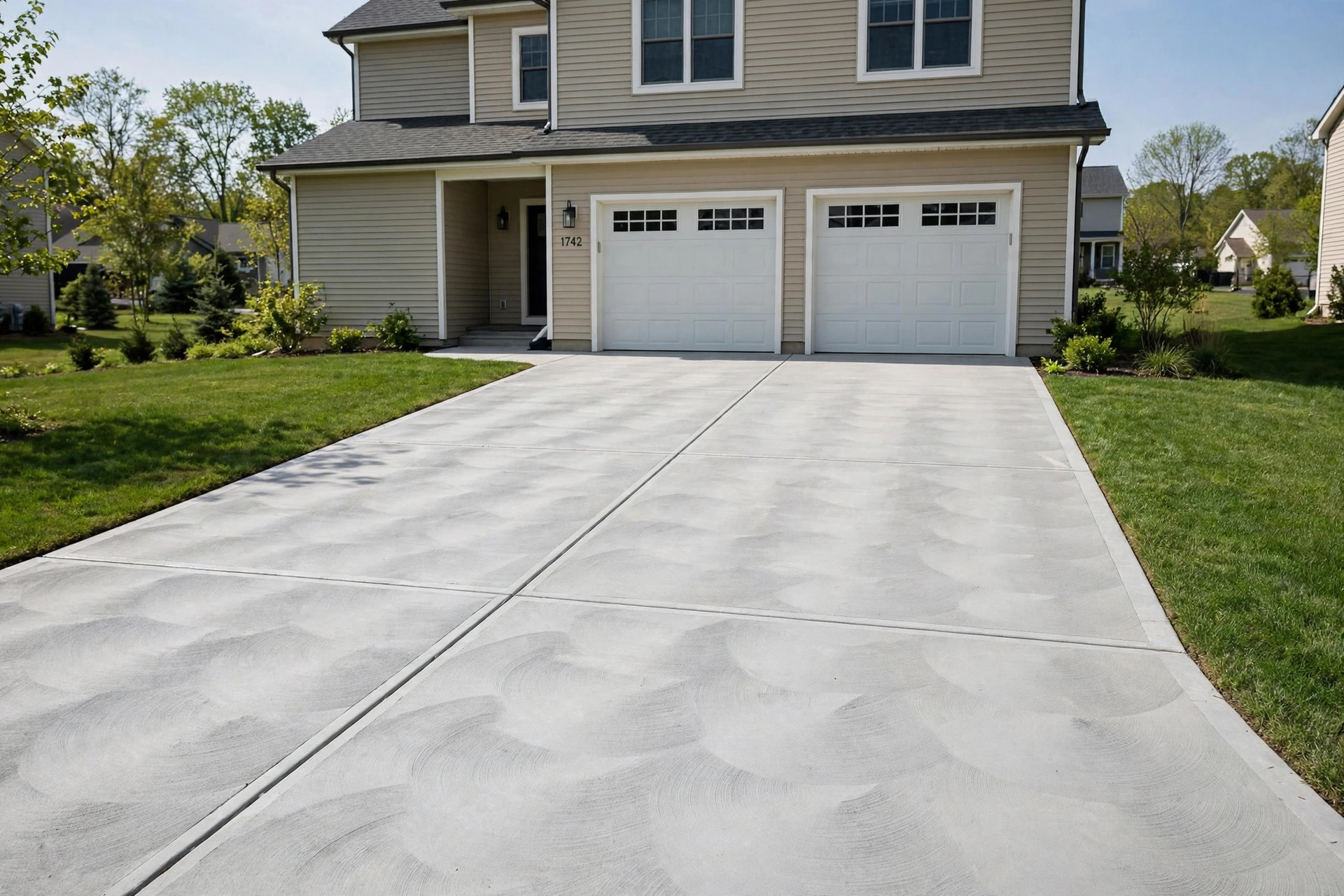

A worn driveway can age a whole house. Cracks spread. Color fades. Small pits grow into holes that catch a shoe or a tire. Many owners search for durable concrete driveway resurfacing near me when they want to fix these problems without the cost of a full tear-out. Resurfacing adds a new layer over the old slab. The result looks fresh and serves well for many years. This guide explains what resurfacing is, why it matters, how to choose a contractor, what it costs, and how to care for the new surface.
Why Resurfacing Matters
A driveway takes heavy wear every day. Cars roll across it. Rain soaks it. Sun beats down on it. In cold states, ice and salt attack the surface all winter. Over time the top layer breaks down even when the base slab stays sound.
Resurfacing matters because it fixes the surface without replacing the slab. A full replacement means breaking out tons of old concrete, hauling it away, and pouring new. That takes weeks and costs a lot. Resurfacing uses the old slab as a base. A crew cleans it, repairs deep cracks, and spreads a new layer that is usually one half to one full inch thick. The job takes days, not weeks. Home improvement guides at Lowe’s list resurfacing as one of the most cost-effective ways to refresh old concrete.
Curb appeal is another reason. The driveway often covers more area than any other hard surface at a house. A clean, even surface makes the home look cared for. Real estate agents often say the first view of a property sets the tone for a buyer. A fresh driveway also removes trip points and standing water, which makes the walk safer for children and older guests.
Durability is the third reason. A good resurfacing job seals the old slab from water and salt. Water is the main enemy of concrete. It seeps into pores, freezes, and breaks the surface apart. A proper overlay locks water out and can add ten to fifteen years of life to a driveway that would otherwise need full replacement.
How to Choose a Contractor: Durable Concrete Driveway Resurfacing near Me
The search for durable concrete driveway resurfacing near me will return many names. Not all of them are equal. A little care in choosing saves money and trouble later.
Check the basics first
Ask every bidder for a state license and proof of insurance. Insurance should cover both injury to workers and damage to your property. A real pro shows these papers without delay. If a contractor dodges the question, move on. Consumer guidance from Consumer Reports stresses that licensed, insured contractors are the safe choice for any major home job.
Ask about experience with overlays
Resurfacing is its own skill. A crew that pours fine new driveways may still do poor overlay work. Surface preparation is where the craft lies. Ask how many resurfacing jobs the company did in the last year. Ask to see photos of work that is at least two years old. That shows how the work holds up over time, not just on day one.
Get written bids from three companies
Three bids give you a fair picture of the local price. Each bid should list the surface area in square feet, the steps of the work, the brand and type of overlay product, the finish, and the warranty. Vague bids lead to vague results. Also ask for a timeline in writing. Most two-car driveways take two to four days of work plus several days of cure time before cars can drive on the surface.
Read reviews and ask for references
Online reviews help, but personal references help more. Ask for two past clients you can call. Good questions to ask them: Did the crew show up on time? Did the price change during the job? Does the surface still look good? Would you hire them again? Short, plain answers tell you most of what you need.
Red flags to watch for
Be careful with door-to-door crews that offer a “today only” price. Be careful with any company that wants the full payment up front. A normal deposit is ten to thirty percent. The rest comes at agreed stages of the work. Also be wary of bids that are far below the others. Cheap work often means thin layers, weak products, or skipped preparation, and those short cuts show within one winter.
Types of Concrete Resurfacing
Not every driveway needs the same treatment. The main overlay types are described below.
Cement-based overlays
These are the workhorse of the trade. A cement-based overlay mixes polymer resins with cement and sand. The crew trowels or squeegees it onto the old slab in thin layers. It bonds hard and takes color well. Product makers such as QUIKRETE and Sakrete sell resurfacing mixes that pros and skilled do-it-yourself owners use. This type suits driveways with light to medium wear and mostly surface cracks.
Stamped and decorative overlays
A decorative overlay adds pattern and color to the new surface. The crew can stamp it to look like brick, slate, or stone, or cut control joints into it for a tile look. This choice costs more but gives a custom look that raises curb appeal. It is a good fit for homes where the driveway is a major part of the street view.
Microtoppings and spray coatings
A microtopping is a very thin layer, often just one eighth of an inch. A spray coating uses a hopper gun to lay a textured coat. Both suit driveways in fair shape that mainly need a fresh look and a sealed surface. They cost less than full overlays but they also wear faster under heavy cars.
Full-depth repair before overlay
Sometimes the slab has problems that no overlay can hide. Large sunken areas, wide structural cracks, or a base that has washed out need repair first. A good contractor lifts and stabilizes bad sections before the overlay goes on. Home repair advice at Bob Vila notes that preparation work decides the life of any concrete job. Skipping it is the most common cause of early failure.
Cost and Price
The national price for professional concrete driveway resurfacing usually falls between three and ten dollars per square foot. A standard two-car driveway of about six hundred square feet then costs roughly two thousand to six thousand dollars. Decorative stamped work can run ten to fifteen dollars per square foot or more.
Several things move the price up or down. Heavy crack repair adds cost. Decorative finishes add cost. Steep driveways or ones with tight access add labor cost. Your region matters too. Prices in high-cost metro areas run above the national average, while prices in smaller towns run below it.
Compare the numbers with full replacement. Tearing out and pouring a new concrete driveway often costs eight to fifteen dollars per square foot, plus haul-away fees. Resurfacing saves forty to sixty percent in most cases. That is why so many owners type durable concrete driveway resurfacing near me into a search bar instead of calling a demolition crew.
Do-it-yourself resurfacing is possible with bagged products. Material for a small driveway may cost a few hundred dollars. But the skill bar is high. The slab must be spotless, the mix must be right, and the weather must be right. A failed do-it-yourself job costs more to fix than hiring a pro at the start. Owners who want to learn the basics can find concrete repair guides at Family Handyman before they decide.
For a different budget view, some owners compare options across the whole home exterior. Reviews of exterior building products at CertainTeed and manufacturer resources for exterior home products at James Hardie show how much a planned, well-built exterior can add to a home. A driveway fits the same logic. Spend once on good work and enjoy it for years.
Care and Upkeep
A resurfaced driveway is not a no-care surface. Simple habits keep it looking good and make it last.
Clean it twice a year. A garden hose and a stiff broom handle most dirt. For oil spots, use a degreaser made for concrete and rinse well. A pressure washer helps, but keep the tip at least a foot from the surface and use a wide fan pattern. A narrow jet can cut into the new layer.
Seal it on schedule. Most pros recommend a quality concrete sealer every two to three years. The sealer blocks water, oil, and salt. Apply it in dry weather when the surface is clean. Two thin coats beat one thick coat. Household care tips at Good Housekeeping often make the same point for sealers and finishes around the home. Thin, even coats last longer.
Handle winter with care. Use calcium chloride or magnesium chloride for ice instead of rock salt when you can. They work at lower temperatures and are gentler on concrete. Never use metal shovels with sharp edges on a fresh overlay. A plastic blade or a snow blower with the skid set high is safer.
Fix small damage early. If a small chip or crack appears, clean it and patch it right away. Small fixes stop water from getting under the surface. That is the single cheapest way to add years to the life of the work.
Some owners also look at related driveway projects. If you have an asphalt section too, reading about the best asphalt driveway sealing near me helps you plan the whole property at once. And if your driveway is in good shape but just needs a fresh coat, a guide on the best concrete driveway resurfacing near me covers product choices in more depth. Owners who want a greener angle can read about energy efficient concrete driveway resurfacing for homeowners as well.
Safety During the Project
Resurfacing is messy work. Plan for it and the job goes smoother.
Keep children and pets off the work area. Wet overlay looks like a fun surface to step in, and the chemicals in sealers can irritate skin. Mark the area with tape or cones and tell everyone in the house the rules before work starts.
Mind the dust and fumes. Grinding and pressure washing throw dust and mist into the air. Crews wear masks for a reason. Keep windows near the driveway closed on work days. If the crew uses solvent-based sealers, ask about the cure time and when it is safe to walk near the area.
Plan your parking. Cars must stay off the new surface for several days. Most overlays need at least three to seven days before they can carry a car, depending on the product and the weather. Park on the street or at a neighbor’s house during that time. Driving on the surface too soon can mark it for life.
Handle waste and runoff with care. Wash water from the job can carry cement dust and cleaning chemicals into storm drains. A responsible contractor captures or diverts that water. Federal guidance on safe material handling for homeowners at the EPA is worth a look if you want to know the rules in your state.
Frequently Asked Questions
How long does driveway resurfacing last? A well-done cement-based overlay usually lasts ten to fifteen years. Decorative overlays last about as long. Thin spray coatings last less, often five to eight years. The life depends on the preparation, the product, the weather, and how well you maintain the surface.
Can any concrete driveway be resurfaced? No. Resurfacing works when the base slab is sound. If the slab has deep structural cracks, large sunken areas, or crumbling edges, those problems need repair first or the job is not a good fit. A good contractor tells you honestly when full replacement is the better choice.
How thick is a resurfacing layer? Most overlays run from one quarter inch to one inch thick. Thin cosmetic coatings can be even thinner. The right thickness depends on the condition of the slab and the product used. Thicker is not always better. Bond to the old surface matters more than raw thickness.
How soon can I drive on the new surface? Most products need three to seven days before car traffic. Foot traffic is usually fine after twenty four hours. Always follow the product maker’s cure schedule and the weather. Cold or wet weather slows the cure, so the wait can be longer in spring and fall.
Does resurfacing work in cold climates? Yes, but the season matters. Overlay products need air temperatures above about fifty degrees during application and cure. In the north, that means late spring through early fall. Plan the job for a stretch of dry, mild weather for the best bond.
Will the new surface match my old concrete? The new layer covers the old surface, so the old color and stains do not show through. You can pick a plain concrete gray or add color and pattern. Most owners choose a fresh, even gray or a decorative finish that suits the house.
A Final Word
A tired driveway does not have to mean a huge bill. Durable concrete driveway resurfacing near me is a search that pays off for many owners. The right contractor, the right product, and a little upkeep give you a driveway that looks new and holds up for years. Get three bids. Check the references. Seal on schedule. Do that, and the surface under your car will serve you well for a long time to come.
References
Bob Vila. (n.d.). Home improvement advice. https://www.bobvila.com CertainTeed. (n.d.). Building materials and exterior products. https://www.certainteed.com Consumer Reports. (n.d.). Product reviews and ratings. https://www.consumerreports.org Family Handyman. (n.d.). DIY home repair and maintenance. https://www.familyhandyman.com Good Housekeeping. (n.d.). Product reviews and home advice. https://www.goodhousekeeping.com James Hardie. (n.d.). Fiber cement siding and exterior products. https://www.jameshardie.com Lowe’s. (n.d.). Home improvement products. https://www.lowes.com Quikrete. (n.d.). Concrete and masonry products. https://www.quikrete.com Sakrete. (n.d.). Concrete repair and resurfacing products. https://www.sakrete.com U.S. Environmental Protection Agency. (n.d.). Protecting human health and the environment. https://www.epa.gov
Was this guide helpful?

About Sarah Mitchell
The My Garden US editorial team writes practical, in-depth home and garden guides for American homeowners — tested advice, no fluff.
You May Also Like
Affordable Basement Waterproofing Services Near Me: A Homeowner Guide
June 14, 2026 0 views
Budget Friendly Pergola Installation Kits with Free Shipping: A Homeowner’s Guide
April 9, 2026 0 views
Weather Resistant Soffit and Fascia Repair for Homeowners
April 17, 2026 0 views