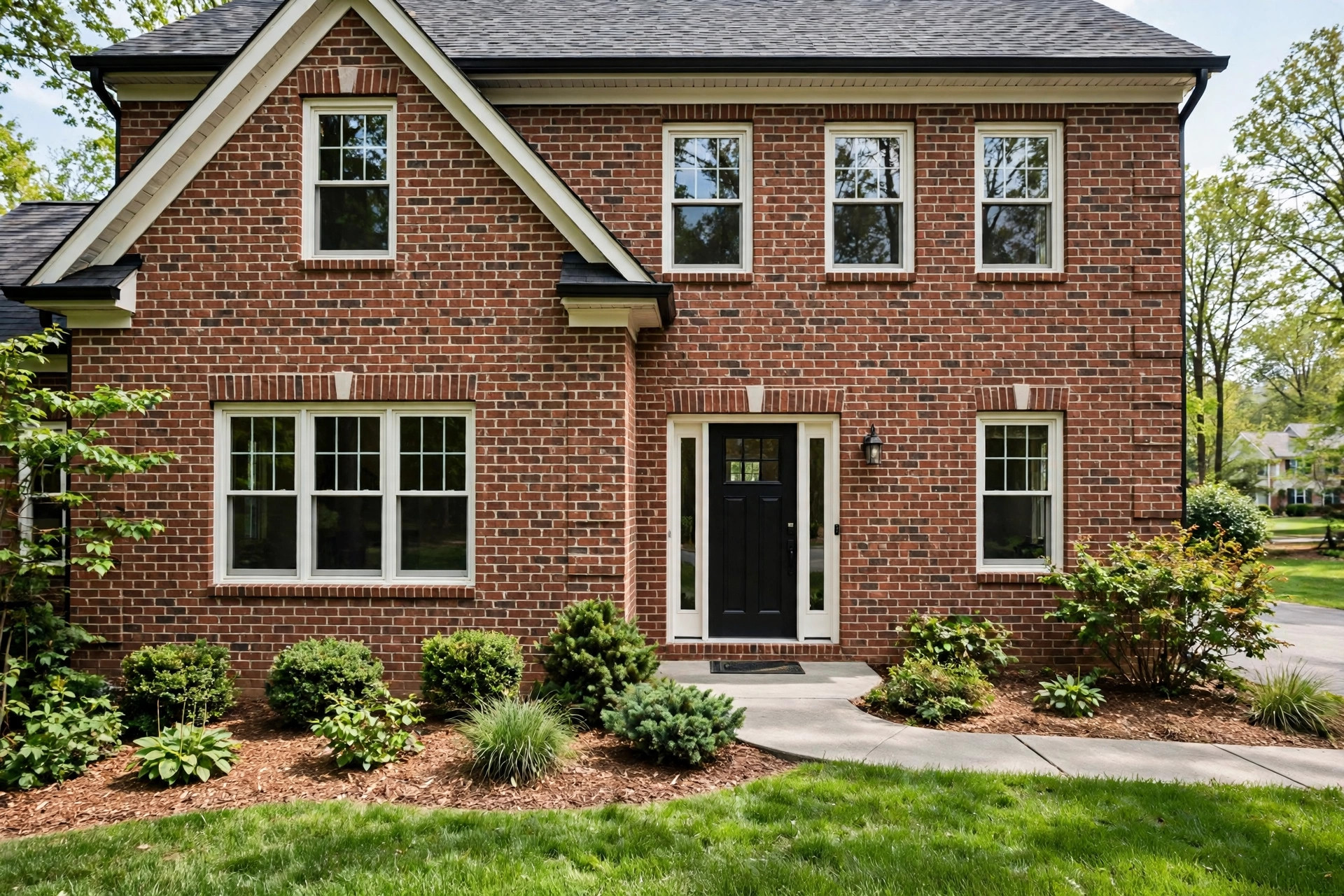

Brick gives a home a solid, settled look. It stands up to weather and needs little care. But full brick walls cost a great deal and take a long time to build. Brick veneer siding is a thinner answer. This brick veneer siding reviews and buying guide explains what it is, how it is made, what it costs, and how to pick the right kind for your home.
What Brick Veneer Siding Is
Brick veneer is a thin layer of brick laid in front of a wood or steel frame wall. The wall carries the weight of the house. The brick is a facing, not a support. The two walls are tied together with metal ties. A small gap sits between them so air can move and water can drain out.
Real brick walls are thick. They hold up the floors above. Veneer brick is about one inch thick, against three or four inches for a full brick. It is much lighter. Most frame homes can carry it with little extra work on the foundation. That is why brick veneer siding is found on so many American homes. It gives the brick look at a lower cost and weight.
Why Brick Veneer Matters for a Home: Brick Veneer Siding Reviews and Buying Guide
Siding is the skin of a house. It must shed rain, stand up to sun and wind, and look good for years. Brick veneer does all three. It does not rot. Insects do not eat it. Fire does not spread on it. A hard rain cannot soak through it the way it can soak through wood.
Homeowners pick it for looks as well. Brick has a warm, honest surface. It fits old farmhouses and new suburbs alike. A front wall of brick veneer can lift the face of a plain house. That is why it is often used on the street side of a home while cheaper siding covers the other sides.
Resale value is another reason. Buyers like brick. A brick front reads as strong and well kept. While no siding pays for itself in full at sale time, brick veneer holds its value better than most options in this class.
Types of Brick Veneer Siding
Not all brick veneer is the same. Here are the main kinds you will see in stores and on job sites.
Thin Brick Panels
Thin brick is real brick cut down to about half an inch to one inch thick. It comes as loose pieces or fixed onto backer panels. Masons lay the loose pieces with mortar, much like real bricklaying. The panels speed the work because a whole section goes up at once.
Thin brick is true clay brick. It has the same color depth and texture. It handles weather like full brick. The weak point is the mortar joints if they are mixed or finished badly.
Manufactured Stone Veneer
This is not brick at all. It is concrete cast in molds to look like brick or stone. It is lighter than thin brick and often cheaper. Installers can learn it faster, which cuts labor cost.
The trade-off is looks and life. Good cast veneer fools the eye at a distance. Up close the pattern repeats and the color can look flat. It can fade over years in strong sun. Still, for budget work it is a fair choice.
Brick Siding Sheets
Some makers press a brick pattern onto metal or cement boards. These sheets go up fast over old walls. They cost less than real thin brick. Reviews are mixed. The pattern can look stamped and fake on close view. Durability varies by brand. In this brick veneer siding reviews and buying guide, these rank below true thin brick for homes where looks matter most.
How to Choose the Right Brick Veneer
Start with your wall. A frame wall with wood sheathing is the usual base. The veneer needs a solid, dry surface and room for a drainage gap. An installer should check that the wall is plumb and the sheathing is sound before any brick goes up.
Next, pick the brick style. Thin brick comes in smooth, wire-cut, tumbled, and handmade looks. Color runs from pale cream to deep red to dark brown. Match the brick to your roof and trim. A gray roof sits well with red-brown brick. A dark roof pairs with lighter brick. Bring sample boards home and look at them in morning and evening light.
Ask about the backing system. Good systems include a water barrier, metal lath or ties, and a weep system at the base so water can escape. Cheap jobs skip the drainage gap. That is where trouble starts. Moisture trapped behind veneer can rot the frame wall out of sight.
Finally, check the warranty. Reputable makers stand behind their thin brick for twenty years or more. Panels and cast veneer often carry shorter terms. Keep the warranty papers with your house records.
For ideas on matching other siding types on the same home, see our guide to vinyl siding installation costs, which many owners pair with a brick front.
Cost and Price Breakdown
Brick veneer siding costs more than vinyl but far less than full brick. As a rough range in the United States, thin brick material runs about six to fifteen dollars per square foot before labor. Manufactured veneer runs about five to ten dollars per square foot for material.
Labor is the large part of the bill. A mason lays thin brick slowly and with care. Installed cost for real thin brick often lands between fifteen and thirty dollars per square foot. A full front wall of a two-story home can run into the tens of thousands of dollars.
Manufactured veneer installs faster, so total cost often lands between ten and twenty dollars per square foot. Sheet products are cheapest of all but add less value.
Get at least three written bids. Each bid should list material brand, square footage, the backing and drainage system, and a separate line for any tear-off of old siding. Beware the low bid that skips the drainage plane. It saves money now and costs far more later.
Cost planning tools at The Home Depot and Lowe’s can help you price materials in your zip code before you call a contractor.
Installation: What to Expect
Installation takes several steps. First the crew covers the wall with a water-resistant barrier. Then they fix metal ties or lath to the wall. Loose thin brick is laid course by course with mortar. Panels are screwed to the wall and the seams are grouted. At the base, the crew leaves weep holes so water can drain.
A simple gable front may take one to two weeks. A whole house can take a month or more. Weather matters. Mortar needs mild, dry days to cure. A good crew will not lay brick in freezing weather or driving rain.
Homeowners can do small repairs themselves, but full installation is skilled work. Bad mortar joints let water in. Poor tie spacing lets the veneer lean. Hire a mason with veneer experience and ask to see past jobs. Advice columns at This Old House and Family Handyman describe the steps in detail for those who want to follow along.
Care and Upkeep
Brick veneer asks little of its owner. That is one of its best traits. Wash it once a year with a garden hose and a soft brush to clear dust and mildew. A mild soap helps on shaded walls where green film grows.
Check the mortar joints every few years. Small cracks can be repointed with matching mortar. Check the weep holes at the base and keep them clear of mulch and soil. Soil piled against the veneer wicks water up behind it.
Do not paint brick veneer unless you must. Paint seals the surface and traps moisture inside. Once painted, brick needs repainting on a cycle like wood. If you want a new color, a mineral stain made for masonry is the safer choice.
Efflorescence, the white powder that blooms on new brick, is common and harmless. It washes off with water. If it keeps coming back, water may be getting in behind the veneer and the drainage should be checked.
Seasonal maintenance checklists at Bob Vila and The Spruce are useful reminders for brick and other exterior work.
Brick Veneer Compared With Other Sidings
It helps to see brick veneer next to the other common choices.
Against vinyl siding, brick wins on looks, fire resistance, and life. Vinyl wins on price and on easy repair of single panels. If your budget is tight, our vinyl siding installation cost guide gives the numbers.
Against fiber cement, brick wins on texture and low upkeep. Fiber cement wins on weight and on cost for full-house coverage. Both are strong choices.
Against stucco, brick wins in wet climates because stucco can trap water if it cracks. Stucco wins on smooth modern looks. See our stucco exterior repair cost guide if your home already has stucco.
Against cedar shake, brick wins on upkeep by a wide margin. Cedar needs stain and watchful care. Cedar wins on natural charm in wooded settings. For wooded lots, read about the best cedar shake siding for southern states.
Makers such as James Hardie and CertainTeed publish side-by-side guides that compare their own products with brick veneer, which can help you weigh the trade-offs.
Safety and Building Codes
Brick veneer is heavy compared with vinyl. A building inspector may ask for a wider footing or a brick ledge on the foundation. This is normal. Do not add heavy veneer to a wall that was framed for light siding without an engineer’s check.
Fire safety is a strong point. Brick does not burn and it slows fire spread along a wall. Some insurers give a small break on premiums for masonry exteriors. Ask your agent.
Seismic zones need special ties. In earthquake country the ties between veneer and frame must meet code for lateral load. Your mason should know the local rules.
Lead and asbestos are not a worry with new veneer, but they can be if you tear off old siding. Test old paint and old siding before demolition. Project guides at Angi and Better Homes & Gardens cover safe tear-off practices.
Frequently Asked Questions
How long does brick veneer siding last?
Real thin brick veneer can last fifty years or more when it is installed with proper drainage. The mortar may need repointing after twenty to thirty years. Manufactured veneer often lasts twenty to thirty years before color fade or wear shows.
Is brick veneer cheaper than real brick?
Yes, by a wide margin. Full brick walls need deeper footings, skilled bricklayers, and far more material. Thin brick veneer gives the same face at roughly half the installed cost or less.
Can brick veneer go over existing siding?
Sometimes. It can go over sound wood sheathing or masonry after the old siding is removed. Going straight over vinyl or old wood siding is risky because the base may not be flat or dry. Most masons prefer a clean wall.
Does brick veneer need a weep system?
Yes. Any veneer job should leave a drainage gap and weep holes at the base. Water will get behind the brick in wind-driven rain. The system lets it drain out instead of soaking the frame wall.
Will brick veneer crack in cold weather?
The brick itself handles freeze and thaw well. Cracks usually come from a shifting foundation or poor mortar, not from the brick. Proper footings and good mortar practice prevent most problems.
How do I clean brick veneer?
A garden hose, a soft brush, and mild soap handle most dirt. Avoid high-pressure washers, which can blast mortar out of the joints. For tough stains, a masonry cleaner from a hardware store works, but test it in a hidden spot first.
A Short Final Word
Brick veneer siding is a middle path. It costs more than the cheapest sidings and less than full brick. It asks little care and gives back a face that ages with grace. The keys are a dry, well-tied wall, a real drainage gap, and a mason who has done the work before. Buy the best thin brick your budget allows, keep the weep holes clear, and wash it once a year. Do that and this brick veneer siding reviews and buying guide will have done its job: a wall that looks right on day one and still looks right in thirty years.
References
Angi. (n.d.). Home services marketplace. https://www.angi.com Better Homes & Gardens. (n.d.). Home and garden ideas. https://www.betterhomesandgardens.com Bob Vila. (n.d.). Home improvement advice. https://www.bobvila.com CertainTeed. (n.d.). Building materials and exterior products. https://www.certainteed.com Family Handyman. (n.d.). DIY home repair and maintenance. https://www.familyhandyman.com James Hardie. (n.d.). Fiber cement siding and exterior products. https://www.jameshardie.com Lowe’s. (n.d.). Home improvement products. https://www.lowes.com The Home Depot. (n.d.). Home improvement products. https://www.homedepot.com The Spruce. (n.d.). Home and garden advice. https://www.thespruce.com This Old House. (n.d.). Home renovation guidance. https://www.thisoldhouse.com
Was this guide helpful?

About Sarah Mitchell
The My Garden US editorial team writes practical, in-depth home and garden guides for American homeowners — tested advice, no fluff.
You May Also Like

Top Rated Sliding Patio Doors for Small Apartments: A Buyer’s Guide
May 27, 2026 0 views
Budget Friendly Brick Veneer Siding for Midwest Homes
May 14, 2026 0 views
Top Rated Fence Installation Contractors: Reviews That Help You Hire Right
August 22, 2026 0 views