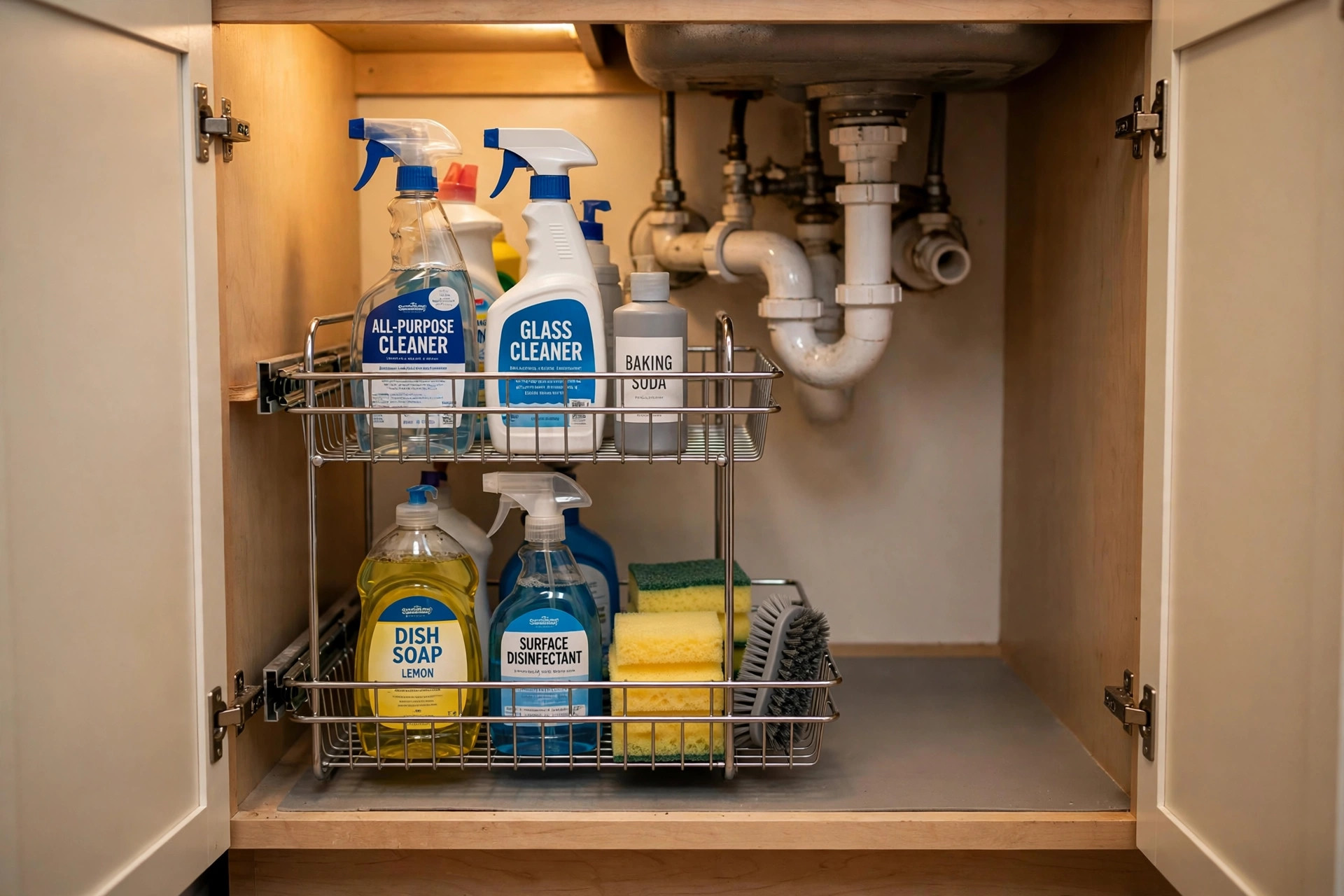
Anyone who has lived in a small apartment knows the space under the sink. It is dark. It is cramped. Pipes run across the middle. Bottles of cleaner fall over and leak. Paper towels get wet. A damp smell rises when the door opens. The best under sink organizers for small apartments change all of that. They turn a wasted box into a clean, working storage spot.
This guide walks through the subject in plain terms. It explains why the space matters, what kinds of organizers exist, how to choose one that fits, what to expect to pay, how to keep it clean, and how to stay safe around the pipes. It ends with answers to common questions and a list of sources.
Why the Space Under the Sink Matters
In a small apartment, every inch counts. The kitchen or bathroom sink cabinet is often the only deep storage near running water. Yet many renters leave it empty or half used. They fear leaks. They fear the smell. They fear that something will spill and ruin what sits below.
That fear has a basis in fact. Studies on indoor plumbing have found that the cabinet under a sink is one of the wettest places in a home. A slow drip from a trap or a supply line can soak paper goods and wood. Mold can grow in dark, damp corners. But the answer is not to avoid the space. The answer is to organize it well, so leaks show up fast and goods stay dry and off the floor.
A good organizer raises bottles off the bottom. It leaves room to see the pipes. It keeps wet things apart from dry things. It makes daily tasks faster, because the spray bottle is always in the same spot. In a kitchen with no pantry, this small gain is large.
What to Look for When Choosing an Organizer: Best under Sink Organizers for Small Apartments
Start with the tape measure. Measure the width of the cabinet opening, the depth from front to back, and the height from the bottom to the top of the opening. Then measure again with the pipes in place. The center pipe and the side shut-off valves take real room. Write all four numbers down: full width, full depth, usable height, and the space to each side of the main drain pipe.
Check the door. Some cabinets have a center bar between two doors. Some doors swing into the space when closed. An organizer that is too wide will catch on the door. An organizer that is too deep will hit the back wall. Leave at least half an inch of play on each side.
Look at the floor of the cabinet. Is it bare wood, contact paper, or a plastic tray? If it is bare wood, you will want an organizer with a drip tray or a liner under it. Water and wood do not mix.
Think about what you store. Under a kitchen sink, you will likely keep dish soap, all-purpose cleaner, a sponge holder, trash bags, and dish gloves. Under a bathroom sink, you will likely keep cleaners, toilet paper, extra soap, and first aid goods. List the tallest bottle you own. The organizer must be taller than that bottle.
Pick a material that does not rust. Coated steel, plastic, and bamboo sealed with varnish are common. Plain steel will rust in a damp cabinet. Plain wood will warp. Look for finishes that wipe clean with a damp cloth.
Types of Under Sink Organizers
Two-Tier Sliding Baskets
The most common design has two wire or plastic baskets that slide out on rails. The bottom basket holds tall bottles. The top basket holds small goods like sponges and scrub pads. You pull the whole unit toward you, take what you need, and push it back. This is the best under sink organizer for small apartments with deep cabinets, because nothing gets lost in the back.
Some two-tier models let you change the height of the top basket. This helps when a tall bottle does not fit. Look for models with side panels that stop small items from falling off.
Pull-Out Caddy Trays
A pull-out caddy is a single tray on rails. It is shallow and wide. It suits cabinets that are wide but short. You can also buy two narrow caddies and place one on each side of the center pipe. This split design works around plumbing that a single wide unit cannot fit.
Stackable Shelf Risers
Shelf risers are simple. They are small shelves that stand on the cabinet floor and create a second level. They cost less than sliding models. They do not move, so you reach under them to get goods in back. They work well in small bathrooms where the cabinet is shallow and you only need a little extra room.
Tension Pole Caddies
A tension pole runs from floor to top of the cabinet, held by spring pressure. Hooks and baskets hang from the pole. This design dodges pipes well, because you can set the pole to one side. It is best for light goods. Do not hang heavy bottles on a tension pole. They will pull it down.
Over-Door Racks
Some organizers hang on the inside of the cabinet door. They hold thin goods: trash bags, gloves, small spray bottles. They add space without taking floor room. Check that the door still closes. A heavy rack can pull a cheap hinge out of line.
How to Fit an Organizer Around Pipes
The plumbing is the hard part. Take a photo of the pipes with the door open. Note where the drain curves down, where the hot and cold supply lines run, and where the shut-off valves sit. Many makers sell models marked as pipe-friendly. These have a notch or an open middle that lets the drain pass through.
If no stock model fits, split the storage. Put a narrow pull-out caddy on the left of the pipe and a small tray on the right. Use the door rack for flat goods. Use stackable risers in the corners. It is better to have three small units that fit than one large unit that blocks the valves.
Never cover the shut-off valves. You must reach them in seconds if a leak starts. Leave a clear path to the valve handles. Test it with your own hand before you load the goods.
Cost and Price Guide
Prices vary by type and make. A simple stackable shelf riser often costs between eight and twenty dollars. A single pull-out caddy often costs between fifteen and thirty dollars. A two-tier sliding basket, the most common choice, often costs between twenty-five and fifty dollars. Over-door racks often cost between ten and twenty-five dollars. Tension pole caddies often cost between twenty and forty dollars.
Sets that combine two units cost more but may save money over buying parts one by one. Stainless or heavy coated steel costs more than thin plastic. A well-made unit should last five to ten years in a damp cabinet. A cheap unit may rust or warp in two.
Shoppers often start with price checks at large home stores. The Home Depot and Lowe’s sites list many under sink models with full size charts, which help when your cabinet has odd pipes. For small-space ideas and real apartment layouts, Apartment Therapy shows how renters fit organizers into tight kitchens. The Spruce carries tested roundups that compare ease of install and daily use. IKEA offers slim cabinet inserts that suit narrow European-style boxes common in city apartments.
If you want buying advice in plain depth, Good Housekeeping and Consumer Reports both test storage products for build quality and value. For fix-it know-how around old plumbing, Bob Vila, This Old House, and the Family Handyman site give clear guides on working safely under a sink.
Care and Upkeep
Wipe the organizer once a month with a damp cloth and a mild cleaner. Pull it out and look at the cabinet floor. If you see dark spots, stains, or a musty smell, find the cause. Tighten supply line nuts by hand. Check the trap for slow drips. Dry the floor with a towel and let the door stand open for an hour.
Throw away cleaners you no longer use. Old bottles leak more often than new ones. Keep only what you use each week under the sink. Store the rest in a closet or on a high shelf. Fewer bottles mean less risk and less mess.
Replace liners or drip trays when they crack. A cracked tray lets water reach the wood. Wood swells and rots. If the cabinet floor is already soft or warped, tell your landlord before you add weight. A renter should not fix plumbing or wood damage alone.
Put a small battery moisture alarm under the organizer if you want early warning. It costs a few dollars. It beeps when water touches it. Many apartment dwellers sleep better with one in place.
Safety Notes
Keep all cleaning goods in their first bottles with labels on. Never pour cleaners into unmarked jars. Keep bleach apart from ammonia products. The fumes from mixed cleaners can hurt the lungs.
Keep the cabinet closed if small children or pets live in the home. Most under sink goods are poison if swallowed. A simple child lock on the door costs little and takes minutes to fit. Store the most risky goods toward the back, out of easy reach.
Turn off the water at the shut-off valves before you touch any pipe. If a valve is stuck, do not force it. Call the building manager or a plumber. Do not place heavy goods on top of supply lines. Do not hang bags from the drain pipe.
Check your lease before you drill or screw into the cabinet. Many leases ban holes in the wood. Most under sink organizers stand free with no screws, which keeps you within the rules.
Frequently Asked Questions
What is the best under sink organizer for a very small apartment kitchen? A two-tier sliding basket is usually the best pick. It pulls out so you can reach the back. It keeps bottles upright. Measure your cabinet and pipes first, then buy the size that leaves half an inch of play on each side.
How do I fit an organizer around the pipes? Choose a pipe-friendly model with a notch for the drain, or split the space. Use a narrow caddy on each side of the main pipe and a door rack for flat goods. Always leave the shut-off valves clear and easy to reach.
Will an organizer damage the cabinet? Most stand free and cause no harm. Place a plastic drip tray or liner under the unit to guard the floor. Do not drill or screw into a rental cabinet unless the lease allows it.
What should I store under the kitchen sink? Keep daily cleaners, dish soap, sponges, trash bags, and dish gloves there. Move rarely used goods to a closet. Fewer bottles mean less clutter and a lower risk of leaks.
How do I stop the damp smell under the sink? Find and fix the drip first. Then wipe the floor dry, run the door open for a while, and toss old sponges and half-empty bottles. A moisture alarm will warn you of new leaks before the smell returns.
Can I use the same organizer under the bathroom sink? Yes, if the size fits. Bathroom cabinets are often shallower. Stackable risers and narrow caddies suit them well. Keep toilet paper and towels in sealed bags so they stay dry.
A Short Final Word
The best under sink organizers for small apartments are not the largest or the costliest. They are the ones that fit your pipes, hold your daily goods, and keep the cabinet dry. Measure well. Pick rust-proof material. Leave the valves clear. Keep the load light and the floor dry. With those simple steps, the darkest box in your apartment becomes one of the most useful.
For more small-space storage ideas, see our guides on pegboard wall organizers, stackable bathroom vanity organizers, and bike storage racks.
References
Apartment Therapy. (n.d.). Home design ideas and inspiration. https://www.apartmenttherapy.com Bob Vila. (n.d.). Home improvement advice. https://www.bobvila.com Consumer Reports. (n.d.). Product reviews and ratings. https://www.consumerreports.org Family Handyman. (n.d.). DIY home repair and maintenance. https://www.familyhandyman.com Good Housekeeping. (n.d.). Product reviews and home advice. https://www.goodhousekeeping.com IKEA. (n.d.). Home furnishings. https://www.ikea.com Lowe’s. (n.d.). Home improvement products. https://www.lowes.com The Home Depot. (n.d.). Home improvement products. https://www.homedepot.com The Spruce. (n.d.). Home and garden advice. https://www.thespruce.com This Old House. (n.d.). Home renovation guidance. https://www.thisoldhouse.com
Was this guide helpful?

About Robert Taylor
The My Garden US editorial team writes practical, in-depth home and garden guides for American homeowners — tested advice, no fluff.