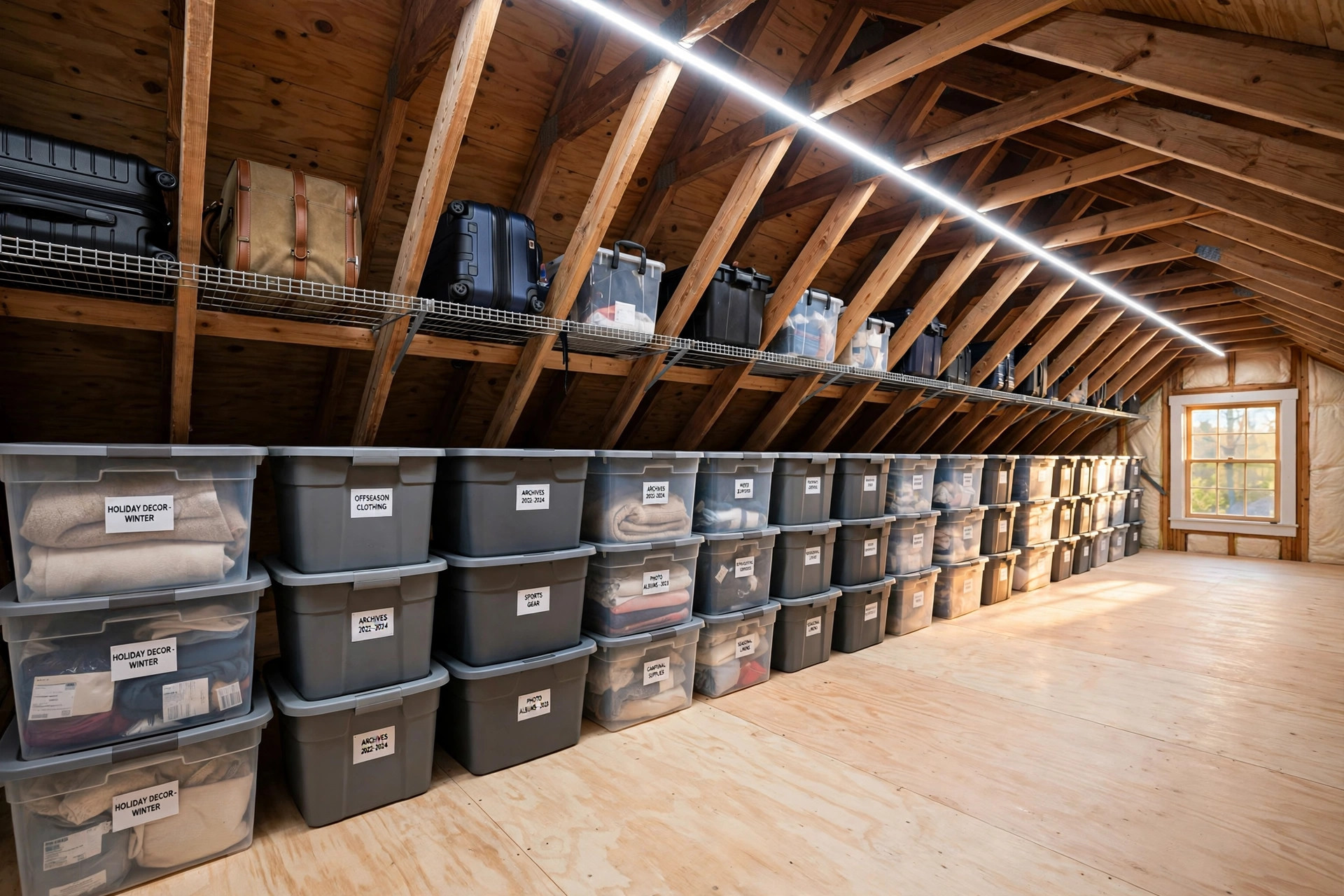

Most American homes have an attic that sits empty or falls into disorder. Boxes pile up. Holiday decorations vanish into dark corners. This premium attic storage solutions buying guide shows how to turn that wasted space into a clean, safe, and orderly storage area. Read it all before you buy a single product.
An attic is the space between your ceiling and your roof. It runs hot in summer and cold in winter, and the floor may be nothing but joists and insulation. Before you spend money on any storage product, learn what your attic can safely hold. That knowledge will save you from wasted purchases and from damage to your home.
Why a Premium Approach Matters
Cheap storage methods cause real harm in attics. Cardboard boxes soak up summer damp and fall apart. Loose boards laid across joists can slip and send a foot through the ceiling below. A premium approach does not mean the most costly one. It means choosing products built for the hard conditions of an attic and installing them in the right way.
A good system brings three gains. First, safety: a solid floor and proper bins keep weight spread out and keep people from stepping through drywall. Second, protection of your goods: attics swing from freezing to well over one hundred degrees, and only the right containers keep papers, photos, and cloth from ruin. Third, time: a labeled, ordered attic lets you find the holiday wreath in five minutes instead of an afternoon.
Some homeowners use the attic for affordable basement shelving units for sale ideas borrowed from below-grade rooms, but attics have their own needs. Basements are damp and cool. Attics are hot and dry. Products that work below ground do not always work above it. Keep that difference in mind as you read.
What to Look for When You Choose: Premium Attic Storage Solutions Buying Guide
Weight Limits
Every attic floor has a limit. Most joists in American homes were sized for a light storage load, often around twenty pounds per square foot near the walls and less in the middle. Heavy items such as tool chests and book crates can overload a floor never meant to carry them. Check your home’s plans or ask a local builder about your joist span before you add flooring.
Storage racks that hang from the rafters have their own limits. A well-made overhead rack may hold one hundred fifty to two hundred fifty pounds in total. Look for a stated load rating on the box. The sites of big retailers such as Home Depot and Lowe’s list these ratings in the product details.
Heat and Moisture
Attic air can top one hundred fifty degrees in a southern summer. That heat warps cheap plastic, melts candle wax, and ruins film and photographs. In winter, a northern attic can drop below freezing, and quick thaws can cause sweating on metal goods. Premium storage bins use thick, tight-fitting lids and resin that resists warping. You can find such bins at The Container Store and through Rubbermaid.
Moisture is the second threat. Roof leaks, bath fans vented into the attic, and blocked soffit vents all feed mold. Never seal boxes airtight around goods that need to breathe, and never store papers or cloth against the roof deck where condensation forms. More on care and upkeep appears in a later section.
Ease of Access
A storage system you cannot reach is a storage system you will not use. Pull-down attic stairs beat a loose ladder. A full plywood walkway beats hopping from joist to joist. Small bins beat large tubs, because a large tub full of books can outweigh what one person can lift at the top of a ladder. Place seldom-used goods farthest from the hatch.
Types of Premium Attic Storage
Attic Flooring and Decking Panels
Flooring is the first purchase for most attics. Without it, you cannot set anything down safely. The standard choice is half-inch plywood or tongue-and-groove decking panels laid across the joists. Tongue-and-groove panels lock together and spread weight well. They cost more than plain plywood, but they make a stiffer floor and are less likely to lift at the edges.
Raised flooring systems are a step up. These are small legs or risers that lift the decking above the joists, so you can keep deep insulation in place under the floor. In homes with thick blown insulation, this matters. Crushing insulation down under plywood cuts its insulating power in half. Raised systems protect both your stored goods and your heating bill. Family Handyman has clear project guides on laying attic decking the right way.
Leave the eaves open. The last few feet near the roof edge should stay clear so soffit vents can feed fresh air to the roof.
Heavy-Duty Storage Bins
Bins are the backbone of any attic system. The plastic should be thick enough that the sides do not bow when you lift a full bin by the handles. The lid should snap or latch tight and keep its seal after many openings. Clear bins let you see contents at a glance, but solid bins block light that fades fabric and photos. Many buyers use both.
Size matters more than most people think. A twenty-seven gallon tub full of old records can weigh eighty pounds. Buy in the ten to twenty gallon range if you will carry bins up the stairs yourself. Label every bin on two sides and keep a master list near the hatch. A quick guide to choosing containers appears at The Spruce. Stack bins no more than two or three high.
Overhead and Rafter Racks
Overhead racks are steel frames that bolt to the ceiling joists or rafters and hang above the floor. They use dead air space for bulky, light items such as coolers, empty luggage, and holiday wreaths. Good racks are made of powder-coated steel and mount with lag bolts into solid framing, not into drywall.
Measure your ceiling height before you buy. The rack must hang high enough to leave walkway space below it. In low-slope attics, racks fit only near the ridge. Check the load rating and spread weight evenly across the rack.
Attic Lifts and Pulley Systems
An attic lift is a platform that carries goods up through the hatch on a cable or track, removing the most dangerous part of attic storage: carrying heavy boxes up a steep ladder. Premium lifts are motorized and rated for two hundred pounds or more. Most makers advise a professional install, since the hatch must be framed to carry the load.
Shelving Units
Freestanding metal or wood shelving turns a tall attic knee wall into a real storage wall. Wire shelving lets air move. Solid wood shelving holds more weight. Either way, anchor tall units to the studs. Our pantry shelving units reviews and buying guide covers kitchen-grade units, and many of the same rules apply above the ceiling: check load ratings, anchor to framing, and leave air gaps.
Lighting and Walkways
You cannot organize what you cannot see. Plug-in LED strips along the ridge beat battery puck lights for a working attic. Add a switch at the hatch so you never climb up into the dark. Mark walkways of plywood clearly, and keep everything off the walkway decked or closed off with a low rail so no visitor steps into insulation. IKEA and Wayfair both sell low-profile LED strips and small storage pieces that fit attic spaces.
Cost and Price
Attic storage costs run from small to large depending on how far you go. Here are honest ranges in American dollars.
A basic setup runs one hundred to three hundred dollars: six to ten quality bins, decking panels for a walkway, labels, and lights.
A mid-range setup runs four hundred to nine hundred dollars: full decking for a storage zone, an overhead rack or two, stackable bins, LED strips, and a pull-down stair kit.
A full premium setup runs one thousand to three thousand dollars or more: raised flooring over deep insulation, several steel racks, a motorized lift, and professional help with the stairs and hatch framing. Labor is the wild card. A handyman may charge two hundred to five hundred dollars to lay decking and mount racks for a day. Get written quotes, and ask each bidder how they will protect your ceiling from foot traffic during the work. Do not forget small costs like lag bolts, labels, and vent baffles, which add fifty to one hundred dollars and are not optional.
Care and Upkeep
A premium attic stays in good shape only with a little regular care. Walk through these tasks once a year, in the fall before winter sets in.
Check the bins first. Look for cracked lids, warped sides, and any bin that no longer seals, and replace failed bins at once. One damp summer can grow mold inside a bin with a bad lid, and mold spreads to the bin next to it.
Check the floor for soft spots, loose screws, and panels that rock. Make sure the walkway is clear and the area near the soffit vents is still open.
Check the roof from inside. Look for dark stains on the sheathing, wet insulation, and daylight shining through where it should not. Any of these signs calls for a roofer, not a storage product. Move bins aside so you can see the deck at least once a year.
Check the vents. Bath and kitchen fans must blow outside the house, never into the attic. Soffit vents must be clear of insulation and boxes. Apartment Therapy offers plain-language home care checklists that cover these seasonal tasks.
Rotate your goods. Papers, photos, and cloth suffer most from heat. Place them near the floor where it is coolest, inside sealed bins with silica packets, and check them yearly. Some families keep overflow clothing in lockable freestanding wardrobe closets with free shipping in a spare room instead, where the climate is kind.
Safety
Attics injure more homeowners than any other storage space, and most injuries come from the same few mistakes. Learn them now.
First, never step on drywall or insulation. Only the joists, the decking, and the walkway will hold you. A foot through the ceiling costs far more than any storage product, and the fall can break a leg. When in doubt, lay a scrap of plywood across two joists and stand on that.
Second, mind the heat. Attics can reach dangerous temperatures in summer. Do not work up there on a hot afternoon. Carry water, take breaks, and stop if you feel dizzy.
Third, watch the air. Old attics may hold cracked wiring, droppings from mice or bats, and vermiculite insulation that can contain asbestos. If you see gray, pebble-like insulation, stop and have it tested before you disturb it. Wear a dust mask and gloves for dusty work.
Fourth, secure the hatch. A pull-down stair left open is an open hole in your hallway. Close it every time you come down. Keep a fire extinguisher on the floor below, within reach of the hatch.
Fifth, respect the load. Spread heavy bins across many joists and keep the heaviest goods near the load-bearing walls. If the floor creaks under your bins, take weight out and call a builder. Family Handyman publishes home safety guidance that covers falls and household hazards in plain terms.
Frequently Asked Questions
What is the first thing I should buy for attic storage?
Buy flooring first. Without a safe deck to stand and set things on, every other product is a hazard. Lay a walkway from the hatch, then deck your main storage zone. Bins come second, lights third.
Can I store clothes in the attic?
You can, but the attic is the worst room in the house for cloth. Heat fades dyes, and damp grows mildew. If you must, use sealed bins with tight lids and silica gel packets, and check the clothes once a year. Valuable garments belong in a closet.
How much weight can my attic hold?
It depends on your joists, their span, and how the roof is framed. Many attics handle about twenty pounds per square foot of light storage near the walls. If you plan to store anything heavy, ask a local builder to check your framing. Guessing is not worth a cracked ceiling.
Are overhead racks safe?
Yes, when they are good racks mounted the right way. Buy racks with a printed load rating, bolt them into joists or rafters with lag screws, and never hang them from drywall or thin sheathing. Spread the load across the rack, and keep total weight under the rating. Cheap unrated racks from unknown sellers are not worth the risk.
Do I need a permit to deck my attic?
Rules vary by town. Laying decking panels for light storage usually needs no permit, but cutting a new hatch, adding stairs, or installing a lift may. Call your local building office before you cut any framing. Cutting a joist or truss without approval can weaken the roof.
What should never go in an attic?
Keep out anything that heat, cold, or damp can ruin: photographs, film, important papers, candles, aerosol cans, paint, wine, electronics with batteries, and anything alive. Also keep out flammables such as gasoline and solvents. If you would not leave it in a hot car, do not leave it in a hot attic.
A Short Final Word
A premium attic is not a luxury. It is a safe floor, honest bins, clear labels, good light, and open vents. Buy in that order, respect the weight limits of your house, and check the space once a year. Do these simple things, and your attic will serve you well for decades. Skip them, and even the finest products will fail you. The guide above gives you the full picture. The next step is a tape measure, a flashlight, and an honest look at your own rafters.
References
Apartment Therapy. (n.d.). Home design ideas and inspiration. https://www.apartmenttherapy.com Family Handyman. (n.d.). DIY home repair and maintenance. https://www.familyhandyman.com IKEA. (n.d.). Home furnishings. https://www.ikea.com Lowe’s. (n.d.). Home improvement products. https://www.lowes.com Rubbermaid. (n.d.). Storage containers and home products. https://www.rubbermaid.com The Container Store. (n.d.). Storage and organization products. https://www.containerstore.com The Home Depot. (n.d.). Home improvement products. https://www.homedepot.com The Spruce. (n.d.). Home and garden advice. https://www.thespruce.com Wayfair. (n.d.). Furniture and home goods. https://www.wayfair.com
Was this guide helpful?

About Robert Taylor
The My Garden US editorial team writes practical, in-depth home and garden guides for American homeowners — tested advice, no fluff.
You May Also Like

Vacuum Storage Bags for Clothes Price Comparison USA
June 29, 2026 0 views
Affordable Sports Equipment Organizers for Sale: A Buyer’s Guide
February 15, 2026 0 views
How to Buy Sports Equipment Organizers Online in California
August 13, 2026 0 views