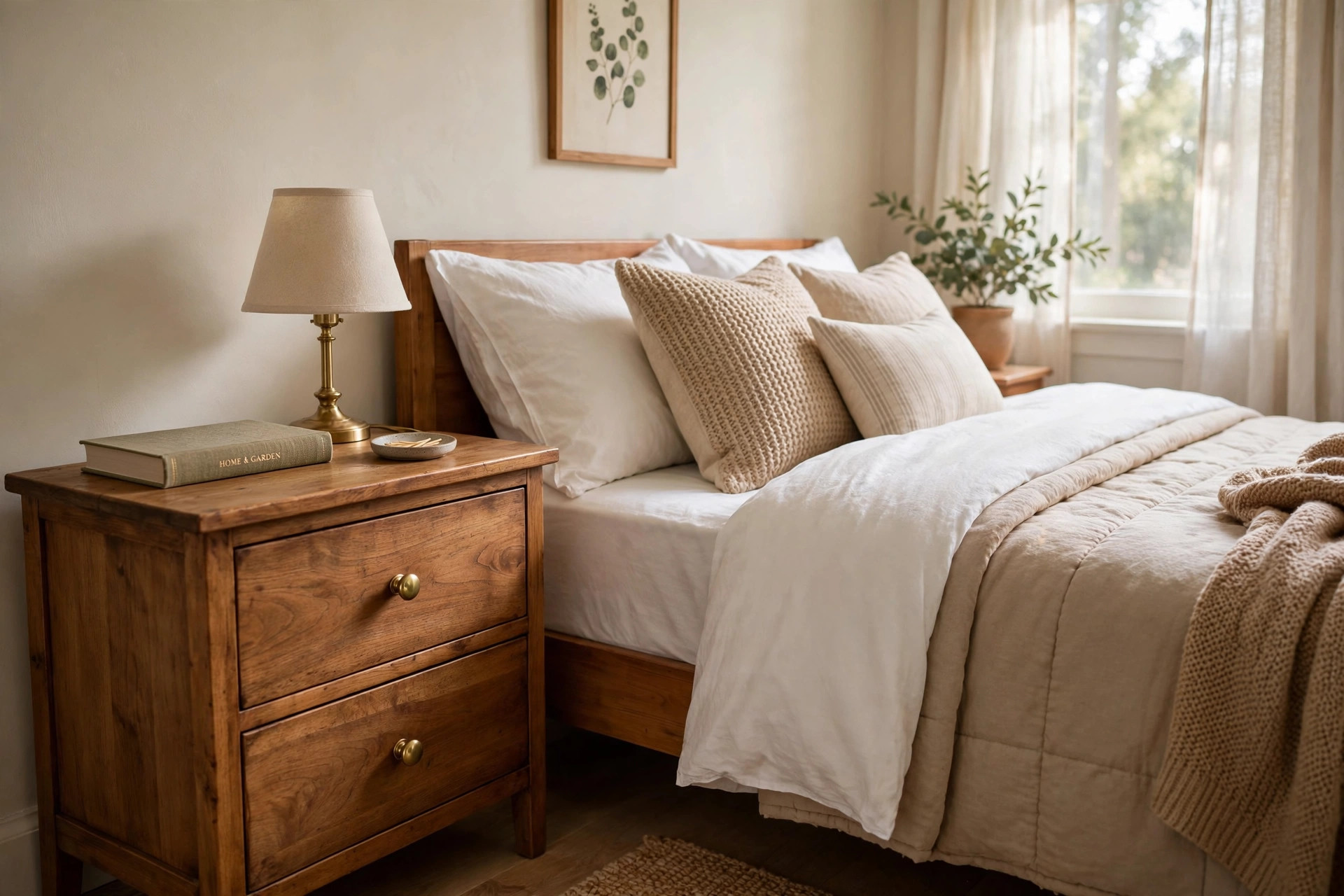

A nightstand is the small table that stands beside a bed. It holds a lamp, a glass of water, a book, and the small things people reach for at night. A nightstand with storage drawers does all of this and more. The drawers hide clutter. They keep medicine, reading glasses, and remote controls out of sight but close at hand. For many shoppers looking for the best nightstands with storage drawers for American homes, the goal is simple. They want a piece of furniture that looks good, holds enough, and lasts for years.
American bedrooms come in many sizes. Some are large master suites. Others are small rooms in city apartments. In every case, the nightstand must fit the space and serve the sleeper. A good nightstand saves time each morning and each night. A poor one crowds the room or falls apart after a year. This guide walks through the reasons drawers matter, the types on the market, the price ranges, and the care they need. By the end, a buyer should know exactly what to look for in a store or online.
Why a Nightstand With Drawers Matters
Open bedside tables look fine in a catalog. In a real home, they collect dust and clutter. Drawers solve this problem. A drawer keeps small items in one place. It protects them from dust. It also hides them from guests. Many Americans like a tidy bedroom. A tidy bedroom is easier to clean. It also feels calm at the end of a long day.
Drawers also add storage where space is tight. Closets are full. Dressers are full. The nightstand drawer is the last easy space in many bedrooms. People store alarm clocks, charging cables, vitamins, and notebooks inside. Some store important papers or a flashlight for power cuts. The drawer keeps these things private and close.
A nightstand with drawers also makes the room safer. Small items on an open shelf can fall off in the night. A glass can tip. A drawer closes. It keeps everything inside. For homes with children or pets, closed storage is the better choice. For these reasons, buyers who compare options, from large furniture retailers such as IKEA to storage specialists such as the Container Store, often find that drawer models sell the most.
The same idea works in every room. Homeowners who install kitchen cabinet organizers in the kitchen or set up workshop tool chests in the garage know that closed storage keeps tools and goods in order. The nightstand does the same job beside the bed.
How to Choose the Right Nightstand: Best Nightstands with Storage Drawers for American Homes
Buying a nightstand is not hard, but a few points deserve care. The size, the height, the build, and the finish all matter. A careful buyer checks each one.
Measure Your Space
Start with a tape measure. Measure the wall space beside the bed. Leave at least a few inches between the bed frame and the nightstand. Leave room to open the drawers fully. A drawer that hits the bed or the wall is useless. Write down the width, the depth, and the height you need. Take the numbers to the store. Keep them by the computer when you shop online.
Match the Height to Your Bed
The top of the nightstand should sit near the top of the mattress. A good rule is within two or three inches of the mattress height. If the nightstand is too low, it is hard to reach the lamp. If it is too high, it towers over the sleeper. Measure from the floor to the top of your mattress. Then look for bedside tables with drawers in that range. Home guides published by The Spruce often give the same advice, and it holds true for most American beds.
Check the Drawer Build
Not all drawers are built the same. Open the drawer and look at the sides. Solid wood sides are best. Plywood sides are fine. Thin fiberboard sides wear out fast. The drawer should slide in and out with ease. Metal glides are smooth and strong. Wood on wood glides are simple and can last, but they need wax now and then. Check the back of the drawer. A thin panel that is nailed in place is a sign of cheap work. A panel set into a groove is better.
Look at the Finish
The finish should be smooth and even. Run a hand over the top. There should be no rough spots. Stained wood should show the grain without blotches. Painted wood should have no drips. A good finish protects the wood from water rings left by glasses. For design ideas, readers often turn to Apartment Therapy, which shows how a simple finish can match many room styles.
Types of Nightstands With Storage Drawers
Nightstands with storage drawers come in several common types. Each suits a different room and a different need.
One-Drawer Nightstands
The one-drawer nightstand is small and light. It has a single drawer near the top and often an open shelf below. It suits small bedrooms and guest rooms. It holds a few items and nothing more. It is also the least costly type. A shopper on a tight budget can start here.
Two-Drawer Nightstands
The two-drawer nightstand is the most popular choice in the United States. Two drawers hold a lamp, a book, glasses, medicine, and more. The top drawer holds the items used each night. The lower drawer holds items used less often. This type fits most beds and most rooms. Independent testing from Wirecutter has often praised simple two-drawer designs for their balance of price and use.
Three-Drawer and Chest Nightstands
A three-drawer nightstand is taller and holds more. It works like a small chest of drawers. It suits people who keep many items by the bed. It also suits large master bedrooms where a small table would look lost. The extra drawer adds weight, so check that the piece feels stable.
Nightstands With a Shelf Plus Drawers
Some nightstands mix a drawer with an open shelf. The drawer hides small items. The shelf holds books or a basket. This mix gives easy access to large items and closed storage for small ones. It is a good pick for readers who keep several books by the bed.
Materials: Wood, Metal, and More
Most nightstands are made of wood. Solid wood is the strongest and lasts the longest. Oak, maple, and cherry are common in American furniture. Pine is softer and costs less. It can dent, but it also takes paint well. A wooden nightstand with storage drawers in solid oak can serve a family for decades.
Engineered wood, such as MDF or particleboard, is the least costly option. It is heavy but can sag or swell if it gets wet. A nightstand with a veneer over engineered wood can look fine, but it needs care around water. It suits a guest room better than a busy master bedroom.
Metal nightstands are less common but very strong. They suit modern rooms. Some mix metal frames with wood drawers. These pieces are stable and easy to clean. A few nightstands are made of rattan or wicker. These suit warm climates and casual rooms. They are light but need gentle care.
Whatever the material, check the joints. Screws and dowels beat staples and glue alone. The piece should not rock when you press on a corner. Repair guides from Family Handyman show how to fix loose joints, but a well-built nightstand should not need fixing for years.
Cost and Price Ranges
Prices for nightstands with storage drawers vary widely across the United States. A small one-drawer model from a discount store can cost less than fifty dollars. These are often made of particleboard. They serve for a short time. A solid wood two-drawer nightstand from a mid-range brand often costs between one hundred fifty and four hundred dollars. This is the sweet spot for most buyers. The piece lasts and looks good.
High-end nightstands can cost five hundred dollars or more. These use fine hardwood and strong joinery. They may come from known furniture makers. For a pair of matching nightstands, double the price. Many stores sell them in pairs at a small discount. Home improvement stores such as the Home Depot carry options across this whole range, from budget models to fine pieces.
Used nightstands are worth a look. Estate sales, thrift stores, and online listings often have solid wood pieces at low prices. An old nightstand may need new paint or new knobs. That is a small job. The bones of an old piece are often stronger than a new cheap one.
Care and Upkeep
A nightstand with drawers needs little care, but regular care keeps it in good shape. Dust the top and the drawers each week with a soft cloth. Wipe spills at once. Water is the enemy of wood and engineered wood alike. Use coasters under glasses. A felt pad under a lamp stops scratches.
Once or twice a year, empty the drawers and wipe the insides. Check the drawer glides. If a drawer sticks, rub a candle or a bar of soap along a wooden glide. For metal glides, a drop of silicone spray helps. Tighten any loose knobs or pulls. A small screwdriver is all you need.
Keep the nightstand out of direct sun when you can. Sun fades the finish over time. Keep it away from heating vents as well. Dry heat can crack solid wood. With these simple steps, a good nightstand can serve for twenty years or more. The Good Housekeeping Institute has long advised the same gentle care for bedroom furniture, and it works.
Safety in the Bedroom
Safety matters in any bedroom. A tall nightstand can tip if a child climbs it. Anchor tall pieces to the wall with the hardware that often comes in the box. This is cheap insurance. Product ratings from Consumer Reports often note which furniture includes tip restraints, and buyers should use them.
Keep medicine and small sharp items in a drawer with a latch if young children live in the home. A lamp with a heavy base is less likely to fall. Keep cords behind the nightstand so no one trips. These are small steps. They keep the bedroom safe for everyone.
Also check for recalls before buying a used piece. Old paint may contain lead. If you plan to strip and repaint an old nightstand, wear a mask and work outside. Safety guides from many remodeling sites, including Bob Vila, cover these steps in detail.
Frequently Asked Questions
How wide should a nightstand be?
Most nightstands are between eighteen and twenty-four inches wide. The right width depends on the bed and the room. A king bed can take a wider nightstand. A twin bed needs a narrow one. Always measure first.
Is one drawer enough, or do I need two?
It depends on what you store. If you only keep a lamp, a book, and glasses, one drawer is enough. If you keep medicine, cables, notebooks, and more, two drawers serve better. When in doubt, choose two. The extra space is always useful.
Should both nightstands match?
Matching nightstands look neat and calm. Many American bedrooms use a matching pair. But they do not have to match. Some designers mix two different nightstands on purpose. If you mix, keep one thing the same, such as the height or the wood tone.
What is the best wood for a nightstand?
Oak and maple are strong and last long. Cherry darkens nicely with age. Pine is soft but takes paint well. Any of these can serve for years if the build is good. The build matters more than the species.
Can I use a small dresser as a nightstand?
Yes. A small dresser works well beside a tall bed. It gives more storage than a nightstand. Just check the height. It should still sit near the top of the mattress. It also pairs well with other bedroom storage, such as tie, belt, and accessory organizers for the closet.
Where can I find good deals?
Watch for sales at large stores and online sellers. Holiday weekends often bring furniture sales. Online furniture sellers such as Wayfair run frequent promotions. Buying a floor model or a used piece can also save money.
A Final Word
The best nightstands with storage drawers for American homes are not always the most costly ones. They are the ones that fit the room, match the bed height, and hold what the sleeper needs. Measure first. Check the drawer build. Pick a finish that suits the room. Then enjoy a bedroom that stays tidy with little effort. A good nightstand is a small piece of furniture, but it serves every single day.
References
Apartment Therapy. (n.d.). Home design ideas and inspiration. https://www.apartmenttherapy.com Bob Vila. (n.d.). Home improvement advice. https://www.bobvila.com Consumer Reports. (n.d.). Product reviews and ratings. https://www.consumerreports.org Family Handyman. (n.d.). DIY home repair and maintenance. https://www.familyhandyman.com Good Housekeeping. (n.d.). Product reviews and home advice. https://www.goodhousekeeping.com IKEA. (n.d.). Home furnishings. https://www.ikea.com The Container Store. (n.d.). Storage and organization products. https://www.containerstore.com The Home Depot. (n.d.). Home improvement products. https://www.homedepot.com The Spruce. (n.d.). Home and garden advice. https://www.thespruce.com Wayfair. (n.d.). Furniture and home goods. https://www.wayfair.com Wirecutter. (n.d.). Product reviews from The New York Times. https://www.nytimes.com/wirecutter
Was this guide helpful?

About Sarah Mitchell
The My Garden US editorial team writes practical, in-depth home and garden guides for American homeowners — tested advice, no fluff.
You May Also Like

Affordable Makeup and Cosmetics Organizers for Sale
April 4, 2026 0 views
Where to Buy Mudroom Storage Benches in Texas
March 21, 2026 0 views
Where to Buy Ottoman Storage Benches in Colorado: A Homeowner’s Guide
June 29, 2026 0 views