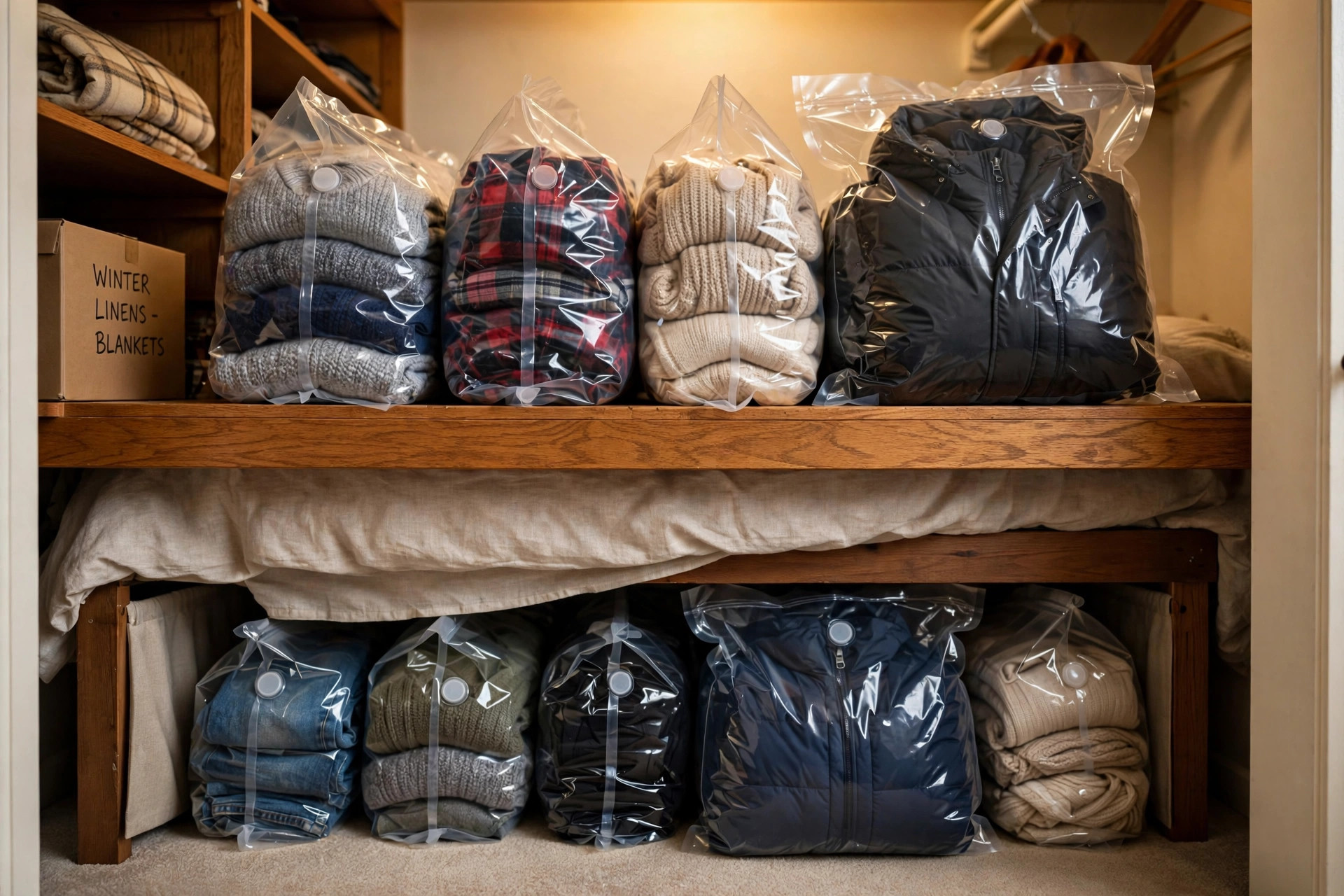

Closets fill up fast. Winter coats, spare blankets, and out-of-season clothes take up room that small homes do not have. A vacuum storage bags for clothes price comparison usa helps shoppers find bags that shrink bulky fabric down to a flat, stackable size. These bags work with a simple idea. Air takes up space. Remove the air, and a puffy comforter becomes a thin slab. You seal clothes inside a thick plastic bag, draw the air out with a vacuum cleaner, and the bag collapses around the fabric. The result fits under a bed, on a high shelf, or in a storage bin. Prices vary a lot. A basic set of four bags can cost less than ten dollars at a discount store. A large branded set with a hand pump can cost forty dollars or more. The difference is not always clear from the box. Some cheap bags leak air within weeks. Some costly bags offer little extra. This guide walks through what matters, what to avoid, and where prices land across the country. With a careful comparison, most families can store a full season of clothes for the price of a pizza dinner.
Why It Matters
Most American homes need more storage than they have. Apartments in cities often have one small closet per bedroom. Houses have attics and basements, but damp air and dust can ruin fabric left in cardboard boxes. Vacuum bags solve three problems at once. First, they cut volume. A bag can shrink clothes to one third of their normal size. That turns a full closet shelf into a single flat package. Second, they seal out dust, moths, and damp. A tight seal keeps pests away from wool coats and cashmere sweaters. Third, they stack well. Flat sealed bags slide under beds and fit inside plastic bins without wasted gaps. Families that move often gain the most. Movers charge by volume, and smaller loads cost less. College students gain too. A dorm room has little room for a winter wardrobe in spring. Seasonal swappers, campers, and anyone with a small linen closet will feel the same relief. The bags also help in an emergency. When a storm threatens, sealed bags protect clothes from water damage better than open boxes. For all these reasons, a little money spent on the right bags pays back in saved space all year.
How to Choose: What to Look For: Vacuum Storage Bags for Clothes Price Comparison Usa
Not all bags hold their seal. The best way to judge is to check a few clear points before you buy.
Bag Size
Bags come in small, medium, large, jumbo, and extra jumbo sizes. Small bags suit shirts and light sweaters. Large bags hold comforters and winter coats. Jumbo bags can take a full bedding set. Measure your shelf or under-bed space first. A jumbo bag means nothing if it does not fit where you plan to keep it. Many shoppers buy a mixed set. Mixed sets include several sizes at a lower price per bag. Home advice sites like The Spruce often publish size guides that help match bags to common items.
Valve and Seal Quality
The valve is the weak point of every bag. Cheap valves leak. A good valve has a firm cap that twists or snaps shut. The seal strip should close with a clear click or a smooth zip line. Double zip seals hold air longer than single seals. Read the seal twice before you vacuum. One hair or thread across the seal can let air seep back in. Stores that specialize in home goods, such as The Container Store, usually stock bags with stronger valves, and their staff can show you how the seal works.
Material Thickness
Bag plastic is measured in thickness. Thicker bags resist tears from zippers, buttons, and rough shelf edges. A bag that is too thin may puncture the first time you stack a heavy coat inside it. Look for bags that feel heavy in the hand. Many makers print the thickness on the box. Bags made for long-term storage tend to be thicker than cheap travel bags. Big-box hardware stores like Home Depot and Lowe’s carry heavy-duty options in their storage aisles, and their websites list thickness in the product details.
Types and Options
Flat Storage Bags
Flat vacuum sealed storage bags are the classic type. You lay clothes inside, seal the top, and suck the air out through the valve. They come in every size. Flat bags suit closets, shelves, and storage bins. They are the cheapest type per bag. Most price comparison shoppers start here because flat bags give the best value for home use.
Roll-Up Travel Bags
Roll-up bags need no vacuum cleaner. You seal the bag and roll it toward the valve to push air out. They are small and light. They suit suitcases, backpacks, and car trunks. They do not shrink clothes as flat as vacuum bags, and the seal loosens over weeks. Buyers who travel often keep a few of these for trips. They cost little, and a set of travel bags often sells for under fifteen dollars.
Jumbo and Wardrobe Bags
Jumbo bags hold the largest loads. A single jumbo bag can hold four pillows or a king-size comforter. Wardrobe bags hang from a closet rod and hold suits or dresses without folding. They cost more per bag, but they save the most space. Families with bulky winter gear often find jumbo bags worth the price. Budget shoppers can also look at related storage buys, such as storage bags for patio cushions, when they compare seasonal storage costs.
Cost and Price Comparison
Prices for vacuum storage bags run from about five dollars to more than fifty dollars per set. The price depends on bag count, size mix, brand, and where you buy. A basic set of four medium bags often sells for six to ten dollars at discount chains like Walmart and Target. These sets work well for light use. A mid-range set of six to eight mixed-size bags sells for fifteen to twenty-five dollars. Mid-range sets are the sweet spot for most homes. They include enough sizes for coats, sweaters, and bedding. Premium sets of eight to twelve bags with thick plastic and a hand pump sell for thirty to fifty dollars. Premium brands promise better valves and longer seals.
Where you shop changes the vacuum storage bags for clothes price. Warehouse clubs sell large packs at a low price per bag. Drug stores sell small packs at a high price per bag for quick trips. Online sellers like Wayfair run frequent sales, and prices can drop by a third during holiday weekends. The budget furniture giant IKEA sells its own line at low prices, though sizes may be limited. Specialty storage retailers charge more but often back their bags with clear return policies.
Watch for hidden costs. A set that needs a vacuum cleaner saves money only if you own one. Some sets include a small hand pump. Hand pumps work, but they take longer and tire your arms on jumbo bags. Shipping costs matter for online orders. A ten-dollar set with eight-dollar shipping is not a deal. Look for free shipping thresholds or buy in store. Also check the price per bag, not the price per box. A twelve-dollar box of six bags beats a ten-dollar box of four bags.
Season changes prices too. Bags sell at full price in spring, when people store winter clothes. They often go on sale in late summer and after the winter holidays. If you can wait, you can save twenty to thirty percent. Small-space living guides at Apartment Therapy often note these seasonal swings and advise readers to buy storage supplies off-season.
For renters comparing full storage setups, the same price-hunting habit pays off on bigger pieces too, from under bed storage containers to mudroom storage benches.
Care and Upkeep
Vacuum bags need little care, but a few habits keep them working for years. Wash and dry all clothes before sealing. Dirt and sweat can stain fabric in a sealed bag. Fold clothes neatly so sharp folds do not press on the plastic. Keep bags away from heat. Do not store them next to a furnace or in a hot attic trunk. Heat softens the plastic and weakens the seal. Check the seal every few months. Press the bag. If it feels soft or puffy, air has leaked in. Reseal it and vacuum again. Wipe the valve with a dry cloth before each use. Dust in the valve can break the seal. Home repair guides at Family Handyman remind readers that most seal failures come from dirt, not from bad bags. Store empty bags flat in a drawer. Folded bags crease, and creases can crack over time.
Safety
Vacuum bags are safe for most homes, but a few rules keep people and clothes safe. Keep bags away from small children. A large empty bag can cover a child’s head, so store bags out of reach. Do not vacuum-seal leather jackets or fur coats. These materials need air to stay soft, and long storage without air can dry and crack them. Down jackets and sleeping bags can go in vacuum bags for a few months, but long storage can flatten the fill. Give down items a day to puff back up after you open the bag. Do not overfill. A bag stretched past its limit can split at the seam. Leave a few inches of room at the top. Keep bags away from sharp tools and rough concrete. One small hole ruins the seal. If you store bags in a garage, place them inside a hard plastic bin for extra guard.
Frequently Asked Questions
How long do vacuum storage bags keep air out?
A good bag holds its seal for three to six months. Thick bags with double seals can last a year. Cheap bags may leak within weeks. Check your bags each season and reseal any that feel soft.
Can I use a regular vacuum cleaner with these bags?
Yes. Almost all flat storage bags fit a standard vacuum hose. Place the hose over the valve, hold it firm, and run the vacuum until the bag stops shrinking. Roll-up travel bags need no vacuum at all.
Do vacuum bags damage clothes?
Most fabrics are fine. Cotton, polyester, wool, and fleece come out with light wrinkles that smooth away after airing. Avoid leather, fur, and silk. These fine materials can lose shape or dry out in a sealed bag.
How many bags do I need for a family of four?
A family of four usually needs twelve to sixteen bags for a full season change. That covers winter coats, sweaters, extra bedding, and spare blankets. A mixed set of large and jumbo bags covers most of it.
Are expensive brands worth the price?
Sometimes. Costly bags often have thicker plastic and better valves. But many mid-price bags perform just as well. Read the seal type and plastic thickness on the box. These two facts predict results better than the brand name.
Where is the cheapest place to buy vacuum storage bags?
Discount chains and warehouse clubs usually offer the lowest price per bag. Online prices swing with sales. Compare the price per bag, add shipping, and check for off-season sales before you buy.
A Final Word
A vacuum storage bags for clothes price comparison usa takes only a few minutes and can save real money. Start with your needs. Count what you must store and measure where it will go. Choose a mixed set with double seals and thick plastic. Compare the price per bag across stores, and buy off-season when you can. With the right bags, a crowded closet turns into open space, and your clothes stay clean, dry, and ready for the next season.
References
Apartment Therapy. (n.d.). Home design ideas and inspiration. https://www.apartmenttherapy.com Family Handyman. (n.d.). DIY home repair and maintenance. https://www.familyhandyman.com IKEA. (n.d.). Home furnishings. https://www.ikea.com Lowe’s. (n.d.). Home improvement products. https://www.lowes.com Target. (n.d.). Retail store. https://www.target.com The Container Store. (n.d.). Storage and organization products. https://www.containerstore.com The Home Depot. (n.d.). Home improvement products. https://www.homedepot.com The Spruce. (n.d.). Home and garden advice. https://www.thespruce.com Walmart. (n.d.). Everyday low prices. https://www.walmart.com Wayfair. (n.d.). Furniture and home goods. https://www.wayfair.com
Was this guide helpful?

About Sarah Mitchell
The My Garden US editorial team writes practical, in-depth home and garden guides for American homeowners — tested advice, no fluff.
You May Also Like

Space Saving Rotating Lazy Susan Turntables Buying Guide
June 10, 2026 0 views
Waterproof Linen Closet Organizers for Texas Homes
June 26, 2026 0 views
Waterproof Wall Mounted Storage Shelves for Sale: A Complete Buying Guide
April 28, 2026 0 views