
Many parents in the Midwest face the same small problem every morning. The child has plenty of clothes, but the closet is too small. Shirts fall from high shelves. Toys hide under pants. The morning rush becomes a hunt for one missing shoe. Space saving kids closet organizers for midwest homes offer a simple answer to this daily trouble. They turn a small closet into a working storage space. This guide explains why these organizers matter, what types you can buy, how much they cost, and how to keep them safe for your child.
Why Kids Closet Organizers Matter in Midwest Homes
Homes in the Midwest are built with the local weather in mind. Winters are cold, and summers can be hot. A child needs two full sets of clothes: one for cold months and one for warm months. Coats, boots, and thick sweaters take up a great deal of room. By the time October comes, the small bedroom closet is full to the door.
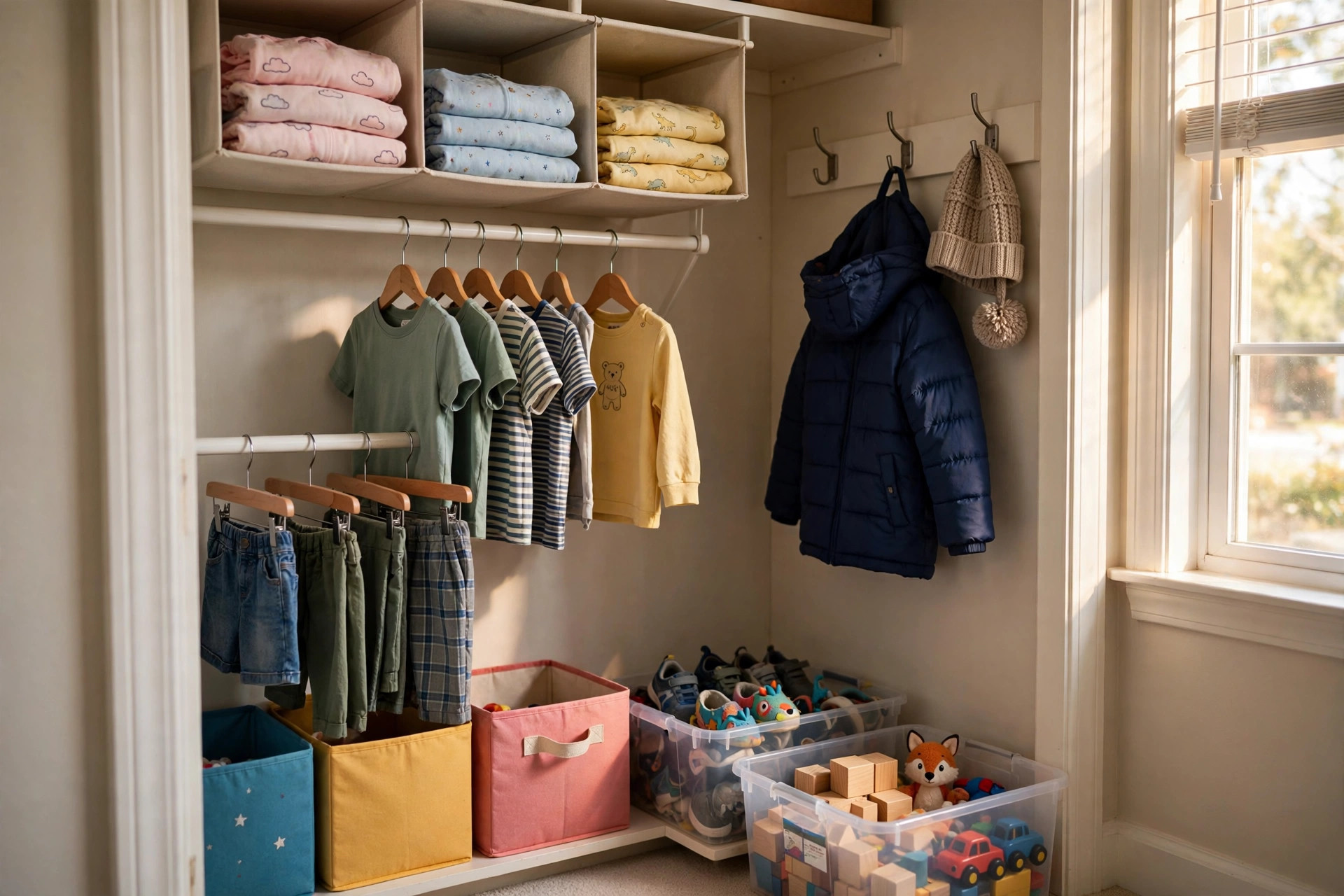
Space saving kids closet organizers for midwest homes solve this by using every inch of the closet. A standard closet has one rod and one shelf. That leaves dead space above the shelf and empty air below hanging clothes. Organizers fill those gaps. Hanging fabric shelves use the vertical space. Small bins catch shoes, socks, and toys. Double rods let you hang short clothes in two rows instead of one.
There is another reason these systems help families. Children grow fast. What fits in September may be too small by March. When clothes are organized, parents can see at a glance what still fits and what must be passed on. The morning routine also goes faster. A child who can reach his own clothes can dress himself. That small step toward independence matters a great deal to a four-year-old.
Families in states like Ohio, Illinois, Indiana, Iowa, Michigan, Minnesota, Wisconsin, Missouri, Kansas, and the Dakotas often live in older houses with small bedrooms. Closets in these houses were built for a single rod and little else. A good organizer system can double the usable storage of such a closet without any drilling or carpentry in most cases. If you rent your home, that is a real advantage.
How to Choose the Right Organizer for Your Child: Space Saving Kids Closet Organizers for Midwest Homes
Before you buy, take a few simple measurements. Measure the width of the closet from wall to wall. Measure the height from the floor to the top shelf. Note where the rod sits. Most organizers fit closets between 24 and 48 inches wide. Write the numbers down and keep them with you when you shop. A tape measure is the best friend of a smart buyer.
Next, think about your child. A toddler needs low hooks and bins that sit on the floor. A ten-year-old can reach a higher shelf. Adjustable systems are worth their price because they move as the child grows. Look for rods and shelves that can be set at different heights. The Container Store carries many adjustable closet systems that grow with a child, and its site shows how parts fit together.
Consider the weight the organizer must hold. Winter coats are heavy. Boots are heavy. A fabric hanging organizer that holds shirts may tear if loaded with coats. Check the weight limit on the box. Metal and wood frames hold more than fabric and plastic. For a full closet with winter gear, a wire or solid frame is the safer buy.
Ask yourself how much work you want to do. Some systems need only a screwdriver and thirty minutes. Others ask for a drill, a level, and a free afternoon. Wall-mounted units hold the most weight, but they leave holes in the wall. Freestanding and hanging units leave the walls alone. Renters should choose options that need no drilling. IKEA offers several freestanding closet frames that need no wall mounting, which suits rented houses well.
Types of Space Saving Kids Closet Organizers
There are five main types. Each suits a different closet and a different child.
Hanging Fabric Organizers
These are the most popular and the least costly. A fabric organizer hangs from the existing closet rod. It has shelves that stack from top to bottom. You can fold shirts, pants, and pajamas into the shelves. Some models have side pockets for small items. They cost little and take only minutes to set up. The drawback is that they hold light items only. Heavy boots can pull the fabric down. They also sway a little when you pull clothes out.
Double Hanging Rods
A double rod hangs a second rod below the first. This lets you hang twice as many shirts and pants. It works best for clothes that are short, like shirts, skirts, and folded pants. Long dresses and coats still need the full length of the closet. Tension rods need no screws. They press against the walls and stay in place. They are a fine choice for renters. Be sure the tension is tight so the rod does not slip under weight.
Stacking Bins and Cubes
Plastic bins and fabric cubes turn wasted floor space into storage. They hold shoes, toys, hats, and gloves. Clear bins let you see what is inside. Fabric cubes come in bright colors that children like. Label each bin with a picture or a word. A young child can match the picture to the item. This turns cleanup into a simple game. The Home Depot stocks a wide range of stacking bins in several sizes for small closets.
Over-the-Door Racks
The back of the closet door is often empty. An over-the-door rack uses that space. It holds shoes, belts, scarves, and small toys. Most racks hang over the door with no screws. Check that the door still closes fully with the rack in place. Some racks are too thick for doors that sit tight against the frame.
Modular Wood and Wire Systems
These are the strongest option. They include shelves, rods, drawers, and baskets that connect into one unit. You can arrange the parts to fit your closet. They hold heavy winter coats with ease. They cost more than fabric options. Some need wall screws for safety. Wayfair lists many modular closet systems in sizes made for small bedrooms.
What a Good System Costs
Prices vary with material and size. A basic hanging fabric organizer costs between fifteen and thirty-five dollars. Double rods sell for ten to twenty-five dollars. A set of four fabric cubes costs about twenty dollars. Over-the-door racks range from fifteen to forty dollars.
Modular systems cost more. A small modular closet kit starts near eighty dollars. Larger kits with drawers and baskets can reach two hundred fifty dollars or more. Custom closets installed by a professional cost several hundred dollars and up. For most families, a mix of low-cost parts works best. A double rod, one hanging organizer, and four bins can change a closet for under seventy-five dollars.
Watch for sales. Late summer brings back-to-school sales on storage goods. January brings clearance sales as stores make room for spring goods. Buying a few parts at a time spreads the cost. Remember that the cheapest organizer is not always the best buy. A twenty-dollar fabric shelf that tears in six months costs more than a fifty-dollar wire unit that lasts five years.
Care and Upkeep Through the Seasons
Midwest weather puts a test on any closet. In winter, wet boots and snowy coats come inside daily. In summer, dust settles on shelves. A little care keeps the organizer working well.
Wipe down shelves and bins once a month. A damp cloth removes dust. Check the weight on hanging parts. Move heavy items to lower shelves. Tighten any screws or tension rods every few months. Metal parts can loosen with daily use.
Change the closet with the seasons. In spring, pack winter coats and boots into the highest shelf or a storage bin. Move summer clothes to the front and to lower shelves where the child can reach them. In fall, reverse the change. This seasonal switch keeps the closet from growing too full. It also gives parents a chance to check what the child has outgrown.
Teach the child a simple rule: one thing out, one thing back. When a child takes a shirt, the shirt goes back on its shelf after washing. This habit keeps the organizer tidy. It also teaches the child to care for his own things.
Safety Comes First
Children are curious. They climb. They pull. Any closet organizer must be safe for a young child.
Anchor tall units to the wall. A tall shelf that a child climbs can tip and cause harm. Most makers include wall anchors in the box. Use them. If you rent, ask the landlord about small anchor holes. Many landlords accept them when the holes are filled at move-out. Family Handyman has guides on anchoring furniture safely in rented homes.
Keep small parts out of reach of toddlers. Hooks, screws, and drawer pulls can come loose. Check them now and then. Avoid glass containers in a kids closet. A dropped glass jar can break and cut. Use plastic or fabric bins instead.
Watch for pinch points. Folding racks and sliding doors can catch small fingers. Teach the child to open and close doors slowly. Keep cleaning supplies and any sharp items out of the kids closet entirely.
Check product recalls. The U.S. Consumer Product Safety Commission lists recalls for storage furniture. A quick check before you buy can keep an unsafe product out of your home. The Spruce also tracks common closet safety tips in its home guides at The Spruce.
Frequently Asked Questions
How much space can a kids closet organizer really save?
A good system can double the usable storage of a small closet. By using the full height of the closet and the space under hanging clothes, you gain room for bins, shoes, and folded clothes that had no place before. Most parents report that a once-crowded closet holds a full season of clothes with room left over.
Can I install an organizer in a rented home?
Yes, in most cases. Choose hanging fabric organizers, tension rods, over-the-door racks, and freestanding bins. None of these need drilling. They come down clean when you move. Keep the original parts in case the landlord asks to see that no holes were made.
What is the best organizer for a very small closet?
Start with a double hanging rod and one hanging fabric shelf. These two parts use space you already have and add a great deal of storage. Add bins on the floor for shoes. This simple set fits closets as narrow as twenty-four inches. If your closet is wider, you may also enjoy reading about full closet organizer systems price comparison usa to see larger options.
How do I organize clothes for both winter and summer?
Keep the current season at child height. Move off-season clothes to the top shelf or into a labeled bin. Winter coats go on strong hooks or a sturdy rod. Summer clothes are light and fit well in fabric shelves. Do the switch twice a year, in spring and fall. This keeps the closet light and easy to use.
Are fabric organizers strong enough for winter coats?
Light fabric shelves are not made for heavy coats. They can stretch and tear. Use fabric shelves for shirts, pants, and pajamas. Hang coats on a solid rod or store them in a sturdy bin. If you need one unit to hold everything, choose a wire or wood modular system.
Where can I learn more about kids-specific closet options?
For a broad look at choices made for children, see our guide on kids closet organizers reviews and buying guide. If you need a lockable option to keep certain items safe, read about lockable kids closet organizers with free shipping. Apartment Therapy also offers many small-space ideas for family homes.
A Short Final Word
A small closet does not have to mean a messy room. With the right parts, a Midwest childs closet can hold two seasons of clothes, shoes, toys, and gear. Start with measurements. Choose parts that fit your child and your budget. Keep safety first. Do a seasonal switch twice a year. The morning rush will go faster, and the child will learn to care for his own space. For more storage ideas beyond the closet, Lowe’s and Target both carry home organization lines worth a look.
References
Apartment Therapy. (n.d.). Home design ideas and inspiration. https://www.apartmenttherapy.com Family Handyman. (n.d.). DIY home repair and maintenance. https://www.familyhandyman.com IKEA. (n.d.). Home furnishings. https://www.ikea.com Lowe’s. (n.d.). Home improvement products. https://www.lowes.com Target. (n.d.). Retail store. https://www.target.com The Container Store. (n.d.). Storage and organization products. https://www.containerstore.com The Home Depot. (n.d.). Home improvement products. https://www.homedepot.com The Spruce. (n.d.). Home and garden advice. https://www.thespruce.com U.S. Consumer Product Safety Commission. (n.d.). Product safety information. https://www.cpsc.gov Wayfair. (n.d.). Furniture and home goods. https://www.wayfair.com
Was this guide helpful?

About Jennifer Lee
The My Garden US editorial team writes practical, in-depth home and garden guides for American homeowners — tested advice, no fluff.
You May Also Like
Affordable Garden Tool Organizers for Sale: A Practical Guide
February 5, 2026 0 views
Buy Holiday Decoration Storage Boxes Online in Colorado
February 27, 2026 0 views
Lockable Freestanding Wardrobe Closets With Free Shipping
August 12, 2026 0 views