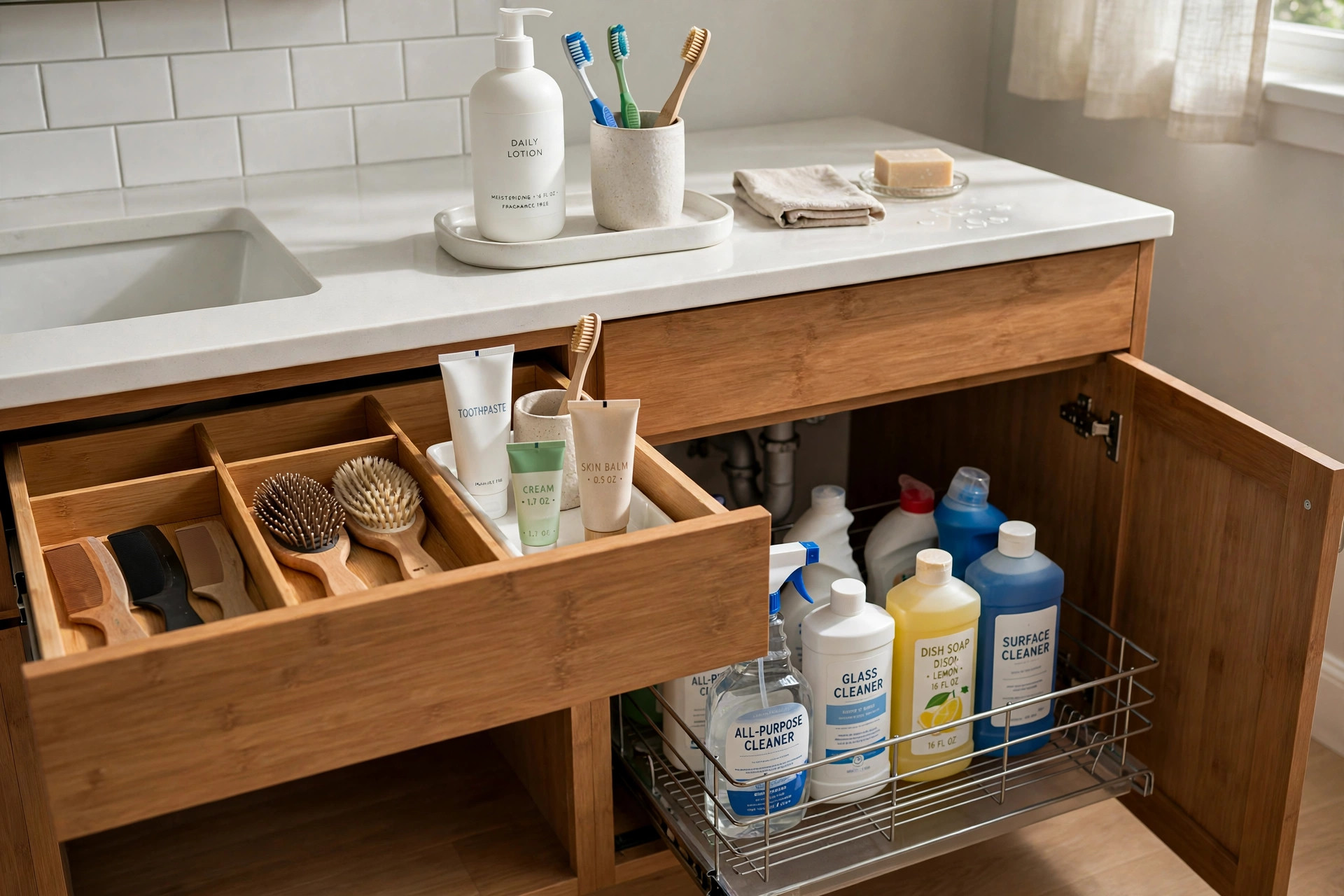

This bathroom vanity organizers reviews and buying guide helps you turn a cluttered bathroom into a calm and orderly space. The vanity is often the busiest spot in the house. Brushes, creams, razors, medicines, and cleaning tools all fight for room in one small area. Without a plan, drawers jam and counters fill with bottles. A good organizer changes that. It gives every item a fixed home. Morning routines move faster. Evenings end with less mess. This guide walks through the types, the costs, and the details that matter. It ends with a short list of answers to common questions. Use it as a plain reference before you buy.
Why Vanity Organization Matters
A neat vanity saves time. Studies on daily routines keep coming back to one point. People lose minutes each morning hunting for small things. A toothbrush lands behind the soap. A razor hides under a towel. Organizers cut that search to seconds. Every item sits in view or in a known slot.
A neat vanity also saves money. When drawers are tangled, people buy twice. They forget they own a tube of ointment. They open a fresh bottle while an old one sits in the back. Clear bins and labeled trays stop that waste. You see what you own before you shop.
Cleanliness improves as well. Damp corners breed mold. Piles of bottles trap water. Open racks and mesh bins let air move. Trays with feet lift items off wet counters. The bathroom smells fresher and looks brighter.
Space is another reason. Many American homes have small bathrooms. A standard vanity cabinet measures only a few square feet. Organizers use the full height of drawers and the empty air under the sink. Stackable units double the room you already own. For more depth on stacked units, read our stackable bathroom vanity organizers buying guide.
What to Look For When You Choose: Bathroom Vanity Organizers Reviews and Buying Guide
Measure First
Take a tape measure to the vanity. Write down the width, depth, and height of each drawer. Open the cabinet doors and note the pipes. Under-sink space is often split by the drain line. An organizer that is one inch too tall will not fit. Measure twice. Buy once.
Pick the Right Material
Most vanity organizers come in plastic, bamboo, stainless steel, or fabric. Plastic is cheap and easy to wipe. It handles water well. Bamboo looks warm and resists mild dampness. It costs more. Stainless steel suits humid bathrooms and lasts for years. Fabric bins are soft and light. They work best in dry drawers, not on wet counters.
Think About Water
The bathroom is the wettest room in the house. Water drips off hands and pools near the sink. Choose materials that drain or wipe dry. Mesh bottoms let water pass. Solid trays need a quick wipe each week. Avoid plain wood in zones that stay damp. It will swell and stain.
Check Stability
A wobbly caddy tips over and spills. Look for non-slip feet or rubber pads. Drawer dividers should lock in place with spring tension or silicone grips. Tiered stands need a firm base. Shoppers who compare models side by side find that weight ratings matter. A unit rated for ten pounds holds full bottles without sagging.
Match Your Style
Function comes first, but looks count. A mismatched jumble of bins can make a small room feel smaller. Clear acrylic suits modern baths. Woven baskets suit rustic baths. White plastic suits almost any bath. Pick one color family and stay with it across the vanity.
Types of Bathroom Vanity Organizers
Drawer Dividers and Trays
Drawer dividers are the most common choice. They split a wide drawer into small zones. Spring-loaded dividers adjust to the drawer width. Bamboo grid trays drop in and lift out for cleaning. These suit brushes, combs, scissors, and tubes. They keep items flat and quiet. When drawers rattle, dividers end the noise.
Countertop Trays and Caddies
A tray on the counter holds daily items in one spot. Soap, lotion, and a cup of brushes fit on one tray. It wipes clean in seconds. Two-tier caddies add height. They hold tall bottles below and small jars above. They suit pedestal sinks with no drawers. They also suit families who share one bath and need fast cleanup.
Under-Sink Racks and Shelves
The cabinet under the sink wastes space without help. Expandable shelves frame the pipes and add a second level. Sliding baskets pull out like drawers. They reveal the back of the cabinet. Two-tier racks hold cleaning bottles and extra rolls. Wire designs dry fast. Plastic designs wipe fast. Either one beats a dark pile.
Tiered and Stackable Units
Tiered organizers rise in steps. Each step holds a row of items. Nothing hides behind anything else. These units sit on counters or inside tall cabinets. Stackable boxes add one level on top of another. You can start with one and add more later. This flexibility suits renters and small budgets.
Door-Mounted and Wall-Mounted Holders
The inside of a cabinet door is free space. Slim racks screw or hook onto it. They hold hair tools, sprays, and extra toothbrushes. Over-door hooks hang towels and bags. Wall-mounted cups keep toothbrushes off the counter. These options cost little and install in minutes.
Cosmetic and Makeup Holders
Makeup brings its own clutter. Brushes roll. Palettes slide. Lipsticks scatter. Acrylic risers show every shade at a glance. Rotating towers spin to bring the back row forward. Brush cups with lids keep dust off. These holders turn a makeup drawer into a tidy grid.
Lazy Susan Turntables
A turntable spins on a shelf. You reach the back without emptying the front. Small turntables fit inside vanity cabinets. They suit vitamins, oils, and small bottles. They also suit corner spaces that are hard to reach. A gentle spin brings every item to your hand.
Reviews: How to Judge Quality Before You Buy
Reviews are your best tool. Start with the star average, then read the words. Three-star reviews often tell the truth. They praise what works and name what fails. Look for comments about fit. “Too tall for my drawer” is a common complaint. Look for comments about smell. Cheap plastic can smell strong at first.
Check the number of reviews. A product with thousands of ratings has been tested by real homes. A product with ten ratings tells little. Photos from buyers show true color and true size. They often show the item in a real bathroom, not a studio.
Watch for patterns. If many reviews mention cracked corners, the design is weak. If many mention great shipping, the seller cares. Reviews that mention long use over months matter more than first-day reviews. They show how the item holds up to water and heat.
Our bathroom vanity organizers price comparison usa page looks at how prices line up across major stores. Pair that with review reading and you buy with confidence.
Cost and Price
Prices run wide. Simple plastic dividers cost a few dollars each. A full set of bamboo drawer trays can cost twenty to forty dollars. Under-sink sliding systems run thirty to eighty dollars. High-end acrylic cosmetic stations can pass one hundred dollars.
Start small. One ten-dollar tray may solve most of the mess. Add pieces only where a need stays. Budget shoppers should read our affordable bathroom vanity organizers with free shipping page for low-cost options that still last.
Shipping and returns matter. Many stores ship free above a set total. Bundling two or three organizers can reach that total. Check the return window. A unit that does not fit should go back without a fee. Store cards and sales events can cut the price further. Holiday weekends often bring storage sales.
Care and Upkeep
Organizers last longer with light care. Wipe trays and bins once a week. Warm water and mild soap work for most materials. Dry them fully before you reload. Do not let water pool in solid-bottom trays. Pour it out and wipe the tray dry.
Bamboo needs extra care. Oil it lightly every few months with food-safe oil. This keeps the wood from drying and cracking. Keep bamboo away from standing water. Stainless steel needs little care. A damp cloth keeps it bright. If spots appear, a paste of baking soda lifts them.
Fabric bins can go in the washing machine on a gentle cycle. Air dry them fully. Never put a damp bin back in a closed drawer. Mold grows fast in dark damp spots. Mesh bins can be hosed in the shower. Let them drip dry upside down.
Safety Tips
Safety rarely gets attention in storage guides, but it matters. Medicines must sit out of reach of small children. Use a high shelf or a locking box inside the vanity. Keep cleaning products under the sink only if the cabinet locks. Otherwise move them high.
Check weight limits. A tiered stand loaded with full bottles can tip. Place heavy items on the lowest level. Secure tall units to the wall in homes with toddlers. Anti-tip straps cost little and install fast.
Watch for sharp edges. Cheap metal racks may have rough welds. Run a finger along edges before you load them. Sand or file any sharp spot. Choose rounded designs for family bathrooms.
Ventilation helps. Do not seal the under-sink cabinet airtight. Pipes drip and humid air needs to escape. Leave a small gap or drill vent holes in solid panels. This stops mold and keeps wood cabinets sound.
Frequently Asked Questions
How many organizers does a typical vanity need?
Most vanities need three to five pieces. One drawer divider set, one counter tray, and one under-sink rack cover the basics. Add a door rack or turntable only if a problem stays. Start small and add as needed.
Are expensive organizers worth the price?
Sometimes. Stainless steel and solid bamboo last longer than thin plastic. But price does not always equal quality. Read reviews and check materials. A well-reviewed twenty-dollar set can beat a poorly reviewed eighty-dollar set.
Can I use kitchen organizers in the bathroom?
Yes, with care. Kitchen drawer dividers and turntables work fine in a dry bathroom drawer. Avoid plain wood and cardboard in wet zones. Check sizes, since bathroom drawers run shallower than kitchen drawers.
How do I organize a vanity with no drawers?
Use the counter and the cabinet. A two-tier caddy on the counter holds daily items. Under-sink shelves and door racks add hidden storage. Baskets on open shelves keep things tidy and visible.
What is the best way to store medicines in the bathroom?
Heat and steam can harm some medicines. Store them in a closed box on a high shelf or in a bedroom drawer. Keep a small daily pill case in the vanity for the current week. Keep everything locked away from children.
How often should I clean my vanity organizers?
A quick wipe each week is enough for most homes. Empty and deep clean each unit once a month. Pull out drawer trays, wash them, and dry them fully. Toss expired products while you clean. This keeps clutter from growing back.
A Final Word
A well-planned vanity brings order to the busiest room in the house. Start with the tape measure. Pick materials that suit the damp air. Read reviews before you buy. Check that each piece fits your drawers and your daily habits. A tray that holds your exact bottles beats a fancy unit that fights your space. Add pieces one at a time and test each one for a week. Within a week, your mornings will run smoother and your counters will stay clear. Small steps build a calm bathroom. This guide gives you the map. The rest is up to you.
For more background, see Family Handyman, IKEA, and The Container Store. For more background, see The Home Depot, Wayfair, and The Spruce. See Apartment Therapy for more detail. See also Target for further detail.
References
Apartment Therapy. (n.d.). Home design ideas and inspiration. https://www.apartmenttherapy.com Family Handyman. (n.d.). DIY home repair and maintenance. https://www.familyhandyman.com IKEA. (n.d.). Home furnishings. https://www.ikea.com Target. (n.d.). Retail store. https://www.target.com The Container Store. (n.d.). Storage and organization products. https://www.containerstore.com The Home Depot. (n.d.). Home improvement products. https://www.homedepot.com The Spruce. (n.d.). Home and garden advice. https://www.thespruce.com Wayfair. (n.d.). Furniture and home goods. https://www.wayfair.com
Was this guide helpful?

About Sarah Mitchell
The My Garden US editorial team writes practical, in-depth home and garden guides for American homeowners — tested advice, no fluff.
You May Also Like

Space Saving Kids Closet Organizers for Midwest Homes: A Practical Guide
June 7, 2026 0 views
Luxury Sewing Room Storage Cabinets for Sale
January 27, 2026 0 views
Rolling Storage Carts Reviews and Buying Guide
August 31, 2026 0 views