
A good workshop runs on order. Tools cost money, and they disappear fast when they have no home. That is why lockable workshop tool chests for sale attract so many buyers every year. A chest gives every wrench, socket, and screwdriver a fixed place. The lock keeps honest hands honest and stops theft. Before you spend money, it pays to learn what separates a good chest from a poor one. This guide walks through the types, the features, the costs, and the care these chests need.
Why a Lockable Tool Chest Matters
Tools are an investment. A single set of ratchets can cost more than a week of wages. When tools lie loose on a bench, they get lost, rusted, or borrowed and never returned. A Www.homedepot.com ends that waste. Each drawer holds one kind of tool. You can see at a glance when something is missing.
The lock adds a second value. In a shared garage, a shop with helpers, or a home with children, a lock draws a clear line. Small hands stay away from sharp tools. Helpers must ask before they take. Thieves face a steel box instead of an open shelf. Many insurance plans also look kindly on locked storage when tools are kept at work or at home.
Order speeds up work. A mechanic who can reach the right socket in seconds finishes jobs sooner. That alone can pay for the chest in a year.
How to Choose the Right Chest: Lockable Workshop Tool Chests for Sale
Choice starts with an honest look at your tools and your space. Measure your bench area. Count your drawers’ worth of tools. Then weigh the points below.
Size and Capacity
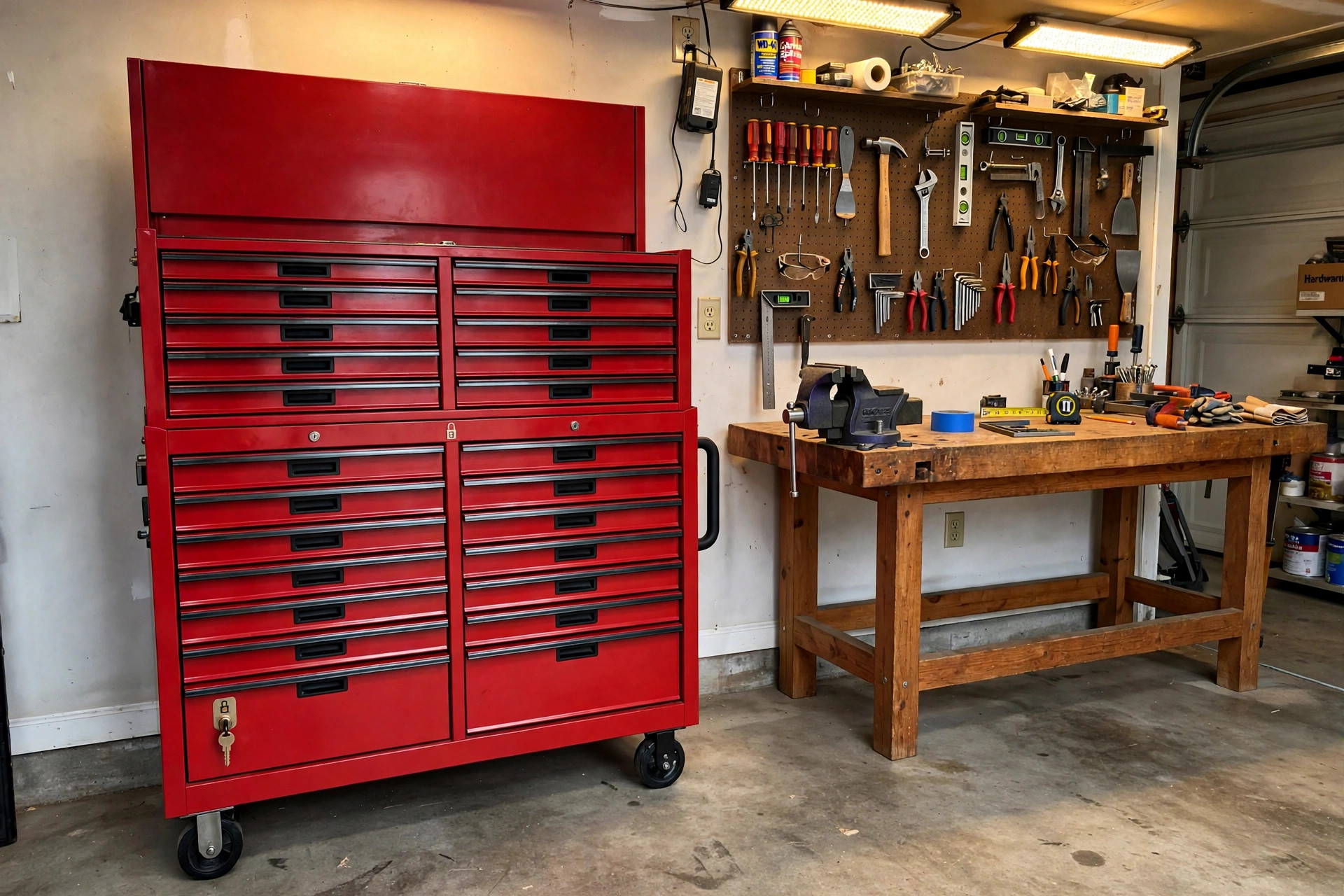
Chests range from small top boxes of 24 inches to full roller cabinets of 72 inches. A top chest sits on a bench or on a roller base. A roller cabinet stands on the floor and rolls where you need it. Large Lowe’s often come as a pair, with a top chest stacked on a roller cabinet. Measure doorways and walkways. A chest that blocks your path will annoy you every day.
Weight capacity matters too. Steel gauge tells part of the story. A thick steel chest can hold hundreds of pounds of tools. Check the drawer weight rating, often 50 to 100 pounds per drawer. Drawer slides make a real difference. Ball bearing slides glide smooth under load. Friction slides stick when drawers are full.
Drawer Layout
Shallow drawers suit sockets, bits, and small parts. Deep drawers fit power tools and larger wrenches. A good mix beats a stack of identical drawers. Look for a top till or a shallow top drawer for items you grab often. Drawer liners keep tools from sliding and scratching. Many buyers add foam liners later, but some chests ship with them.
Count the drawers, then ask how deep and wide each one is. A chest with twenty tiny drawers may hold less than one with ten wide drawers. Your tool set decides.
The Lock Itself
Not all locks are equal. Simple key locks are common and cheap. They stop casual theft but yield to a determined thief. Tubular locks, the round key kind, resist picking better. Some chests use a locking bar that drops into all drawers at once. A few high end models use electronic keypad locks. Ask yourself who you are locking out. For a family garage, a key lock is plenty. For a shared job site, look for a thicker steel body and a stronger lock.
Keep spare keys in a safe place. A lost key can mean drilling the lock out, which ruins the chest.
Types of Lockable Tool Chests
Shops sell several kinds. Each fits a different life.
Roller cabinets are the workhorses. They stand on casters, often four to six inches wide, with brakes on at least two wheels. You can roll the whole shop to the car. When parked, the brakes hold it still.
Top chests are smaller boxes made to sit on a bench or on a matching roller cabinet. Many mechanics buy the roller cabinet first and add the top chest later. Make sure the brands and sizes match.
Side lockers bolt to the side of a roller cabinet. They hold long items like levels, saws, and extension cords. They come with their own locks and latches.
Workstation chests combine storage with a work top. A wood or steel top turns the chest into a bench. This suits small garages where one piece must do two jobs.
Portable chests are hand carry boxes with a handle and a hasp lock. They hold a basic set for road calls. They will not hold a full shop, but they travel well.
When you browse Harbor Freight Tools, note which type each model is. Price jumps with size, but type sets the floor.
Cost and Price Ranges
Prices spread wide. A small portable box with a basic lock can sell for under fifty dollars. A mid size roller cabinet of 46 inches often sells between two hundred and five hundred dollars. Big professional cabinets of 60 to 72 inches, with thick steel and ball bearing drawers, can run one thousand dollars or more. Top brands charge extra for name, finish, and warranty.
Steel gauge is the quiet price driver. Thicker steel costs more but lasts longer. Ball bearing slides add cost over friction slides. Extra drawers add cost too.
Watch for sales. Big retailers cut prices on tool storage around holidays and during spring garage season. Floor models and open box units can save real money. Check the warranty before you buy used. Some makers honor the warranty only for the first owner.
Set a budget that fits your tools. A thousand dollar cabinet for two hundred dollars of tools is overkill. A cheap thin box under a heavy tool set will sag and fail. Match the chest to the load.
Care and Upkeep
A tool chest lasts decades with small care. Wipe the outside with a damp cloth when dust builds. Do not use harsh cleaners on painted or coated steel. They dull the finish.
Oil the drawer slides once a year. A light spray of silicone or a drop of machine oil keeps them smooth. If a drawer sticks, check for a bent slide before you force it. Forcing bends it worse.
Keep the lock dry and working. A shot of dry graphite in the keyhole each year stops sticking. Do not use oil in locks. Oil draws dust and gums up the pins.
Manage rust. Garages get damp. A small packet of silica gel in a bottom drawer pulls moisture. If you see a rust spot, sand it light and touch up with paint. Bare steel rusts fast in humid air.
Level the chest. An unlevel chest makes drawers drift open or closed. Adjust the casters or shim one corner until drawers stay where you put them.
Safety Tips
A heavy chest is a safety item in itself, so treat it like one.
First, bolt or brace tall chests to a wall when children are near. A full 60 inch cabinet can weigh over a thousand pounds. If it tips, it kills. Anti tip kits cost little and take minutes to fit.
Second, close drawers before you move the chest. Open drawers catch on benches and doors. They also throw the weight off balance.
Third, lock up sharp and toxic items. Blades, punches, and solvents belong behind the lock. Teach children that the chest is not a toy.
Fourth, do not climb on the chest. The drawers are not steps. Use a proper step stool.
Fifth, mind the top. A loaded top chest on a roller cabinet raises the center of gravity. Keep the heaviest tools low.
The national safety office at the U.S. Consumer Product Safety Commission publishes guidance on heavy furniture and tip over risks. Their advice applies to tall tool cabinets too.
Where to Shop for the Best Value
You can buy a lockable tool chest in many places. Big home improvement stores let you open the drawers and feel the slides before you buy. That hands on test is worth a trip. Online stores often beat local prices and ship the chest to your door, though freight delivery for a heavy cabinet may cost extra.
Check the return policy before you order. A chest is heavy to ship back. Some sellers charge a restocking fee. Read the fine print on delivery too. Curbside drop off means you haul a two hundred pound box into the garage yourself.
Buy the brand that services your area. Replacement keys, drawer slides, and casters come from the maker. A cheap unknown brand with no parts support can turn a small repair into a full replacement. Stick with makers that answer the phone.
Frequently Asked Questions
What size lockable tool chest should a home mechanic buy?
A 46 inch roller cabinet suits most home mechanics. It holds a full socket set, wrenches, and hand tools with room to grow. Measure your garage first. Leave at least three feet of working space in front of the chest.
Are cheap lockable tool chests worth it?
They can be, for light use. A thin steel chest works fine for a small hand tool set in a dry garage. It will dent easier and its slides will wear sooner. For daily shop use or heavy tools, spend more on thicker steel and better slides.
Can I add a lock to a chest that has none?
Yes. Aftermarket hasp kits and bar locks fit many chests. Drill two holes, bolt on the hasp, and add a padlock. The result stops casual theft but is weaker than a built in lock. For real security, buy a chest made with a lock.
How do I keep my tool chest from rusting in a damp garage?
Keep air moving with a fan or a dehumidifier. Wipe metal with a light oil cloth twice a year. Drop silica gel packs in the drawers. Touch up paint chips right away. A chest stored dry will outlast one stored damp by many years.
Do roller cabinets really roll well when fully loaded?
Good ones do. Large casters of five inches or more roll smooth over concrete. Small hard casters struggle. Lock the brakes when you park. Never roll a chest across a rough yard or up steps. The frame can twist and the drawers can jam.
What is the difference between a top chest and a roller cabinet?
A top chest is a bench top box. A roller cabinet is a floor standing unit on wheels. They are built to stack. Many buyers start with the cabinet and add the top chest later for more drawers. Buy matching widths so the stack sits square.
A Final Word
Lockable workshop tool chests for sale come in every size and price. The right one matches your tools, your space, and your budget. Measure first. Check the steel, the slides, and the lock. Read reviews from other buyers at guides like Www.thespruce.com and Www.familyhandyman.com before you decide. Retailers such as Www.wayfair.com and Craftsman carry wide ranges, while shops like Www.ikea.com and Www.containerstore.com offer ideas for Wayfair that pair well with a chest. Even unrelated organizers, from The Container Store to IKEA, show the same rule at work: a place for everything, and everything in its place. For broader home planning, Www.apartmenttherapy.com has solid room layout advice. Buy once, buy right, and your tools will serve you for decades.
Related guides on this site include where to buy dresser drawer dividers in texas, buy rolling storage carts online in florida, and buy vertical file cabinets online in texas.
References
Apartment Therapy. (n.d.). Home design ideas and inspiration. https://www.apartmenttherapy.com Craftsman. (n.d.). Tools and storage. https://www.craftsman.com Family Handyman. (n.d.). DIY home repair and maintenance. https://www.familyhandyman.com Harbor Freight Tools. (n.d.). Tools and workshop equipment. https://www.harborfreight.com IKEA. (n.d.). Home furnishings. https://www.ikea.com Lowe’s. (n.d.). Home improvement products. https://www.lowes.com The Container Store. (n.d.). Storage and organization products. https://www.containerstore.com The Home Depot. (n.d.). Home improvement products. https://www.homedepot.com The Spruce. (n.d.). Home and garden advice. https://www.thespruce.com U.S. Consumer Product Safety Commission. (n.d.). Product safety information. https://www.cpsc.gov Wayfair. (n.d.). Furniture and home goods. https://www.wayfair.com Www. (n.d.). Home and garden information. https://www
Was this guide helpful?

About Robert Taylor
The My Garden US editorial team writes practical, in-depth home and garden guides for American homeowners — tested advice, no fluff.
You May Also Like
Patio Cushion Storage Bags: A Price Comparison Across the USA
September 17, 2026 0 views
Bathroom Vanity Organizers Reviews and Buying Guide
August 2, 2026 0 views
Luxury Under Bed Storage Containers for Sale: A Plain Guide for American Homes
March 25, 2026 0 views