
Introduction
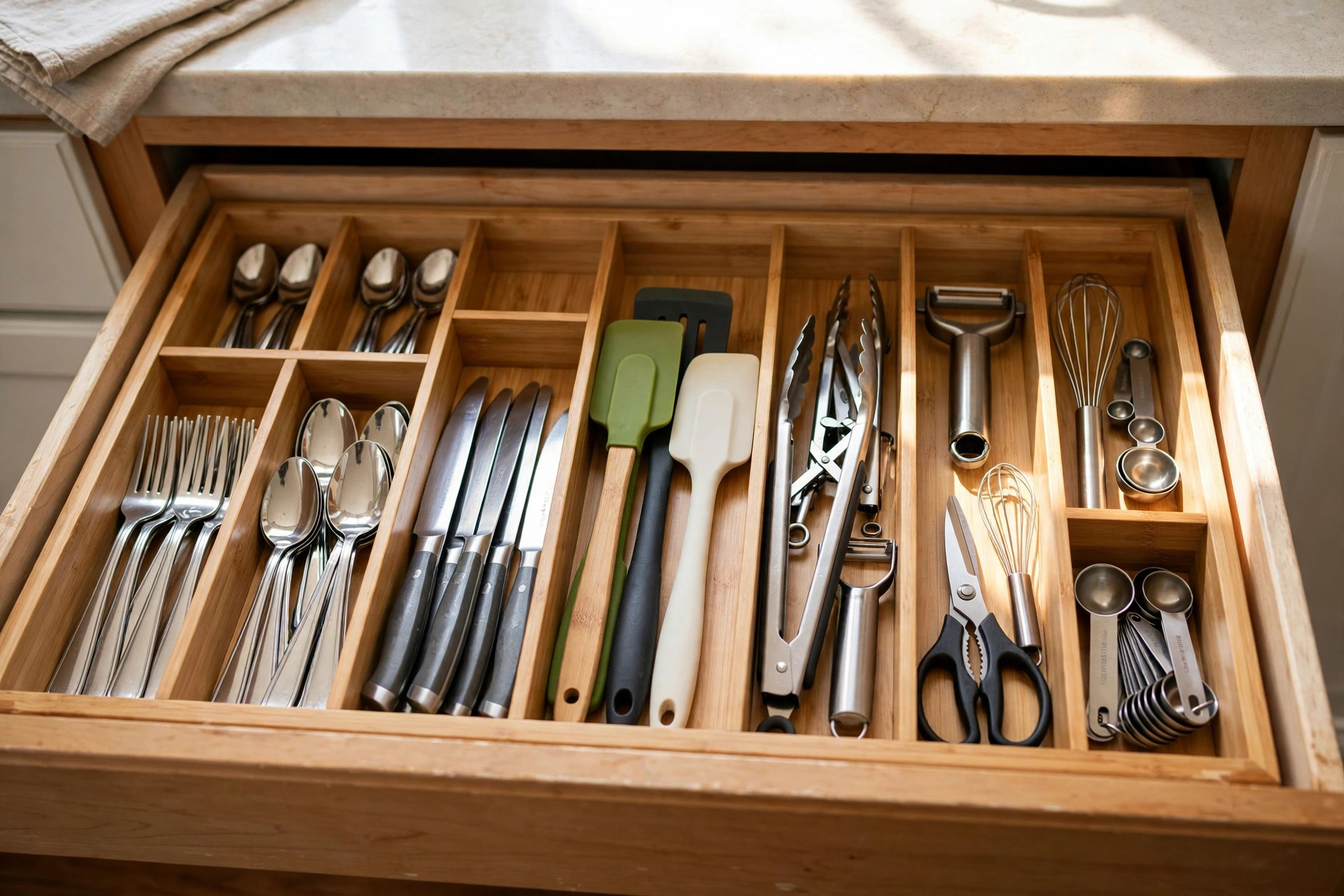
The top rated kitchen drawer organizers for usa homes share one simple goal. They turn a jumbled drawer into a clean, working space. Most American kitchens have at least one drawer that is hard to open and harder to use. Spoons sit on top of knives. Lids hide under towels. A small tool that should take ten seconds to find takes two minutes instead. A good organizer ends that problem. It gives every item a home. It saves time every single day. This guide explains what makes an organizer worth buying, the main types sold in stores today, what they cost, and how to keep them clean. It also answers the questions buyers ask most often before they place an order.
Why a Tidy Drawer Matters: Top Rated Kitchen Drawer Organizers for Usa Homes
A kitchen drawer is opened dozens of times a day. It is one of the most-used storage spots in any home. When it is messy, the whole kitchen feels harder to work in. Cooks waste time hunting for a peeler or a spatula. They buy tools they already own because the old ones are lost in the pile. Food prep takes longer. Tempers grow short at dinner time.
A drawer organizer changes the daily routine. Each utensil has a slot. Knives rest in a dock instead of sliding loose. Spices line up where they can be seen. The drawer opens smoothly because items no longer catch on the frame. Cleanup becomes faster too. After washing dishes, everything goes back to a known place in seconds.
There is also a safety gain. Loose knives in a crowded drawer cause cuts. A hand reaching for a spoon can brush a sharp blade. Organizers hold blades away from fingers. They are a small investment that pays back in time saved and injuries avoided.
How to Choose the Right Organizer
Not every organizer fits every drawer. A careful buyer checks a few points before spending money.
Measure the Drawer First
Take a tape measure to the drawer. Write down the width, depth, and height in inches. Most organizers list their outside dimensions on the box or the web page. Leave a small gap on each side so the tray can slide in and out with ease. A tray that is too wide will jam. One that is too deep will block the drawer from closing. Many buyers skip this step and end up returning the product. Five minutes with a tape measure prevents that waste.
Match the Material to the Job
Organizers come in bamboo, wood, plastic, metal, and silicone. Bamboo is a favorite in American homes because it looks warm and resists moisture. Plastic is light, cheap, and easy to wash. Metal trays, often stainless steel or coated wire, are strong and hold heavy tools. Silicone liners grip the drawer base and keep trays from sliding. There is no single best material. The right one depends on the drawer, the tools inside, and the style of the kitchen.
Think About the Layout
Count the tools the drawer must hold. A cooking drawer needs long slots for spatulas and ladles. A cutlery drawer needs narrow rows for forks, knives, and spoons. Deep drawers benefit from two-level trays that use the full height. Shallow drawers need low-profile inserts. Sketch the layout on paper before buying. The sketch shows how many compartments are needed and what sizes they should be.
Check the Fit and Finish
The best organizers have smooth edges that do not scratch hands or drawer walls. Non-slip feet or a rubber base keep the tray steady when the drawer opens fast. Rounded corners make cleaning easier. A product page with clear photos of these details is a good sign. Vague listings with one small photo are harder to trust.
Read the Ratings With Care
Star ratings help, but the written reviews help more. Look for reviews from buyers with kitchens like yours. Note what they say about fit, smell, and durability. A tray that smells strongly of chemicals on arrival is worth skipping. One that cracks within a month is not a bargain at any price. Review sites like Consumer Reports and Wirecutter test home goods in depth, and Good Housekeeping runs its own kitchen product tests as well.
Types of Kitchen Drawer Organizers
Stores carry many styles. Each serves a different need.
Cutlery Trays
The cutlery tray is the classic drawer organizer. It is a flat tray with five to seven slots. Forks, knives, spoons, and teaspoons each get a row. Standard trays fit drawers about 13 inches wide. Larger trays handle wider drawers. Bamboo and plastic are the common materials. This is the right choice for the main silverware drawer.
Expandable Trays
An expandable tray has wings that slide out to fill a wider drawer. It suits renters and anyone with odd drawer sizes. One tray can serve a 13-inch drawer today and a 20-inch drawer after a move. The moving parts should glide with ease and lock in place. A loose wing that shifts around is worse than no wing at all.
Knife Docks and Inserts
Knife docks hold blades inside the drawer instead of on the counter. Some are angled blocks with slots. Others are inserts with soft bristles or rubber fins that grip each blade. They keep sharp edges covered and free up counter space. Every home with children should use one. They are among the most practical of the top rated kitchen drawer organizers for usa homes because they remove a real danger from the drawer.
Spice Inserts
Spice inserts hold jars at a low angle so labels face up. The cook can read every label without lifting a jar. Some inserts are stepped trays. Others are flat boards with clips. They fit the narrow drawers found next to many stoves. A spice insert turns a deep, dark drawer into a clear display.
Utensil and Tool Dividers
Deep drawers hold spatulas, tongs, whisks, and ladles. Adjustable dividers split these drawers into lanes. Spring-loaded dividers press against the drawer walls and stay put without screws. They are a simple fix for the “junk drawer” that holds cooking tools. Related guides, such as the overview of best kitchen cabinet organizers for american homes, cover how drawer systems and cabinet systems can work together in one kitchen.
Deep Drawer Organizers
Many newer American kitchens have deep drawers instead of lower cabinets. These drawers hold pots, pans, and mixing bowls. Special organizers fit them. Pegboard bases let the owner set pegs around odd shapes. Stackable bins separate lids from bases. Pan dividers stand baking sheets on edge. For cooks who store dry goods nearby, a rotating lazy susan turntable guide shows how corner spaces can pick up the slack that drawers cannot cover.
Cost and Price
Kitchen drawer organizers are among the cheapest upgrades a homeowner can make. Simple plastic cutlery trays start around five dollars. Mid-range bamboo trays run fifteen to forty dollars. Large expandable trays and knife docks cost thirty to seventy dollars. Custom-cut wood inserts for high-end kitchens can pass one hundred dollars.
Price often tracks with material and fit. A five-dollar tray may warp in a hot kitchen. A forty-dollar bamboo tray usually lasts for years. Buyers should weigh how long they plan to keep the organizer. A renter may do fine with a budget tray. A homeowner planning to stay for a decade gets more value from a solid wood or metal unit.
Sales are common. Major retailers run kitchen storage sales in January and around holiday weekends. Shoppers can compare prices across big stores like Home Depot and Wayfair before buying. Specialty storage shops such as The Container Store and IKEA carry wide ranges at steady prices. Set a budget first, then look for the best fit inside it. A tidy drawer does not require a luxury price.
Care and Upkeep
An organizer needs little care, but a few habits keep it in good shape for years.
Wipe trays with a damp cloth every few weeks. Crumbs and grease build up in the corners of compartments. A soft brush or an old toothbrush reaches the tight spots. Plastic trays can go in the sink with warm soapy water. Wood and bamboo trays should be wiped, not soaked. Soaking swells the fibers and warps the board. After washing, dry every piece fully before it goes back in the drawer.
Check the fit twice a year. Drawers shift as houses settle and as humidity changes with the seasons. A tray that fit in winter may rattle in summer. Add a small non-slip liner under the tray if it starts to slide. Replace any tray with cracks or broken dividers. A cracked tray traps food and grows mold where it cannot be cleaned.
Keep the drawer itself clean too. Pull the tray out, vacuum the drawer box, and wipe the runners. Light oil on wooden drawer slides keeps them moving with ease. Sites like Family Handyman publish step-by-step drawer repair guides, and The Spruce offers regular cleaning checklists that fit into a normal home routine. For small kitchens and apartments, a rolling storage cart roundup pairs well with drawer organization as an extra layer of tidy storage.
Safety in the Drawer
Drawers hold some of the sharpest tools in the home. A few safety rules protect the whole family.
Store knives blade-down in a dock or blade-first in covered slots. Never toss a bare knife into a loose drawer. Keep the knife drawer or dock in a spot children cannot reach with ease, or add a child lock to that drawer. Teach older children that the knife drawer is not for play.
Heavy items belong low. Do not stack heavy tools on a flimsy tray that can tip when the drawer opens fast. Check that the drawer slides hold the weight with ease. Old drawers with weak runners may need new hardware before heavy organizers go in.
Watch for small parts. Some expandable trays have small screws or clips. In a home with toddlers, choose one-piece trays with no loose bits. Clean under the tray often so crumbs do not attract pests. Apartment Therapy and The Spruce both run childproofing guides that cover kitchens drawer by drawer.
Frequently Asked Questions
What size drawer organizer should I buy?
Measure the inside of the drawer first. Note the width, depth, and height in inches. Then pick a tray slightly smaller than those numbers. Most American kitchen drawers are 13 to 24 inches wide. Expandable trays cover a range of sizes and are a safe pick when the exact size is unknown.
Are bamboo organizers better than plastic ones?
Each has strengths. Bamboo looks better, feels solid, and stands up to daily use for years. Plastic costs less, weighs less, and washes in the sink with ease. Bamboo can warp if it stays wet. Plastic can stain from spices like turmeric. Many buyers mix the two: bamboo for the main cutlery drawer and plastic for utility drawers.
How do I keep the tray from sliding around?
Use a non-slip drawer liner under the tray. Many trays also have rubber feet built in. If the tray still moves, it may be too small for the drawer. A tray that fills the drawer width has less room to shift. Spring-loaded dividers solve the same problem in deep drawers by pressing against the walls.
Can drawer organizers hold pots and pans?
Yes, but not with a standard cutlery tray. Deep drawers need pegboard bases, pan dividers, or stackable bins made for heavy cookware. Check the weight rating on the product page. Make sure the drawer slides are strong enough to carry the load day after day.
Do I need to anchor the organizer to the drawer?
Most trays need no screws. They sit in place by weight and fit. Spring dividers hold by tension. A few custom wood inserts are made to order for one drawer and fit so tight they need no help. Avoid drilling into a rental kitchen drawer unless the lease allows it.
How often should I replace a drawer organizer?
A good tray lasts five to ten years. Replace it when it cracks, warps, stains deeply, or smells bad after cleaning. Plastic trays wear out faster than wood or bamboo. If the layout of the drawer changes, a new tray that fits the new tools is worth the small cost.
A Final Word
The top rated kitchen drawer organizers for usa homes are not luxury goods. They are simple tools that bring order to the busiest room in the house. A measured drawer, a well-chosen tray, and a few minutes of setup can end years of daily frustration. Pick the style that fits the drawer, keep it clean, and every meal gets a little easier to make.
References
Apartment Therapy. (n.d.). Home design ideas and inspiration. https://www.apartmenttherapy.com Consumer Reports. (n.d.). Product reviews and ratings. https://www.consumerreports.org Family Handyman. (n.d.). DIY home repair and maintenance. https://www.familyhandyman.com Good Housekeeping. (n.d.). Product reviews and home advice. https://www.goodhousekeeping.com IKEA. (n.d.). Home furnishings. https://www.ikea.com The Container Store. (n.d.). Storage and organization products. https://www.containerstore.com The Home Depot. (n.d.). Home improvement products. https://www.homedepot.com The Spruce. (n.d.). Home and garden advice. https://www.thespruce.com Wayfair. (n.d.). Furniture and home goods. https://www.wayfair.com Wirecutter. (n.d.). Product reviews from The New York Times. https://www.nytimes.com/wirecutter
Was this guide helpful?

About Robert Taylor
The My Garden US editorial team writes practical, in-depth home and garden guides for American homeowners — tested advice, no fluff.
You May Also Like
Top Rated Rolling Storage Carts for Small Apartments
June 14, 2026 0 views
Where to Buy Workshop Tool Chests in Florida
July 2, 2026 0 views
Lockable Workshop Tool Chests for Sale: A Buyer’s Guide
August 25, 2026 0 views