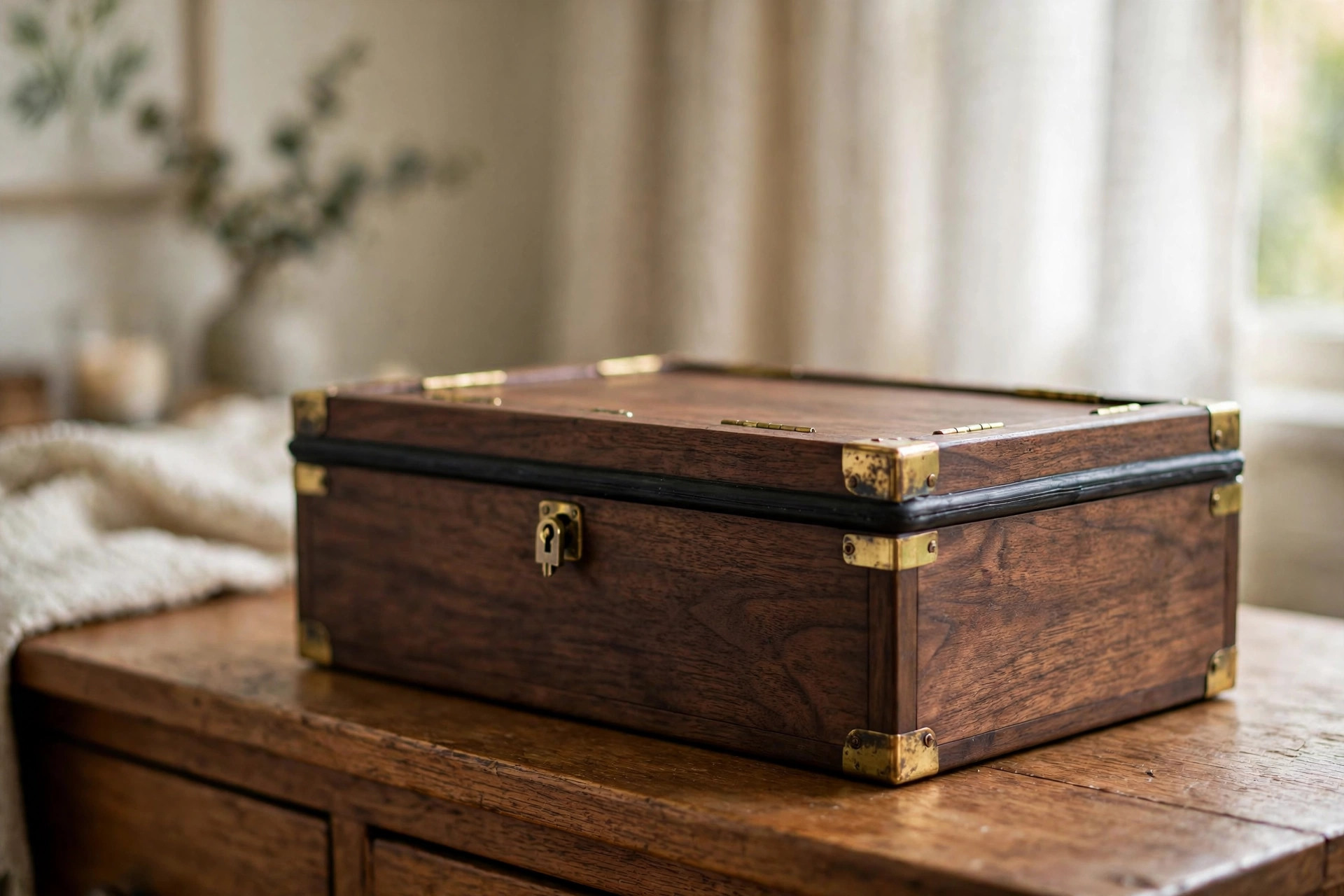

Good jewelry deserves a safe home. This waterproof jewelry storage boxes with locks buying guide explains how to choose one with care. A jewelry box keeps rings, chains, and watches in one place. A waterproof seal keeps moisture out. A lock keeps the box closed against prying hands. The three traits work together. This guide shows what to look for, what kinds exist, what they cost, and how to keep them in good order.
Why It Matters
Jewelry fails in two quiet ways. The first is water. Humidity and splashes dull metal and spot stones. Silver tarnishes fast in damp air. Pearls lose their shine. The second is loss. Pieces left loose on a dresser vanish. A thief in a hurry takes what he can grab. A curious child drops a ring behind the furniture. A proper box fights both problems at once.
Many homes have damp corners. Bathrooms run humid after showers. Basements stay moist in summer. Coastal air carries salt. A plain wooden box breathes, and damp air gets in. A box with a sealed lid keeps that air out. Rubber gaskets and tight latches make the seal real.
A lock adds control. It does not stop a determined burglar. Nothing small can. But it stops casual taking. It stops children. It stops a guest who helps himself. For many families, that is enough. Insurance agents often ask how valuables are stored. A locked box shows care.
Order matters too. When every piece has its slot, you notice when one is missing. You save time in the morning. Necklaces do not tangle. Earring pairs stay together. A well-built box turns a drawer of chaos into a set of small drawers with a purpose.
How to Choose the Right Box: Waterproof Jewelry Storage Boxes with Locks Buying Guide
Start with size. Lay your pieces out on a table. Count rings, pairs of earrings, necklaces, bracelets, and watches. Choose a box with more room than you need today. Collections grow. A box that is full on day one is a box you will replace in a year. If you own many necklaces, pick one with hooks or tall slots so chains hang straight.
Check the seal. Look for a rubber or silicone gasket around the lid. Press the lid down and listen. A good latch clicks firm. Some boxes carry a rating such as IPX4 or IPX7. IPX4 resists splashes. IPX7 survives brief submersion. For bedroom use, a snug gasket is enough. For travel or a beach house, a rating helps. Be honest about where the box will live.
Study the lock. Keyed locks are simple and reliable. Combination locks remove the need for a key. Electronic locks open with a code or a fingerprint. Small padlocks work on boxes with hasps. A keyed lock suits a home where one adult holds the key. A combination suits a couple who both need access. Electronic locks need batteries, so keep spares. Whatever type you pick, test it in the store or on arrival. The latch should move smooth and the lid should not pop open when locked.
Weigh materials. Hard plastic cases travel well and shrug off water. Aluminum boxes resist dents and look sharp. Wood boxes look fine in a bedroom but need a sealed liner to fight moisture. Leather wraps look rich but soak up water unless treated. Inside, soft velvet or felt protects stones from scratches. Make sure the lining is glued flat with no loose edges.
Think about the lid. A lid that opens flat lets you see everything. A mirror inside the lid helps when you dress. Hinged lids need space behind the box. Lift-off lids need a place to set them down. Measure your dresser top before you buy. For more ideas on keeping small things in order, many shoppers pair a jewelry box with waterproof dresser drawer dividers to keep drawers tidy and dry.
Retailers make comparison easy. Big chains such as Home Depot and Target carry storage lines with plain return policies. Online marketplaces like Amazon and Wayfair list hundreds of options with buyer photos. Stores like Walmart and IKEA stock budget-friendly cases. Specialists such as The Container Store focus on organization and carry locking cases in several sizes. Jewelers such as Blue Nile sell fine pieces and can advise on proper storage. Guides from The Spruce and Family Handyman show what to check before you buy.
Types of Waterproof Jewelry Boxes with Locks
Hard-Shell Travel Cases
These are small, tough, and made for the road. Most use molded plastic with a foam seal. Many have a keyed latch. They fit in a suitcase and survive baggage handling. The downside is capacity. They hold a handful of pieces, not a full collection. Buy one if you travel often or move between homes.
Locking Jewelry Chests
A chest sits on a dresser and looks like furniture. Wood or coated metal forms the shell. Inside are stacked trays with ring rolls and compartments. The lock is often a small keyed cam lock on the front. Many chests add a top tray that lifts out. They hold a full collection. They are heavy, so they are not for travel. Some chests claim a waterproof seal. Check for a real gasket, not just a tight lid.
Wall-Mounted Lock Boxes
These hang on a wall like a small safe. They keep jewelry off the dresser and out of sight. A keyed or combination door covers shallow hooks and shelves. Water resistance comes from a gasketed door and a coated steel body. They suit homes with small children because the box mounts above their reach. Installation needs a drill and wall anchors. They hold fewer pieces than a chest.
Fire-and-Water Resistant Safes with Jewelry Trays
Some buyers want fire protection too. Small safes rated for fire add jewelry trays inside. They carry real locks: dial, keypad, or key. They are heavy and ugly, and most need bolting to a floor. They protect against fire and theft better than a box. They cost more. If your pieces are worth thousands, a safe may be the right call.
Stackable Locking Cases
These are sets of small cases that snap or stack together. Each case has its own lock or latch. You can add more cases as the collection grows. They suit people who like to sort by type: one case for rings, one for watches. Look for cases that stack flat so they do not wobble. They are easy to carry to a safe deposit box if you wish.
What They Cost
Prices spread wide. Small hard-shell travel cases run from 15 to 40 dollars. Simple locking jewelry chests run from 40 to 120 dollars. Well-made chests with solid locks and real gaskets run from 120 to 300 dollars. Wall-mounted boxes run from 60 to 200 dollars. Small fire-rated safes with trays run from 150 to 500 dollars and up.
What drives price up? Better locks cost more. Real seals cost more. Solid metal costs more than plastic. Brand names cost more. Hand-finished wood costs more. Do not pay for looks alone. A pretty box with a weak latch fails at both jobs.
What should you spend? Match the box to the value inside. A 30-dollar box is fine for costume jewelry and a few silver pieces. A 150-dollar box suits gold, diamonds, and watches worth a few thousand. A safe suits heirlooms and investment-grade pieces. As a rule, spend about five to ten percent of the collection’s value on storage. That is cheap insurance.
Watch for extras in the price. Some boxes include extra keys, silica gel packets, or polishing cloths. Some charge extra for a second key. Check shipping costs for heavy safes. Check return policies. A lock that feels cheap in your hands will feel cheaper in a year.
Care and Upkeep
A sealed box needs little care, but it is not zero care. Wipe the outside with a soft cloth once a month. Dust builds up around latches. A damp cloth works for plastic and metal. For wood, use a dry cloth and furniture polish twice a year.
Open the box each month and look inside. Check the gasket for cracks. A cracked gasket lets moisture in. Most gaskets can be replaced with a strip of foam weather seal from a hardware store. Check the lining for stains or wear. A torn lining can scratch stones. Line repair kits are cheap.
Fight humidity inside the box. Drop in a small silica gel packet and replace it every few months. Do not store wet jewelry. Let pieces dry after a swim or a sweaty day before you lock them away. A tiny bit of care beats a tarnished ring.
Care for the lock. Spray a keyed lock with a dry graphite lubricant once a year. Oil collects dust and gums up small locks. For combination locks, work the dial through all numbers each month. For electronic locks, change batteries on a schedule, not when they die. Keep spare keys in a separate locked place, not next to the box.
If you keep other locked storage in the room, keep the routine the same. Some buyers place their box inside lockable wardrobe closets for a second layer of security. Others keep cosmetics in luxury makeup and cosmetics organizers on the same dresser so the whole top stays neat.
Safety Notes
A lock is not a safe. A small box can be carried away whole. If burglary is a real worry, bolt the box down or use a proper safe. Hide the box. A box on an open dresser invites trouble. A box inside a closet drawer is less visible.
Keep keys away from the box. A key taped under the box is no lock at all. Give a spare key to a trusted person outside the home. If you use a combination, do not write it on a card in the same drawer.
Think about children. Small jewelry is a choking hazard. Lock the box and store it high. Teach children that the box is not a toy. Some locks are easy for older children to pick or force. A real safe is better in a home with curious teenagers.
Think about water honestly. A sealed box resists splashes and humidity. It does not make jewelry waterproof. Do not store the box where it can flood. Basements and ground floors near rivers are risky. Move the box upstairs in flood season. No box survives a house flood.
Check your insurance. Many home policies cap jewelry coverage at a few thousand dollars. Fine pieces may need a separate rider. Photograph every piece and keep receipts with the photos, in a different place from the box. A locked box plus a rider is the sensible pair.
Frequently Asked Questions
Are waterproof jewelry boxes truly waterproof?
Most are water-resistant, not waterproof in the deep-sea sense. A good gasket keeps out splashes, spills, and damp air. A rated case, such as IPX7, can survive brief submersion. Read the rating on the package. When no rating is given, treat the box as splash-proof only.
What kind of lock is best for a jewelry box?
A keyed lock is simple and hard to guess. A combination lock suits shared access. An electronic lock is fast but needs batteries. For a home, a keyed cam lock or a small combination lock is enough. For high-value pieces, move up to a safe with a keypad.
Will a sealed box cause tarnish?
A seal alone does not cause tarnish. Trapped moisture does. Always store dry pieces. Add a silica gel packet. Open the box now and then to air it out. Anti-tarnish strips, sold at jewelry stores, absorb the gases that dull silver. With these habits, a sealed box fights tarnish rather than causing it.
Can I travel with a locking jewelry box?
Yes. Hard-shell cases are made for travel. Keep the box in your carry-on, never in checked luggage. Airport security may ask you to open it. A keyed case is easy to open and re-lock at the checkpoint. Photograph the contents before the trip in case anything goes missing.
How big should the box be?
Big enough for today plus half again. Count your pieces and add room to grow. Necklaces need tall space so they do not kink. Watches need wide slots. Rings need padded rolls. If you are between sizes, buy the larger one. An overstuffed box lets pieces scratch each other.
Do I need a fire-rated safe instead?
It depends on value and risk. A jewelry box guards against moisture, casual theft, and clutter. It does not guard against fire. If your pieces are worth many thousands, or include irreplaceable heirlooms, a small fire-rated safe with jewelry trays is the safer buy. Many owners use both: a box for daily wear and a safe for the rest.
A Short Final Word
A good jewelry box does three jobs. It keeps water out. It keeps hands out. It keeps order in. This waterproof jewelry storage boxes with locks buying guide has shown how to weigh seals, locks, size, and price. Measure your collection. Pick a real gasket and a lock you trust. Spend in line with what you own. Then use the box every day. The finest box in the world protects nothing if the jewelry sits loose on the dresser.
References
Amazon. (n.d.). Online shopping. https://www.amazon.com Blue Nile. (n.d.). Fine jewelry. https://www.bluenile.com Family Handyman. (n.d.). DIY home repair and maintenance. https://www.familyhandyman.com IKEA. (n.d.). Home furnishings. https://www.ikea.com Target. (n.d.). Retail store. https://www.target.com The Container Store. (n.d.). Storage and organization products. https://www.containerstore.com The Home Depot. (n.d.). Home improvement products. https://www.homedepot.com The Spruce. (n.d.). Home and garden advice. https://www.thespruce.com Walmart. (n.d.). Everyday low prices. https://www.walmart.com Wayfair. (n.d.). Furniture and home goods. https://www.wayfair.com
Was this guide helpful?

About Sarah Mitchell
The My Garden US editorial team writes practical, in-depth home and garden guides for American homeowners — tested advice, no fluff.
You May Also Like
Top Rated Pantry Shelving Units for Sale: A Complete Buyer’s Guide
July 4, 2026 0 views
Heavy Duty Wicker Storage Baskets With Free Shipping: A Practical Guide
August 1, 2026 0 views
Where to Buy Entryway Coat Racks in Texas: A Complete Buying Guide
March 11, 2026 0 views