The best kitchen cabinet organizers for american homes share one simple trait. They turn deep, dark, crowded cabinets into spaces where every pot, pan, and plate is easy to reach. Most American kitchens have more storage than the family can use well. The problem is not the size of the cabinets. The problem is what happens inside them. Pots get stacked so high they fall. Spices hide behind taller jars. Baking sheets lean in a tangle. A good organizer fixes each of these troubles without a costly remodel.
Why It Matters
The kitchen is the hardest working room in the house. Meals are cooked there two or three times a day. Children do homework at the counter. Guests gather near the stove. When cabinets are in disorder, the whole room feels strained. Cooking takes longer. Small items go missing. Money is wasted on goods that were already owned but could not be seen.
Order in the cabinets also protects the home. Heavy pots stacked on a high shelf can slide out and hurt someone. Cans kept past their dates crowd out fresh food. A clean, ordered cabinet lets the cook see what is on hand and use it before it spoils.
There is a money reason too. A kitchen remodel can cost ten thousand dollars or more. Cabinet organizers cost a small share of that sum. They give much of the same benefit. Shelves pull out. Racks rise up. Corners turn. The kitchen feels new because it works better, even though the cabinets are the same ones that were there before.
What to Look for When You Choose: Best Kitchen Cabinet Organizers for American Homes
Not every organizer suits every cabinet. A few plain facts decide what will work.
Measure first. Take a tape measure and record the width, depth, and height of the inside of each cabinet. Note the position of hinges, pipes, and the center stile that divides double doors. An organizer that is one inch too wide is useless. Many makers list inside measurements on their pages, and home guides like The Spruce explain how to measure common cabinet sizes.
Think about how the doors open. Pull-out shelves need clear space in front of the cabinet. Corner turntables need a door wide enough to reach through. Door-mounted racks need a flat inner panel. Stand at the cabinet and picture the organizer in use before you buy.
Weight matters. Pots and small appliances are heavy. A cheap plastic tier may sag under a Dutch oven. Steel and solid wood frames carry more load. Check the rated weight on the box. If the maker does not list one, choose a stronger unit.
Finish and care count in a kitchen. Grease and steam reach every corner. Wire racks with a chrome or coated finish wipe clean. Bare wood can stain. Mesh baskets dry fast after washing. Pick materials that can be wiped down in a minute, because that is how long most people will spend on it.
Finally, decide if you will install the unit yourself. Most organizers need only a screwdriver and a drill. Pull-out shelves screw into the cabinet floor. Tension rods need no tools at all. If drilling makes you uneasy, choose units that rest on the shelf or grip with brackets. Guides from Family Handyman walk through the common steps.
Types of Organizers
The market holds many forms. Each one answers a different kitchen trouble.
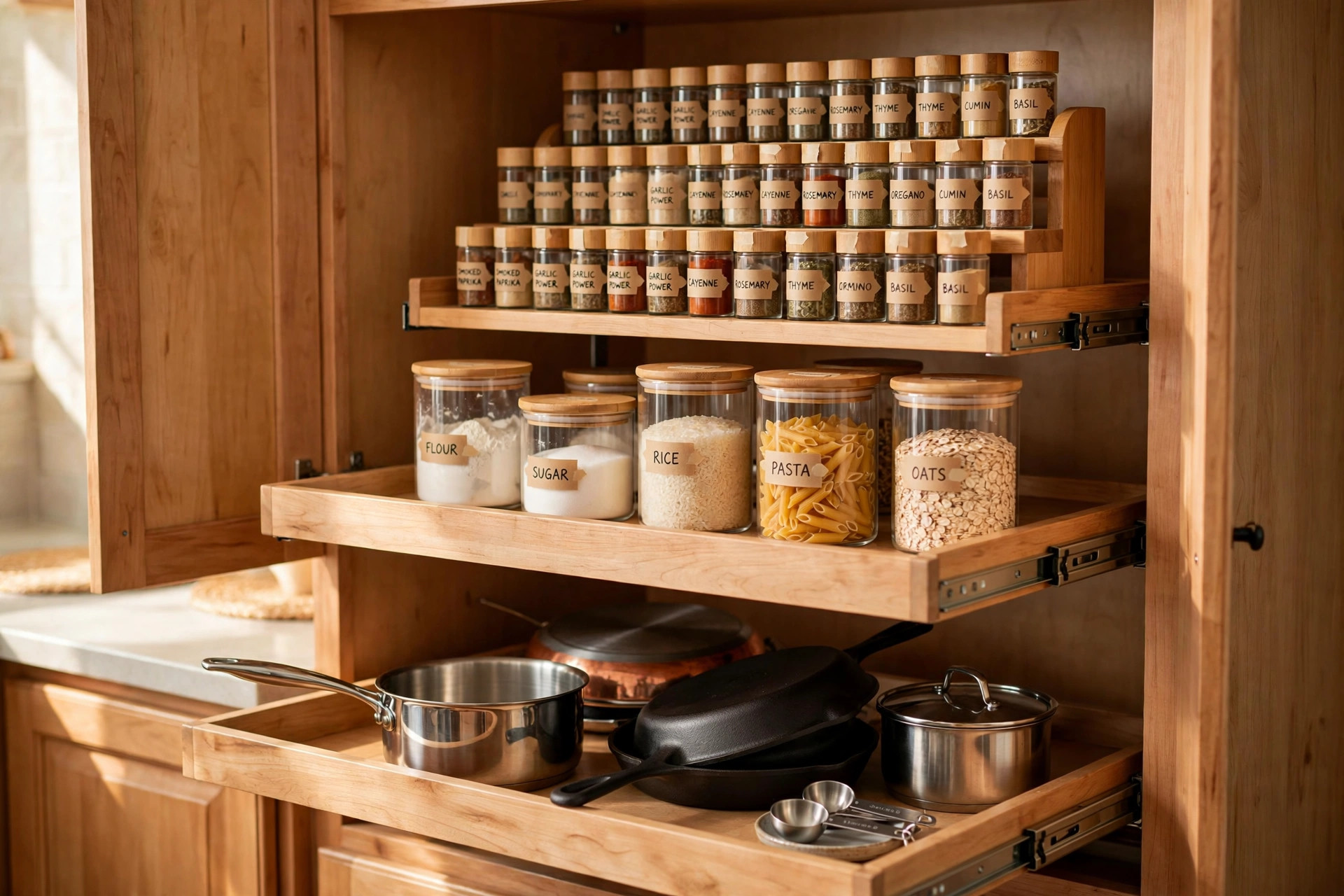
Pull-out shelves. These are flat trays on full-extension rails. They replace the fixed middle shelf or sit on the cabinet floor. The cook pulls the tray toward herself and sees everything at once. They work best in base cabinets under the counter, where deep space hides items in back. Solid shelves hold heavy pots. Wire shelves let crumbs fall through for easy cleanup.
Two-tier corner turntables. The corner cabinet is the hardest spot in the kitchen. A turntable, often called a lazy susan, spins so the back of the corner comes to the front. Two tiers double the space. Kidney-shaped units fit blind corners. Full rounds fit diagonal corner cabinets. Readers who like this style may also enjoy our guide to best rotating lazy susan turntables for texas homes.
Door-mounted racks. The inside of a cabinet door is wasted space in most homes. Narrow racks screw to the door and hold spices, wraps, or cleaning bottles. They cost little and install in minutes. Make sure the door still closes with the rack full.
Tiered risers and shelf inserts. These are simple stepped shelves that sit inside a cabinet. They lift back rows so small jars can be seen over front rows. They suit spice cabinets and canned goods. No tools are needed. They are the cheapest fix on this list.
Under-sink organizers. The cabinet under the sink holds pipes, so a normal shelf will not fit. Special U-shaped trays wrap around the plumbing. Tiered units keep cleaners above the pipes. Choose rust-proof materials, since this cabinet sees water and damp air.
Pot and pan racks. Heavy cookware needs its own system. Vertical dividers hold lids and sheet pans upright like books. Pull-out pan racks carry skillets on rails. Hanging racks from the ceiling free cabinet space, but they need solid joists above.
Drawer dividers and trays. Deep drawers near the stove can hold utensils, knives, and tools. Adjustable dividers split the drawer into zones. A knife block insert keeps blades safe and edges sharp.
Basket and bin systems. Wicker and fabric bins suit pantries and open shelves. They group snacks, baking goods, or linens so each group lifts out as one unit. For a fuller look at basket styles, see our wicker storage baskets reviews and buying guide.
Cost and Price
Prices run from a few dollars to a few hundred. Tiered risers and tension rods cost under twenty dollars each. Door racks and turntables run from twenty to sixty dollars. Pull-out shelves cost from forty to one hundred and fifty dollars per cabinet, based on size and material. A full set for a medium kitchen can run from three hundred to nine hundred dollars when the homeowner installs the units.
Custom pull-out systems installed by a carpenter cost more, often two hundred to four hundred dollars per cabinet with labor. They fit odd sizes and carry heavy loads for years.
Retail prices shift with sales. Big home stores run cabinet organization sales in January and late summer. Comparison guides at places like Home Depot and Lowe’s show current ranges side by side. IKEA and Wayfair sell wide lines at low prices, while The Container Store focuses on premium systems. Shoppers on a budget also check Target and Walmart, which carry many of the same basic units.
Measure the full project before buying piece by piece. A plan for the whole kitchen costs less than random purchases. List every cabinet, pick one organizer per trouble spot, and buy them together. Many stores cut the price on bundles.
For mobile storage that can move between rooms, read our rolling storage carts reviews and buying guide. It covers carts that hold overflow from crowded cabinets.
Care and Upkeep
Organizers need little care, but a small routine keeps them working for years.
Wipe shelves and racks once a month with a damp cloth and mild soap. Grease builds up near the stove and makes trays sticky. Wire units can go in the sink for a deeper wash. Dry them well before they go back, since standing water spots chrome.
Check rails and screws twice a year. Pull-out shelves carry weight every day. Screws loosen with use. A quick turn of the screwdriver keeps the rails smooth. Spray a dry silicone lubricant on metal slides if they start to stick. Never use cooking oil on rails. It gums up and draws dust.
Look for rust under the sink. Even coated metal can chip. Touch up small chips with appliance paint. Replace a tray if rust spreads, since flakes can fall into stored goods.
Empty each cabinet once a year and sort. Throw out expired spices and stale mixes. Give away duplicate tools. This yearly clearing keeps the organizers from filling past their best use. Apartment Therapy offers simple seasonal routines for this habit in their home guides at Apartment Therapy.
Wooden units need a bit more care. Wipe spills at once so the grain does not stain. Once a year, rub food-safe mineral oil into butcher-block style shelves. Keep them away from the steam path of the kettle and the dishwasher vent.
Safety
A safe cabinet is as important as a tidy one.
Keep heavy items low. Pots, Dutch ovens, and small appliances belong in base cabinets, not on high shelves. A falling pot can break a foot or a tile. Pull-out shelves in low cabinets let heavy goods slide out at waist height.
Lock up cleaners and sharp tools. Under-sink cabinets hold poisons. Use a child latch on the door or move cleaners to a high locked cabinet. Knife blocks and blade guards belong in drawers with latches when small children visit.
Do not overload rails past their rated weight. A shelf that bows will drop its load. Spread weight across two shelves instead of piling it on one.
Secure tall or top-heavy units. A freestanding pantry shelf that holds canned goods can tip if a child climbs it. Anchor tall units to the wall with the straps that come in the box. Bob Vila has clear anchoring guides for freestanding storage.
Watch heat and steam. Do not store plastic bins or wraps in the cabinet right above the stove. Heat warps them. Keep paper goods away from the toaster oven cabinet.
Frequently Asked Questions
What are the best kitchen cabinet organizers for small kitchens? Small kitchens gain the most from door-mounted racks, tiered risers, and pull-out shelves. These three use space that is now wasted: the door back, the air above short goods, and the dark rear of deep cabinets. Start with one base cabinet near the stove and one spice cabinet. The change is felt at once.
Do pull-out shelves fit old cabinets? Most do. Pull-out shelves come in standard widths that match common American cabinet sizes from the past fifty years. Measure the inside width and depth, then buy the next smaller size. The rails screw to the cabinet floor or side walls. Very old cabinets with warped floors may need a thin plywood base first.
How much should I spend to organize a full kitchen? A careful plan costs between three hundred and nine hundred dollars for a medium kitchen when you install the units yourself. This covers pull-out shelves for four to six base cabinets, risers for the pantry, a corner turntable, and door racks for spices and wraps. Custom carpenter work can double the sum.
Are wire or wood organizers better? Wire suits most kitchens. It wipes clean, lets air move, and shows spills at once. Wood suits dry pantries and looks warm on open shelves. Wood needs more care near water and steam. For under-sink cabinets, coated wire or plastic is the safer pick.
Can renters use cabinet organizers without damage? Yes. Tension rods, tiered risers, turntables, and bins need no screws. Some door racks hang over the door top instead of screwing in. Pull-out shelves need screws, so ask the landlord first. Most landlords allow small screw holes inside cabinets, but get the answer in writing.
How do I keep cabinets organized after the first month? Give every item a home and return it after use. Keep daily tools near the stove and rare tools high or deep. Do a five-minute reset each night. Once a year, empty each cabinet and sort. The system only works if the family follows it, so keep the rules simple enough for children to follow.
A Final Word
The best kitchen cabinet organizers for american homes are not the costliest ones. They are the ones that fit the cabinet, carry the load, and get used every day. Measure well. Buy for the trouble you have, not the trouble in the advertisement. Install with care. Keep up a small cleaning habit. A kitchen that works well feeds the family better, and that is worth more than any single gadget on the shelf.
References
Apartment Therapy. (n.d.). Home design ideas and inspiration. https://www.apartmenttherapy.com Bob Vila. (n.d.). Home improvement advice. https://www.bobvila.com Family Handyman. (n.d.). DIY home repair and maintenance. https://www.familyhandyman.com IKEA. (n.d.). Home furnishings. https://www.ikea.com Lowe’s. (n.d.). Home improvement products. https://www.lowes.com Target. (n.d.). Retail store. https://www.target.com The Container Store. (n.d.). Storage and organization products. https://www.containerstore.com The Home Depot. (n.d.). Home improvement products. https://www.homedepot.com The Spruce. (n.d.). Home and garden advice. https://www.thespruce.com Walmart. (n.d.). Everyday low prices. https://www.walmart.com Wayfair. (n.d.). Furniture and home goods. https://www.wayfair.com
Was this guide helpful?

About David Wilson
The My Garden US editorial team writes practical, in-depth home and garden guides for American homeowners — tested advice, no fluff.