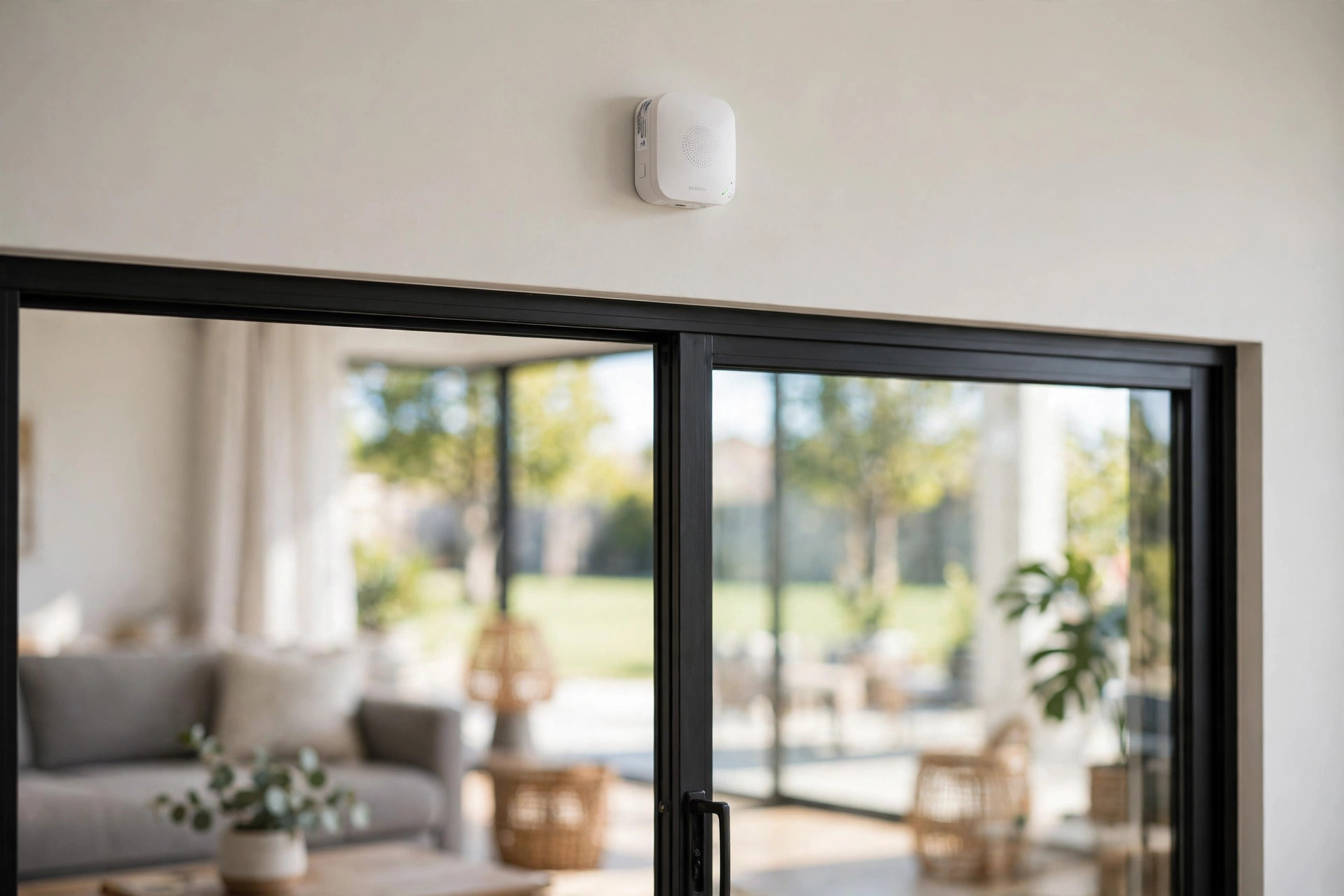

Most break-ins in America do not start at the front door. They start at a window. A burglar breaks a pane, reaches in, and unlocks the latch. A door sensor never trips because the door never opens. This is the gap that our best glass break sensor reviews 2026 USA guide is written to close. A glass break sensor listens for the sound or shock of breaking glass and tells your alarm panel to act, often before the intruder can step inside.
Why a Glass Break Sensor Matters in 2026
Home alarms have grown smarter in recent years, and yet the weak point has not changed. Windows are the easiest way into a house. According to public safety data reported for years, a large share of home burglaries involves a rear window or a glass sliding door. A standard contact sensor on a window frame only works if the window is opened. If the glass is smashed, the contact sensor stays silent.
A glass break detector solves this problem. It watches over one or more windows at a time. When it hears the sharp pattern of breaking glass, it sends a signal to your alarm panel. The panel can then sound the siren, send you a phone alert, or call a monitoring station. If you already read our carbon monoxide detector reviews roundup, you know we value devices that work quietly in the background until the day they matter. A glass break sensor is exactly that kind of device.
In 2026, most new sensors are wireless, battery powered, and able to join popular alarm systems. Reviews from independent labs such as Consumer Reports and testing sites like CNET and PCMag confirm that the best models are both accurate and hard to fool with false alarms.
How a Glass Break Sensor Works: Best Glass Break Sensor Reviews 2026 Usa
There are two main ways these devices detect a break.
Acoustic sensors use a small microphone. They listen for the sound of glass breaking, which has two parts: a low thump when the pane is struck and a higher shattering sound as the glass falls apart. The sensor looks for both parts in the right order. This makes it less likely to react to a dropped plate or a loud television.
Shock sensors mount directly on the glass. They feel the vibration when the pane is hit. They react only to the window they touch, which makes them very precise.
Some models use both methods at once. These are called dual-technology sensors. They are the most trusted in reviews because they must see both the sound and the shock before they trigger.
Most acoustic sensors cover a room up to about 20 or 25 feet. One unit in the corner of a living room can guard several windows and a sliding door. Shock sensors cover only the pane they sit on, so you need one per window.
What to Look For When You Choose
Our best glass break sensor reviews 2026 USA research points to five things that matter most.
Detection Range
Check the listed range. For a large open living room, choose a sensor rated for at least 20 feet. For a small bedroom, a shorter range works fine. A range that is too long can cause false alarms from glass sounds in another room.
Compatibility With Your Alarm System
This is the most common mistake buyers make. A sensor must speak the same wireless language as your panel. If you have a Ring system, buy the sensor made for Ring. If you have a SimpliSafe system, buy the one made for SimpliSafe. Ring and SimpliSafe both sell their own glass break sensors that pair in minutes. If you use a monitored service like ADT, ask your dealer which sensor they support.
Battery Life and Power
Good wireless sensors run for two to five years on one battery. Look for a model that warns you when the battery is low. Hardwired sensors need no battery, but they need a wire run to your panel, which means more work at install time.
False Alarm Protection
The best models in 2026 use smart filters. They ignore dog barks, thunder, dropped dishes, and loud music. Dual-technology models are the strongest here. In expert reviews at Wirecutter, sensors that use pattern matching score far higher than cheap single-sound units.
Pet Immunity and Smart Features
If you have a large dog that bangs into windows, choose a sensor with pet immunity or a dual-technology design. Many 2026 models also send phone alerts, show battery level in an app, and test themselves on a schedule. Google Nest products and other smart home gear show how far app control has come, and glass break sensors now follow the same path.
Types of Glass Break Sensors on the Market
Acoustic Room Sensors
These mount on a wall or ceiling and listen to the whole room. They are the most popular type in the United States because one unit covers several windows. Prices run from about 30 to 80 dollars. Brands sold through alarm makers and large retailers dominate this group.
Window-Mounted Shock Sensors
These stick or screw onto the glass itself. Each one guards a single window. They cost less per unit, often 15 to 35 dollars, but you need more of them. They are a good choice for a home with only one or two risky windows, such as a basement window hidden from the street.
Dual-Technology Sensors
These combine sound and shock detection. They cost more, usually 60 to 120 dollars, but they are the top pick in most window glass break alarm reviews. If your home has large glass areas, such as floor-to-ceiling windows or a glass sunroom, a dual-technology sensor is worth the extra money.
Sensors Built Into Alarm Kits
Many starter kits now include a glass break sensor in the box. If you are building a new system, compare the kit price with buying parts alone. Sometimes the kit is cheaper. Our smart lock comparison shows the same idea at work: bundled devices often beat buying one by one.
Cost and Price in the USA
Prices for glass break sensors in 2026 are steady. Here is what American buyers can expect.
– Basic acoustic sensor: 25 to 50 dollars – Mid-range wireless sensor from a major alarm brand: 40 to 80 dollars – Dual-technology sensor: 60 to 120 dollars – Shock sensor for a single window: 15 to 35 dollars – Professional installation (if you hire it): 75 to 150 dollars per visit
Most homeowners install the sensor themselves in under half an hour. Wireless models need only a screw or an adhesive pad and a few minutes of pairing in the app. If your system is monitored, tell your monitoring company after you add the sensor so they list it on your account.
Watch for sales at big home improvement stores. Seasonal sales in spring and fall often cut prices by 15 to 25 percent. Reviews at The Verge note that smart home prices drop most during holiday sales events.
Installation Tips for American Homes
Place the sensor where it can hear the windows you want to guard. For an acoustic sensor, mount it on the wall opposite the windows or on the ceiling near the center of the room. Keep it within the listed range of every pane.
Avoid placing the sensor near sources of noise. Do not mount it above a television, next to a speaker, or beside a kitchen where dishes clatter. These sounds will not always cause false alarms, but they raise the risk.
For sliding glass doors, mount the sensor on the wall above the door frame. This is one of the most attacked entry points in American homes, and one sensor covers the whole door.
Test the sensor after you install it. Most brands sell a small glass break simulator, a handheld device that plays the sound of breaking glass. Use it once a year to confirm the sensor still hears the test. The U.S. Consumer Product Safety Commission reminds homeowners to test all safety devices on a regular schedule, and glass break sensors are no different.
If you rent your home, ask your landlord before you drill. Many wireless sensors mount with removable adhesive strips, which leave no marks.
Care and Upkeep
A glass break sensor needs very little care. Dust the unit once or twice a year with a dry cloth. Dust on the microphone can dull its hearing over time.
Change the battery when the app or the panel warns you. Do not wait. A dead sensor guards nothing. Keep a spare battery in a drawer so you can swap it the same day.
After any big change in the room, check the sensor. If you move heavy furniture, hang thick curtains over the windows, or add a loud sound system, the sound path may change. Run a test to make sure the sensor still works.
When you paint the room, cover the sensor with tape. Paint on the microphone holes can ruin it.
Safety and Limitations
A glass break sensor is one layer of protection, not the whole wall. Pair it with door sensors, motion sensors, and good locks. Our wall safe for home installation guide makes the same point about valuables: no single device does it all.
Know the limits. An acoustic sensor may miss a break if the window is covered by heavy drapes, which muffle the sound. A shock sensor guards only its own pane. Neither type stops a break-in by itself. What they do is buy time: the siren sounds, the alert goes out, and the intruder often runs before entering.
Do not rely on a glass break sensor as a smoke or carbon monoxide alarm. It detects breaking glass only. Keep your other safety devices in place and tested.
If you have a monitored alarm, make sure the monitoring station knows about the new sensor. Some contracts charge a small fee per added zone. Ask before you buy so there is no surprise on the bill.
Frequently Asked Questions
Do glass break sensors work on all types of glass?
Most acoustic sensors work on plate glass, tempered glass, wired glass, and laminated glass. Very thick laminated or bullet-resistant glass may need a shock sensor mounted right on the pane. Check the product sheet for your glass type before you buy.
Will my dog barking set off the sensor?
A good 2026 sensor should not. Modern units listen for the two-part pattern of breaking glass, not just loud noise. Dual-technology models are the safest choice for homes with loud pets. If false alarms happen, move the sensor farther from the noise source.
How many sensors does my home need?
Count your ground-floor windows and sliding doors. One acoustic sensor covers a room with several windows if all are within range. A typical ranch home needs two to four sensors: one for the living room, one for the master bedroom area, and one or two for other rooms with exposed windows. Upper floors need sensors only if they are easy to reach from a porch, balcony, or tree.
Can I add a glass break sensor to my current alarm?
In most cases, yes. Buy the sensor made for your brand of panel. Pairing usually takes a few minutes in the app. If your panel is very old, it may not support wireless sensors. In that case, a hardwired shock sensor or a panel upgrade will do the job.
Do wireless glass break sensors need Wi-Fi?
No. Most use a low-power radio signal to talk to the alarm panel, not Wi-Fi. The panel itself may use Wi-Fi or cellular to reach you and the monitoring station. This means the sensor keeps working even if your home Wi-Fi goes down.
Are glass break sensors worth the money?
For most American homeowners, yes. They are one of the cheapest alarm parts, often under 50 dollars, and they cover the entry path that door sensors miss. Reviews across major testing sites agree: a 40-dollar sensor that catches a window break is money well spent.
A Short Final Word
Windows are the quiet way in, and a glass break sensor is the quiet way to watch them. Choose a sensor that fits your alarm panel, mount it where it can hear your most exposed glass, and test it once a year. For less than the cost of a family dinner out, you close one of the largest gaps in home security. Our best glass break sensor reviews 2026 USA testing points to one clear rule: buy from a known alarm brand, prefer dual-technology where you can, and never skip the test after install.
References
ADT. (n.d.). Home security and automation. https://www.adt.com CNET. (n.d.). Technology news and reviews. https://www.cnet.com Consumer Reports. (n.d.). Product reviews and ratings. https://www.consumerreports.org Google Store. (n.d.). Smart home devices. https://store.google.com PCMag. (n.d.). Technology product reviews. https://www.pcmag.com Ring. (n.d.). Smart home security devices. https://www.ring.com SimpliSafe. (n.d.). Home security systems. https://www.simplisafe.com The Verge. (n.d.). Technology news and reviews. https://www.theverge.com U.S. Consumer Product Safety Commission. (n.d.). Product safety information. https://www.cpsc.gov Wirecutter. (n.d.). Product reviews from The New York Times. https://www.nytimes.com/wirecutter
Was this guide helpful?

About Emily Rodriguez
The My Garden US editorial team writes practical, in-depth home and garden guides for American homeowners — tested advice, no fluff.
You May Also Like
Smart Air Purifier With App Reviews 2026 USA: A Practical Guide for American Homes
February 20, 2026 0 views
Best Transfer Switch for Portable Generator USA: A Complete Home Guide
January 23, 2026 0 views
Automatic Washing Machine Shutoff Valve Reviews
June 24, 2026 0 views