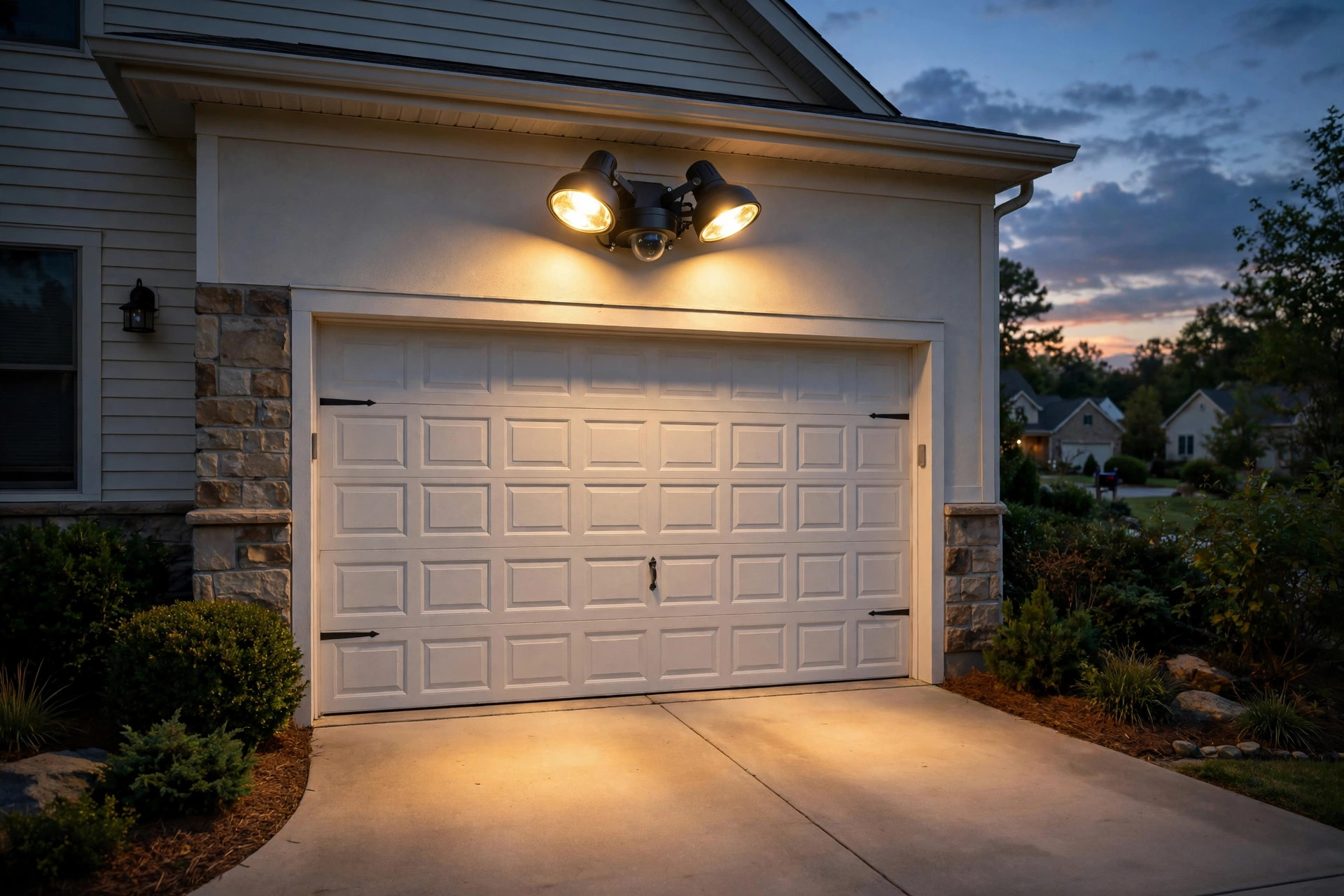

Many houses in the United States now carry at least one motion sensor flood light. It sits above the garage door or beside the back door and waits. When a person or a car moves within its range, the lamp turns on. The sudden light can startle a prowler, help a guest find the walk, and let you see what the dog is barking at. These motion sensor flood light reviews for 2026 in the USA gather the main points that buyers care about: how bright the lamp is, how far the sensor sees, how hard the unit is to install, and what it costs to own.
Why It Matters
A dark yard has two problems. The first is safety. Steps, toys, and garden hoses hide in the dark. A bright light that switches on by itself makes trips and falls less likely. The second is security. Most break-ins happen at night. A house that answers movement with light looks occupied and watched. A motion sensor flood light gives you both benefits without burning power all night long.
The numbers behind the choice are simple. A flood light may run for ten seconds or three minutes at a time, depending on the setting you choose. That is a tiny share of the power a light that stays on all night would use. Homeowners also save money on bulbs, because light emitting diode lamps now last many years. Consumer Reports has long found that motion-activated lighting is one of the cheapest steps a homeowner can take toward better security.
A good light also spares your neighbors. The lamp stays off until it is needed. It does not shine into the bedroom window across the street for no reason. That courtesy matters in close suburbs and town lots.
What to Look For When You Choose One: Motion Sensor Flood Light Reviews 2026 Usa
Reviews of motion sensor flood lights in the USA for 2026 keep returning to the same five points. Learn them before you buy.
Brightness. Brightness is measured in lumens. A small door light may give 1,000 to 2,000 lumens. A large yard or driveway light may give 3,000 to 5,000 lumens. More is not always better. Too much light bounces off white siding and blinds the camera, if you have one. Match the output to the size of the space.
Sensor range and angle. Most sensors see 40 to 70 feet away. The angle is often 180 or 240 degrees. Look for a sensor head that you can point and tilt. A wide field that you cannot aim will catch every passing car and every falling leaf.
Power source. Wired lights draw from your house current. They are bright and steady, but you must have an electrical box where you want the light. Battery and solar models mount anywhere. They are weaker and need sun or fresh batteries. Some hybrid models plug into a low voltage adapter. Choose the power type that fits your wall and your patience.
Adjustable settings. Good reviews always praise three dials: sensitivity, duration, and range. Sensitivity decides how much motion is needed to trip the lamp. Duration decides how long the light stays on. Range decides how far the sensor looks. A unit without these dials will either flash too often or stay dark when you need it.
Weather rating. The lamp will face rain, snow, and summer heat. Look for a wet location rating and a sealed housing. Plastic heads cost less but can grow brittle in hard sun after a few years. Aluminum heads last longer.
Reading Reviews the Right Way
Not every review you find online is equal. The most useful motion sensor flood light reviews in 2026 come from testers who mount the light and live with it for weeks. They note false alarms, slow warm-up, and how the lamp behaves in rain. Short reviews written right after delivery tell you more about shipping than about the light. PCMag and CNET both run hands-on outdoor tests and are worth a look. Keep an eye on the date of any review you read. Models change each year, and a review from 2023 may describe a unit that no longer exists.
Types and Options
Four broad types cover nearly everything on the market.
Wired Twin-Head Lights
This is the classic form. Two lamp heads hang from a crossbar over a center sensor box. You wire it to an outdoor junction box. It is bright, reliable, and cheap to run. Most models give 2,000 to 4,000 lumens per unit. This is the best choice for a garage, a large driveway, or the back of a house.
Integrated Smart Flood Lights
These add wireless connection and an app. You can set schedules, change brightness from your phone, and link the light to a doorbell camera. Ring makes several outdoor smart lights that pair with its cameras. The Google Store carries compatible lighting options for homes that already use Google Home. A smart flood light costs more and needs a strong wireless signal at the mounting point. For some buyers, the best smart floodlight for backyard use is one of these connected models.
Floodlight Cameras
A floodlight camera joins a bright lamp with a video camera in one body. It records when it senses motion and sends an alert to your phone. These units cost the most and often ask for a monthly plan to store video. If you want light without a subscription, read floodlight camera reviews without subscription before you decide.
Solar and Battery Models
These mount with two screws and no wiring. A small solar panel charges a built-in battery by day. At night the light fires on motion. They are ideal for sheds, fences, and far corners of the yard where no wire runs. Expect less brightness and shorter run time than a wired unit. In cloudy regions, keep a wired option for the main entrances.
Where Each Type Fits Best
For the front door and garage, wired twin-head lights win on brightness and steadiness. For the backyard and patio, a smart model lets you dim the light for evening guests and raise it for security later. For a long driveway or a gate, pair the light with a driveway motion sensor alarm so you know about visitors before they reach the house.
Cost and Price
Prices in the United States for 2026 fall into clear bands.
Budget models cost 20 to 40 dollars. These are usually single-head solar lights or simple wired units with basic sensors. They work, but the sensor may be crude and the housing thin.
Mid-range models cost 40 to 90 dollars. This is the sweet spot for most buyers. You get adjustable dials, decent brightness of 2,000 lumens or more, and a sealed housing. Many wired twin-head lights in this band perform as well as units twice the price.
Premium models cost 90 to 250 dollars. These are smart lights and floodlight cameras with apps, voice control, and wide fields of view. You pay for the electronics, not just the light.
Installation cost is a separate question. If you already have an outdoor electrical box, a wired light is a one-hour job for a handy homeowner. If you need a new box and wiring run, an electrician may charge 150 to 300 dollars. Solar and battery models cost nothing to install beyond your own time.
Running cost is small. A light emitting diode flood light uses 20 to 40 watts while on. Since it only burns for seconds or minutes at a time, the yearly power bill for one unit is often under five dollars.
Care and Upkeep
A motion sensor flood light asks little of its owner, but a little care each year keeps it honest.
Clean the sensor lens twice a year. Dust, spider webs, and pollen film blur the lens and cause false trips or missed motion. Wipe it gently with a damp cloth. Do the same for the lamp lens, since dirt cuts brightness.
Check the aim each spring and fall. Wind and vibration can tilt the heads or the sensor. Point the sensor slightly downward so it sees people and cars, not tree branches swaying above. Point the lamp heads at the ground or walk, not into a neighbor’s window.
For solar models, clean the panel with a soft cloth and trim any plant that shades it. For battery models, swap batteries on schedule even if the light still works. Weak batteries make the sensor sluggish in cold weather.
Replace the whole unit when the housing cracks or the sensor dies. Most lights last five to ten years. Light emitting diode heads cannot be rebulbed in many models, so a dead lamp means a new fixture.
Safety
Outdoor electricity and bright light demand respect. Turn off the breaker before you open any wired fixture. Test the wires with a non-contact tester before you touch them. Use fixtures rated for wet locations, and point wire nuts and splices downward inside a sealed box.
Think about light trespass. A 5,000-lumen lamp aimed at the street can annoy neighbors and may break local rules. Many towns now set limits on outdoor lighting brightness and aim. Check your town code before you mount a powerful unit.
The CPSC reminds homeowners to buy electrical products that carry a listing mark from a recognized lab. Cheap unlisted fixtures can overheat or fail in rain. A listed unit costs a little more and is far safer.
Bright light near a stair or a walk is a safety feature. Bright light aimed into a driver’s eyes at a curve is a hazard. Aim with care, and use the lowest brightness that does the job.
A Note on Security Systems
A flood light is one layer of a home security plan. It works best beside a lock, a camera, and an alarm. ADT and SimpliSafe both sell monitored systems that can work alongside outdoor lighting. The Verge covers new smart home security gear each year and is a useful source for what pairs well with motion lights.
Frequently Asked Questions
How far do motion sensor flood lights reach? Most units sense motion from 40 to 70 feet. Larger models reach 100 feet or more. The advertised range assumes a clear line of sight and a warm body moving across the sensor. Heavy rain, fog, and cold can shorten the range.
Do motion sensor lights work in daylight? Most do not turn on in daylight by design. A daylight sensor blocks the lamp when the sun is up. Some smart models let you override this in the app. For normal use, leave the daylight sensor on so the lamp saves power.
How long should the light stay on after motion? One to three minutes is the common choice. Thirty seconds is fine for a walk to the door. Five minutes suits a large yard. Avoid ten minutes or more. Long run times waste power and annoy neighbors.
Why does my light turn on for no reason? Small animals, swaying branches, and passing car headlights are the usual causes. Lower the sensitivity, shorten the range, and aim the sensor away from the street. A dirty lens also causes false trips. Clean it first.
Can I use a motion sensor flood light with a smart home system? Yes, if you buy a smart model. Most connect through a phone app and link to common voice assistants. Basic wired lights without wireless chips cannot join a smart system. Check the box for the words smart, app, or wireless before you buy.
Are solar motion sensor lights bright enough? They are bright enough for a shed, a fence line, or a side gate. They are usually not bright enough to light a full driveway or a large yard. For main entrances, choose a wired light and use solar models for the far corners.
A Short Final Word
The best motion sensor flood light is the one that fits your house, not the one with the biggest numbers on the box. Match brightness to the size of the space. Choose wired power for the main doors and solar power for the far corners. Set the dials low at first and raise them until the light answers real motion and ignores the rest. Do that, and a modest light will serve you well for many years.
References
ADT. (n.d.). Home security and automation. https://www.adt.com CNET. (n.d.). Technology news and reviews. https://www.cnet.com Consumer Reports. (n.d.). Product reviews and ratings. https://www.consumerreports.org Google Store. (n.d.). Smart home devices. https://store.google.com PCMag. (n.d.). Technology product reviews. https://www.pcmag.com Ring. (n.d.). Smart home security devices. https://www.ring.com SimpliSafe. (n.d.). Home security systems. https://www.simplisafe.com The Verge. (n.d.). Technology news and reviews. https://www.theverge.com U.S. Consumer Product Safety Commission. (n.d.). Product safety information. https://www.cpsc.gov
Was this guide helpful?

About Emily Rodriguez
The My Garden US editorial team writes practical, in-depth home and garden guides for American homeowners — tested advice, no fluff.
You May Also Like

Best Smart Bulbs for Recessed Lighting USA
April 16, 2026 0 views
Best Solar Security Camera Reviews 2026 USA: A Plain Guide for Homeowners
February 26, 2026 0 views
SimpliSafe vs ADT Cost Comparison 2026 USA
March 10, 2026 0 views