Finding honest linear electric fireplace reviews for living room use takes more work than it should. The units look alike in photos. The flame effects all claim to be the most realistic. Prices swing from a few hundred dollars to several thousand. This guide walks through what matters, what buyers praise, and what they complain about, so a living room choice can be made with confidence.
Why a Linear Electric Fireplace Suits the Living Room
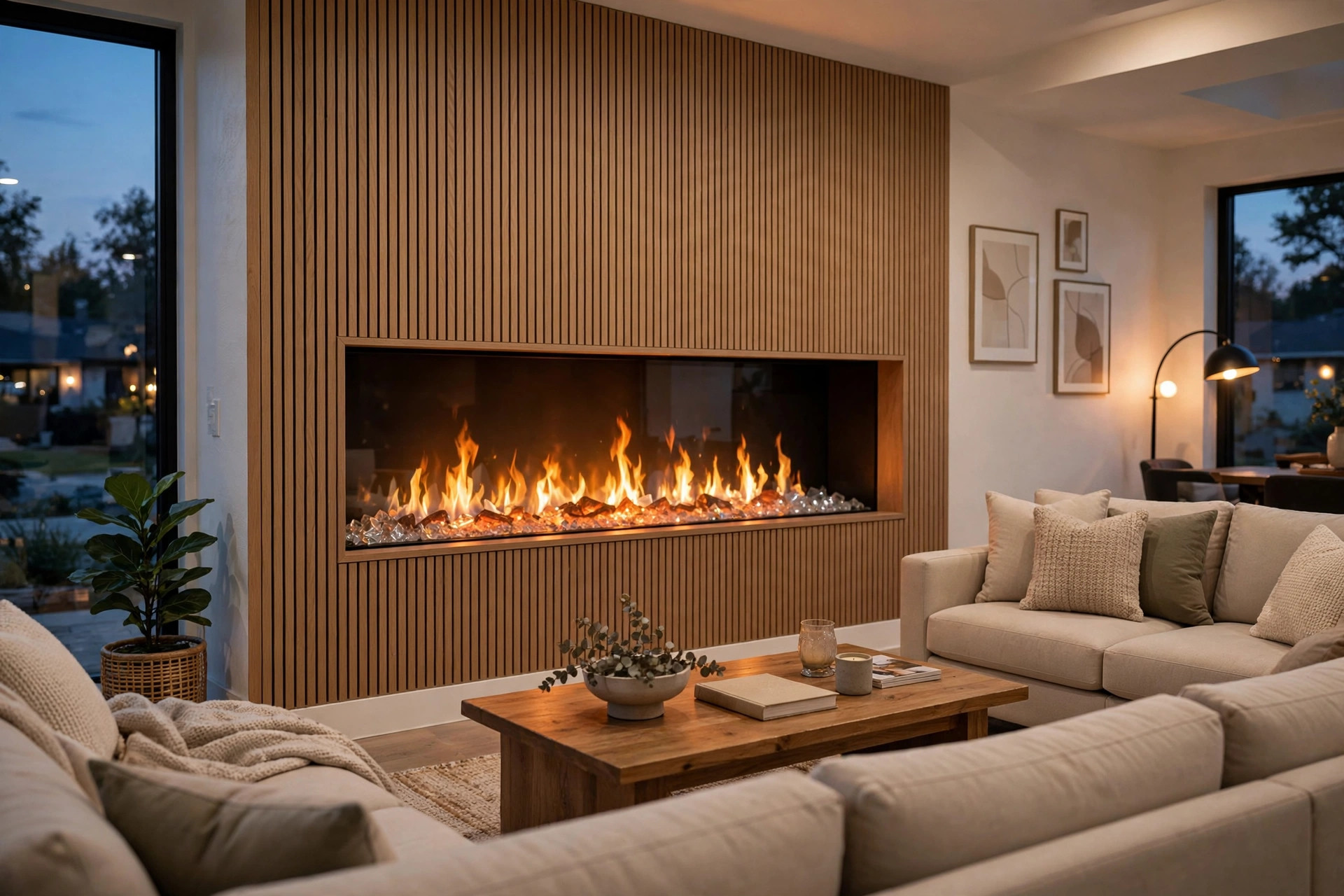
The living room is the room guests see first. It is where the family gathers in the evening. A linear electric fireplace fits this space well. It is long and low. It sits close to the wall or mounts flat against it. It gives the room a clean, modern line without the deep box of a traditional hearth.
Reviews from owners repeat the same points. The look is the top reason to buy. A linear model draws the eye across the wall. It pairs well with a television mounted above. It works in rooms with low ceilings because it does not push far into the space.
Heat is the second reason. Most linear units include a fan-forced heater. It warms a medium room in a short time. Owners in cold states report that the unit takes the chill off a 300 to 500 square foot living room. It does not replace the furnace. It works as zone heat. It warms the room that is in use. That is the point reviewers stress again and again.
A third point is ease. There is no chimney. There is no gas line. There is no wood to buy or ash to carry. A standard outlet runs the unit. Installation is closer to hanging a picture than to a building project. For renters and condo owners, that ease matters a great deal.
What to Look for in Living Room Models: Linear Electric Fireplace Reviews for Living Room
Reviews separate good units from poor ones on a few clear points. Start with size. Linear fireplaces run from about 36 inches to over 100 inches wide. The common living room picks are 50, 60, and 72 inches. Measure the wall first. A unit that is too small looks lost on a wide wall. One that is too large crowds the room. Many reviewers wish they had measured twice before ordering.
Heat output comes next. Most units use a 1,500-watt heater, the most a normal outlet can feed. That yields about 5,000 BTUs. It warms roughly 400 square feet. Check the room size. A small den will do fine. A large open plan with high ceilings may need more. Reviews of units in large rooms are mixed on heat. The flame still pleases, but the warmth does not reach the far corners.
Flame realism is the third point. Older units showed flat orange shapes on a screen. Newer models use layered light and drifting smoke effects. Reviews praise models with adjustable flame color and brightness. Being able to run the flames with no heat is a plus. In warm months, the look stays without the warmth. Buyers call this the “summer mode,” and it is one of the most loved features.
Noise matters more than buyers expect. The heater fan makes sound. Cheap units hum or click. Reviewers notice this during quiet movies. Look for models that reviewers call quiet. Some units allow the flames to run with the fan off. That solves the noise question at night.
Controls are the last check. A remote control is standard now. Better models add a phone app or voice control. Reviewers like timers and thermostats built into the unit. The thermostat holds the room at a set warmth and cycles the heater. That saves power and keeps the room steady.
Types and Options on the Market
Linear electric fireplaces come in three main forms. Each has its fans.
Wall-mounted units hang on the wall like a wide frame. They need only a bracket and an outlet. Reviews call them the easiest to install. They sit a few inches off the wall. Cords can show unless planned for. Many owners hide the cord with a paintable channel.
Recessed or in-wall units sit inside the wall. The face is flush with the drywall. The look is the cleanest of the three. Installation takes more work. A framed opening must be cut. Reviewers who chose recessed models say the extra work was worth it. The fireplace looks built in, not hung on.
Freestanding or insert units slide into an existing cabinet or a new media console. They work well under a television. Some buyers place them in old fireplace openings to fill dead space. Reviews are kind to this group. The unit hides its edges. The room keeps its storage.
Beyond form, options vary. Flame bed choices include glass crystals, logs, and pebbles. Crystals read modern. Logs read classic. Many units ship with both. Color themes change the mood. Blue flames suit a cool room. Orange suits a warm one. Some units cycle through many hues. Reviewers split on this. Some love the color play. Others set one tone and never touch it again.
Wi-Fi models link to home systems. The fireplace joins the same app as the lights. Reviews call this nice but not needed. A simple remote covers most daily use. Spending more for smart features makes sense only if the home already runs on them. Shoppers comparing smart heating gear often read heater brand guides, such as the buying advice at Lennox or Rheem, to learn how thermostats and controls work across product lines.
Cost and Price Ranges
Prices for linear electric fireplaces fall into clear bands. Knowing them helps set a budget before reading reviews.
The low band runs about $300 to $600. Units here are 36 to 50 inches wide. The flames are basic. The heater works. Build quality is light. Reviews in this band are mixed. Happy buyers praise the price and the look from across the room. Unhappy buyers note thin metal, loud fans, and flames that look flat up close. This band suits a spare room or a first try.
The mid band runs about $600 to $1,200. This is where most living room reviews land. Units are 50 to 72 inches wide. Flame effects look much better. Remotes and thermostats are common. Build feels solid. Reviews here are the most positive. Owners say the unit looks far more costly than it was. For most living rooms, this band is the sweet spot.
The high band runs $1,200 to $3,000 and up. Units are wide, often 72 to 100 inches. Flame technology is top grade. Some use water vapor or advanced light projection. Cabinets and trim look like custom work. Reviews are strong on looks and weaker on value. The heat is no better than a mid-band unit. The extra money buys looks, size, and finish. Large great rooms justify it. Small rooms do not.
Running cost is low. At full heat, a unit draws about 1.5 kilowatts. An hour of heat costs roughly 20 to 25 cents at average United States power rates. Flame-only mode costs almost nothing. Many owners run the flames all evening and the heat only when needed. Official efficiency guidance from Energy Star and the U.S. Department of Energy explains why zone heating like this can cut whole-house heating bills when used wisely.
Installation cost is small for wall-mounted models. A handy owner spends nothing. An electrician visit to add a nearby outlet runs about $150 to $300. Recessed models add carpentry. A contractor may charge $500 to $1,500 to frame and finish an opening. Reviews advise getting that quote before buying the unit.
Care and Upkeep
An electric fireplace asks little. That is part of its appeal. Still, small habits keep it looking and working well.
Dust the glass front often. A microfiber cloth does the job. Avoid harsh cleaners. They can scratch or cloud the surface. Reviews warn against paper towels on some finishes. They leave fine marks that show under the lights.
Vacuum the heater vents once or twice a year. Dust builds up inside. It can make the fan noisier and the heat weaker. Unplug the unit first. A soft brush on the vacuum hose reaches the slots. Practical upkeep walkthroughs at Family Handyman show how little tools this kind of cleaning needs.
Check the cord and plug each season. Look for wear or heat marks. The plug should fit snug in the outlet. A loose plug can warm up. If it feels hot, stop using the unit and call an electrician. Reviews rarely report cord trouble, but the check takes a minute.
The LED lights last many years. They do not burn out like old bulbs. If flames dim, check the settings first. A reset often fixes odd behavior. The manual lists the steps. Keep the manual. Reviewers who lost it wish they had not.
Safety in the Living Room
Electric fireplaces are among the safest heat sources for a home. No open flame exists. No fuel burns. Still, rules apply.
Keep clear space in front. Most makers ask for three feet. Curtains, blankets, and papers should stay back. The heater outlet blows warm air. It can heat soft items placed too close. Owners with pets note that cats love the warm front. A low guard or simple habit keeps tails safe.
Do not run the unit on an extension cord. Plug it straight into the wall. The heater draws full power. A thin cord can overheat. If the outlet must be far, have one added near the unit. This is the single most repeated safety tip in reviews.
Mount the unit firm. Wall-mounted models are heavy. Use the bracket and the studs in the wall. Drywall anchors alone are not enough for large units. Recessed models must sit level in a sound frame. A tilted unit looks wrong and can strain the case.
Turn it off when the house is empty for long stretches. The thermostat and timer make this easy. Set the timer for the evening. Let it switch off at bedtime. Many reviewers use this habit and sleep better for it.
Frequently Asked Questions
How wide should a linear electric fireplace be for a living room?
A common rule is two-thirds the width of the wall or the furniture below it. For a 10-foot wall, a 60 to 72 inch unit looks right. Measure first. Tape the outline on the wall with painter’s tape. Live with it a day. Reviews say this simple step prevents most size regrets.
Do these units really heat a room?
Yes, within limits. A 1,500-watt heater warms about 400 square feet. It works best in closed rooms with standard ceilings. Open plans and very tall ceilings dilute the heat. Owners use the fireplace as extra warmth in the room they sit in, not as the main heat for the house.
Can a television go above a linear electric fireplace?
In most cases, yes. The heat blows forward, not straight up. Keep the clearance the maker states, often 8 to 12 inches. Many owners mount the TV above with no trouble. Reviews call this the classic living room setup. If the unit has a top heat vent, add more space or pick a front-vent model. Shoppers also compare electric fireplace stands and console setups before deciding on the layout.
Are the flames realistic?
They have come far. Mid and high band units fool most guests at first glance. Up close, a keen eye sees the trick. Adjustable color and brightness help. Running the unit in a dim room helps most. Reviewers say guests often ask where the firewood is. That is praise enough.
How much power does flame-only mode use?
Very little. The LEDs draw a few watts. An evening of flames costs a penny or two. This is why owners run the look all night in winter. The room feels warm and alive for almost nothing.
What do owners complain about most?
Three things top the complaint lists. Loud fans in cheap models. Flames that look flat when viewed up close. And remotes that stop working after a year. Buying in the mid band and reading recent reviews cuts all three risks. Independent test notes at Consumer Reports echo the fan-noise point across brands.
A Short Final Word
Linear electric fireplace reviews for living room buyers tell a steady story. The units look good. They heat a sitting area well. They cost little to run. The mid price band gives the best mix of looks and value. Measure the wall. Read recent reviews on noise. Skip the extension cord. Then enjoy the glow. A living room with a soft fire on the wall is a room people want to stay in.
Related reading: electric fireplace insert reviews for units that fit old fireboxes, best electric fireplace TV stand reviews for console-style setups, and gas fireplace insert installation cost for shoppers weighing gas against electric.
References
Consumer Reports. (n.d.). Product reviews and ratings. https://www.consumerreports.org ENERGY STAR. (n.d.). Energy efficient products. https://www.energystar.gov Family Handyman. (n.d.). DIY home repair and maintenance. https://www.familyhandyman.com Lennox. (n.d.). Heating and cooling systems. https://www.lennox.com Lowe’s. (n.d.). Home improvement products. https://www.lowes.com Napoleon. (n.d.). Fireplaces, grills, and heating products. https://www.napoleon.com Rheem. (n.d.). Heating, cooling, and water heating. https://www.rheem.com U.S. Department of Energy. (n.d.). Energy efficiency and renewable energy. https://www.energy.gov
Was this guide helpful?

About Lisa Anderson
The My Garden US editorial team writes practical, in-depth home and garden guides for American homeowners — tested advice, no fluff.