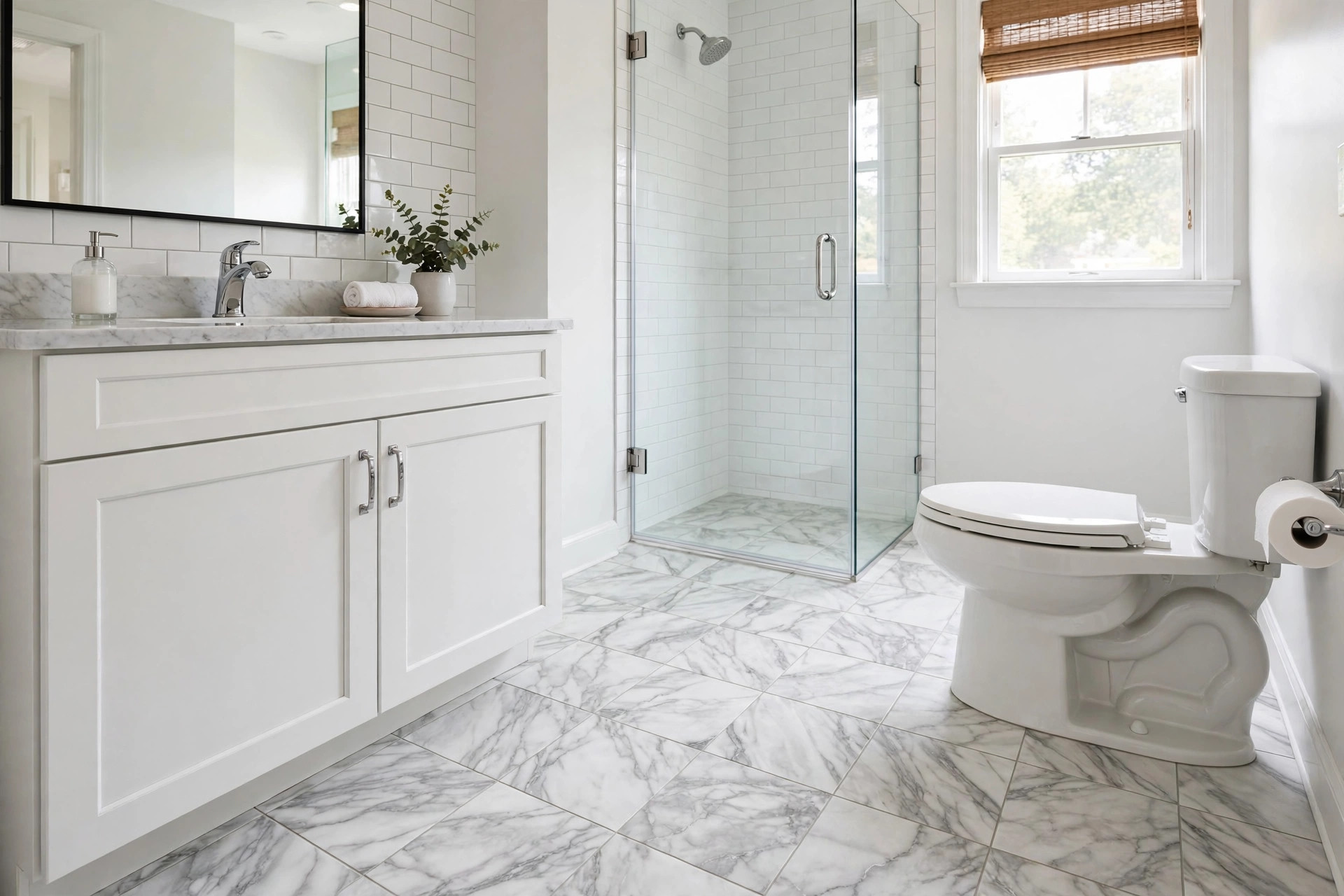

What Peel and Stick Tile for Bathroom Floor Reviews Really Tell You
Bathroom remodels cost more than most homeowners expect. A new tile floor can take days and cost thousands. That is why peel and stick tile for bathroom floor reviews draw so much attention. These self-adhesive tiles promise a new floor in an afternoon with no grout, no mortar, and no tiler. The reviews that matter most come from buyers who lived with the tile for a year or more. They speak plainly about what holds up and what peels. This guide gathers those lessons so you can decide with clear eyes.
Peel and stick tile is a vinyl tile with a pre-glued back. You peel off a paper liner and press the tile onto a clean floor. Each tile sticks to the subfloor or to an old hard surface. Most designs copy stone, marble, slate, or wood. The best ones fool the eye from a few feet away. For a rental or a budget refresh, they are worth a serious look. For a forever home, the reviews ask for caution.
Why Homeowners Try Peel and Stick Tile in the Bathroom: Peel and Stick Tile for Bathroom Floor Reviews
Bathrooms see constant water. Toilets overflow. Showers steam. Sinks splash. A bathroom floor must take all of it. Reviews show that buyers choose peel and stick tile for four main reasons.
First is cost. A box of tiles runs a fraction of the price of ceramic and its labor. Second is speed. Many buyers finish a small bathroom in one day. Third is the renter case. People who cannot rip out a floor want a reversible change. Fourth is looks. New patterns mimic marble and terrazzo so well that guests guess wrong.
But reviews also show the trade off. The adhesive bond is strong only when the floor beneath is right. Standing water is the enemy. Heavy steam works the seams loose over time. Knowing these limits before you buy is the difference between a floor that lasts years and one that lifts in months.
What to Look For Before You Buy
Readers who study peel and stick tile for bathroom floor reviews learn to judge a product on five points. Each one matters more in a wet room than in a dry room.
Water Resistance
Not all self-adhesive tile is meant for bathrooms. Look for products that state water resistance on the box. Vinyl composition tile with a waterproof core does better than thin felt-backed tile. Check whether the maker allows use in bathrooms at all. Some brands rate their tile for kitchens only. Reviews warn that tile meant for dry floors fails fast in a wet bath.
Thickness and Wear Layer
Thicker tile feels better under bare feet and resists dents. A wear layer of 6 mil or more handles bathroom traffic well. The wear layer is the clear top coat that takes the scratches. Reviewers who picked tile with a thin wear layer report fading and scuffing within a year.
Tile Size and Pattern
Large square tiles make a small bathroom look bigger. Hexagon and mosaic sheets give a classic bath look. Marble-look sheets are the most reviewed pattern of all. Pick a pattern you can lay straight. Patterns with a strong repeat show crooked cuts fast.
Adhesive Quality
The glue decides the floor. Some tiles use a pressure-sensitive glue that bonds at once. Others need a day to reach full hold. Reviews note that extra floor adhesive, sold at home improvement stores, helps in problem spots. You can also read how flooring specialists compare products before you choose.
Subfloor Condition
Peel and stick tile grips smooth, clean, and dry surfaces best. It sticks to concrete, plywood underlayment, and old sheet vinyl. It does not bond well to textured or damp floors. Buyers who skipped floor prep report edges lifting first. A level surface matters as much as the tile itself.
Types of Peel and Stick Tile for Bathroom Floors
Reviews group these tiles into three broad types. Each suits a different budget and bath.
Vinyl self-adhesive squares. These are the classic 12 by 12 inch tiles. They are thick, firm, and easy to cut with a utility knife. Buyers rate them highest for hold. They suit half baths and powder rooms best.
Mosaic and hexagon sheets. Small shapes on a mesh sheet give a high-end look. They cost more per square foot. Reviews praise the look but warn that the many seams need care around water.
Plank-style peel and stick. Long planks copy wood or stone. They lay fast and need few cuts. Reviewers like them in larger baths. They ask for extra care at the tub edge, where water pools.
For more on the broader floor options for wet rooms, compare waterproof laminate flooring for bathrooms and waterproof basement flooring to see how each class of product handles moisture.
How Much Peel and Stick Bathroom Tile Costs
Prices in 2026 run from about one dollar to about four dollars per square foot. A small 50 square foot bath needs 60 to 70 dollars of tile, plus ten percent extra for cuts and waste. Add a trowel, utility knife, and a gallon of primer, and the full job often lands under 150 dollars.
That is a fraction of ceramic. Tile installation alone can run several dollars per square foot before the tile itself. Reviewers call this the main win. The floor looks fresh for the cost of a nice dinner out.
The hidden cost is replacement. Ceramic lasts decades. Peel and stick tile in a busy family bath lasts three to seven years in most reviews. Some buyers report ten years in a guest bath that sees little water. Weigh the low price against the shorter life before you commit. Reports from consumer testers and renovation guides back this shorter-life finding.
Installing Peel and Stick Tile on a Bathroom Floor
Buyers who report the best results follow the same plain steps. Their method is simple and worth copying.
1. Clean the floor. Sweep, mop, and let it dry fully. Grease and dust kill adhesion. 2. Remove the toilet if you can. It is extra work, but the tile then runs under it for a clean edge. If you cannot, cut tiles tight around the base. 3. Prime porous floors. A coat of primer on raw concrete or plywood helps the glue bite. 4. Find the center. Snap chalk lines from the middle of each wall. Start at the center and work outward so cut tiles land at the edges. 5. Peel and press. Peel the liner, set the tile, and press hard from the center out. Roll each tile with a floor roller if you have one. 6. Seal the edges. Run a thin bead of silicone caulk where the tile meets the tub, the shower curb, and the toilet base. Reviews call this step the single best defense against water.
Let the floor rest a full day before heavy use. Many buyers walk on it at once, but the glue bond grows stronger overnight. Keep the room ventilated while the adhesive cures.
Care and Upkeep
A peel and stick bathroom floor asks for gentle care. Sweep it often. Mop with a damp mop, not a soaking one. Skip steam mops. The heat and water drive into the seams and loosen the glue. Reviewers who used steam mops report edges curling within weeks.
Wipe spills fast. Standing water is the one true enemy. In front of the tub, lay a bath mat that you hang up after each use. A mat that sits wet on the floor traps moisture against the tile.
Avoid harsh cleaners. A mild soap and water mix does the job. Bleach can dull the print layer. Ammonia can weaken some adhesives. When a single tile fails, peel it up and press in a spare. Keep a few tiles from the original box for this job. Buyers call this the great saving grace of the product. One bad tile never ruins the whole floor.
Safety Notes
A bathroom floor must not be a slip hazard. Look for tile with a textured surface. Glossy smooth tile gets slick when wet. The federal safety agency publishes guidance on slip-resistant flooring for wet rooms, and it is worth a read before you buy.
Ventilation matters too. Adhesives release fumes at first. Open a window and run the bath fan during and after installation. Let the room air out overnight. People with asthma or chemical sensitivity should read the product label for VOC claims first. The federal environmental agency publishes indoor air guidance that covers home projects.
One more point from the reviews. Peel and stick tile is a floating surface change, not a structural fix. If the floor beneath is soft, rotted, or spongy, fix that first. Tile laid over a bad subfloor will fail, and worse, it can hide damage that grows worse unseen.
Frequently Asked Questions
Does peel and stick tile really hold up on a bathroom floor?
It holds up in low to moderate use. Reviews report three to seven years in a family bath and longer in a guest bath. It does not match ceramic for life. It wins on price and speed. Most reviewers would buy it again for a rental, a flip, or a quick refresh.
Can you put peel and stick tile over old tile?
Yes, if the old tile is sound, level, and clean. Deep grout lines will show through thin tile. Some buyers fill the grout lines first with a leveler. Reviews also mention laying it over old sheet vinyl with good results. For notes on matching new tile to existing surfaces, see reviews of shower wall tile.
Will water ruin peel and stick bathroom tile?
Standing water ruins it. Splashes that you wipe up do not. The seams are the weak point. Buyers who caulked the tub edge and the toilet base report far fewer failures. Bathrooms with poor ventilation fail sooner because moisture never fully leaves the air.
How do you remove peel and stick tile later?
Warm each tile with a hair dryer or heat gun, then pry it up with a putty knife. The heat softens the glue. Some adhesive stays behind. Mineral spirits or an adhesive remover takes it off most floors. Reviews note that removal from concrete is easy and removal from plywood takes more scraping.
Is peel and stick tile safe for radiant heated floors?
Check the maker. Some brands allow it over low-temperature radiant heat. Others warn that heat softens the adhesive. Reviewers who tried it over hot floors report tiles sliding out of place. When in doubt, call the maker’s help line before you install.
How do you pick a pattern that looks real?
Hold a full tile at arm’s length. Good prints show grain and shade shifts. Bad prints repeat the same swirl. Marble-look and slate-look sheets earn the best marks in reviews. Wood-look planks earn mixed marks because the print can look flat up close. Flooring maker catalogs and tile maker catalogs show how real tile patterns vary, which helps you judge a print.
Final Word
Peel and stick tile for bathroom floor reviews paint a fair picture. The product is a budget tool, not a forever floor. In a rental, a guest bath, or a quick sale flip, it earns its keep. It looks good, installs fast, and costs little. In a hard-use family bath with kids and daily showers, plan on a shorter life and give the seams extra care.
Buy tile that is rated for bathrooms. Prep the floor well. Caulk the wet edges. Keep spare tiles on hand. Do those four things, and the floor will serve you for years. Skip them, and the reviews warn you what comes next. For a modest cost and a weekend of work, few home upgrades change a tired bathroom faster. Read the major flooring reviews, compare home store selections, check manufacturer care guides, and you will buy with confidence.
References
Consumer Reports. (n.d.). Product reviews and ratings. https://www.consumerreports.org Daltile. (n.d.). Ceramic and porcelain tile. https://www.daltile.com Family Handyman. (n.d.). DIY home repair and maintenance. https://www.familyhandyman.com LL Flooring. (n.d.). Hardwood, vinyl, and tile flooring. https://www.llflooring.com Lowe’s. (n.d.). Home improvement products. https://www.lowes.com Mohawk Flooring. (n.d.). Flooring products. https://www.mohawkflooring.com Shaw Floors. (n.d.). Flooring products. https://www.shawfloors.com The Home Depot. (n.d.). Home improvement products. https://www.homedepot.com The Spruce. (n.d.). Home and garden advice. https://www.thespruce.com This Old House. (n.d.). Home renovation guidance. https://www.thisoldhouse.com U.S. Consumer Product Safety Commission. (n.d.). Product safety information. https://www.cpsc.gov U.S. Environmental Protection Agency. (n.d.). Protecting human health and the environment. https://www.epa.gov
Was this guide helpful?

About Sarah Mitchell
The My Garden US editorial team writes practical, in-depth home and garden guides for American homeowners — tested advice, no fluff.
You May Also Like
Carpet to Hardwood Stair Conversion Cost: A Plain Guide for Homeowners
February 9, 2026 0 views
Penny Tile Floor Cost Per Square Foot USA: A Plain Guide for Homeowners
September 4, 2026 0 views
Waterproof Laminate Flooring for Bathrooms USA: A Simple Guide
August 24, 2026 0 views