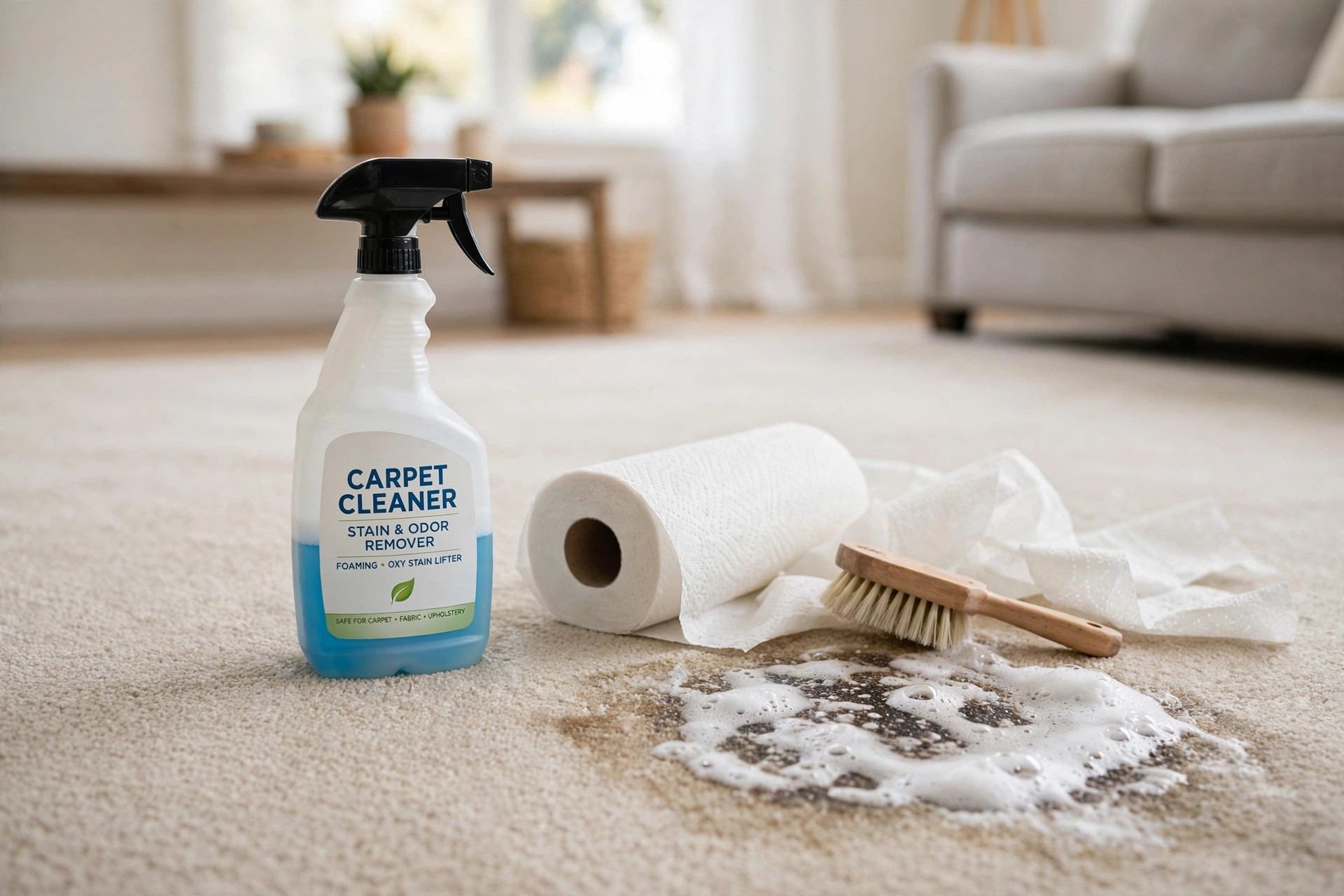

A pet stain on the carpet is one of the most common problems in an American home. Dogs and cats bring joy. They also bring messes. Urine, vomit, and muddy paw prints sink into carpet fast. The best carpet cleaner for pet stains usa shoppers can buy will pull those stains out of the fibers. It will also remove the smell. That last part matters most. If the odor stays, the pet will return to the same spot again.
This guide walks through everything you need to know. It covers how pet stains work, what to look for in a cleaner, the main types on the market, what they cost, and how to use them safely around animals and children. It also answers the most common questions buyers ask. Every home is different. The right product for you depends on your carpet, your pet, and your budget.
Why Pet Stains Are So Hard to Remove
Pet stains are not like coffee spills. They are made of proteins and acids. Urine starts as a clear liquid. As it dries, it turns into crystals that bond with carpet fibers. Heat makes the bond stronger. That is why hot water can set a stain for good.
A surface wipe will not fix it. The liquid sinks through the carpet into the pad below. Many cleaners only clean the top of the fibers. The stain looks gone. Then the smell comes back on a humid day. This is called wicking. The moisture from the pad rises back up the fibers and brings the stain with it.
Enzymes are the answer for protein stains. Enzyme cleaners use live bacteria that eat the proteins in urine and vomit. They work slowly. Most need several hours to do their job. The wait is worth it. When the proteins are gone, the odor is gone too. Guides at cleaning sites like The Spruce explain that enzyme action is the only method that truly removes the source of pet odor rather than masking it.
Time matters as well. A fresh stain comes out in minutes. A stain that has sat for weeks needs several treatments. Old stains may never come out fully. The goal then is to make them faint and odor-free. That is a fair and honest expectation for pet-specific carpet cleaning products.
What to Look For in a Carpet Cleaner: Best Carpet Cleaner for Pet Stains Usa
Enzyme Formulas
Look for products that list enzymes or bio-enzymatic action on the label. These are the strongest choice for urine, vomit, and drool. They break stains down at the chemical level. Non-enzyme cleaners mostly lift surface dirt. They help with mud. They are weak against urine.
Safe Ingredients
Pets walk on the carpet all day. They lick their paws. Children play on the floor. The cleaner must be safe for both. Avoid products with bleach, ammonia, and strong solvents. Ammonia is a special problem. It smells like urine to dogs and cats. It can invite them to mark the same spot again. The EPA’s Safer Choice program lists cleaning products that meet strict safety standards for homes with people and pets.
Odor Neutralization
A good cleaner does two jobs. It removes the stain and it neutralizes the odor. Masking sprays add perfume over the smell. That does not solve the problem. Look for words like “odor eliminator” or “odor neutralizer” on the label. These products change the chemistry of the smell. They do not just cover it up.
Carpet Compatibility
Not every cleaner works on every carpet. Wool and other natural fibers can be damaged by strong chemicals. Always test a small hidden area first. Check with your carpet maker. Big carpet makers like Shaw Floors publish cleaning guides for their products. Mohawk offers similar care advice. Following the maker’s guide protects your warranty.
Ease of Use
Some cleaners come in spray bottles. Others are powders or concentrates you mix with water. Sprays are fastest for spot cleaning. Concentrates cost less per use. They are a good pick if you clean stains often. Machines need their own special formulas. Never use a regular carpet spray in a carpet machine. It will foam too much and may damage the machine.
Types of Carpet Cleaners for Pet Stains
Enzyme Spot Sprays
These are the most common type. You spray the stain, wait, and blot. They work best on fresh stains. Keep a bottle under the sink at all times. Fast action is half the battle. Many home advice sites like Bob Vila recommend enzyme sprays as the first line of defense in pet homes.
Oxygen-Based Cleaners
Oxygen cleaners use sodium percarbonate. It releases oxygen when mixed with water. The bubbles lift stains out of fibers. These work well on light-colored carpets. They can bleach dark carpet, so test first. They are strong against organic stains like blood and vomit.
Foam Cleaners
Foam products sit on top of the stain. You work the foam in with a brush, let it dry, and vacuum it up. Foam is easy to use. It does not soak the pad. That makes it a safe pick for surface stains. It is less effective on deep urine that reached the pad.
Carpet Machine Solutions
Upright carpet machines deep-clean large areas. They spray water and solution into the carpet, then suck it back up. Pet-specific machine formulas include enzymes and odor fighters. They cost more than spot sprays. They are worth it for homes with several pets or wall-to-wall carpet. Hardware stores like Lowe’s and Home Depot stock a wide range of these solutions.
Powder Deodorizers
Powders absorb odors. You sprinkle them on dry carpet, wait, and vacuum. They do not remove stains. They are a good helper between deep cleanings. Baking soda works the same way and costs very little. Use plain baking soda, not scented mixes, around sensitive pets.
Cost and Price Ranges
Pet stain cleaners span a wide price range. Small spray bottles cost about 8 to 15 dollars. They treat a limited number of stains. Concentrates cost 20 to 40 dollars. They make many gallons of working solution. That brings the cost per stain down sharply.
Carpet machine solutions cost 15 to 30 dollars per bottle. A bottle covers several rooms. Renting a carpet machine costs about 30 to 50 dollars per day at most flooring retailers like LL Flooring and big hardware stores. Buying a home machine costs 100 to 300 dollars. For a busy pet home, a home machine pays for itself in a year.
Professional carpet cleaning costs 25 to 75 dollars per room. It is the deepest clean you can get. Many pet owners hire a pro once or twice a year. They handle spot stains themselves in between. That mix keeps costs down and carpets fresh. Shoppers browsing home goods stores like Wayfair can compare machine prices and reader reviews side by side before they buy.
How to Use Carpet Cleaner the Right Way
Start with speed. Blot fresh stains at once with paper towels. Press down hard. Do not rub. Rubbing spreads the stain and pushes it deeper. Stand on the towels to press out as much liquid as you can.
Apply the cleaner generously. The product must reach as deep as the stain went. For urine, that often means soaking through to the pad. Cover the spot with a damp cloth or plastic wrap. This keeps the enzymes wet and working. Let it sit for the time the label says. Most enzyme products need 6 to 12 hours.
Blot up the excess when the time is up. Rinse the area with a little clean water. Blot again. Let the carpet dry fully. Air flow helps. Open a window or run a fan. Keep pets off the damp spot until it is dry.
For old stains, repeat the treatment. Two or three rounds may be needed. Each round lifts a little more. Be patient. Enzyme cleaners do not work faster with more product. They work with time.
Never mix products. Bleach and ammonia create dangerous fumes. Mixing any two cleaners can cause bad reactions. Finish one treatment, rinse, and dry before you try another product.
Care and Upkeep for Pet Homes
Prevention saves the most money. Vacuum high-traffic areas twice a week. Gritty dirt cuts carpet fibers like sandpaper. A clean carpet also shows new stains faster, so you can treat them while they are fresh.
Use washable rugs in doorways and under food bowls. They catch most of the mess. Wash them often. Keep a stain kit ready: paper towels, enzyme spray, baking soda, and a brush. When a stain happens, you will not waste time hunting for supplies.
Train and routine help too. Let dogs out on a schedule. Clean litter boxes daily. Cats avoid dirty boxes and may go on the carpet instead. Trim pet nails. Long nails catch carpet loops and cause pulls.
Deep clean the whole carpet every 6 to 12 months. A carpet machine or a pro service pulls out the dirt that vacuuming leaves behind. Home improvement experts at This Old House note that regular deep cleaning can double the life of a carpet in a pet home. That saves far more than the cost of the cleaning.
Safety for Pets, Kids, and Carpets
Keep pets and small children off wet treated carpet. Even safe products can upset a stomach if licked while wet. Wait until the area is fully dry. Store all cleaners in a locked cabinet or on a high shelf. Curious pets chew bottles.
Ventilate the room while you clean. Open windows or run a fan. Fresh air clears fumes and speeds drying. People with asthma or allergies should be extra careful. Choose fragrance-free products when you can.
Read the label before every use. Labels change. A product you used for years may get a new formula. Follow the dilution rates exactly. More is not better. Too much product leaves a sticky residue. That residue attracts dirt. It can also irritate pet paws.
Protect your carpet warranty. Some carpet makers require specific cleaning methods. Keep receipts for pro cleanings if your warranty asks for them. A quick check of the maker’s care page takes five minutes. It can save you thousands if a warranty claim comes up.
Frequently Asked Questions
What is the best carpet cleaner for pet urine specifically?
Enzyme cleaners are the best choice for urine. They break down the proteins and acids that cause both the stain and the smell. Apply them generously so the liquid reaches the pad. Give them plenty of time to work. For very old urine stains, several treatments may be needed.
Can I use a regular carpet cleaner on pet stains?
You can, but it will not work as well. Regular carpet cleaners lift dirt. They do not break down the proteins in urine and vomit. The stain may look gone while the odor stays. That invites the pet back to the same spot. Use an enzyme product made for pet messes whenever you can.
How do I get old, dried pet stains out of carpet?
Old stains need patience. Rewet the area with warm water, not hot. Apply an enzyme cleaner and cover it to keep it moist. Let it work for 12 hours. Blot and repeat. Two or three rounds usually fade the stain and kill the odor. Set-in stains may not vanish fully, but they can become faint and smell-free.
Are carpet cleaners safe for dogs and cats?
Most pet-specific cleaners are safe once dry. The risk comes from wet product on paws and fur. Keep pets out of the room until the carpet is fully dry. Avoid products with bleach, ammonia, phenols, and strong solvents. When in doubt, pick a product with a pet-safe claim on the label and good reviews from other pet owners.
Why does the stain smell come back after cleaning?
The odor was never fully removed. Surface cleaning leaves residue in the pad. Humidity or foot traffic brings it back up. This is called wicking. The fix is to treat deeper. Soak the stain all the way to the pad with an enzyme cleaner. Let it work long enough. Then rinse and dry the area well.
Should I replace carpet or keep cleaning it?
Keep cleaning if the carpet is in good shape. Deep clean twice a year and treat spots fast. Replace it if stains and odor have soaked the pad across large areas. No cleaner can fix a ruined pad. If the whole room smells after several deep cleanings, new carpet and new pad are the honest answer. Consider a pet-friendly floor for the next install. Guides like /best-flooring-for-kitchens-with-dogs-usa/, /pet-friendly-flooring-options-for-usa-homes/, and /scratch-resistant-flooring-for-large-dogs-usa/ cover hard-surface options that handle pets far better than carpet.
A Final Word
The best carpet cleaner for pet stains USA pet owners rely on is not one magic bottle. It is the right product used the right way, and used fast. Enzyme cleaners win for urine and organic stains. Spot sprays handle daily messes. Machines handle whole rooms. Safe ingredients protect the pets and children who live on that floor.
Start today. Stock a bottle of enzyme cleaner. Learn the blot, soak, wait, and rinse routine. Treat stains the hour they happen. Your carpet will last longer, your home will smell better, and your pets will have one less reason to revisit old spots. A clean carpet and a happy pet can share the same home. It just takes the right cleaner and a little care.
References
Bob Vila. (n.d.). Home improvement advice. https://www.bobvila.com LL Flooring. (n.d.). Hardwood, vinyl, and tile flooring. https://www.llflooring.com Lowe’s. (n.d.). Home improvement products. https://www.lowes.com Mohawk Flooring. (n.d.). Flooring products. https://www.mohawkflooring.com Shaw Floors. (n.d.). Flooring products. https://www.shawfloors.com The Home Depot. (n.d.). Home improvement products. https://www.homedepot.com The Spruce. (n.d.). Home and garden advice. https://www.thespruce.com This Old House. (n.d.). Home renovation guidance. https://www.thisoldhouse.com U.S. Environmental Protection Agency. (n.d.). Protecting human health and the environment. https://www.epa.gov Wayfair. (n.d.). Furniture and home goods. https://www.wayfair.com
Was this guide helpful?

About David Wilson
The My Garden US editorial team writes practical, in-depth home and garden guides for American homeowners — tested advice, no fluff.
You May Also Like
A Complete DIY Hardwood Floor Installation Tools List
February 1, 2026 0 views
Foam Tiles for Home Gym for Sale USA: A Plain Buying Guide
April 23, 2026 0 views
Best Hardwood Floor Finish for Dogs USA
June 30, 2026 0 views