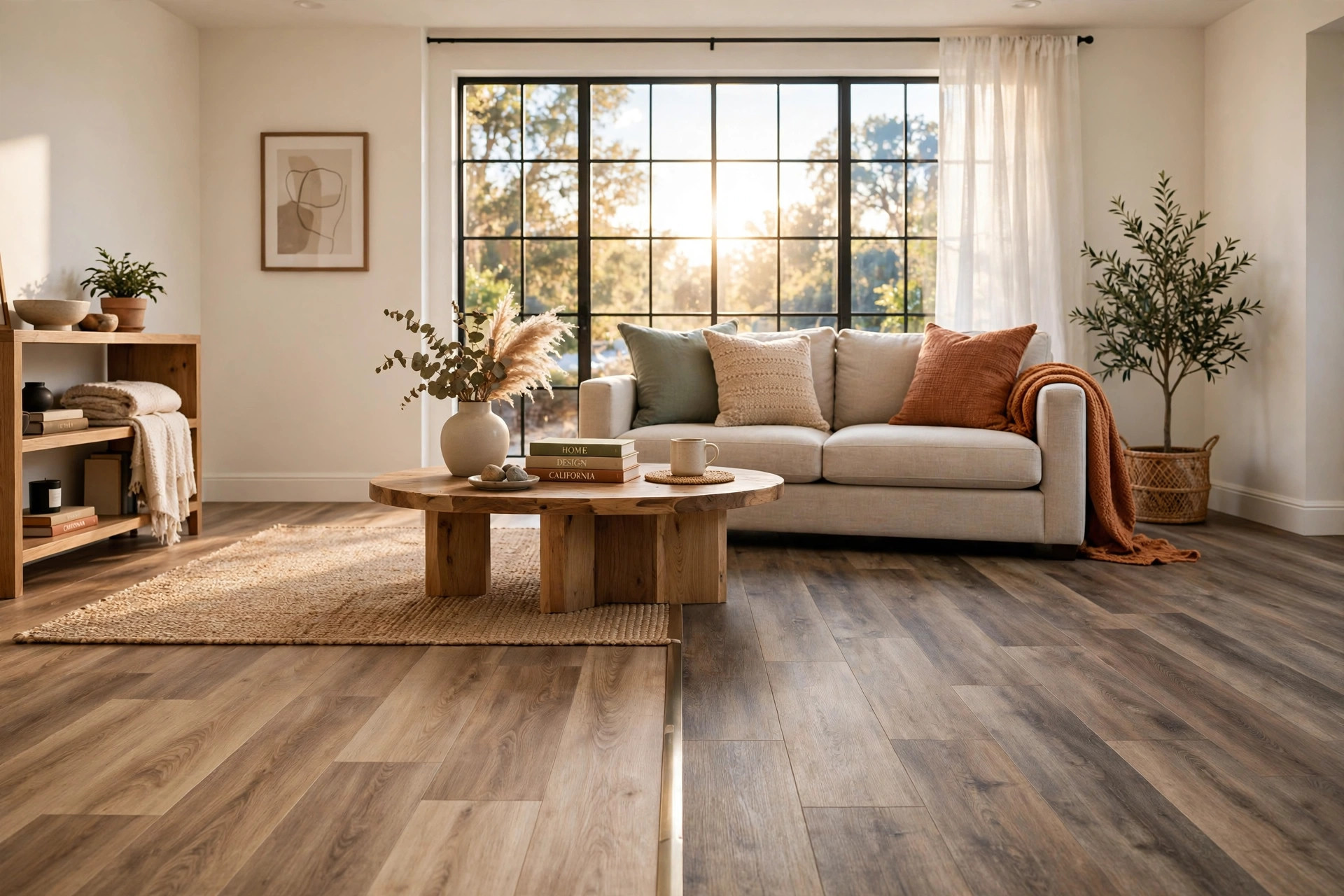

When families shop for new floors today, two names come up again and again: laminate and vinyl plank. Both are low in price. Both look like real wood. Both can be set down over a weekend. Yet they are built in very different ways, and the wrong pick can mean trouble with water, noise, or wear. This laminate vs vinyl plank flooring comparison walks through the facts, one by one, so you can pick the floor that suits your house, your budget, and your way of life.
Why This Comparison Matters
Flooring is not a small buy. Most homes need hundreds of square feet, and the cost adds up fast. A laminate vs vinyl plank flooring comparison matters because the two floors serve different needs. Laminate gives a hard, wood-like surface at a low price. Vinyl plank gives a soft, bendable surface that stands up to water. If your home has dogs, kids, or a wet basement, the choice between them will shape how your floors look five years from now. A poor pick leads to warped boards, lifted edges, and an early redo. A good pick gives years of quiet service with little care.
What Laminate Flooring Is: Laminate vs Vinyl Plank Flooring Comparison
Laminate flooring is made of four pressed layers. The top layer is a clear wear layer that fights scratches and fading. Below it sits a printed photo layer that copies the look of oak, maple, or stone. The core is high-density fiberboard, which is wood fiber pressed with glue into a hard sheet. The bottom layer keeps the board flat and stable. Laminate boards click together along their edges in a floating floor system. No glue or nails touch the subfloor.
Laminate feels firm underfoot, much like real wood. It does not give when you walk. The boards are rigid, so they bridge small dips in the subfloor with ease. Most laminate has a wear rating called AC, which runs from AC1 for light home use to AC5 for heavy store use. For a home, AC3 or AC4 is a sound pick. Major flooring makers such as Shaw and Mohawk publish full rating charts for their lines.
What Vinyl Plank Flooring Is
Vinyl plank flooring, often called LVP, is made of PVC, a form of plastic. The top layer is a clear wear layer measured in mils. A thicker wear layer, such as 20 mil, stands up better to pets and chairs. Below the wear layer sits a printed film that mimics wood grain. The core can be flexible PVC, wood-plastic composite (WPC), or stone-plastic composite (SPC). WPC cores feel softer and warmer. SPC cores are harder and thinner. Many planks click together like laminate, though some are glued down or laid loose.
Vinyl plank bends a little underfoot and feels softer than laminate. It also runs quieter. Dropped keys or dog nails make less noise on vinyl than on a hard laminate board.
Appearance: Which Looks More Real
In a careful laminate vs vinyl plank flooring comparison, looks are close but not the same. Laminate has a longer record of copying wood. Its photo layer is printed in high detail, and the hard surface takes an embossed texture that matches the grain lines. At a glance, good laminate can fool the eye.
Vinyl plank has improved fast. New printing methods give deep grain patterns, bevel edges, and mixed plank widths that copy real boards. Luxury vinyl plank lines now sit at the top of the field for realism, and retailers such as LL Flooring stock a wide range of them. If you want the most true-to-life wood look, high-end vinyl plank often wins, though top-tier laminate is not far behind.
Water Resistance: The Big Divide
Water is where the two floors split apart. Standard laminate has a fiberboard core. When water sits on it, the core swells. Swollen edges lift and stay lifted. Even a small spill that is left too long can ruin a board. There is waterproof laminate flooring for bathrooms usa on the market, and it holds up better, but most plain laminate is best kept out of wet rooms.
Vinyl plank is fully plastic. Water does not soak in. A waterproof flooring for basements reviews usa guide will tell you that vinyl plank is the usual pick below grade. Spills, pet bowls, and damp concrete cause it little harm. If your home has a wet kitchen, a busy bath, or a flood-prone basement, vinyl plank is the safer floor by far.
Durability and Wear
Both floors stand up to daily life, but they wear in different ways. Laminate has a hard top that fights scratches from chair legs and toys. Its wear layer does not dent with ease. However, once the top is cut through by a deep scratch, the pale core shows, and the mark is hard to hide.
Vinyl plank bends rather than chips. Heavy items can dent it, but the printed film hides small marks well. The wear layer thickness matters most: a 12-mil layer suits a quiet bedroom, while a 20-mil or thicker layer suits a hall with dogs. Check luxury vinyl plank flooring reviews 2026 for current lines with thick wear layers. For scratch-heavy homes, laminate has a slight edge; for dent-heavy homes, vinyl has the edge.
Comfort, Sound, and Feel
Walk barefoot on both, and the feel is plain. Laminate is hard and cool, like wood. It can be loud in a room with bare walls, and an underlay pad helps. Vinyl plank is softer, warmer, and quieter. Many vinyl planks come with an attached pad, which cuts sound and adds softness. In a second-floor bedroom or a condo, vinyl plank keeps noise down for the rooms below.
Installation: Which Is Easier
Both floors suit do-it-yourself work. Laminate click boards snap together fast, and the floor floats over the subfloor. You will need a saw, spacers, and a tapping block. The floor must sit level, and a thin underlay goes down first for sound and damp control. Full guides from makers and home centers walk through each step.
Vinyl plank is even more forgiving. Thin planks cut with a simple knife, so no saw is needed in many jobs. Click-lock vinyl floats like laminate. Glue-down vinyl takes more skill and a smooth subfloor. Loose-lay vinyl needs no lock at all and is the easiest of all. Step-by-step install guides from This Old House walk through each method in plain terms. For a first-time installer, vinyl plank is the simpler path.
Cost and Price
Price is close, and both beat real wood by a wide margin. Laminate runs about two to six dollars per square foot for the material. Vinyl plank runs about two to eight dollars per square foot, with luxury lines at the top. Installation by a pro adds two to five dollars per square foot for either floor.
Watch the full cost. Underlay for laminate adds to the bill. Thick wear-layer vinyl costs more up front. In the end, mid-range laminate and mid-range vinyl plank often land within a dollar of each other per square foot. Homeowners on a tight budget can find sound floors at the low end of both lines at big home centers like Home Depot and Lowe’s.
Care and Upkeep
Both floors ask for little. Sweep or vacuum each week. Mop with a damp mop and a mild cleaner made for the floor. Never flood either floor with water.
There is one key rule. Laminate must stay dry. Wipe spills at once, and never steam mop laminate, since steam drives water into the joints. Care guides from The Spruce give the same advice: damp, never wet. Vinyl plank can take a damp mop with ease and stands up to steam in many cases, though you should read the maker rules first. Neither floor needs wax or polish.
Lifespan and Warranties
Laminate floors in homes last about 15 to 25 years with good care. Vinyl plank lasts about 15 to 20 years, with top luxury lines reaching 25. Warranties often run 20 to 30 years for homes, and some lines carry lifetime home warranties. Read the fine print: many warranties drop if the floor is set in a wet room against the maker rules, which is one more reason to weigh the laminate vs vinyl plank flooring comparison with care before you buy.
Safety and Health
Both floors are safe when made to current standards. Look for low-VOC labels. Vinyl plank should carry a FloorScore mark, which tests for indoor air quality. Laminate should meet CARB rules for formaldehyde. Buy from known makers and read the box. During install, work in a room with fresh air, and keep dust from cutting out of the space.
Slip safety matters too. Textured vinyl plank often grips better when damp than smooth laminate. In a bath or entry, a textured surface with a high slip rating is the wise pick.
Environmental Impact
Laminate is made in large part from wood fiber, a natural raw stock, though glue and resins hold it together. Vinyl plank is made from PVC, a plastic that is hard to recycle. Neither floor breaks down in a dump. If green building is your aim, look for makers with take-back plans, and weigh a longer-lasting floor as the greener pick since it stays out of the waste stream.
Which Floor Fits Which Room
A room-by-room view makes the laminate vs vinyl plank flooring comparison easy to use.
– Living room and bedrooms: either floor works. Laminate feels more like wood. Vinyl is quieter. – Kitchen: vinyl plank is the safer pick near sinks and dishwashers. – Bathroom: vinyl plank. Keep laminate out unless it is rated for wet rooms. – Basement: vinyl plank, since concrete floors can wick damp. – Hall and entry: vinyl plank for wet boots, or laminate with a strong AC rating. – Rental units: vinyl plank, since it takes spills and rough use with less fuss.
FAQ
Is vinyl plank flooring better than laminate? It depends on the room. Vinyl plank is better where water is a risk, such as kitchens, baths, and basements. Laminate is a sound pick for dry rooms where you want a hard, wood-like feel at a low price.
Which floor lasts longer, laminate or vinyl plank? They are close. Both last 15 to 25 years in a home with good care. The wear layer rating matters more than the floor type.
Can laminate flooring go in a kitchen? It can in a dry kitchen if you wipe spills at once. Many pros still favor vinyl plank in kitchens because one leak from a dishwasher can swell laminate boards for good.
Is vinyl plank flooring waterproof? The planks themselves are waterproof. Water cannot soak through the surface. However, water can seep through seams to the subfloor if it pools for a long time, so wipe up floods fast.
Which is cheaper, laminate or vinyl plank flooring? Basic lines of both cost about the same, two to three dollars per square foot. Mid-range vinyl plank often costs a bit more than mid-range laminate, but the gap is small.
Does vinyl plank flooring increase home value? New floors of either type help a sale. Real wood still adds the most value, but clean, modern vinyl plank or laminate shows far better than worn carpet and can lift a home price. If you are weighing tile as well, makers like Daltile offer stone-look options that pair well with either floor.
A Short Final Word
There is no single winner in this laminate vs vinyl plank flooring comparison. Pick laminate for dry rooms where a hard, wood-like floor at a low price is the goal. Pick vinyl plank where water, pets, or noise are part of daily life. Measure your rooms, set your budget, and read maker guides on the sites below before you buy. The right floor is the one that fits your home as it is, not as you wish it were.
References
Daltile. (n.d.). Ceramic and porcelain tile. https://www.daltile.com LL Flooring. (n.d.). Hardwood, vinyl, and tile flooring. https://www.llflooring.com Lowe’s. (n.d.). Home improvement products. https://www.lowes.com Mohawk Flooring. (n.d.). Flooring products. https://www.mohawkflooring.com Shaw Floors. (n.d.). Flooring products. https://www.shawfloors.com The Home Depot. (n.d.). Home improvement products. https://www.homedepot.com The Spruce. (n.d.). Home and garden advice. https://www.thespruce.com This Old House. (n.d.). Home renovation guidance. https://www.thisoldhouse.com
Was this guide helpful?

About David Wilson
The My Garden US editorial team writes practical, in-depth home and garden guides for American homeowners — tested advice, no fluff.
You May Also Like
Concrete Look Tile for Modern Homes USA: A Plain Buyer’s Guide
October 5, 2026 0 views
The Cheapest Way to Redo Floors: A Practical USA Guide
June 16, 2026 0 views
Moisture Resistant Flooring for Coastal Homes: A Buyer’s Guide
April 25, 2026 0 views