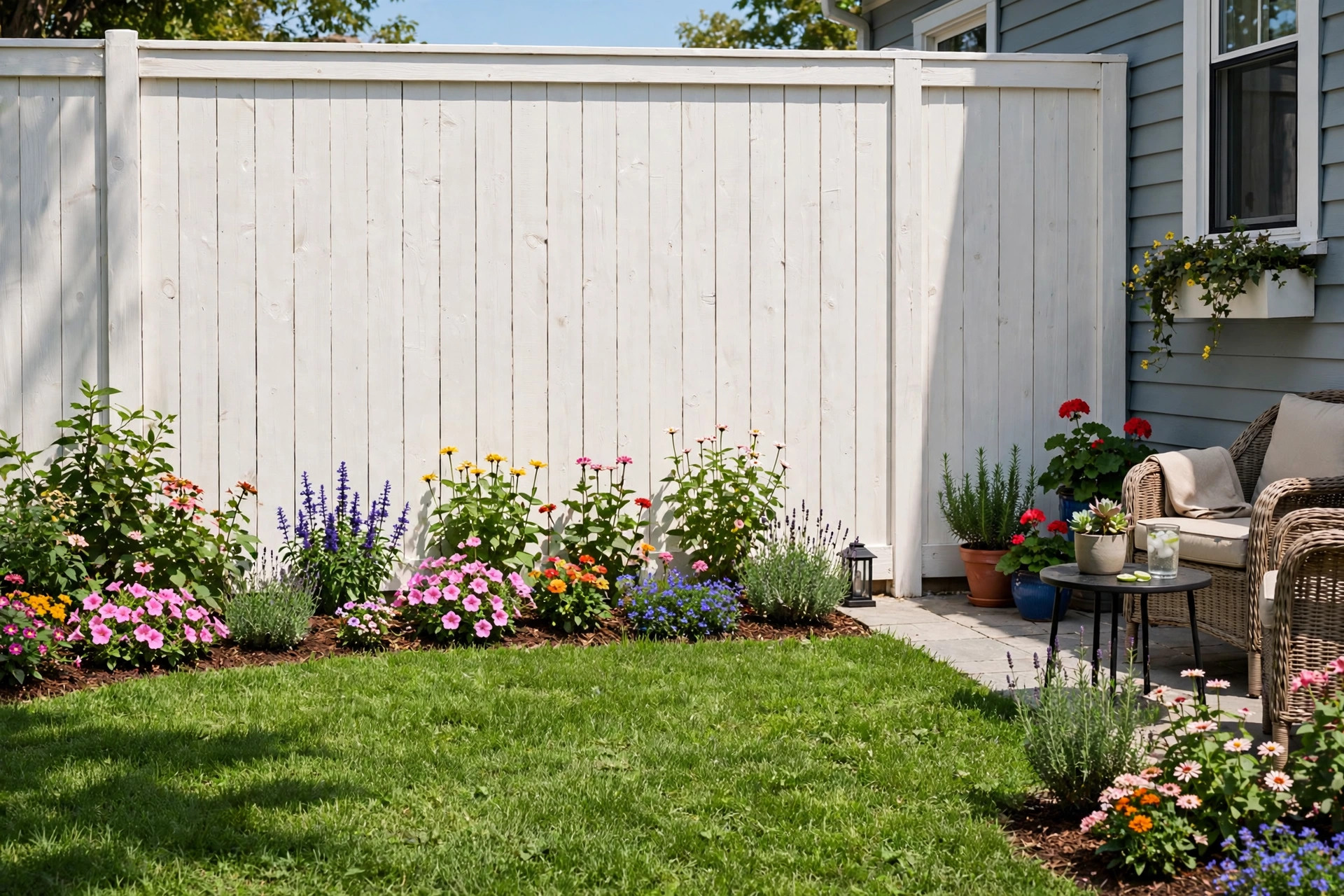

A small yard needs smart choices. The right fence paint colors for small yards in the USA can change how the whole space feels. Paint is cheap. Paint is fast. Paint can turn a dark, tight backyard into a place that feels open and calm. Many home owners do not know this. They paint their fence a dark brown or leave it gray and weathered. Then the yard feels smaller than it is. This guide explains how color works in a small yard.
Why Fence Color Matters in a Small Yard
A fence is the wall of your yard. In a small yard, it is close to your eyes. You see it from the kitchen window and from the patio. It fills your view. So its color sets the mood of the whole space.
Dark colors pull the fence closer. A black or dark brown fence feels like a wall. Light colors push the fence back. A soft white or pale gray fence feels far away. That makes the yard feel bigger than it is. This is not a trick. It is how the human eye works. Light colors reflect light. Dark colors absorb light. In a small yard, every bit of light helps.
Color also sets the mood. Green makes the fence blend with plants. White makes it feel clean and open. A bright color like red or yellow makes the fence the star of the yard. That can be fun in a big yard. In a small yard, it can feel too loud.
Many parts of the USA have small city lots. Town homes in Philadelphia. Bungalows in Chicago. Small ranch homes in Dallas. The fence is often less than forty feet from the house. At that distance, color matters a great deal. Good fence paint colors for small yards can add real value to the home too. A fresh, well-chosen fence tells buyers that the yard is cared for.
How to Choose Fence Paint for a Small Yard: Fence Paint Colors for Small Yards Usa
Start with the light. Look at your yard in the morning and in the afternoon. Note where the sun hits the fence. A fence in full sun can take a warmer shade. A fence in shade needs a light color. Dark paint on a shady fence looks gloomy.
Next, look at your plants. Green plants pop against a light fence. A white fence behind green leaves looks crisp and classic. A dark green fence behind green plants blends in. Decide which look you like.
Then look at your house. The fence and the house should get along. If your house is white, a white fence ties in well. If your house is brick, a deep green or soft black fence can look rich. Avoid a fence color that fights the house color. Hold a paint sample against the house trim and step back.
Think about the style you want. A cottage yard suits soft pastels and white. A modern yard suits charcoal or warm gray. A farmhouse yard suits a classic barn red accent on the gate.
Test before you buy a gallon. Paint a two-foot square test patch on the fence. Look at it over two days. Light changes through the day. A color that looks perfect at noon may look flat at dusk. Most paint stores in the USA, such as the brands shown at Behr, sell small sample jars.
One more point. Check your local rules. Some towns and home owner groups limit fence colors. Check before you paint. A short call to your local office saves trouble.
Best Fence Paint Colors for Small Yards
Here are proven shades that work well in small American yards.
Soft White
White is the top choice for making a small yard feel larger. It reflects the most light. It makes the fence seem to move back. A white fence with green plants is a timeless look. Pick an off-white rather than a pure bright white. Pure white can glare in full sun. Soft white with a touch of warmth looks gentle. Good fence paint colors for small yards often start here because white suits almost every home style.
Light Gray
Light gray is calm and modern. It does not glare like white can. It looks clean against both brick and siding. Warm light gray works with most plant colors. Cool light gray looks sharp with green lawns. Gray also hides dust better than white. If you want a tidy look with less washing, gray is a smart pick.
Sage Green
Sage is a soft, grayish green. It helps the fence melt into the garden. When the fence blends with the plants, the eye does not stop at the fence. The yard feels deeper. Sage works best in yards with lots of plants. It also pairs well with terra cotta pots and wooden furniture.
Deep Forest Green
This is a classic pick from old English gardens. Dark green reads almost black at a distance. It makes the fence fade away. Plants stand out in front of it. Bright flowers look stunning against deep green. In a small yard, this trick makes the plants the focus.
Charcoal Black
Black fences are a modern trend. Like deep green, black makes the fence recede. It frames the plants like a picture frame. It works best in yards that get good light. If you paint a fence black, choose a matte or flat finish. Flat black hides flaws in old wood.
Navy Blue
Navy is rich and calm. It gives a small yard a quiet, elegant feel. Navy looks great with white trim and silver-green plants. Navy works well on fences near patios. It makes an outdoor sitting area feel like a room.
Pale Blue
A light sky blue or powder blue lifts a shady yard. It feels fresh and open. Pale blue suits cottage and coastal styles. It looks good with white flowers and pale stone. Avoid blue that is too bright. A soft, dusty blue is best.
Warm Beige or Sand
Beige and sand tones are warm and natural. They suit wood fences well. They feel softer than white. Sand colors look good with brick homes. They also hide dirt well. In hot states like Texas or Arizona, light warm colors stay cooler to the touch and fade less in strong sun.
Soft Yellow or Butter
A pale buttery yellow brings cheer. It makes a small yard feel sunny even on gray days. It suits cottage gardens full of flowers. Keep it pale. A bright yellow can feel too loud in a small space.
Barn Red Accent
Red is bold. An all-red fence can shrink a small yard. But a small red section, like a gate or one panel, adds charm. It suits farmhouse and country styles. Use it as an accent, not as the main color.
Two-Tone Ideas
Some owners paint fence posts one color and panels another. White posts with light gray panels look crisp. Dark posts with lighter panels add depth. Two-tone paint jobs need more work, but they look finished and custom. For tips on sheen and tools, the guides at This Old House are useful.
Paint or Stain: Which Is Better for a Fence
You have two main options. Exterior paint or exterior stain.
Paint sits on top of the wood. It gives full color coverage and hides old, gray wood. It lasts five to ten years and comes in any color. But paint can peel. Once it peels, you must scrape and repaint. Paint also costs more per gallon.
Stain soaks into the wood and shows the grain. Solid-color stain gives strong color like paint but rarely peels. Semi-transparent stain lets the grain show through. Stain needs recoating every three to five years, but recoating is easy. You clean the fence and apply a new coat. No scraping.
For small yards, either works. If your fence is old and weathered, paint or solid stain gives a fresh start. If your fence is new cedar or redwood, a semi-transparent stain keeps the natural beauty. Many home owners read the buying guides at The Home Depot and Lowe’s to compare brands before they choose.
Cost of Painting a Fence
Fence painting is one of the cheapest yard upgrades. Here are typical USA price ranges.
Paint costs about 30 to 60 dollars per gallon for good exterior paint. A gallon covers about 250 to 350 square feet of smooth wood. Rough wood drinks more paint. A small yard fence, say 100 feet long and 6 feet tall, is 600 square feet per side. That is two to four gallons per side.
Brushes, rollers, and tape cost about 30 to 60 dollars. A paint sprayer rents for about 75 to 100 dollars per day and is much faster on a long fence. Hiring a pro costs 1 to 3 dollars per square foot, so a 600 square foot fence might cost 600 to 1800 dollars with labor. The cost guides at Bob Vila can help you judge a fair price. A power washer rental costs about 50 dollars per day; washing the fence first helps paint stick.
Care and Upkeep of a Painted Fence
A painted fence needs light care to stay fresh.
Wash it once a year. A garden hose and a soft brush remove dust and pollen. For mildew, mix one part bleach with three parts water, scrub gently, and rinse well.
Check for chips each spring. Touch up small spots right away. A small chip lets water into the wood. Touch-up takes minutes and saves a full repaint.
Trim plants back from the fence. Vines and bushes trap water against the paint. Wet paint fails faster. Keep six inches of air space between plants and the fence.
Repaint when the color fades or peels. Light colors may need a fresh coat every five to seven years in strong sun. Dark colors fade faster in the sun.
Fix drainage near the fence. Soil piled against the boards rots the bottom. Keep soil and mulch a few inches below the bottom board. Good drainage adds years to the paint job.
Safety Tips for Fence Painting
Painting a fence is simple work, but safety still matters.
Wear a mask when sanding or spraying. Paint dust and spray mist harm the lungs. Wear gloves and eye protection too.
Work in mild weather. Paint between 50 and 85 degrees Fahrenheit. Do not paint in direct hot sun. The paint dries too fast and cracks.
Keep kids and pets away from wet paint. Wet paint is toxic if eaten. Let the paint dry fully before pets roam the yard.
Ladder safety counts. Most fences are six feet tall. You may need a step ladder for the top. Keep the ladder on flat ground. Have someone hold it if you can.
Read the paint label. Homes built before 1978 may have lead paint under old coats. If you think lead is present, do not sand it dry. Get a test kit first. The safety pages at HGTV and The Spruce explain lead-safe steps.
Dispose of paint properly. Do not pour paint down drains. Let leftover latex paint dry out, then put it in the trash. Take oil paint to a local hazardous waste site.
Frequently Asked Questions
What is the best fence color to make a small yard look bigger?
Soft white and light gray are the best choices. They reflect light and make the fence seem farther away. Light shades beat dark shades for a sense of space almost every time. Deep green and charcoal also work by making the fence fade into the background.
Should I paint my fence the same color as my house trim?
It is a safe and tidy choice. Matching the trim ties the yard and house together. But it is not a rule. Try white trim with a sage fence, or gray trim with a white fence.
How long does fence paint last?
Good exterior paint lasts five to ten years on a fence. Sun, rain, and snow wear it down. Fences in harsh climates need paint sooner. Solid stain lasts three to five years but is easier to recoat.
Can I paint a fence in winter?
It is risky in most of the USA. Paint needs temperatures above 50 degrees to cure well. Cold paint does not stick. It cracks and peels. If you live in a warm state like Florida, winter painting can work. Everywhere else, wait for spring or fall.
Is it cheaper to paint or replace a fence?
Painting is far cheaper. A new wood fence costs thousands of dollars. Painting costs a few hundred at most. If the fence is solid but ugly, paint it. Replace the fence only if boards are rotten or posts lean.
Do I need to prime a fence before painting?
Yes, if the wood is bare, weathered, or has old peeling paint. Primer seals the wood and helps paint grip. Many modern exterior paints claim to include primer. They work on surfaces in fair shape. For rough or bare wood, a separate primer coat gives a longer-lasting job. Color advice from Benjamin Moore and Sherwin-Williams often stresses good prep for exterior wood.
A Short Final Word
A small yard is not a small problem. It is a chance to make smart, simple choices. The right fence paint colors for small yards can open up the space and lift your mood every time you step outside. Start with light. Test your color. Prep the wood well. The work takes a weekend. The result lasts for years.
If you are planning other outdoor paint projects, a porch and patio paint buying guide can help you pick finishes that match your fence. If your fence needs more than paint, check local fence staining service prices to compare with a DIY job. And if the front of the house needs a refresh too, read up on the best paint for front doors to tie the whole look together.
References
Behr. (n.d.). Paints, primers, and stains. https://www.behr.com Benjamin Moore. (n.d.). Paints and stains. https://www.benjaminmoore.com Bob Vila. (n.d.). Home improvement advice. https://www.bobvila.com HGTV. (n.d.). Home and garden ideas. https://www.hgtv.com Lowe’s. (n.d.). Home improvement products. https://www.lowes.com Sherwin-Williams. (n.d.). Paints and coatings. https://www.sherwin-williams.com The Home Depot. (n.d.). Home improvement products. https://www.homedepot.com The Spruce. (n.d.). Home and garden advice. https://www.thespruce.com This Old House. (n.d.). Home renovation guidance. https://www.thisoldhouse.com
Was this guide helpful?

About Robert Taylor
The My Garden US editorial team writes practical, in-depth home and garden guides for American homeowners — tested advice, no fluff.
You May Also Like

The Best Dark Home Theater Wall Paint Colors in the USA
March 3, 2026 0 views
Epoxy Garage Floor Cost Per Square Foot: What Every Homeowner Should Know
May 15, 2026 0 views
Basement Floor Epoxy Kit for Sale USA: A Plain Buyer’s Guide
August 9, 2026 0 views