
Introduction
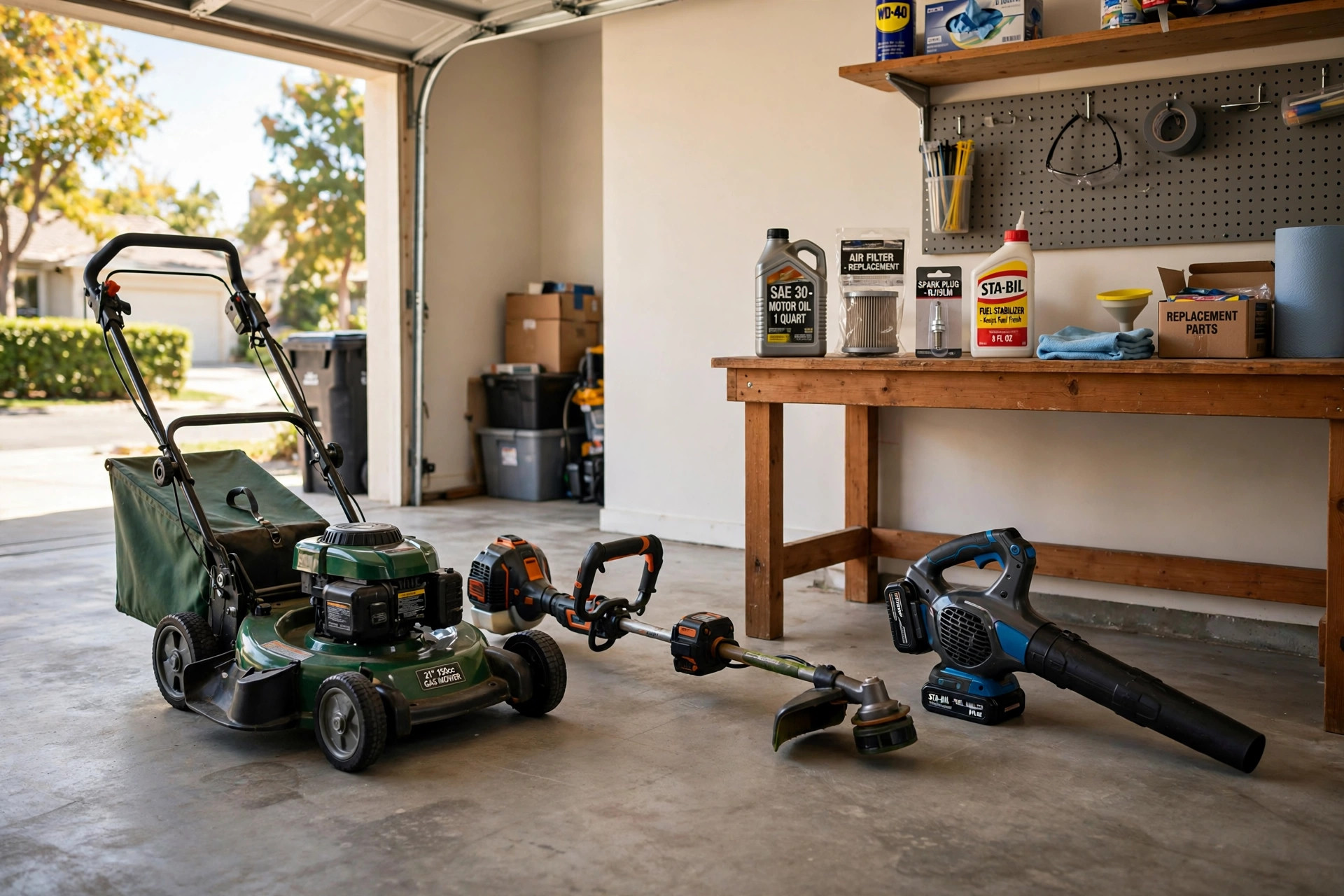
Most homeowners spend good money on lawn tools. A walk-behind mower, a string trimmer, a leaf blower, and sometimes a riding mower can cost well over a thousand dollars together. Yet many owners skip the simple care that keeps these machines running. A lawn care equipment maintenance checklist gives you a clear plan. It covers daily, monthly, and seasonal tasks for every common tool in the yard. Follow it, and your equipment will start on the first pull, cut cleanly, and last for years.
Small engines are honest machines. They fail for simple reasons. Old fuel turns to varnish. Dirty oil wears the piston. A dull blade tears grass instead of cutting it. A clogged air filter starves the engine of air. Each of these problems takes only minutes to prevent. A checklist turns prevention into a habit. Print this guide and keep it in the garage. Check off each task as you finish it.
Why a Maintenance Checklist Matters: Lawn Care Equipment Maintenance Checklist
A mower that sits unused through winter often refuses to start in spring. The cause is almost always fuel. Gasoline begins to break down after thirty days. It leaves a sticky residue inside the carburetor. That residue blocks the tiny passages that feed fuel to the engine. A maintenance checklist reminds you to add fuel stabilizer before storage. That one step prevents the most common spring repair.
Checklists also save money. A new mower engine can cost half the price of a new mower. An oil change costs a few dollars and takes fifteen minutes. A sharp blade is free to maintain if you own a file. Homeowners who follow a plan spend far less on repairs. They also spend less on replacement machines. A well kept mower can serve a family for ten to fifteen years.
There is also the matter of the lawn itself. A dull blade rips grass blades instead of slicing them. Torn grass turns brown at the tips. It also opens the door to disease. A clean air filter and fresh spark plug keep the engine running at full power. Full power means a steady blade speed and an even cut. The result is a greener, thicker lawn.
How to Use This Checklist
The checklist below is split into three time frames. Before each use. Once a month during the cutting season. Once at the end of the season. Mark the tasks on a calendar or a paper sheet in the garage. The whole monthly routine takes less than an hour for a typical set of tools.
Before Each Use
Walk around each machine and look it over. Check the fuel level and fill the tank outdoors, never in the garage. Check the oil level on four-cycle engines. The dipstick should show oil between the marks. Look at the blade area for stuck grass or debris. Clear it with a stick, never with your hands. Test that all guards and safety switches are in place. Start the engine and listen. A steady hum is normal. Knocking, squealing, or heavy smoke is not.
Once a Month
Change or clean the air filter as the maker directs. Inspect the spark plug for cracks or heavy deposits. Clean the underside of the mower deck. Packed grass under the deck blocks air flow and lowers cutting quality. Check tire pressure on riding mowers. Tighten loose bolts and handles. Look at belts for cracks or fraying. Oil pivot points and cables that move.
End of the Season
Run the engine until the fuel tank and carburetor are empty, or add stabilizer to fresh fuel. Change the oil so dirty oil does not sit in the engine all winter. Remove and inspect the spark plug. Clean or replace it. Sharpen the blades or take them to a shop. Clean the whole machine with a dry brush or cloth. Store batteries for cordless tools at about half charge in a cool, dry place. Cover machines with a breathable cover.
Lawn Mower Maintenance
The mower is the heart of any lawn care set. Walk-behind mowers and riding mowers share the same basic needs. The engine needs clean oil, clean air, and fresh fuel. The cutting system needs a sharp blade and a clear path under the deck. The care guides published by Toro list these same steps for their walk-behind and riding models.
Engine Oil and Filters
Check oil before every mow. Change it at least once per season, or after fifty hours of use. Warm the engine for two minutes first. Warm oil drains faster and carries dirt with it. Tip the mower toward the drain side with the air filter facing up. Catch the old oil in a pan and take it to a recycling point. Refill with the oil grade named in the owner manual. Too thick or too thin oil can harm the engine. Engine makers such as Briggs & Stratton publish oil charts for their small engines, which helps you pick the right grade for your climate. Clean foam air filters with warm soapy water, dry them fully, and add a light coat of oil if the manual calls for it. Replace paper filters when they look dirty.
Blades
A sharp blade cuts grass cleanly. A dull blade tears it. Sharpen blades at least twice per season. Remove the spark plug wire first so the engine cannot start by accident. Tip the mower on its side with the air filter facing up. Mark the blade position with chalk before you remove the bolt. File the cutting edge at the original angle until it is smooth. Balance the blade on a nail through the center hole. If one side dips, file a little more off that side. An unbalanced blade shakes the engine. If the blade is bent, cracked, or worn thin, replace it. Many owners search for a lawn mower blade sharpening service near me once a year and let a shop handle the job.
Belts and Decks
Riding mowers drive the blades with belts. Inspect belts each month for cracks, glazing, or missing chunks. A belt that slips will leave uncut strips in the grass. Keep the belt area free of packed clippings. For a full repair walkthrough, see this riding mower deck belt replacement guide. Owner manuals from John Deere include belt routing diagrams for riding mowers, which help when you put a new belt on. Clean under the deck after every mow if the grass is wet. A plastic scraper works well. Avoid washing the deck with a strong water jet near seals and bearings. Check tire pressure monthly. Uneven pressure tilts the deck and gives an uneven cut.
String Trimmers, Edgers, and Blowers
Handheld tools need less care than mowers, but they still need a routine. For two-cycle engines, mix fuel and oil at the exact ratio in the manual. Old mixed fuel goes bad faster than plain gasoline. Make a fresh batch every thirty days. For four-cycle trimmers, check oil like a mower. Inspect the trimmer head for cracks. Replace worn cutting line before it gets too short. Short line forces the engine to work harder. Clean cooling fins and air vents with a soft brush. For edgers, keep the blade guard tight and the blade sharp. If you are choosing between power types, this cordless edger vs gas edger comparison guide explains the trade-offs in weight, power, and upkeep.
Leaf blowers collect dust in their air filters. Clean them often during leaf season. Check the blower tube for cracks that leak air. A cracked tube lowers performance and raises noise. Tighten any loose screws on the housing. Vibration loosens fasteners over time.
Battery-Powered Equipment Care
Battery tools have grown popular. They need no oil, no fuel mix, and no spark plugs. They still need care. Keep battery contacts clean and dry. Wipe them with a dry cloth. Charge batteries in a dry place at room temperature. Never leave a battery on the charger for weeks. Store batteries at about half charge during the off season. Full storage and empty storage both shorten battery life. Keep blades and trimmer heads as sharp and clean as on gas tools. A sharp blade draws less power from the battery. Check that vents on the motor housing are clear of dust.
What to Look For When You Buy Maintenance Supplies
Buy oil that matches your engine. The owner manual names the grade. Common grades are SAE 30 for warm weather and 10W-30 for mixed climates. Do not use automotive oil with additives unless the manual allows it. Buy the air filter that fits your exact model. Filters look alike but differ in size. Write the model number on a card and take it to the store. Buy spark plugs by the part number in the manual. A wrong plug can run too hot or too cold.
For blades, buy the blade made for your mower deck. Deck width and blade length must match. Buy a fuel stabilizer from a known brand and add it at the ratio on the bottle. Keep a flat file, a blade balancer, a spark plug wrench, and an oil drain pan in the garage. These one-time tools pay for themselves in the first season.
Cost and Price of Lawn Equipment Maintenance
A season of basic maintenance costs little. A bottle of oil costs a few dollars. A spark plug costs a few dollars. An air filter costs a few dollars. Fuel stabilizer costs a few dollars. A sharpening file is a one-time purchase. Together, the supplies for one mower for one season usually come to less than forty dollars. Riding mower parts cost more. Belts, blades, and filters for a riding mower can run fifty to one hundred dollars per season.
Professional service is the other option. A basic mower tune-up at a shop costs between seventy-five and one hundred fifty dollars in most parts of the country. A full riding mower service can cost two hundred dollars or more. Many owners do the simple tasks themselves and let a shop handle blade balancing, belt replacement, or engine repair. The checklist still helps. It tells you what to ask for when you take the machine in. It also shows the shop that you keep records, which leads to better advice.
Neglect costs more than care. A seized engine from old oil can mean a new mower. A carburetor rebuild costs more than a bottle of stabilizer. Set aside one hour per month. That hour protects an investment of many hundreds of dollars.
Safety Rules to Follow
Lawn equipment can hurt you if you rush. Read the owner manual for each machine. Keep the manual in a dry spot in the garage. Disconnect the spark plug wire or remove the battery before you touch blades or belts. Let the engine cool before you refuel. Fuel spilled on a hot muffler can catch fire. Wear gloves when you handle blades. Wear eye protection when you sharpen or grind. Wear hearing protection with loud gas tools. Keep children and pets away from the work area. Never bypass a safety switch. Those switches exist because someone was hurt without them. Store fuel in approved containers, away from the house, and never near a furnace or water heater.
Frequently Asked Questions
How often should I change the oil in my lawn mower?
Change it at least once per cutting season. If you mow a large yard every week, change it after fifty hours of use. Check the level before each mow. Low oil kills engines faster than almost anything else.
Can I leave fuel in the mower over winter?
It is better not to. Gasoline breaks down in about thirty days. If you must store fuel, add a stabilizer to fresh fuel and run the engine for five minutes so the treated fuel reaches the carburetor. The safest method is to run the tank dry at the end of the season.
Why does my mower vibrate so much?
Heavy vibration often means a blade problem. The blade may be dull, bent, or unbalanced. A bent crankshaft from hitting a rock can also cause shaking. Stop the engine, disconnect the spark plug wire, and inspect the blade. Replace a bent blade. Never straighten it and reuse it.
How do I know when trimmer line needs replacing?
The cutting swath gets narrow and the engine strains. Check the line before each use. Bump-feed heads release line with a tap on the ground. Keep the line at the length the maker specifies. Line that is too long can damage the engine.
Should I sharpen mower blades myself or hire a shop?
Both work. A flat file and a steady hand give good results for a careful owner. A shop grinds a clean edge and balances the blade. If the blade is badly nicked from rocks, a shop is the safer choice.
Do battery mowers need winter care?
Yes, but it is simple. Clean the deck and housing. Charge the battery to about half. Store the battery indoors in a cool, dry place. Do not store it on concrete in an unheated garage all winter. Check the charge once mid-winter.
A Short Final Word
A lawn care equipment maintenance checklist is not a burden. It is a habit that pays you back. Fifteen minutes before each mow. One hour each month. One afternoon at the end of the season. That is the whole price. In return, your machines start fast, cut well, and serve for many years. Tape this checklist to the garage wall. Check off each task. Your lawn, your wallet, and your Saturday mornings will thank you.
References
Briggs & Stratton. (n.d.). Small engine maintenance and care. https://www.briggsandstratton.com Deere & Company. (n.d.). Lawn tractor and mower maintenance. https://www.deere.com Toro. (n.d.). Lawn mower and yard equipment care. https://www.toro.com
Was this guide helpful?

About Jennifer Lee
The My Garden US editorial team writes practical, in-depth home and garden guides for American homeowners — tested advice, no fluff.
You May Also Like
Best Wheelbarrow for Yard Work Reviews
June 7, 2026 0 views
Riding Mower Tires for Sale Near Me: A Plain Guide to Fit, Types, and Fair Prices
May 22, 2026 0 views
Lawn Sweeper for Pine Needles Reviews: What Real Owners Say
April 17, 2026 0 views