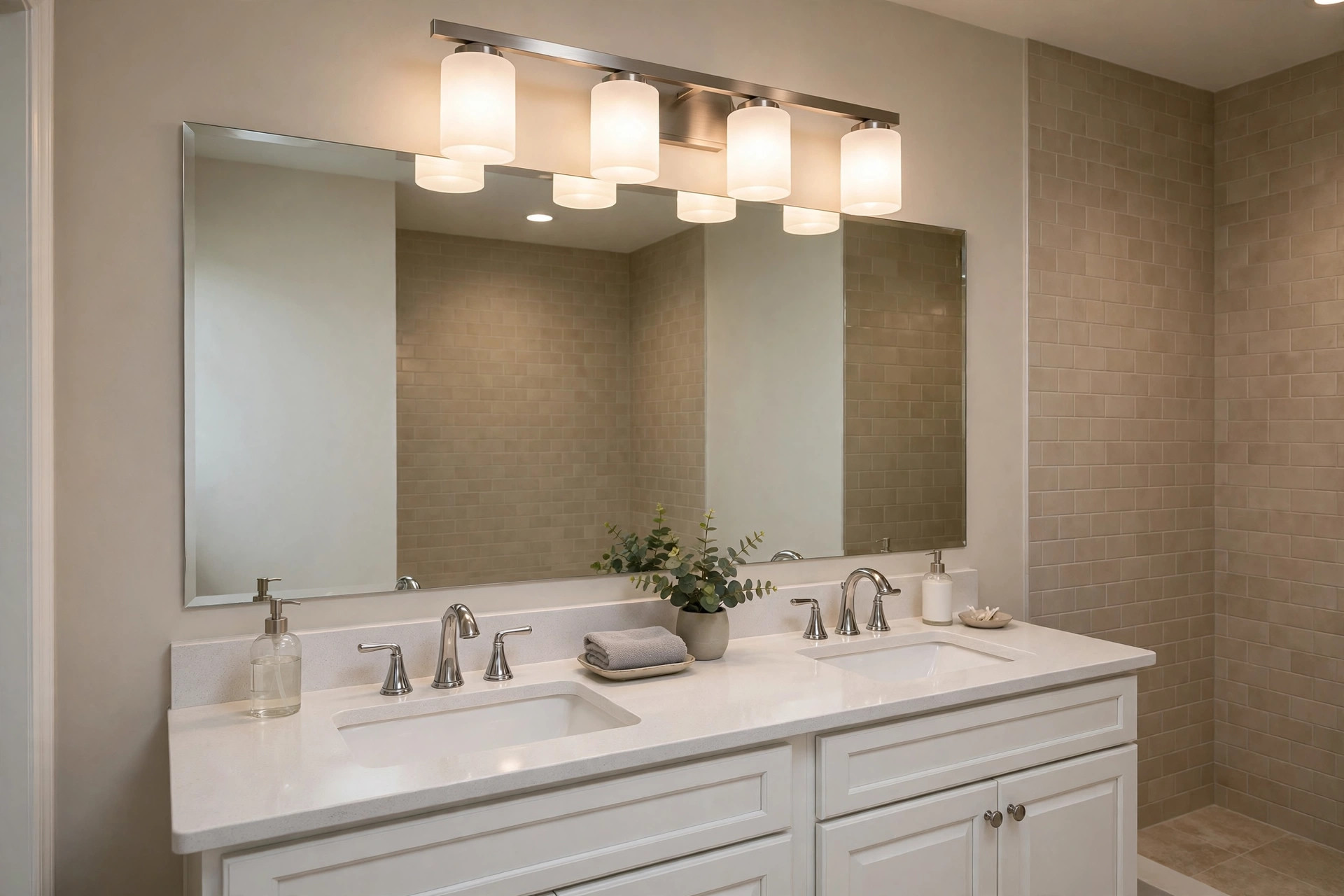

A good bathroom begins at the mirror. This vanity light bars american homes guide explains how these fixtures work, why they matter, and how to pick the right one for a bath in any part of the country. A vanity light bar is a long, low-profile fixture mounted above or beside a bathroom mirror. It holds two to five lamp heads in a row and spreads light across the face and sink. It is the single most useful light in most bathrooms.
Bathrooms are small rooms with hard surfaces. Tile, glass, and chrome bounce light in sharp ways. A lone ceiling light throws shadows under the chin and brow. That makes shaving, makeup, and contact lens work harder than it needs to be. A vanity light bar fixes the problem at its source. It puts soft, even light where the face is. In this guide, we cover the basics of design, sizing, bulb choice, energy use, installation, cost, care, and safety. Whether you own a ranch house in Texas, a colonial in New Jersey, or a condo in Chicago, the same rules apply.
Why Vanity Light Bars Matter
Face-level light is the heart of bathroom design. When light comes from above the head alone, the brow casts a shadow over the eyes. The nose casts a shadow on the mouth. These shadows hide detail. A vanity light bar sits at or near eye level, usually above the mirror or flanking it on both sides. Light arrives from the front. Features become clear. Colors read true.
The fixture also shapes the room. Bathrooms are the first room many people see each morning and the last each night. Harsh light feels cold and rushed. Warm, even light feels calm. A well-chosen bar warms the mirror wall and softens the whole space. Real estate agents note that updated bathrooms rank high on buyer wish lists. Good lighting is a large part of that appeal.
There is also a health angle. Poor light at the mirror leads to eye strain. People lean in close to see detail. That posture strains the neck and back. Bright, even light lets a person stand back at a natural distance. It is a small comfort, but it repeats every day.
How to Choose the Right Vanity Light Bar: Vanity Light Bars American Homes Guide
Match the Light to the Mirror
Start with the mirror width. As a rule, the light bar should be about one third to one half the width of the mirror when mounted above it. A 36-inch mirror pairs well with a bar 18 to 24 inches wide. A 48-inch double sink mirror can take a 30 to 36-inch bar. Too short, and the ends of the face go dim. Too long, and the bar crowds the wall and throws light past the mirror onto the paint.
Side-mounted bars work well with tall mirrors. Two short bars, one on each side of the mirror, give the most even face light of all. Each bar should sit about 60 to 65 inches from the floor. This puts the lamps at face height for most adults.
Pick the Finish
Chrome is the most common finish in American baths. It is bright, easy to clean, and matches most faucets. Brushed nickel is softer and hides water spots better. Matte black suits modern baths. Oil-rubbed bronze fits traditional rooms. The finish should echo the faucet and cabinet hardware. Mixed metals can work, but they need care.
Glass shades matter too. Frosted glass softens the light and hides the bulb. Clear glass shows more sparkle but can glare. Alabaster-look shades give a classic feel. For small baths, a simple frosted bar keeps the look clean.
Decide on Bulb Type
LED is the clear choice today. An integrated LED vanity bar uses far less power than old incandescent bars and lasts for years. Many carry the ENERGY STAR label, which means they meet set rules for efficiency and quality. Look for a color temperature between 2700K and 3000K for a warm, flattering light. This range mimics the soft light of older bulbs.
Some bars take replaceable bulbs. These give more control. You can swap a bulb for a brighter or warmer one later. Screw-base LED bulbs made for bath use are easy to find at major home stores like The Home Depot or Lowe’s. Either path works. The key is warm color and high color rendering.
Check the Color Rendering Index
Color rendering index, or CRI, measures how true colors look under a lamp. A CRI of 90 or above is best for a bathroom. Under low-CRI light, skin looks gray and makeup shades shift. With high CRI, what you see in the mirror matches what others see in daylight. This matters most at the mirror, which is why bath bars deserve better bulbs than a closet or hall.
Types and Styles of Vanity Light Bars
Above-Mirror Bars
This is the classic layout. The bar mounts on the wall above the mirror, centered on the sink. It is simple to wire because most baths already have a box in that spot. It works in small baths where side space is tight. The light washes down over the mirror and face. For best results, keep the bottom of the bar about 75 to 80 inches from the floor.
Side-Mount Bars
Two vertical bars flank the mirror. This layout gives the most shadow-free face light. It suits wide mirrors and double sinks. It needs clear wall space on both sides, so it fits best in larger baths. Many design guides, such as those at The Spruce, rank side-mount pairs as the top choice for makeup and grooming.
Multi-Light Hollywood Style
The classic strip with exposed round bulbs brings a dressing-room feel. Modern LED versions keep the look but cut the heat and power draw. This style works in vintage and glam baths. Frosted bulbs are kinder to the eyes than clear ones.
Backlit and Floating Bars
Newer designs hide the light source behind a slim panel. Light glows from the edges or from behind the bar itself. The effect is soft and modern. These bars suit minimalist baths. They cost more, but they look clean and high-end.
For shoppers comparing styles and prices, lighting showrooms such as Lumens and Lamps Plus carry wide ranges of bath bars with detailed specs. Reading spec sheets there helps you learn what terms like lumen output and beam spread mean before you buy.
Sizing and Placement Rules
Good placement follows a few simple rules used by electricians across the country.
– Mount an above-mirror bar so its center is about 78 inches from the floor. – Keep side-mount bars centered at eye level, roughly 60 to 66 inches from the floor. – Leave at least 3 inches between the top of the mirror and the bottom of an above-mirror bar. – For a double sink, use either one wide bar or two separate bars, one per sink. – Do not mount a bar where it shines into the eyes of a person lying in a nearby tub.
In a typical American bath with an 8-foot ceiling, these numbers land well. In baths with taller ceilings, a longer drop or a taller mirror keeps the proportions right.
Cost and Price Ranges
Vanity light bars span a wide price range. Basic two-light bars in chrome start around 30 to 50 dollars at big-box stores. Mid-range three- and four-light bars in brushed nickel or matte black run 70 to 150 dollars. Designer bars with backlit panels or premium finishes run 150 to 400 dollars or more.
Installation adds cost if you hire an electrician. A simple swap of an old bar for a new one in the same spot often takes under an hour. That may cost 100 to 200 dollars in labor, depending on the region. Moving the wiring or adding a new box costs more. In older homes, the electrician may need to bring the bath circuit up to current code, which adds to the bill.
LED bars cost more up front than bulb-type bars but save money over time. A quality LED bar can run for 15 to 25 years of normal bath use. Bulb-type bars need new bulbs every few years. Over a decade, the LED bar often wins on total cost.
Energy Use and Efficiency
Bathroom lights run many times a day in short bursts. That pattern still adds up. An old four-bulb incandescent bar can draw 240 watts. An LED bar with the same brightness may draw 20 to 40 watts. The U.S. Department of Energy notes that LED lighting uses at least 75 percent less energy than incandescent lighting and lasts far longer.
To shop smart, look at lumens, not watts. Lumens measure brightness. A bath bar should put out roughly 500 to 900 lumens per sink for task light at the mirror. The Lighting Facts label on the box lists lumens, watts, color temperature, and estimated yearly cost. Philips and other major makers print these labels on their LED bath fixtures, which makes side-by-side shopping easier.
Dimmers add more savings and comfort. A dimmer lets you lower the light for a late-night bath or a sleepy morning. Make sure the dimmer matches the bulb type. LED bars need LED-rated dimmers. A mismatched dimmer can buzz or flicker.
If you are updating other rooms too, our led recessed lights installation guide usa covers ceiling lights, and the dining room chandeliers buying guide usa helps with statement fixtures.
Care and Upkeep
Vanity light bars need little care, but a small routine keeps them bright.
– Dust the fixture monthly with a dry microfiber cloth. Bath steam leaves a film on glass shades. – Wipe chrome and nickel with a damp cloth, then dry. Avoid harsh cleaners that strip finishes. – Clean frosted glass shades with mild soap and water. Remove shades only when the power is off. – Replace burned-out bulbs at once. A missing bulb makes the light uneven. – Check integrated LED bars once a year for loose mounting screws. Steam can loosen hardware over time.
In hard-water areas, wipe the fixture dry after steamy showers. Mineral film dulls both metal and glass. A soft cloth takes seconds and keeps the bar looking new.
Safety in the Bathroom
Bathrooms mix water and electricity. That mix demands respect. Always turn off the breaker, not just the wall switch, before touching a fixture. Use a voltage tester to confirm the power is off.
Choose fixtures rated for damp locations. Every bath bar sold for bathroom use should carry a damp-location or wet-location rating from a testing lab such as UL or ETL. The rating is printed on the box and on a sticker inside the fixture. In a shower or above a tub, only wet-rated fixtures belong.
Keep all electrical parts dry during cleaning. Never spray cleaner directly onto a lit fixture. Let bulbs cool before wiping them. If a fixture feels hot enough to burn skin, the bulbs may be too strong for the shade. Switch to lower-wattage LED bulbs.
Homes built before the 1980s may have wiring that needs review. An electrician can check that the bath has proper grounding and GFCI protection on outlets near the sink. The light bar itself does not need GFCI, but the circuit should meet current code.
Frequently Asked Questions
How wide should a vanity light bar be?
Aim for one third to one half the width of the mirror for an above-mirror bar. For a 24-inch mirror, an 18-inch bar works well. For a 36-inch mirror, choose 24 inches. Side-mount bars should run about two thirds the height of the mirror.
What color temperature is best for a bathroom vanity?
Between 2700K and 3000K is best for most American homes. This warm white flatters skin and feels welcoming. Daylight bulbs at 5000K can look harsh and clinical in a bath. If you apply makeup for office lighting, 3000K to 3500K is a fair middle ground.
Can I install a vanity light bar myself?
If you are only swapping an old bar for a new one in the same spot, many handy homeowners do it themselves. Turn off the breaker, test for voltage, and follow the wiring diagram. If you must run new wire, move the box, or the old wiring looks damaged, hire a licensed electrician.
How many lumens do I need at the bathroom mirror?
Plan for about 500 to 900 lumens per sink for task lighting at the mirror. The room also needs general light, which often comes from a ceiling fixture. Together, they should give the bath a bright but comfortable feel with no dark corners.
Do LED vanity bars work with dimmers?
Many do, but the dimmer must be rated for LED loads. Check the fixture box for a list of approved dimmers. An old dimmer made for incandescent bulbs may cause flicker, buzzing, or a limited dimming range with LED bars.
Where should I buy a vanity light bar?
Major home centers, lighting showrooms, and online stores all carry them. Lowe’s and The Home Depot stock common sizes for same-day pickup. Specialty sites like Lumens and Lamps Plus offer wider style ranges and detailed specs. If wall sconces interest you too, see our indoor wall sconces where to buy usa guide.
A Short Final Word
A vanity light bar is a small fixture with a large daily impact. It sets the tone of the bathroom, makes grooming easier, and trims energy use when you choose LED. Measure the mirror, pick a warm high-CRI light, mount it at the right height, and keep it clean. Those four steps cover most of what this vanity light bars american homes guide has to teach. The result is a bath that looks better, works better, and greets you well every morning.
References
ENERGY STAR. (n.d.). Energy efficient products. https://www.energystar.gov Lamps Plus. (n.d.). Lighting and home decor. https://www.lampsplus.com Lowe’s. (n.d.). Home improvement products. https://www.lowes.com Lumens. (n.d.). Lighting and ceiling fans. https://www.lumens.com Philips. (n.d.). Lighting products. https://www.philips.com The Home Depot. (n.d.). Home improvement products. https://www.homedepot.com The Spruce. (n.d.). Home and garden advice. https://www.thespruce.com U.S. Department of Energy. (n.d.). Energy efficiency and renewable energy. https://www.energy.gov
Was this guide helpful?

About Michael Thompson
The My Garden US editorial team writes practical, in-depth home and garden guides for American homeowners — tested advice, no fluff.
You May Also Like

Sensor Porch Lights Florida Homes USA: A Practical Buying Guide
March 5, 2026 0 views
Patio String Lights Texas Homes USA: A Practical Buying and Care Guide
July 6, 2026 0 views
Vanity Light Bars Where to Buy USA: A Plain Guide to the Best Stores
May 3, 2026 0 views