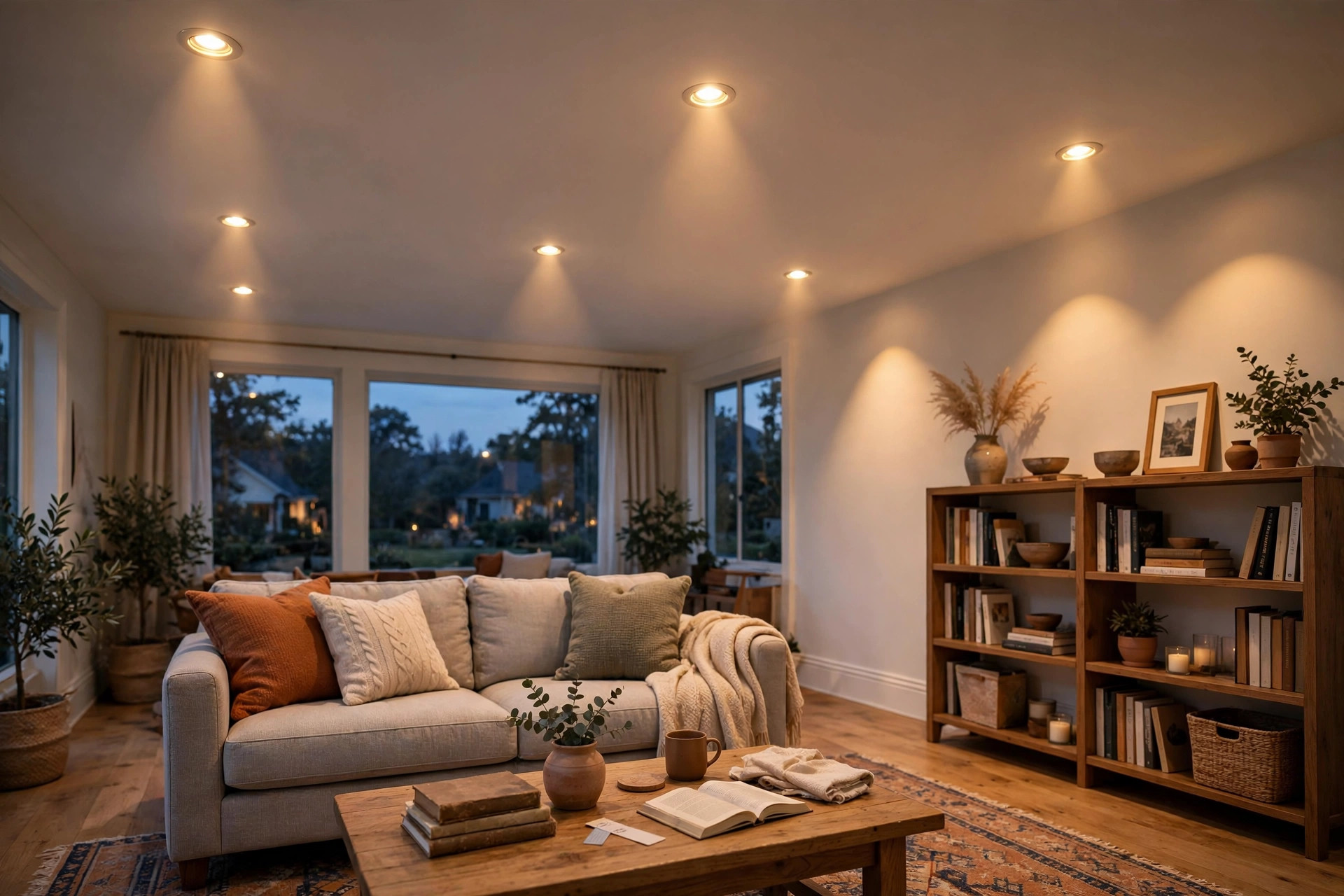

Many American families are changing their ceiling lights. They want light that is bright, clean, and cheap to run. This led recessed lights american homes guide explains what these lights are and how to pick them. It covers sizes, trims, prices, and safety. It uses plain words. By the end, a homeowner can plan a project with confidence.
Recessed lights sit inside the ceiling. They do not hang down. They send light straight down in a clean cone. They are common in kitchens, halls, living rooms, and baths. They give a modern look without lamps or cords. They also work well with low ceilings. A room that is eight feet high still feels open with these lights.
LED stands for light emitting diode. It is a small part that makes light when power passes through it. LED lights use far less power than old bulbs. They also last much longer. The U.S. Department of Energy notes that LED lamps can save most of the energy used by old incandescent lamps. That makes them a smart choice for the whole house.
Why Recessed Lights Suit American Homes
American homes often have wide open rooms. A kitchen may join the family room. A long hall may lead to many doors. Recessed lights spread light evenly across such spaces. A single lamp in the center of a room leaves dark corners. A row of small lights does not.
The lights also suit many ceiling types. Drywall, plaster, and drop ceilings can all hold them. Many models work with sloped ceilings too. A trim made for slopes keeps the light aimed down. That is useful in bedrooms with angled roofs.
Homeowners like the clean look. Nothing hangs from the ceiling. Ceiling fans can spin without hitting a lamp. Tall bookcases fit under the ceiling line. The room looks neat and plain. For people who like simple style, this is a big plus.
Recessed LED lights also help with daily tasks. In the kitchen, they light the counter where food is cut. In the hall, they guide feet at night. In the bath, they light the mirror area. Good light makes a house safer and easier to use.
How to Choose the Right Lights: Led Recessed Lights American Homes Guide
Choice starts with the room. A kitchen needs bright, white light. A bedroom needs soft, warm light. A bath needs light that can handle damp air. A hall needs steady light for walking. Write down what each room does before shopping.
Next, measure the ceiling height. Low ceilings need wide light spread. High ceilings need strong light that reaches the floor. The height also sets how far apart the lights go. A common rule is to space lights about half the ceiling height apart. An eight foot ceiling means lights about four feet apart.
Think about what is above the ceiling. If the space is an attic with insulation, the light housing must be safe to touch the insulation. Such housings carry a rating for insulation contact. If the ceiling is between floors, a standard housing is fine. Always check this before buying.
Size and Housing
The most common sizes are four inch, five inch, and six inch. The size is the diameter of the hole in the ceiling. Four inch lights give a small, neat look. Six inch lights give more light per unit. Five inch sits in the middle.
Most new lights come as retrofit kits. These fit into old housings made for old bulbs. They are easy to add to a house that already has recessed cans. New construction housings are made for fresh ceilings. They attach to the frame before the drywall goes up.
Wafer or canless lights are another option. They have no large metal can. A small round disk mounts flat to the ceiling. They need very little space above. This is handy when a pipe or duct blocks the way.
Brightness and Color
Brightness is measured in lumens. More lumens means more light. A kitchen counter may need 500 to 800 lumens per light. A hall may need 300 to 500 lumens. Check the box for the lumen number. Do not judge by watts. LED watts are small and tell little about brightness.
Color is measured in Kelvins. Low numbers near 2700K look warm and yellow. High numbers near 5000K look cool and blue-white. Many families pick 3000K to 3500K for living areas. It feels like soft daylight. Kitchens and baths often use 3500K to 4000K for clear task light.
Some lights can change color. These are called selectable or tunable lights. A switch on the light sets the color before install. Others change with a wall control or a phone app. They cost more but give more choice.
Trim Styles
The trim is the ring seen from below. A baffle trim has ridges that cut glare. It is the most common choice. A reflector trim has a shiny inner surface that throws more light down. It suits high ceilings.
An eyeball trim lets the inner part turn. It can aim light at a wall or a painting. A shower trim has a sealed lens for wet areas. A wall wash trim spreads light across a wide wall. Each trim changes what the light does. Pick the trim for the job at hand.
Trim color is usually white. Black trims look bold in modern rooms. Nickel trims match many bath fixtures. The trim should match the ceiling or the room style. Lighting specialty sites such as Lumens show many trim choices side by side for easy comparison.
Types and Options
Fixed downlights are the standard type. They point straight down. They suit kitchens, halls, and offices. They are the least costly and the easiest to find.
Adjustable or gimbal lights tilt inside the housing. They can point at art or shelves. They cost more than fixed lights. They are good for living rooms where mood matters.
Smart recessed lights connect to home networks. They can dim, change color, or follow a schedule. They work with voice helpers and phone apps. They cost the most. They suit tech minded families. Simple dimmers also work with many LED lights. Check that the light and the dimmer are made to work together. Old dimmers often make LEDs flicker.
Shower rated lights have a sealed trim. They are safe in wet zones above tubs and showers. They cost a bit more. They are required by code in those spots. Never use a dry rated light over a shower.
Insulation contact housings, called IC rated, are safe under attic insulation. Non IC housings need a clear gap around them. Family Handyman how-to articles explain how to tell which type is in your ceiling. The label inside the housing says IC or non IC.
Cost and Price
Price varies by type and brand. A basic retrofit kit often costs 15 to 40 dollars each. Adjustable and smart models cost 40 to 100 dollars each. Shower rated and specialty trims sit in the middle range. Buying in packs of six or twelve often cuts the per unit cost.
Professional install adds to the cost. A licensed electrician may charge 100 to 250 dollars per light. The price depends on the ceiling, the wiring, and the region. New construction with open ceilings costs less per light. Retrofits through closed ceilings cost more. Always get more than one quote.
Homeowners who know basic wiring can do simple retrofits themselves. The job is to remove an old trim and screw in a new kit. This can take ten minutes per light. New wiring should be left to a pro. Bad wiring is a fire risk.
Running cost is low. A 12 watt LED gives the light of a 75 watt old bulb. If a light runs five hours a day, it costs only a few dollars a year to power. ENERGY STAR certified models use even less power. They must pass tests for life and color quality.
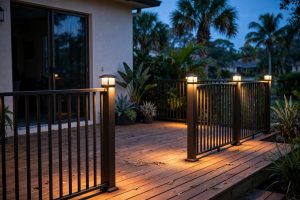
For outdoor options in the same low voltage family, a solar path lights buying guide covers yard lighting, while a deck cap lights for sale usa roundup helps with deck edges. Readers who want to buy fixtures online can browse the current led recessed lights for sale usa listings for price ideas.
Care and Upkeep
LED recessed lights need little care. The diodes last 25,000 to 50,000 hours. At five hours a day, that is 13 to 27 years. Most families will never change them. This is a big change from old bulbs that failed every year or two.
Keep the trims clean. Dust can dim the light over time. Wipe trims with a soft dry cloth once or twice a year. Do not use water on the trim of a dry rated light. For shower trims, wipe gently and let them dry.
Check dimmers if flicker starts. Flicker often comes from an old dimmer that does not match the LED. A new LED rated dimmer fixes most cases. If one light goes dark, check the connection first. The screw in base may be loose.
Do not cover non IC lights with insulation. Heat must escape around them. Covering them is a fire risk. If insulation was added later, check the housings. A quick look from the attic can confirm the rating. This Old House experts advise checking housings before any attic insulation project.
Safety
Turn off the power at the breaker before touching any light. Test with a voltage tester. Do not trust a wall switch alone. Someone else in the house may flip it back on.
Use the right rating for the spot. Wet areas need wet rated trims. Attic spaces need IC rated housings. Bath fans and lights near steam need care too. The label on the housing tells the rating. When in doubt, pick the higher rating.
Keep clear space around non IC housings. Three inches on all sides is the common rule. Do not push boxes or stored goods against them in the attic. Heat builds up fast in closed spaces.
Wiring must match the load. LED lights draw little power, but the circuit still has rules. A licensed electrician knows the local code. Many towns require a permit for new circuits. The Spruce home advice site lists common code points for recessed lights. Bob Vila home guides also cover safe install steps for beginners.
If a light smells hot or looks brown around the trim, turn it off. Call an electrician. Do not use the light until it is checked. Discoloration can mean poor contact or a wrong lamp.
Frequently Asked Questions
How many recessed lights does a room need? Count the floor area and the ceiling height. A 12 by 12 foot room with an eight foot ceiling often needs six lights. Space them about four feet apart and two feet from the walls. Bright rooms like kitchens need more. Soft rooms like bedrooms need fewer.
Can I put LED kits in my old recessed cans? Yes, in most cases. Retrofit kits screw into the old socket. They fit standard four, five, and six inch cans. Check the can size first. Old cans from the 1980s usually work fine.
Do recessed lights work with dimmers? Many do, but not all. The box will say dimmable. The dimmer must also be rated for LED. Old dimmers made for incandescent bulbs often cause flicker or buzz. A new LED dimmer is a cheap fix.
What color temperature is best for a kitchen? Most cooks like 3500K to 4000K. It is bright and clear without feeling cold. It shows true food colors. For the dining side of an open kitchen, 3000K feels warmer and more relaxed.
Are these lights safe under attic insulation? Only IC rated housings are safe. The label inside the housing will say IC. Non IC housings need clear space. If you are not sure, have an electrician check before adding insulation.
How long do LED recessed lights last? Most last 25,000 to 50,000 hours. That is many years of normal use. Consumer Reports tests show quality brands often outlast cheap no name lights. Buying a known brand pays off over time.
A Final Word
LED recessed lights are a solid upgrade for American homes. They use little power. They last for years. They give clean, even light in every room. The keys are simple. Pick the right size for the ceiling. Pick the right color for the room. Use IC rated housings under insulation. Use wet rated trims near water. When the job is new wiring, call a licensed pro.
Start with one room. A kitchen or a hall is a good test. See how the light feels at night. Then plan the rest of the house. With a little care, the whole home can have bright, calm light for decades. Philips lighting guides and big retailers like Home Depot and Lowe’s offer planners that help map a full room layout. Lamps Plus also stocks a wide range of trims and styles for every budget.
References
Bob Vila. (n.d.). Home improvement advice. https://www.bobvila.com Consumer Reports. (n.d.). Product reviews and ratings. https://www.consumerreports.org ENERGY STAR. (n.d.). Energy efficient products. https://www.energystar.gov Family Handyman. (n.d.). DIY home repair and maintenance. https://www.familyhandyman.com Lamps Plus. (n.d.). Lighting and home decor. https://www.lampsplus.com Lowe’s. (n.d.). Home improvement products. https://www.lowes.com Lumens. (n.d.). Lighting and ceiling fans. https://www.lumens.com Philips. (n.d.). Lighting products. https://www.philips.com The Home Depot. (n.d.). Home improvement products. https://www.homedepot.com The Spruce. (n.d.). Home and garden advice. https://www.thespruce.com This Old House. (n.d.). Home renovation guidance. https://www.thisoldhouse.com U.S. Department of Energy. (n.d.). Energy efficiency and renewable energy. https://www.energy.gov
Was this guide helpful?

About Robert Taylor
The My Garden US editorial team writes practical, in-depth home and garden guides for American homeowners — tested advice, no fluff.
You May Also Like
Motion Flood Lights USA Online Deals: A Buyer’s Guide
April 25, 2026 0 views
A Complete Guide to Outdoor Wall Lanterns for American Homes
January 22, 2026 0 views
Motion Flood Lights for Florida Homes USA: A Plain Guide
May 28, 2026 0 views