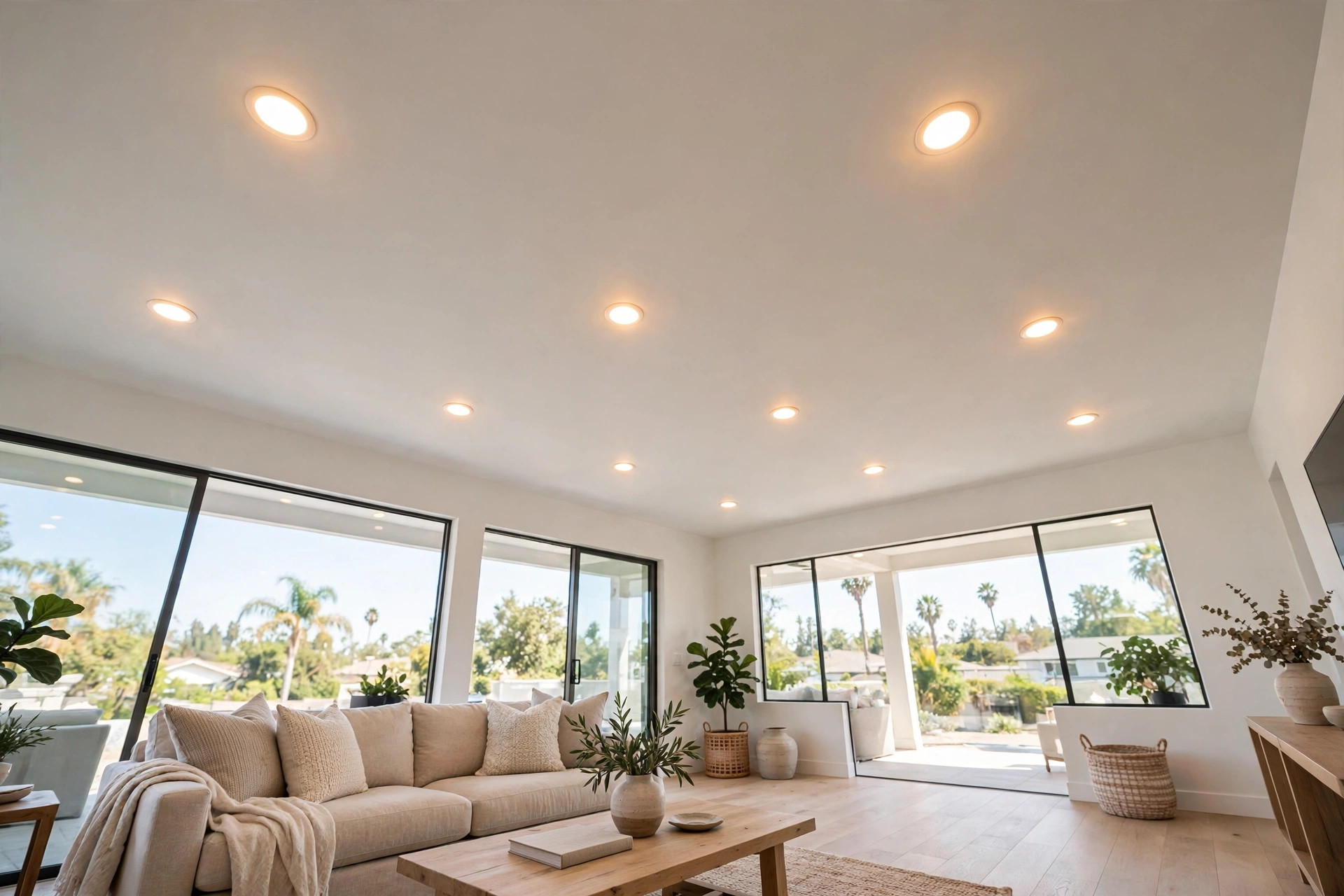

Many homes in California now use led recessed lights california homes usa buyers can find at local stores. These small round lights sit flat in the ceiling. They give clean light with no hanging shade. They work in kitchens, halls, baths, and living rooms. This guide explains what they are, why they suit California homes, how to choose them, what they cost, and how to care for them.
Why It Matters
A ceiling light changes a room. Old can lights used hot bulbs. They wasted power and made rooms hot. LED recessed lights use far less power. They run cool. They last many years. In California, where power can be dear and summers run hot, these traits matter a great deal.
The California Angle
California has strict rules about home power use. New and remodeled homes must meet the state energy code. Recessed LED lights that are sealed and listed help meet these rules. They cut the load on air conditioning. They lower monthly bills. Many owners also like the clean look. A flat ceiling with even light feels calm and modern. Retailers such as The Home Depot and Lowe’s carry a wide range of these lights for buyers in the USA.
Power rates in California rank among the highest in the nation. A home with twenty old can lights can waste a great deal of money each year. Swapping those old bulbs for LEDs can cut lighting power use by seventy to eighty percent. The savings show up on the bill within the first month.
Heat is the second reason. Old recessed bulbs pour heat into the room and into the attic. In a hot California summer, the air conditioner must fight that heat. LEDs run much cooler. A cooler ceiling means a cooler room. It also means less work for the air conditioner.
There is a third reason that owners mention often. Many California homes are ranch style with low ceilings. A hanging light crowds a low room. A recessed light takes no head room. The ceiling looks clean. The room feels bigger. For hallways, small baths, and low basements, this flat profile is hard to beat.
How to Choose LED Recessed Lights: Led Recessed Lights California Homes Usa
Start with the room. Measure it. Note the ceiling height. Most California homes have eight foot ceilings. Some have nine or ten. Light spread depends on height. A simple rule: space lights about half the ceiling height apart. For an eight foot ceiling, place them about four feet apart.
Size of the Can
Common sizes are four inch and six inch. Four inch lights give a neat, modern look. They suit small rooms and halls. Six inch lights spread more light. They suit big rooms and kitchens. Both sizes work well with LED trims from Philips and other makers.
Color Temperature
Light color is measured in Kelvin. Warm white, near 2700K, feels like old incandescent light. It suits living rooms and bedrooms. Bright white, near 4000K, feels crisp. It suits kitchens, baths, and work areas. Pick one color for the whole room. Mixed colors look wrong.
Brightness
Brightness is measured in lumens. A four inch LED light may give 600 to 900 lumens. A six inch may give 900 to 1200 lumens. Do not use old watt ratings to judge LEDs. Look for lumens on the box. Guides on The Spruce and Lamps Plus explain how lumens map to room size.
Trim Style
The trim is the ring you see on the ceiling. Baffle trims have ridges that cut glare. Reflector trims give more light. Gimbal trims can tilt to aim light at art or walls. For most rooms, a simple white baffle trim is the safe pick.
Dimming
Many owners want dimmers. Not all LEDs dim well. Buy lights marked as dimmable. Match them with an LED rated dimmer switch. Old dimmers made for incandescent bulbs may cause flicker. Check the maker list of approved dimmers before you buy.
Planning the Layout
Draw the room on paper. Mark doors, windows, and work spots. Place lights in a simple grid for general light. Add extra lights over task spots such as the kitchen sink, the stove, and the reading chair. Keep lights at least two feet from walls. This avoids harsh bright spots on the paint. In a long hall, a single straight row down the center works well.
Mind the joists. Ceiling joists run in one direction. A slim LED module can fit between them. Old style cans need more room. Check the attic before you buy. A quick look with a flashlight saves trouble later. Note where pipes, ducts, and wires run. Move the plan around these blocks.
Think about layers. Recessed lights give general light. They do not do everything. A kitchen still needs light under the cabinets. A living room still needs a lamp near the reading chair. Plan recessed lights as one layer in a full lighting plan, not the whole plan.
Types and Options
Retrofit Kits
A retrofit kit fits into an old can light housing. You remove the old trim and bulb. You screw in the kit. It takes minutes. This is the cheapest way to go LED in an older California home.
Integrated LED Modules
New installs often use a slim integrated module. The light and the housing are one unit. These are thin. They fit where old cans cannot. They work under joists and in tight attics.
Smart LED Recessed Lights
Smart lights connect to a phone app or a voice helper. You can change color and set schedules. They cost more. They add wiring and setup work. For many homes, a plain dimmable LED is enough.
Wet and Damp Rated Lights
Baths and showers need wet rated lights. Porches and eaves need damp or wet ratings. Check the label. Never put a dry rated light in a wet spot.
IC and Non-IC Rated
IC rated housings can touch insulation. Non-IC housings need clearance from insulation. In California attics, insulation is thick. Use IC rated lights where they touch insulation. This is both safe and required by code.
Cost and Price
Prices in the USA vary by brand and type. A basic LED retrofit kit may cost fifteen to forty dollars. An integrated smart light may cost forty to ninety dollars. Hiring an electrician adds cost. A new install with wiring may run one hundred fifty to three hundred dollars per light. A simple swap of trims in existing cans may run fifty to one hundred dollars per light for labor.
What Drives the Price
– Brand name and warranty length – Smart features and color change – Size and brightness – Wet rating and IC rating – Labor cost in your part of California
Energy savings offset the cost over time. An LED may use ten to fifteen watts where an old bulb used sixty five. The ENERGY STAR site and the U.S. Department of Energy publish data on home lighting savings. Pair your recessed lights with other fixtures, such as indoor wall sconces or a dining room chandelier, to build a full lighting plan.
Sample Project Budgets
A small hall with four retrofit kits is a weekend job. Four kits at twenty five dollars each cost one hundred dollars. No electrician is needed if the cans are in good shape. A medium kitchen with eight new slim LED modules needs wiring. Eight modules at forty dollars each cost three hundred twenty dollars. An electrician may charge eight hundred to fifteen hundred dollars for the install. A full home swap of twenty old trims with LED kits may cost five hundred dollars in parts and one thousand dollars in labor. Get two or three quotes before you sign.
Where the Money Goes
Parts are the small share. Labor is the large share. Cans that need new wiring cost the most. Simple trim swaps cost the least. Smart features add to both parts and labor. A plain dimmable LED gives the best value for most homes. Spend the savings on better dimmers and trims, not on fancy features you will not use.
Care and Upkeep
LED recessed lights need little care. Dust the trim now and then. Wipe with a dry cloth. Do not spray cleaner into the can. Check dimmers once a year for buzz or flicker. Replace a bad dimmer with an LED rated model.
LEDs last a long time. Most are rated for twenty five thousand to fifty thousand hours. That can mean fifteen to twenty years of normal use. When a light fails, replace the whole module or kit. Keep a spare trim on hand if your model may go out of production. Retailers like Lumens list long life models with long warranties.
Check the attic once a year if you can. Look for sagging insulation near the lights. Make sure no insulation has fallen onto a non-IC housing. In the bath, check that the shower light lens is still sealed. A cracked lens lets steam into the housing. Replace it before rust starts.
Keep the product boxes or take a photo of the model labels. When a light fails in ten years, the model name will be hard to recall. A photo in your phone saves a long search at the store.
Safety
Electricity and ceilings demand care. Turn off the breaker before any work. Test that power is off. If you are not sure, hire a licensed electrician. California code may require permits for new circuits. Follow local rules.
Use only listed products. Look for UL or ETL marks on the box. In attics, respect the IC rating. Keep insulation off non-IC housings. In showers, use only wet rated lights. The Consumer Product Safety Commission posts recalls for home electrical products. Check it if you buy a new brand. For step by step remodel advice, This Old House offers plain how to articles. You can also extend good lighting outside with solar path lights.
FAQ
How many recessed lights does my room need?
Divide the room area by the light spread. As a rule, plan one light per twenty five to fifty square feet for general light. Kitchens need more. Halls need fewer. Sketch the layout on paper before you cut any holes.
Can I put LED recessed lights in an old house?
Yes. Retrofit kits fit most old can housings. If your home has no cans, you can add slim LED modules with new wiring. Have an electrician check the circuit first.
Do LED recessed lights work with old dimmers?
Sometimes. Old dimmers often cause flicker with LEDs. The safe path is to buy dimmable LEDs and pair them with an LED rated dimmer. Check the maker list of tested dimmers.
Are recessed lights allowed in California under the energy code?
Yes, when they meet the code. Use sealed, high efficacy LED lights. Many products sold in California carry the needed marks. Your contractor should know the current Title 24 rules.
Do LED recessed lights add heat to my attic?
Very little. An LED can light gives off a small fraction of the heat of an old bulb. The housing stays near room temperature in most cases. This is one reason they are popular in hot climates. It also means less fire risk than old hot cans.
Yes, when they meet the code. Use sealed, high efficacy LED lights. Many products sold in California carry the needed marks. Your contractor should know the current Title 24 rules.
What color temperature is best for a living room?
Most owners pick 2700K warm white. It feels soft and like old bulbs. For kitchens and baths, 3000K to 4000K is common. Keep one color per room.
How long do LED recessed lights last?
Most last twenty five thousand to fifty thousand hours. At three hours a day, that is more than twenty years. Buy from a known brand with a five year or longer warranty.
A Short Final Word
LED recessed lights fit California homes well. They save power. They run cool. They last for years. Pick the right size, color, and rating. Space them with care. Hire an electrician when the job needs new wiring. With a sound plan, your rooms will look clean and bright for a long time.
References
ENERGY STAR. (n.d.). Energy efficient products. https://www.energystar.gov Lamps Plus. (n.d.). Lighting and home decor. https://www.lampsplus.com Lowe’s. (n.d.). Home improvement products. https://www.lowes.com Lumens. (n.d.). Lighting and ceiling fans. https://www.lumens.com Philips. (n.d.). Lighting products. https://www.philips.com The Home Depot. (n.d.). Home improvement products. https://www.homedepot.com The Spruce. (n.d.). Home and garden advice. https://www.thespruce.com This Old House. (n.d.). Home renovation guidance. https://www.thisoldhouse.com U.S. Consumer Product Safety Commission. (n.d.). Product safety information. https://www.cpsc.gov U.S. Department of Energy. (n.d.). Energy efficiency and renewable energy. https://www.energy.gov
Was this guide helpful?

About Jennifer Lee
The My Garden US editorial team writes practical, in-depth home and garden guides for American homeowners — tested advice, no fluff.
You May Also Like

Solar Path Lights California Homes USA Guide
August 28, 2026 0 views
Reading Floor Lamps for Sale USA: A Plain Guide for Buyers
August 22, 2026 0 views
Bedroom Table Lamps Reviews Buying Guide USA
February 13, 2026 0 views