
Every year more families in America want a green lawn without harsh chemicals. They ask for the best organic lawn care products usa stores sell, and they want facts they can trust. This guide gives those facts in plain words. It explains why organic care works, what to buy, how much to spend, and how to keep the lawn safe for children and pets.
Why Organic Lawn Care Matters
A lawn is a small part of nature. The soil under the grass holds roots, worms, and tiny living things that feed the plants. Chemical fertilizers and weed killers can harm that life. They can also wash into storm drains after rain. From there they reach rivers and lakes.
Organic products work in a different way. They feed the soil first, and the soil feeds the grass. They come from plant matter, animal matter, or rock minerals. Common sources include corn gluten meal, soybean meal, bone meal, and seaweed. These break down slowly. They give steady food to the grass over weeks, not days.
Many parents and pet owners choose organic products for safety. A dog that rolls on the grass will not pick up harsh residues. A child who plays barefoot will not touch burned skin chemicals. Reviews such as pet safe lawn weed killer reviews show how many buyers now rank safety first. The best organic lawn care products usa brands make combine safety with real results.
What to Look for in Organic Products: Best Organic Lawn Care Products Usa
Read the Label
A true organic product lists its source on the bag. Look for words like “derived from” followed by plant or animal names. Bags that say only “natural” may still hold synthetic chemicals. The word natural is not regulated the way organic claims are. Check for the OMRI mark, which shows the product passed review by the Organic Materials Review Institute.
Check the Numbers
Fertilizer bags show three numbers, such as 9-2-4. These stand for nitrogen, phosphorus, and potassium. Nitrogen feeds leaf growth. Phosphorus feeds roots. Potassium guards against disease and heat. Organic bags often show lower numbers than chemical bags. That is normal. The food lasts longer in the soil.
Slow release is the key idea. A chemical bag may push fast green growth that fades in two weeks. An organic bag feeds a little each day for six to eight weeks. The grass grows at a steady pace. Steady growth builds stronger roots than fast growth does.
Match the Product to the Grass
Cool-season grasses like fescue and bluegrass grow in the North. Warm-season grasses like St. Augustine and Bermuda grow in the South. Some products suit all types, but some are made for one kind. If you grow St. Augustine in Texas, guides like best fertilizer for st augustine grass texas can help you pick a matching organic blend.
Main Types of Organic Lawn Care Products
Organic Fertilizers
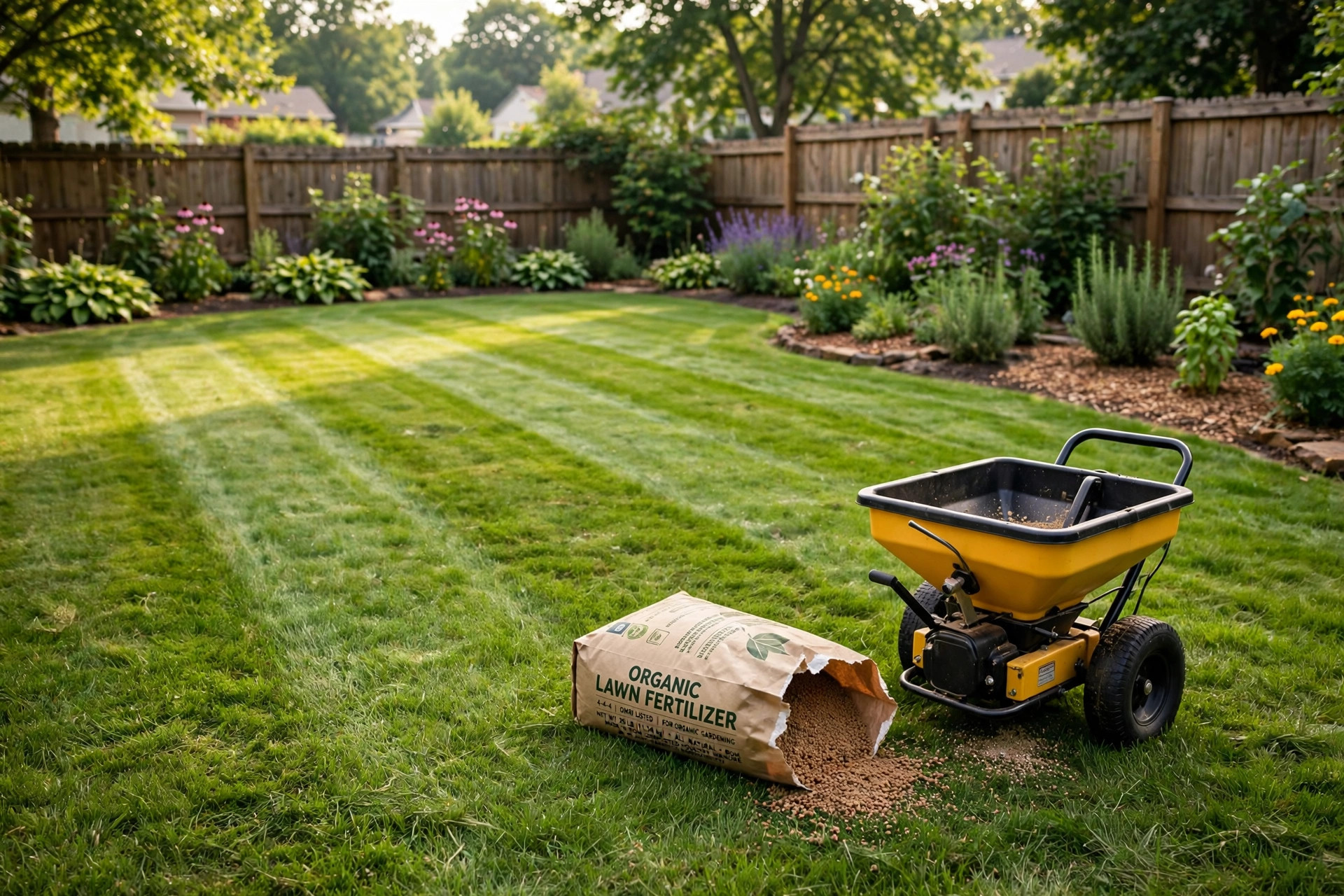
Organic fertilizers are the base of any organic program. They include meals made from corn, soy, and alfalfa. They also include composted poultry manure and feather meal. These give a slow release of nitrogen. They will not burn the grass if you spread a bit too much.
Corn gluten meal is one of the best known organic products. It feeds the lawn with nitrogen and also stops weed seeds from sprouting. Many yard owners use it in spring as a pre-emergent weed control. It is safe for pets once it is watered in.
Organic Weed Control
Weeds test the patience of every lawn owner. Organic weed control works slower than chemical sprays, but it lasts. Hand pulling remains the surest method for small yards. For larger lawns, corn gluten meal blocks new weeds each spring.
Spot treatment with vinegar-based products can kill weeds on contact. These products burn the leaves they touch. They work best on young weeds in hot sun. Always read the label before use near flower beds, since vinegar does not tell weeds from flowers.
Pest and Grub Control
Grubs are the fat white larvae of beetles. They eat grass roots and leave brown dead patches. Milky spore is a natural bacteria that kills Japanese beetle grubs. It takes a few years to build up in the soil, but it lasts for many years after that.
Beneficial nematodes are tiny worms that hunt grubs and other soil pests. You mix them with water and spray the lawn in the evening. They are harmless to people, pets, and plants. Homeowners who want a natural mosquito yard treatment safe pets can sometimes pair it with the same spray routine.
Soil Builders and Lime
Healthy soil grows healthy grass. Compost is the best soil builder of all. A thin layer of compost each fall feeds the soil life. It also helps clay soil drain and sandy soil hold water.
Lime raises the pH of acid soil. Many lawns in the eastern states need lime every few years. A soil test tells you the exact rate. Gypsum is another mineral that loosens heavy clay without changing pH. Both are fully natural products.
How to Choose the Right Products
Start with a soil test. Many state extension offices offer cheap tests. The report tells you the pH and the nutrient levels. It tells you what the lawn lacks. This saves money because you buy only what the soil needs.
Think about the size of your lawn. A small city yard may need one bag per season. A half acre lot may need four or five bags. Check the coverage printed on each bag. Organic products cost a bit more per bag, but you apply them less often.
Pick a brand with a clear record. Big lawn care names now sell organic lines. Equipment makers such as Toro and John Deere also publish guides on caring for lawns with fewer chemicals. Their engines, like those from Briggs & Stratton, run the mowers that cut organic lawns week after week. Independent tests from Consumer Reports can also help you compare product claims before you buy.
Plan a Gradual Switch
If your lawn now runs on chemicals, do not stop them all at once. A sudden stop can leave the grass weak while the soil life recovers. Most experts suggest a two season bridge. In the first season, replace half of the chemical fertilizer with organic fertilizer. Keep spot weed treatment for the worst patches.
In the second season, drop the chemical fertilizer fully. By then the soil life should be strong enough to carry the lawn. The grass may look a little pale in the first spring of the switch. That is normal. By summer the color returns, often deeper than before.
Keep a notebook during the switch. Write down what you applied and when. Note the weather and the lawn’s response. Simple notes turn guesswork into knowledge. After one full year you will know your lawn better than any store clerk.
Cost and Price
Organic lawn care costs a little more than chemical care, but the gap is small. A bag of organic fertilizer for 5,000 square feet often costs between 25 and 45 dollars. Chemical bags of the same size may cost 18 to 30 dollars. The organic bag lasts longer in the soil, so the yearly cost is close.
A full season of organic care for an average yard may run from 120 to 250 dollars in products. This covers spring feeding, corn gluten meal, one summer feeding, and fall compost or fertilizer. Hiring a service costs more. An organic lawn care service may charge 50 to 90 dollars per visit, with five or six visits a year.
You can cut costs by making your own compost. Grass clippings left on the lawn return free nitrogen to the soil. This practice, called grasscycling, cuts fertilizer needs by up to a third. A mulching mower makes grasscycling easy.
Care and Upkeep Through the Year
A simple yearly plan keeps an organic lawn thick and green. In early spring, rake off winter debris and spread corn gluten meal. Mow as soon as the grass wakes up. Set the mower blade high. Tall grass shades out weed seeds.
In late spring, apply organic fertilizer. Water it in if rain is not due. In summer, water deeply but seldom. One inch of water per week is enough for most lawns. Water in the morning so leaves dry by night. This guards against fungus. If brown spots appear, guides such as lawn fungus treatment home remedy guide can help you act early without harsh sprays.
In fall, feed again and overseed thin spots. Fall is the best time to plant grass seed in most states. The soil is warm and the air is cool. A thin layer of compost after seeding helps the seed take root. In winter, stay off frozen grass. Foot traffic on frozen blades breaks them and leaves dead marks.
Mowing right is half of organic care. Keep the blade sharp. A dull blade tears grass and opens the door to disease. Cut no more than one third of the blade at a time. Leave the clippings. They are free food.
Safety
Organic does not mean risk free. Some organic products carry real warnings. Corn gluten meal is safe, but concentrated vinegar can burn skin and eyes. Bone meal can upset a dog’s stomach if the dog eats it straight from the bag. Always store bags where pets and children cannot reach them.
Wear gloves when spreading any product. Wash your hands after yard work. Keep pets off the lawn until watered-in products dry. Read every label, even on products marked organic. The label is the law for safe use.
Frequently Asked Questions
Do organic lawn care products really work?
Yes. They work more slowly than chemical products, but the results last. Most lawns look better by the second season. The soil grows richer each year, so the lawn needs less help over time.
How long does it take to see results?
Expect six to twelve weeks for the first clear change. Organic fertilizer feeds through soil life, which needs warm weather to wake up. Weed control with corn gluten meal builds up over two or three seasons.
Are organic products safe for dogs and children?
They are much safer than synthetic chemicals. Most can be used around pets and children once they are watered in and dry. Still, keep children and pets off the lawn during application and read each label.
Can I mix organic and chemical products?
You can, but it is not the best plan. Chemical weed killers harm the soil life that organic products feed. Many owners switch fully to organic and accept a short transition period with some weeds.
How often should I apply organic fertilizer?
Two to four times a year is enough for most lawns. A common plan is spring, early summer, and fall. Sandy soils may need one extra feeding. A soil test tells you the true need.
Will organic care stop all weeds?
No product stops every weed. A thick lawn is the best weed defense. Tall mowing, deep watering, and yearly overseeding keep the grass dense. Dense grass leaves no room for weeds to start.
A Final Word
The best organic lawn care products usa stores carry share one trait. They feed the soil, not just the grass. With a soil test, a simple yearly plan, and steady mowing, any homeowner can grow a safe green lawn. The change takes patience, but the result is a yard the whole family can enjoy.
References
Briggs & Stratton. (n.d.). Engines and outdoor power equipment. https://www.briggsandstratton.com Consumer Reports. (n.d.). Product reviews and ratings. https://www.consumerreports.org Deere & Company. (n.d.). John Deere lawn and garden equipment. https://www.deere.com Toro. (n.d.). Lawn mowers and yard equipment. https://www.toro.com
Was this guide helpful?

About Michael Thompson
The My Garden US editorial team writes practical, in-depth home and garden guides for American homeowners — tested advice, no fluff.
You May Also Like
Affordable Tree Pruning Service Near Me: How to Find Good Work at a Fair Price
May 24, 2026 0 views
Pre Emergent Weed Killer Application Timing Guide
May 8, 2026 2 views
Native Plant Landscaping Ideas for Front Yards
September 25, 2026 0 views