
Wall lights shape the mood of a home. This indoor wall sconces buying guide USA walks you through the choices. You will learn the styles. You will learn the sizes. You will learn the prices. You will learn the safe way to install them. By the end, you will know which sconce fits your room, your taste, and your budget. Wall sconces are small lights mounted on walls. They save floor space. They add soft light. They dress up plain walls. Homes across the country use them in halls, bedrooms, and baths. This guide covers all of it in plain terms.
Why Indoor Wall Sconces Matter
A ceiling light spreads light down. A lamp sits on a table. A wall sconce does something different. It puts light at eye level on the wall. This makes rooms feel warm and layered. Many designers call it layer lighting. It mixes bright and soft light in one room.
Sconces also save space. A small hall has no room for a table lamp. A narrow bedroom has no floor space for a tall lamp. A sconce mounts on the wall and frees the floor. This helps small apartments and large homes alike.
They add style too. A sconce is like art that also lights the room. Glass, brass, and wood shades each send a different message. You can match them to your furniture or use them as a bold accent.
Many buyers also use sconces for tasks. A pair beside the bed gives light for reading. A sconce by the mirror helps with morning tasks. A row along a hall keeps the path safe at night. For these reasons, sconces remain one of the most useful lights in a home.
What to Look for Before You Buy: Indoor Wall Sconces Buying Guide Usa
Light Direction
Sconces throw light up, down, or both. Up-light sconces bounce light off the ceiling. They make ceilings look higher. They give soft, even light. Down-light sconces push light onto a counter or a picture. They work well over a mantel or a reading chair. Up-and-down sconces send light both ways. They give a bold look and strong output. Think about what you want the light to do before you pick one.
Shade Material
The shade shapes the light. Glass shades spread light wide and clean. Frosted glass softens it. Metal shades aim the light in one direction. Fabric shades give a warm, soft glow. They fit bedrooms and living rooms. Choose a material that fits the room and is easy to clean.
Bulb Type
Most modern sconces take LED bulbs. LED bulbs last for years. They use little power. They come in warm and cool tones. Some sconces take candelabra bulbs. Some take standard medium bulbs. Check the socket type before you buy. A good Energy Star rated bulb can cut power use and still give warm light.
Switch and Dimming
Many buyers want a dimmer. Dimmers let you set the mood. Make sure the sconce and the bulb both work with dimmers. Not all LED bulbs dim well. Some sconces have a built-in pull chain or rocker switch on the base. Plug-in sconces often have a cord with a switch. Hard-wired sconces use the wall switch.
Finish and Color
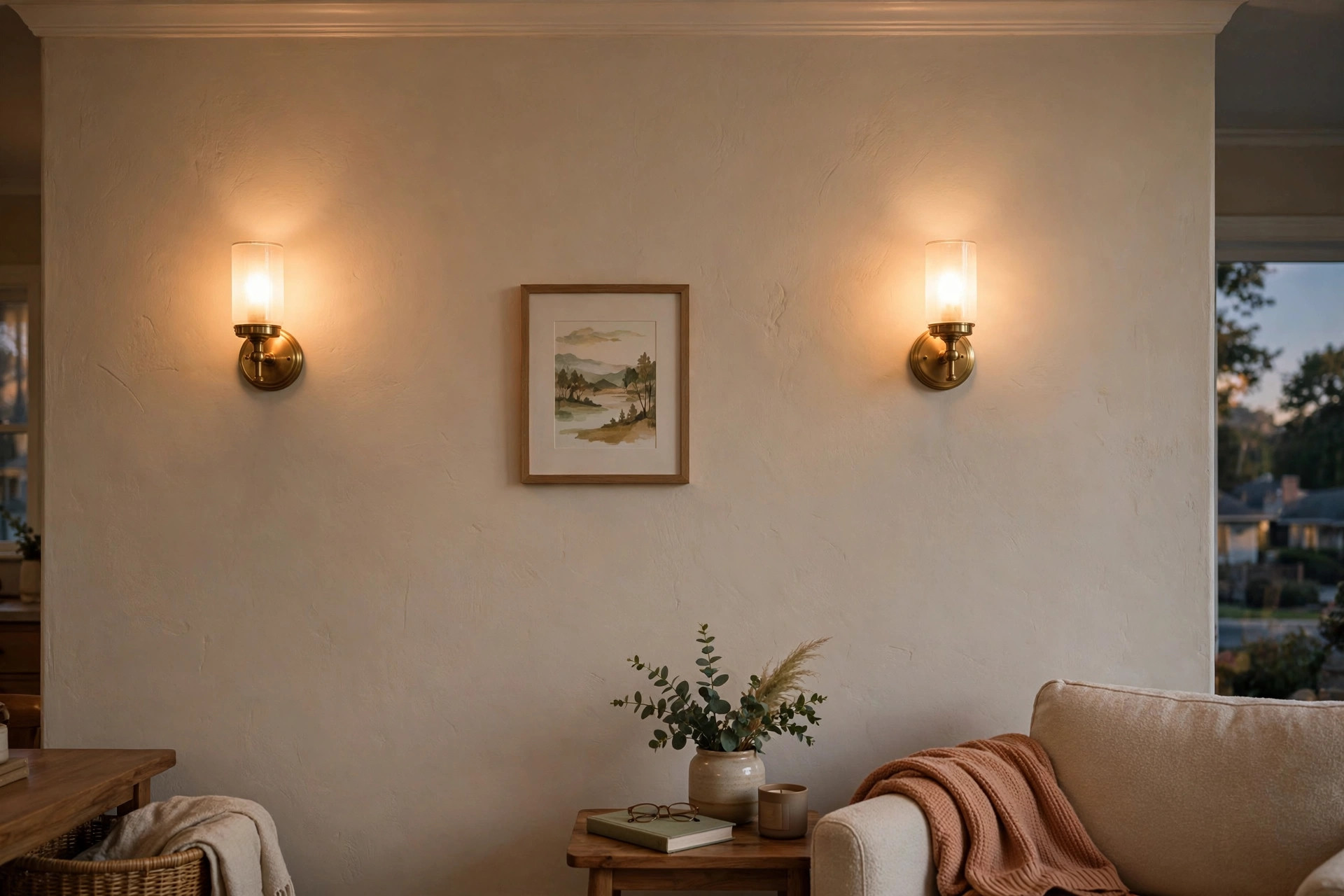
The finish of the sconce should match or complement the room. Brushed nickel and chrome fit modern rooms. They look clean and cool. Oil-rubbed bronze fits rustic and farmhouse rooms. It looks warm and old-fashioned. Brass and gold add a rich touch. They suit classic and luxury rooms. Black metal fits almost any style. It looks sharp against light walls. White and cream finishes blend into the wall. They work when you want the light, not the fixture, to stand out. Pick a finish that repeats somewhere else in the room, such as the cabinet pulls or the faucet. This ties the look together.
Plug-In or Hard-Wired
Hard-wired sconces connect to the house wiring. They need an electrical box in the wall. They look clean because no cord shows. An electrician can install them. Plug-in sconces use a normal outlet. You mount the shade and hang the cord. They suit renters and simple upgrades. Battery sconces need no wiring at all. They work where wiring is hard to run.
Types and Options of Indoor Wall Sconces
Swing-Arm Sconces
These have an arm that moves. You can pull the light close for reading. You can push it back to the wall. They are a top pick beside beds and chairs. Look for a strong joint that holds its place.
Candle-Style Sconces
These look like old wall candles. They give a classic feel. They suit dining rooms and entry halls. Many use small LED bulbs shaped like flames. They look warm without the fire risk.
Modern Bar Sconces
These are slim bars with clean lines. They fit modern and simple rooms. Many have built-in LED strips. They give even light with no visible bulb. They work well in halls and bathrooms.
Lantern-Style Sconces
These look like small lanterns on the wall. They fit farmhouse and rustic rooms. Some use seeded glass for a vintage feel. They look fine in kitchens and mudrooms.
Picture Lights
These are narrow sconces made to light art. They mount above a frame. They throw light down across the picture. They protect art from glare. They also add a gallery feel to a room.
Vanity Sconces
Bathrooms need bright, even light. Vanity sconces mount beside or above the mirror. A pair on both sides of the mirror cuts shadows on the face. This helps with shaving and makeup. For more on this topic, see our guide on vanity light bars.
When you plan a room, think of sconces as part of a set. They pair well with ceiling lights and lamps. Our notes on bedroom table lamps and kitchen track lighting may help you plan the whole room.
Size and Placement
Size matters more than most buyers think. A tiny sconce on a big wall looks lost. A huge sconce in a small hall looks crowded. A good rule is to match the sconce to the wall space. For a hall, pick sconces about six inches wide for narrow walls. For a large living room, you can go wider.
Mount height is key. Most guides say to place the center of the sconce about sixty to sixty-six inches from the floor. This puts the light near eye level. Beside a bed, mount them so the light sits at shoulder height when you sit up. This is often about fifty to fifty-five inches from the floor.
Spacing matters for pairs. Two sconces flanking a mirror should sit about twenty-eight to thirty inches apart. Two sconces flanking a bed should sit about thirty inches apart as well. If you light a long hall, space sconces about eight to ten feet apart. This keeps the light even from end to end.
Cost and Price
Wall sconces fit many budgets. Simple plug-in models cost about twenty to fifty dollars. Mid-range hard-wired sconces cost about fifty to one hundred fifty dollars. Designer and solid-brass models can cost three hundred dollars or more.
The bulb adds to the cost. A quality LED bulb costs a few dollars and lasts for years. A dimmer switch costs about twenty to forty dollars. If you hire an electrician, plan for one hundred to three hundred dollars per fixture. This covers labor and basic parts.
Prices vary by store. Big home centers like The Home Depot and Lowe’s carry wide ranges. Lighting shops like Lumens and Lamps Plus carry more styles. Brand sites like Philips offer bulbs and fixtures. Compare prices and read reviews before you buy.
Think of the long-term value. A cheap sconce with poor parts may need new bulbs often. A well-made sconce with LED bulbs can run for a decade with little cost. The extra dollars up front can pay back in lower power bills and fewer replacements. A good warranty is worth a lot. Many makers offer one to five years of cover. Keep the receipt and the box until you are sure the fixture works well.
Care and Upkeep
Sconces need little care. Dust them every few weeks with a soft cloth. Glass shades can be washed with mild soap and water. Let them dry fully before you switch the light on. Metal shades can be wiped with a damp cloth. Dry them right away to avoid spots.
Fabric shades need gentle care. Use a dry cloth or a soft brush. Do not soak them. Vacuum attachments with a brush head work well.
Check bulbs once a year. LED bulbs last long, but they do fail. Replace them with the same base type. Keep spare bulbs on hand. If a sconce flickers, check that the bulb is tight. If it still flickers, the bulb may not match the dimmer. Energy advice from the U.S. Department of Energy can help you pick efficient bulbs and fixtures.
Safety
Safety comes first with any wall light. Always switch off the power at the breaker before you wire a sconce. Use a voltage tester to confirm the wires are dead. Follow the maker’s wiring diagram. Match wire colors as shown. Use wire nuts and push them tight.
Do not exceed the wattage on the label. A fixture rated for sixty watts should not hold a larger bulb. LED bulbs make this easy because they use few watts.
Keep sconces away from water unless they are rated for damp areas. Bathrooms need fixtures rated for damp or wet use. A bathroom guide from The Spruce can help you learn the rating terms.
Mount sconces on a solid box. A loose box can sag. If the wall feels soft, call an electrician. Never cover a sconce with cloth or paper. Fabric shades should sit clear of the bulb. If you smell burning or see smoke, switch off the power and call a pro.
Frequently Asked Questions
How high should indoor wall sconces be mounted?
Most guides put the center of the sconce sixty to sixty-six inches from the floor. Beside a bed, mount lower, about fifty to fifty-five inches, so the light reaches you while you read in bed.
Can I install wall sconces myself?
Plug-in sconces are easy for most people. You mount a bracket and hang the shade. Hard-wired sconces need care. If you know basic wiring and you switch off the breaker, you can do it. If you are unsure, hire an electrician.
Do wall sconces need to be hard-wired?
No. Plug-in and battery sconces need no wiring. Hard-wired models look cleaner because the cord is hidden. Renters often pick plug-in models to avoid wall damage.
What bulb is best for wall sconces?
LED bulbs are the best pick for most homes. They last for years and use little power. Pick warm white, about twenty-seven hundred kelvin, for living rooms and bedrooms. Pick a brighter tone for task areas.
How far apart should sconces be in a hallway?
Space them about eight to ten feet apart. This gives even light along the hall. For a short hall, one or two sconces are enough.
Are wall sconces good for small rooms?
Yes. They free up floor and table space. They add light at eye level. This makes small rooms feel larger and warmer.
A Final Word
Wall sconces are a small change with a big effect. They add light where you need it. They add style where walls look bare. They fit every budget and most rooms. Take time to pick the right size, direction, and finish. Check the bulb type and the wiring. Follow safe steps when you install them. With this indoor wall sconces buying guide USA in hand, you can shop with confidence and enjoy the warm light for years.
References
ENERGY STAR. (n.d.). Energy efficient products. https://www.energystar.gov Lamps Plus. (n.d.). Lighting and home decor. https://www.lampsplus.com Lowe’s. (n.d.). Home improvement products. https://www.lowes.com Lumens. (n.d.). Lighting and ceiling fans. https://www.lumens.com Philips. (n.d.). Lighting products. https://www.philips.com The Home Depot. (n.d.). Home improvement products. https://www.homedepot.com The Spruce. (n.d.). Home and garden advice. https://www.thespruce.com U.S. Department of Energy. (n.d.). Energy efficiency and renewable energy. https://www.energy.gov
Was this guide helpful?

About Michael Thompson
The My Garden US editorial team writes practical, in-depth home and garden guides for American homeowners — tested advice, no fluff.
You May Also Like

How to Find the Best Ceiling Fans Lights USA Online Deals
February 23, 2026 0 views
Kitchen Track Lighting: How to Find the Best USA Online Deals
July 9, 2026 0 views
Reading Floor Lamps Buying Guide USA: How to Pick the Right Light
May 17, 2026 0 views