A good mirror needs good light. This vanity light bars buying guide for the USA will help you choose the right bar for your bathroom. A vanity light bar is the row of lights that sits over the mirror or over the sink. It lights your face in the morning when you shave, put on makeup, or brush your teeth. The right bar cuts shadows and makes the room look clean and bright. The wrong bar leaves your face in shade and makes the bathroom feel small.
Many buyers feel lost when they shop for these lights. Stores show bars with two, three, four, or five lights. Some use LED parts that never need a new bulb. Others take normal bulbs that you replace by hand. Prices run from under thirty dollars to well over two hundred. This guide walks through the choices in plain words. By the end, you will know what size to buy, how bright it should be, and which color of light suits you.
Why the Right Vanity Light Bar Matters
The bathroom is where you start and end each day. Most mornings, you stand at the sink and look into the mirror. If the light is weak or comes from behind you, your face falls into shadow. You miss spots when you shave. Makeup looks wrong when you step into daylight. A well-chosen light bar throws soft, even light across your face and the whole sink area. It removes harsh lines under the chin and eyes.
Good bathroom vanity lighting also shapes the mood of the room. A bright, warm bar makes a small bath feel open and clean. A dim or cold light makes the same room feel gray and tired. Guests notice the light, even if they never speak of it. Real estate agents say that a bright, neat bathroom helps sell a home. A new light bar is one of the cheapest upgrades a homeowner can make, and it takes less than an hour to mount.
Safety counts too. Wet floors, rugs, and steps become easier to see in good light. Older family members move with more care when the room is well lit. A steady LED bar turns on at once, with no flicker, so eyes adjust fast in the middle of the night.
What to Look for When You Buy: Vanity Light Bars Buying Guide Usa
Size and Width
Measure your mirror or your vanity cabinet before you shop. The bar should be a little narrower than the mirror, never wider. A bar that hangs past the edges looks wrong and throws light on the wall instead of your face. As a rule, pick a bar that spans about two thirds to three quarters of the mirror width.
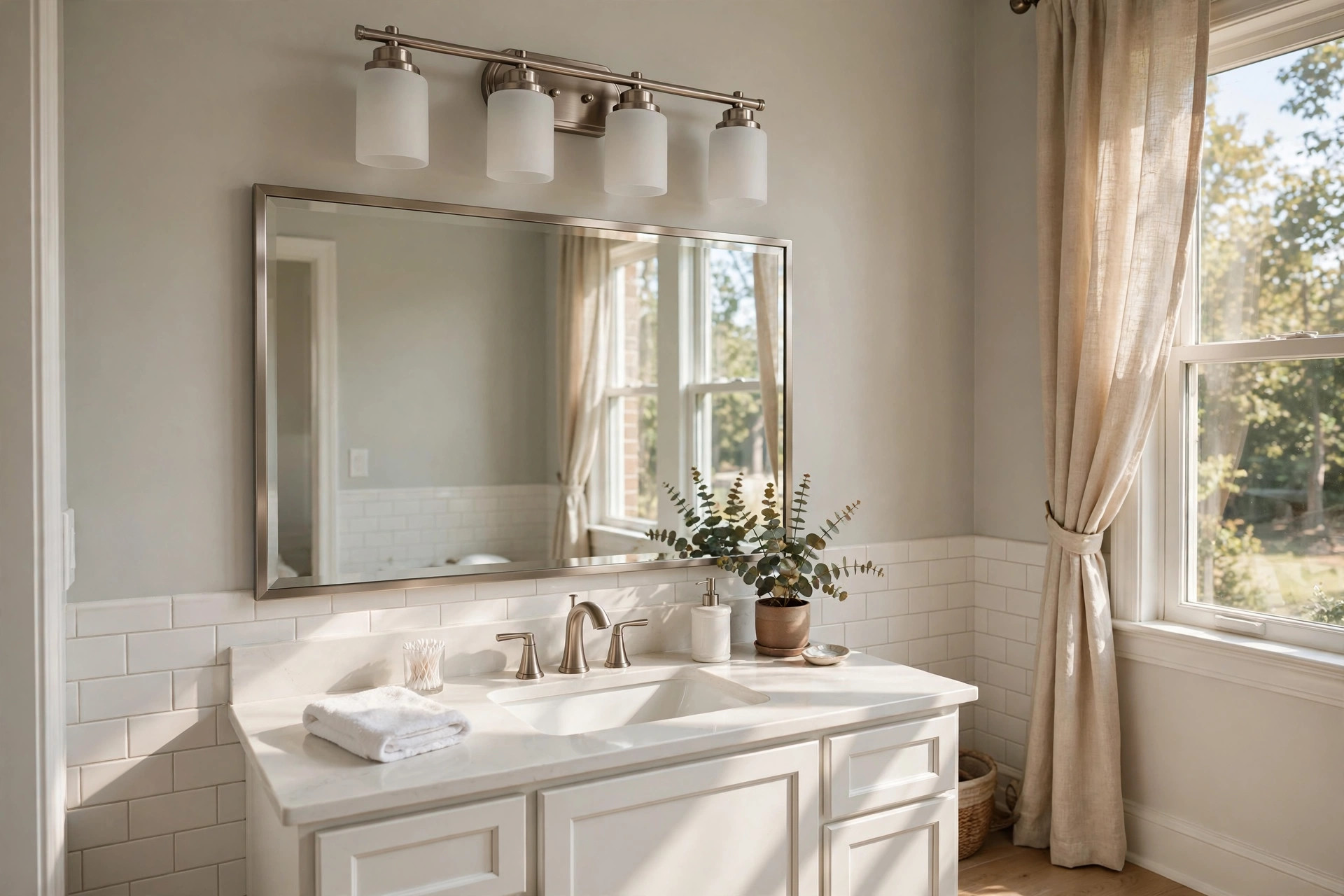
Count the lights on the bar. A two-light bar suits a small powder room with one sink. A three-light bar fits most standard vanities, which run about 30 to 36 inches wide. A four-light bar, like the one shown above, covers a wide mirror or a double-sink vanity up to about 48 inches. Five-light bars exist for grand master baths. Match the light count to the width, not to habit. More lights on a narrow mirror only wastes power.
Brightness
Brightness is measured in lumens, not watts. For a vanity bar, look for a total of about 1,000 to 2,000 lumens across the whole bar. That range lights a face well without glare. One bulb of 800 lumens was once called a 60-watt bulb. A bar with three such bulbs gives 2,400 lumens, which suits a large room. A small bath needs less.
If the bar is dimmable, check that the dimmer in your wall works with the light type. LED bars need LED-rated dimmers. An old dimmer built for incandescent bulbs can make an LED bar buzz or flicker. The maker lists matched dimmers on the package or on its site. Guides on Energy Star explain how to pair efficient lighting with the right controls.
Color Temperature
Color temperature tells you whether the light looks warm, white, or blue. It is measured in kelvin. For a bathroom, most people like 2700 to 3000 kelvin. That range gives a warm white glow, close to old incandescent bulbs. It flatters skin and makes the room feel calm.
A value of 3500 to 4000 kelvin gives a cooler white light. It suits a modern bath with gray tile and chrome parts. It shows colors more truly, which helps with makeup. Values above 5000 kelvin look harsh and blue. They belong in a garage, not over a mirror. Pick one temperature and stay with it, so all bars in the bath match. Product pages on Philips show how kelvin numbers map to real room looks.
CRI and Finish
CRI stands for Color Rendering Index. It runs from 0 to 100. A higher number means colors look true under the light. For a vanity bar, choose a CRI of 90 or more. At that level, skin tones and makeup shades show as they should. Cheap bars with a CRI near 80 make faces look flat or gray.
The finish of the bar should match your faucet and cabinet pulls. Brushed nickel, matte black, chrome, and oil-rubbed bronze are the common choices in the USA. A bar that matches the rest of the hardware makes the bath look planned and neat.
Types of Vanity Light Bars
LED Bars with Built-in Light
Most new bars use LED parts built into the fixture. You never change a bulb. The maker claims a life of 30,000 to 50,000 hours. At three hours a day, that is decades of use. These bars use little power, often under 30 watts for the whole bar. They give even light and turn on at full brightness at once.
The catch is that when the LED part fails, you must replace the whole bar. For most buyers, that trade is fair, since the bar should last a very long time. Retailers such as The Home Depot carry wide ranges of these bars in many finishes.
Bars That Take Bulbs
Some bars take standard bulbs, usually the small candelabra type with an E12 base. These give you freedom. You can try warm or cool bulbs. You can pick dimmable or smart bulbs. When a bulb dies, you swap it in seconds. The fixture itself can last a lifetime.
The cost is higher power use if you pick old-style bulbs, and you must buy bulbs on top of the bar. Choose LED bulbs for these fixtures to keep power low and life long. Stores like Lowe’s sell both the bars and matched LED bulbs. Design shops such as Lumens and Lamps Plus carry these fixtures in every finish.
Upward and Downward Facing Bars
Most bars point the shades up or down. Shades that point up bounce light off the ceiling. The room glows soft and even. Shades that point down throw light straight onto the sink and your face. That helps with close work such as shaving. Some bars let you mount the shades either way, so you can test both and keep what you like.
Hollywood and Globe Bars
Hollywood bars carry a row of round exposed bulbs around or above the mirror. They give very even light on the face, which is why makeup artists like them. They use more bulbs and can feel bright in a small bath. If you like this style but want softer light, pair it with frosted bulbs.
Cost and Price
Vanity light bars in the USA fall into clear price bands. Budget bars cost 25 to 60 dollars. They use simple metal, basic glass shades, and often take bulbs. They suit a rental or a quick refresh.
Mid-range bars cost 60 to 150 dollars. This band holds most of the best values. You get solid finishes, built-in LED parts, good CRI numbers, and clean design. For a family bathroom, a bar in this band should serve for many years.
High-end bars cost 150 to 350 dollars and more. They come from design brands with fine metalwork, hand-blown glass, and exact color control. They suit a full remodel of a master bath. Above 350 dollars, you pay mostly for the brand name.
Watch for hidden costs. If the bar takes bulbs, add the price of LED bulbs. If you need a new dimmer, add 20 to 40 dollars. If you hire an electrician, plan on 100 to 200 dollars for a simple swap where the wires already exist. A like-for-like swap is a job many handy owners do themselves, but local codes vary, so check your town rules first.
Care and Upkeep
A vanity light bar needs little care. Dust the shades every month with a dry cloth. Dust dims the light more than most people think. Once or twice a year, take the shades off and wash them in warm soapy water. Let them dry fully before you put them back. Water spots on glass scatter light and cut brightness.
For bars with built-in LED parts, there is nothing to replace. For bars that take bulbs, keep one spare bulb in a drawer. When a bulb dies, let the fixture cool, then swap the bulb by hand. Never force a bulb. If it will not seat, the socket may be bent or corroded, and the bar may need a look from an electrician.
Tighten the mounting screws once a year. Heat and steam can work them loose over time. A bar that sags or tilts throws light in the wrong place. A small level tool helps you set it straight.
Safety
A bathroom is a wet place, and water and power do not mix. Buy a bar that is rated for damp locations at least. The rating is printed on the package and on the fixture. Damp-rated parts resist steam and splashes. If the bar sits very close to a shower or tub, choose one rated for wet locations instead.
Turn off the power at the breaker before you touch any wiring. Test with a non-contact tester to be sure the wires are dead. If the old fixture has no ground wire, or if you see scorched wire nuts, stop and call an electrician. Guides from the Department of Energy explain safe home lighting practices in plain language.
Keep paper, cloth, and sprays away from hot bulbs. LED parts run cool, but old incandescent bulbs run very hot and can scorch a shade. If you mount the bar low over a shelf, check that nothing stored below can touch a hot shade.
A Note on Related Lighting
A vanity bar works best with support from other lights. Wall sconces on either side of the mirror fill in side shadows. If you plan a wider lighting update, our guide to indoor wall sconces covers side-mounted options. For the rest of the house, see our guides on bedroom table lamps and under cabinet strips. Design ideas and room photos on The Spruce and Houzz can help you picture the finished look, and marketplaces such as Amazon list thousands of buyer reviews for popular bars.
Frequently Asked Questions
How high should I mount a vanity light bar? Mount the bar about 75 to 80 inches from the floor to the center of the fixture. That puts the light just above eye level for most adults. It should clear the top of the mirror by a few inches. If the ceilings are low, keep the bar as high as the space allows.
Should the shades point up or down? Both work. Shades that point down give brighter light on the face and the sink. Shades that point up bounce light off the ceiling and soften the whole room. Try down first if you shave or apply makeup at the mirror. Many bars can mount either way.
What size bar fits a 30-inch vanity? A three-light bar about 22 to 26 inches wide fits a 30-inch vanity well. Keep the bar narrower than the mirror. A bar as wide as the mirror looks crowded and wastes light on the wall.
Are LED vanity bars worth the extra cost? In most cases, yes. They use far less power than old bulbs and last many years. The price gap has shrunk. A mid-range LED bar now costs about the same as a good bulb-type bar plus quality bulbs. Over ten years, the power savings pay for the bar.
Can I put a vanity bar on a dimmer? Yes, if both the bar and the dimmer support dimming. Check the package. LED bars need dimmers rated for LED loads. An old dimmer can cause buzzing or flicker. When in doubt, buy the dimmer the maker recommends.
Do I need an electrician to replace a vanity bar? A simple swap of one bar for another, using the wires already in the wall, is a job many owners do themselves. Turn off the breaker first. If the wiring looks damaged, if there is no ground wire, or if you must run new wire, hire a licensed electrician. Local rules differ by town and state.
A Short Final Word
A vanity light bar is a small purchase with a daily payoff. Measure your mirror, pick a width that fits, and choose warm white light with a high CRI. A mid-range LED bar in a finish that matches your faucet will serve your family for years. Shop with a tape measure in hand, read the ratings on the package, and trust your eyes. The right bar turns a plain bathroom into a bright, honest place to start the day.
References
Amazon. (n.d.). Online shopping. https://www.amazon.com ENERGY STAR. (n.d.). Energy efficient products. https://www.energystar.gov Houzz. (n.d.). Home design and remodeling. https://www.houzz.com Lamps Plus. (n.d.). Lighting and home decor. https://www.lampsplus.com Lowe’s. (n.d.). Home improvement products. https://www.lowes.com Lumens. (n.d.). Lighting and ceiling fans. https://www.lumens.com Philips. (n.d.). Lighting products. https://www.philips.com The Home Depot. (n.d.). Home improvement products. https://www.homedepot.com The Spruce. (n.d.). Home and garden advice. https://www.thespruce.com U.S. Department of Energy. (n.d.). Energy efficiency and renewable energy. https://www.energy.gov
Was this guide helpful?

About David Wilson
The My Garden US editorial team writes practical, in-depth home and garden guides for American homeowners — tested advice, no fluff.