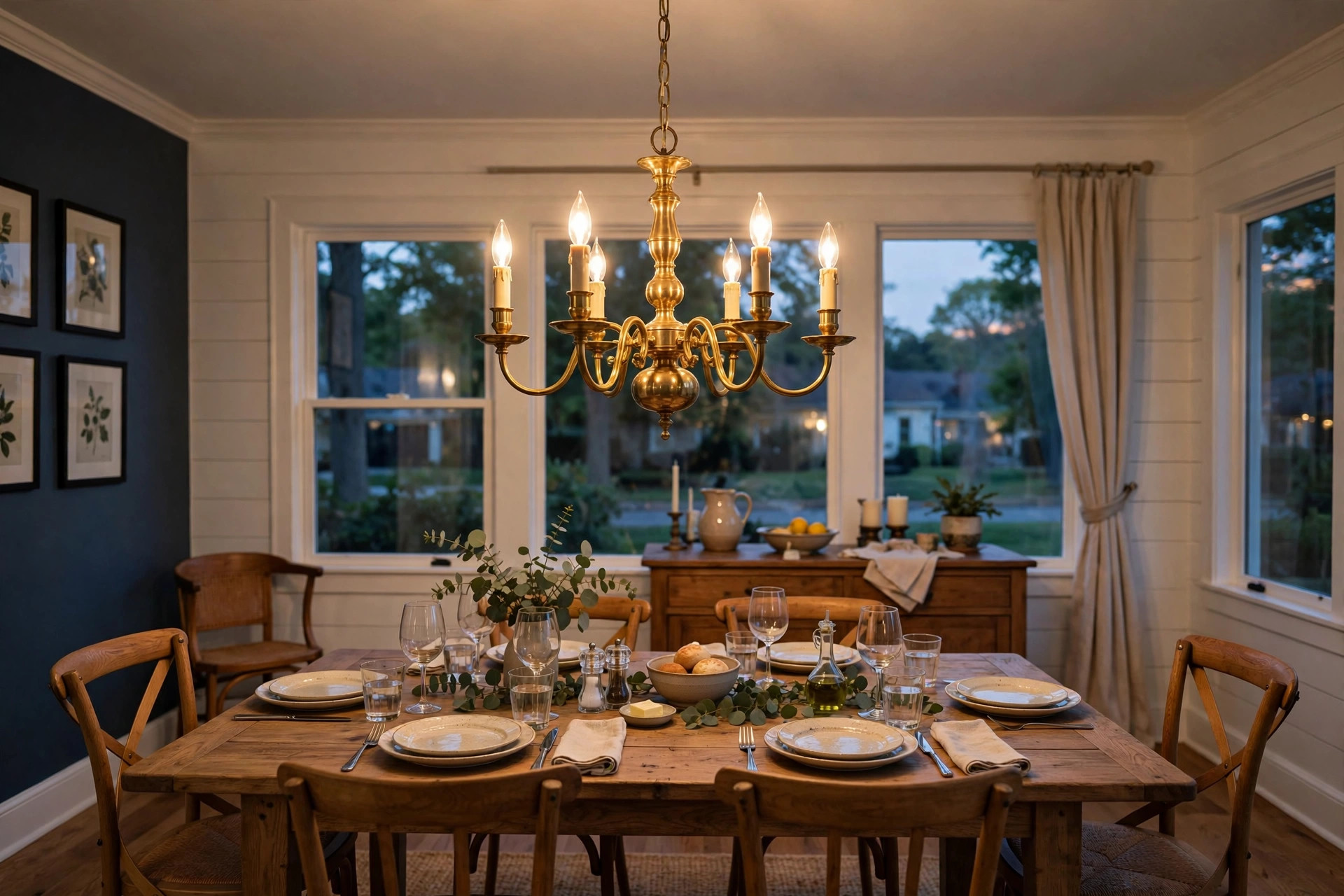

A chandelier is the one light fixture that every guest will see. It hangs over the table where families eat and friends gather. A good one makes the whole room feel warm and finished. A bad one hangs too low, looks too small, or gives off harsh light.
This dining room chandeliers buying guide usa will help you choose with care. You will learn how to measure your room and table, how to pick a style and finish, what to pay, and how to install and care for the fixture. The advice below is plain and practical, and it applies to most American homes.
Why a Dining Room Chandelier Matters
A dining room is built around its table. The light above it sets the mood for every meal. Soft, even light makes food look good and faces look pleasant. Bright, glaring light does the opposite. It makes people squint and want to leave the table.
Lighting designers treat the dining room chandelier as the anchor of the room. Other lamps and wall lights play a supporting role. Lamps Plus notes that the right fixture size matters more than style in most rooms, because a small chandelier over a long table looks lost no matter how fine it is.
A chandelier also holds its value. Unlike a trendy paint color, a well-made fixture in a classic finish lasts for years. Many homeowners keep the same chandelier through several changes of furniture. That makes this purchase one worth thinking about.
How to Choose: Size and Placement: Dining Room Chandeliers Buying Guide Usa
Size is the first decision, and it is also the one people get wrong most often. The rule of thumb is simple and old. It has guided lighting shops for decades.
Measure the Room
Add the length and width of the room in feet. Change that sum to inches. The result is the right diameter for the chandelier. A room that is 12 feet by 14 feet calls for a fixture about 26 inches wide.
Match the Table
The chandelier should be about one-half to two-thirds as wide as the table. A 60-inch table works well with a fixture 30 to 40 inches across. For a long table, consider two smaller chandeliers instead of one large one. Two fixtures spread light more evenly and look balanced.
Hang It at the Right Height
Hang the bottom of the chandelier 30 to 36 inches above the table top. This is measured from the table surface, not the floor. At this height the fixture lights the food without blocking sight lines across the table. People can talk face to face without the fixture in the way.
If your ceiling is higher than eight feet, add about three inches of drop for each extra foot of ceiling height. A room with a ten-foot ceiling needs the fixture to hang a few inches lower than the standard rule suggests. Many lighting buying guides repeat this rule because it keeps the light where it belongs.
Mind the Walkway
Make sure the fixture does not hang into a walkway. If the dining area opens into a kitchen or living room, keep the chandelier clear of the path. A good test is to walk through the space at a normal pace. If you must duck or step around the light, it hangs too low.
Types and Styles of Dining Room Chandeliers
Chandeliers come in many forms. The style you pick should match the room, not the catalog. Here are the common types sold in the USA.
Traditional Crystal
Crystal chandeliers have cut glass arms and hanging prisms. They throw small rainbows of light across the room. They suit formal dining rooms with classic furniture. They need regular dusting to stay bright. Homeowners in historic districts often pick this style for its timeless look.
Modern Linear
Linear chandeliers are long bars with lights spaced along them. They fit rectangular tables and modern rooms. Many use built-in LED strips that use little energy. Design sites like HGTV often show them in open-plan kitchens that flow into the dining area.
Farmhouse and Rustic
These fixtures use wood beams, metal cages, or candle-style bulbs. They pair well with farmhouse tables and country decor. Black and bronze finishes are the most common. They give a warm, casual glow that suits family meals.
Transitional
Transitional chandeliers mix old and new. They may use classic shapes with modern materials, or simple lines with warm metal finishes. This style works in rooms that are neither fully formal nor fully casual. It is a safe choice when you plan to change furniture later.
Drum and Globe
Drum chandeliers use a fabric or metal shade shaped like a drum. Globe styles use glass spheres. Both spread light softly and cut glare. They work well in rooms with low ceilings because they read as one clean shape. Fabric shades need care around steam and cooking smells.
Candle-Style and Tiered
Candle-style fixtures mimic old candelabra with small flame-shaped bulbs. Tiered chandeliers have two or more rings of light. Both suit larger rooms and taller ceilings. They make a strong statement, so they need a room big enough to carry them.
What to Look For Before You Buy
Bulb Type and Brightness
Most new chandeliers use LED bulbs or accept standard screw-in bulbs. LED bulbs last for years and use little power. The U.S. Department of Energy explains that efficient lighting can cut the energy a fixture uses by a large share. Look for bulbs with a warm color, around 2700K to 3000K, for dining rooms. Cool white light feels wrong over food.
Brightness is measured in lumens, not watts. A dining room usually needs 300 to 400 lumens per fixture for a soft glow, or more if the chandelier is the only light source. Philips and other bulb makers print lumen ratings on every box, so compare the numbers, not the watt claims.
Dimmability
A dimmer switch is close to a must in a dining room. Full brightness suits homework and games. Low light suits dinner parties and holidays. Check that both the chandelier and the bulbs are marked dimmable. Mixing a non-dimmable bulb with a dimmer can cause flicker and buzz. ENERGY STAR lists certified dimmable LED bulbs that perform well with common dimmers.
Finish and Material
Common finishes include brass, brushed nickel, matte black, bronze, and chrome. Brass and gold tones are warm and current. Black and bronze feel classic. Chrome and polished nickel suit modern rooms. Pick a finish that repeats somewhere else in the room, such as cabinet handles or a mirror frame. This small repeat ties the room together.
Metal fixtures last longer than plastic ones. Glass shades clean easily. Fabric shades soften light but hold dust. Check the weight before you buy. A heavy fixture may need extra support in the ceiling box.
Ceiling Type and Slope
Most homes have flat ceilings. Some have sloped or vaulted ceilings. If yours is sloped, buy a fixture with a chain or a sloped-ceiling adapter. A rigid stem will hang at an angle and look wrong. Many retailers, including Lowe’s, sell adapters and longer downrods for high ceilings.
Room Proportion and Furniture Scale
Step back and look at the room as a whole. A heavy crystal fixture can crowd a small room. Take a photo of your room and hold it next to the product photo. This simple check catches scale mistakes before the box arrives.
Where to Shop in the USA
American shoppers have many choices. Big home improvement stores such as Home Depot and Lowe’s carry many styles in store, so you can see the finish in person. Specialty lighting shops offer design help and wider ranges. Online retailers like Lumens stock modern brands with detailed specs. Review sites such as CNET test lighting products and can help you compare features.
If you are furnishing other rooms at the same time, think about the whole house. Coordinated lighting feels calm. For example, some homeowners match their dining room chandelier finish with bedroom table lamps or with vanity light bars in nearby bathrooms. Outdoors, solar path lights can carry a similar finish along the front walk.
Cost and Price in the USA
Chandelier prices vary widely. A clear picture of the ranges helps you set a budget.
Budget Range: 75 to 200 Dollars
Fixtures in this range are often small or simple. They suit apartments, rentals, and first purchases. Check reviews for notes on thin metal or poor wiring.
Mid Range: 200 to 700 Dollars
This is the sweet spot for most homes. You get solid metal frames, better finishes, and more style choices. Many of the best-selling fixtures in the USA sit in this range. Dimming features and quality shades are common here.
High End: 700 Dollars and Up
High-end fixtures use heavy brass, hand-cut crystal, or designer names. They suit formal dining rooms and large spaces. Lead times can be long for made-to-order pieces. Expect to pay extra for installation of heavy fixtures.
Installation and Extra Costs
Budget 100 to 300 dollars for professional installation if you hire an electrician. Costs rise for high ceilings, heavy fixtures, or rooms that need a new ceiling box. A dimmer switch adds 30 to 80 dollars if you do not already have one. Some retailers offer installation services at checkout.
Ways to Save
Shop end-of-season sales and open-box deals. Floor models from lighting shops often sell at a discount. Buying a fixture that uses standard bulbs keeps future costs low, since you will not need pricey specialty bulbs. Energy-efficient bulbs also trim the electric bill month after month.
Installation Basics
Many homeowners hang a chandelier themselves. Others call an electrician. Either way, these points matter.
First, turn off the power at the breaker, not just the wall switch. Test with a voltage tester before you touch any wire. Second, check the ceiling box. It must be rated to hold the weight of the fixture. An old box meant for a small flush mount may not be safe for a 40-pound chandelier. If the box is not rated for a fan or fixture, replace it.
Third, assemble the fixture on the floor before you lift it. Thread the chain or stem through, attach the shades, and wire it according to the instructions. White wire goes to white, black to black, ground to ground. Use wire nuts and wrap them with electrical tape. Fourth, have a helper hold the fixture while you connect the wires. A second pair of hands makes the job far safer.
If the ceiling is high or the fixture is heavy, hire a licensed electrician. The cost is small next to the risk of a fall or a bad connection. Many local electricians hang a chandelier in under an hour.
Care and Upkeep
A chandelier stays bright with simple care. Dust it every few weeks with a soft cloth or a feather duster. For crystal, use a damp cloth and a mild cleaner once or twice a year. Turn off the power and let the bulbs cool before you clean.
Replace burned-out bulbs promptly. One dead bulb changes the look of the whole fixture. Keep a spare box of the same bulbs so the color stays even. LED bulbs rarely burn out, but they do fade over many years. When the light looks dim or yellow, replace the set together.
Check the chain, screws, and mounting hardware once a year. Homes settle and screws loosen. A quick check takes five minutes and prevents a falling fixture. If you smell burning or see flicker that a new bulb does not fix, call an electrician.
Safety Notes
Never exceed the maximum wattage printed on the fixture. Over-wattage bulbs can melt sockets and start fires. This rule matters more than any other in this guide.
Keep fabric shades away from high-heat bulbs. Use LED bulbs near fabric, since they run cool. Keep the fixture clear of curtains and tall plants. If children can reach the fixture, choose one that hangs well above their heads.
For homes with old wiring, have an electrician check the circuit before adding a heavy fixture. Old cloth-covered wire cannot always carry the load of a modern chandelier with many bulbs. The check is cheap and it brings peace of mind.
Frequently Asked Questions
What size chandelier do I need for a 6-person dining table?
A table for six is usually 60 to 72 inches long. Pick a fixture 30 to 42 inches wide, or about one-half to two-thirds of the table length. Hang it 30 to 36 inches above the table top.
How low should a chandelier hang over a dining table?
Hang the bottom of the fixture 30 to 36 inches above the table surface. For ceilings above eight feet, add about three inches of drop per extra foot of ceiling height. The goal is light on the food without blocking the view across the table.
Can I put a chandelier in a dining room with a low ceiling?
Yes. Choose a flush-mount or semi-flush chandelier that hugs the ceiling. Drum and globe styles work well here. Keep the bottom of the fixture at least seven feet above the floor in walkways.
Should the chandelier be centered over the table or the room?
Center it over the table, not the room. The table is where the light is needed. If the table sits off-center in the room, the chandelier follows the table. This looks correct in almost every case.
Are LED chandeliers worth it?
Yes, for most buyers. LED fixtures use less energy, run cool, and last for years without a bulb change. Pick a warm color temperature, 2700K to 3000K, so the light feels right for dining. Check that the fixture is dimmable if you want mood control.
How much does it cost to have a chandelier installed?
Most electricians charge 100 to 300 dollars for a standard install on an eight-foot ceiling. Heavy fixtures, high ceilings, and new wiring add to the cost. Get the price in writing before the work starts.
Final Word
Buying a dining room chandelier comes down to a few clear steps. Measure the room and the table. Pick a size that fits both. Choose a style that suits the room and a finish that repeats elsewhere in the house. Check the bulbs, the dimmer, and the weight. Hang it at the right height, and keep it clean.
Take your time with this purchase. A chandelier is not a small accessory. It shapes every meal, every gathering, and every first impression of your dining room. With the steps in this dining room chandeliers buying guide usa, you can choose one that will serve your home well for many years.
References
CNET. (n.d.). Technology news and reviews. https://www.cnet.com ENERGY STAR. (n.d.). Energy efficient products. https://www.energystar.gov HGTV. (n.d.). Home and garden ideas. https://www.hgtv.com Lamps Plus. (n.d.). Lighting and home decor. https://www.lampsplus.com Lowe’s. (n.d.). Home improvement products. https://www.lowes.com Lumens. (n.d.). Lighting and ceiling fans. https://www.lumens.com Philips. (n.d.). Lighting products. https://www.philips.com The Home Depot. (n.d.). Home improvement products. https://www.homedepot.com The Spruce. (n.d.). Home and garden advice. https://www.thespruce.com U.S. Department of Energy. (n.d.). Energy efficiency and renewable energy. https://www.energy.gov
Was this guide helpful?

About Jennifer Lee
The My Garden US editorial team writes practical, in-depth home and garden guides for American homeowners — tested advice, no fluff.
You May Also Like

Garage Shop Lights for Sale USA: A Plain Buyer’s Guide
August 31, 2026 0 views
Kitchen Track Lighting Texas Homes USA: A Plain Buyer’s Guide
September 10, 2026 0 views
Garage Shop Lights for Florida Homes: A Plain Buyer’s Guide
June 21, 2026 0 views