
Shoppers who search for bathroom linen cabinets usa online deals want two things at once: a cabinet that fits the bathroom and a price that fits the budget. A linen cabinet is the tall, narrow piece of furniture that holds towels, washcloths, toilet paper, and spare toiletries. It stands against the wall or in a corner, and it keeps the bathroom tidy. Buying one online in the United States opens a wide field of deals. Prices swing with the seasons, with store sales, and with the material of the piece. This guide explains how the market works, what to measure, which materials last, and how to buy with care so the deal you find is a good one.
Why Linen Cabinets Matter in the Bathroom
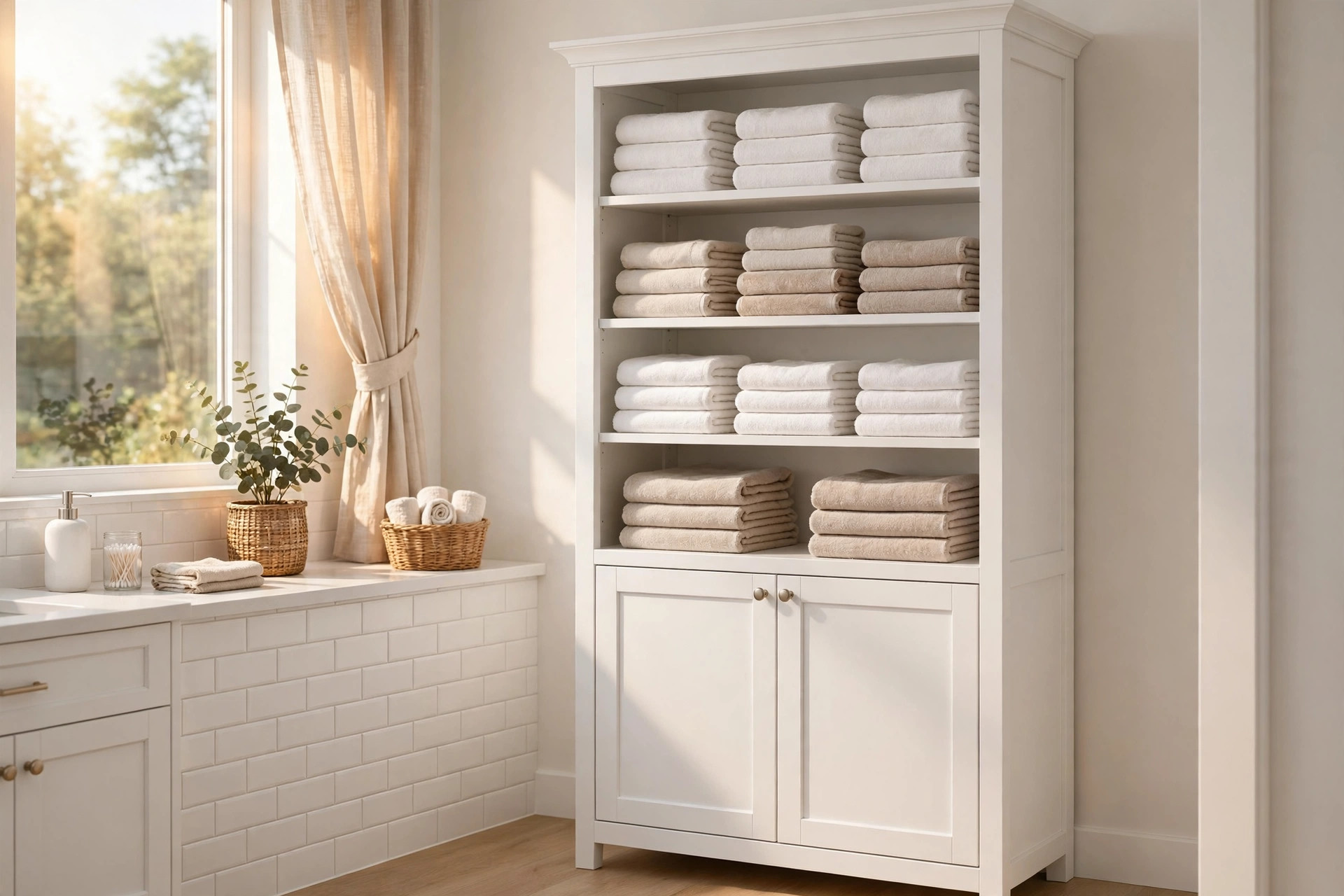
Most bathrooms are small. Towels pile up on the door. Bottles crowd the edge of the sink. A linen cabinet gives these items a home. The best units stand five to six feet tall and use the vertical space that other furniture ignores. That height lets the cabinet hold a full stack of bath towels on one shelf and folded hand towels on the next, with room at the bottom for cleaning supplies.
The value is not only in storage. A bathroom with closed storage looks calm and ordered. Guests notice it. Morning routines run faster when towels and soap sit where you expect them. In homes with one bathroom and several people, a linen cabinet reduces friction. Each person gets a shelf, and the shelves stay in the same order day after day.
Online deals matter because the same cabinet can cost thirty percent more at full price than during a sale. Large American retailers rotate discounts through the year. A buyer who watches prices for a few weeks often lands a unit at a steep markdown. The pages of the bathroom linen cabinets for sale usa listings show how wide the price range runs, and the difference between a list price and a deal price can be larger than many buyers expect.
What to Look for Before You Buy: Bathroom Linen Cabinets Usa Online Deals
Measure the Space
Measure the wall where the cabinet will stand. Note the width, the depth, and the ceiling height. Linen cabinets are narrow, often twelve to twenty inches wide, but some reach thirty inches. Depth runs from ten to fifteen inches in most models. Leave at least two inches of clearance above the unit so doors or drawers open fully, and check that the cabinet will not block a heat vent, an outlet, or the swing of the bathroom door.
Write the measurements on a card and keep it near the computer while you shop. Online listings give dimensions in inches, and it is easy to order a piece that is too wide for the corner you had in mind.
Check the Construction
Open the product details and read about the material. Solid wood stands up best in a damp bathroom. Oak, maple, and pine take stain well and hold screws tightly over years of use. Engineered wood, often called MDF or particleboard, costs less but swells if water seeps into the edges. A good middle ground is a plywood frame with hardwood doors.
Look at the back panel. Thin cardboard backs bend and tear. A cabinet with a finished wood back panel lasts longer and looks better if you ever move it away from the wall. Check whether the shelves adjust. Adjustable shelves let you change the layout as your needs change, which matters when a tall bottle of shampoo joins the household.
Doors, Drawers, and Hardware
Some cabinets have full doors that hide everything. Some mix open shelves with closed ones, so display items sit on top and private items stay behind doors. Glass-front doors give a built-in look but show dust and clutter. Solid doors hide mess and suit busy family bathrooms.
Drawers at the base hold small items such as cotton balls, hair ties, and first aid supplies. Pull the hardware into your judgment. Metal knobs and handles outlast plastic ones. Hinges should feel firm in the product photos and reviews, not loose or thin.
For a broader view of how these units compare across the market, the bathroom linen cabinets buying guide usa walks through sizes and styles in detail, and reader feedback in the bathroom linen cabinets reviews buying guide usa shows which models hold up after a year of daily use.
Types and Options on the Market
Freestanding Floor Cabinets
The freestanding unit is the classic choice. It stands on the floor and needs no screws in the wall. Most come partly assembled or flat-packed. A freestanding cabinet suits renters, since it moves with you. Prices run lower than wall-mounted pieces of the same size, and online deals on these models appear often because retailers stock them in volume.
Wall-Mounted Cabinets
Wall-mounted cabinets hang on brackets and float above the floor. They suit small bathrooms because the floor stays clear for cleaning. They need solid wall anchors, so they work best on studs or tile backed by cement board. Many wall-mounted units are shallower than floor cabinets, which keeps them out of the walkway.
Corner Cabinets
Corner cabinets fit into the unused corner by the tub or the toilet. They have a triangular or L-shaped footprint. They hold less than a full floor cabinet, but they turn dead space into storage. They are a smart pick for powder rooms and half baths where a full unit would crowd the room.
Over-the-Toilet Units
Some linen storage stacks above the toilet tank. These units use the wall space that would otherwise go to waste. They usually come as a frame with shelves and doors. Measure the tank height and the space to the ceiling before you order, and pick a finish that matches the rest of the bathroom.
Open Etagere Styles
An etagere is a tower of open shelves with no doors. It suits folded towels and decorative baskets. It costs less than closed cabinets and shows everything, so it works best for households that keep things neat. Pair it with cloth bins to hide small items.
Cost and Price: What the Deals Look Like
Small etagere and flat-pack towers sell for sixty to one hundred fifty dollars at full price. Mid-range freestanding cabinets with solid doors run one hundred fifty to three hundred fifty dollars. Solid wood or well-finished units from name brands reach four hundred to eight hundred dollars. Custom or designer pieces pass one thousand dollars, but those rarely appear in online deal bins.
Online deals cut these numbers in several ways. Clearance events drop discontinued finishes by forty to sixty percent. Holiday sales, such as Labor Day and Memorial Day, cut twenty to thirty percent off broad lines. Open-box and returned items sell at a discount with full store return policies. Bundle deals, where the cabinet ships with a matching vanity or mirror, lower the unit price when you outfit a full bathroom.
Watch the shipping cost. Some sellers offer free shipping on furniture, and some charge sixty dollars or more for a tall cabinet. A deal that looks strong can fade once shipping joins the total. Also note the tax line. Compare the final checkout price, not the headline price.
Price tracking helps. Many shoppers keep a list of three or four models and check prices each week for a month. Retailers such as the large home improvement chains refresh their promotions at Home Depot and the current offers at Lowe’s on a regular cycle, so patience pays. Set up price alerts where the store offers them, and buy when the price dips below your target.
Where to Find Honest Deals Online
Start with the big home improvement retailers. Their furniture lines carry steady stock, clear product photos, and customer reviews with real bathroom photos. Brand sites such as Kohler and Moen show how finished bathrooms pair storage with fixtures, which helps you judge style. American Standard and Delta Faucet offer the same kind of whole-bathroom view, and their finish guides help you match a cabinet to your faucets.
For design ideas and room photos, HGTV runs bathroom features that show linen cabinets in real homes. This Old House covers bathroom remodels with practical notes on storage placement. Bob Vila publishes buying advice for bathroom storage with plain-language pros and cons. Read the reviews on any listing before you buy. Sort by the lowest rating first, since those comments name the weak points, such as thin backs or doors that warp.
Marketplace sellers can offer low prices, but check the return policy. A cabinet that arrives damaged needs a simple return path. Stick with sellers that accept free returns on furniture, and save the listing page as a PDF in case the terms change.
Care and Upkeep
A linen cabinet lives in the dampest room of the house. Ventilation is the first line of defense. Run the bathroom fan during showers and for twenty minutes after. Wipe up standing water near the base of the cabinet. These two habits do more for the life of the piece than any finish.
Clean the surfaces with a soft cloth and mild soap. Avoid harsh cleaners that strip the finish. Oil the hinges once a year with a drop of household oil so the doors swing without squeak. Tighten screws each spring, since wood moves with the seasons and screws work loose.
Line the shelves with washable shelf paper or thin mats. Towels shed lint, and bottles leak. A liner keeps the shelf clean and lifts out for a wash. Keep heavy items, such as stacks of large bath towels, on the lower shelves. Top shelves suit light items such as spare soap and cotton. This keeps the cabinet stable and stops it from tipping.
If the cabinet stands on a wood floor, put felt pads under the feet. They stop scratches and let you slide the unit out for cleaning behind it. Anchor tall units to the wall with the anti-tip hardware that ships in the box, especially in homes with small children.
Safety in the Bathroom
Bathrooms bring water, heat, and electricity together, so safety deserves attention. Anchor any cabinet taller than four feet to the wall. A full linen cabinet is top-heavy, and a child who climbs the shelves can pull it over. Use the strap or bracket in the box, and drive it into a stud.
Keep medicines and cleaning chemicals on the highest shelf, or better yet in a locked box inside the cabinet. Children reach higher than parents expect. Store the cabinet away from the tub edge so a slip does not end with a fall into sharp corners. Round-cornered designs suit family bathrooms for this reason.
Electrical safety matters near water. If the cabinet sits close to an outlet, keep the outlet covered with a ground-fault protected face when not in use. Never run a cord across the top of the cabinet where a leak could reach it. These are small steps, but they prevent the accidents that fill emergency rooms each year.
Frequently Asked Questions
What size linen cabinet fits a standard bathroom?
Most standard bathrooms take a cabinet twelve to eighteen inches wide, twelve to fifteen inches deep, and sixty to seventy-two inches tall. Measure your wall first. In a small bath, a twelve-inch-wide unit often works best. In a master bath, you can go wider and add a second tower.
Is a freestanding or wall-mounted cabinet better?
Freestanding cabinets suit renters and anyone who wants to avoid drilling into tile. Wall-mounted units suit small bathrooms because they free the floor. Both hold the same goods. Pick the one that fits your space and your comfort with wall anchors.
Can a linen cabinet go next to the shower?
Yes, but keep it at least a foot from direct spray and run the vent fan every time the shower runs. Solid wood or well-sealed finishes handle the humidity. Raw particleboard does not. In a very damp bath, a metal or sealed plastic unit lasts longer than cheap wood.
How do I get the lowest price online?
Track two or three models for a month. Buy during holiday sales or clearance events. Check open-box listings at large retailers. Compare the final checkout price with shipping and tax. Sign up for the store email list, since many chains send a first-order coupon that stacks with sale prices.
Do I need to assemble the cabinet myself?
Most online linen cabinets ship flat-packed or partly assembled. Expect one to two hours with a screwdriver and the included hex key. Read the reviews for notes on unclear instructions. If assembly feels like too much, some retailers offer assembly service at checkout for a fee.
What finish matches most bathrooms?
White and light gray match nearly every bathroom. Wood tones such as oak and walnut suit warm tile and brass fixtures. Black works with modern chrome and dark grout. If you plan to repaint the bathroom later, white is the safest choice because it blends with any color.
A Short Final Word
A linen cabinet is a quiet workhorse. It costs less than a vanity, installs in an afternoon, and changes the feel of the bathroom from cluttered to calm. The online market rewards the patient buyer. Measure the space, pick a material that survives humidity, anchor the unit to the wall, and buy when the price dips. Do that, and the deal you find will serve the household for years.
References
American Standard. (n.d.). Bathroom and kitchen products. https://www.americanstandard.com Bob Vila. (n.d.). Home improvement advice. https://www.bobvila.com Delta Faucet. (n.d.). Kitchen and bathroom faucets. https://www.deltafaucet.com HGTV. (n.d.). Home and garden ideas. https://www.hgtv.com Kohler. (n.d.). Bathroom and kitchen fixtures. https://www.kohler.com Lowe’s. (n.d.). Home improvement products. https://www.lowes.com Moen. (n.d.). Faucets and plumbing fixtures. https://www.moen.com The Home Depot. (n.d.). Home improvement products. https://www.homedepot.com This Old House. (n.d.). Home renovation guidance. https://www.thisoldhouse.com
Was this guide helpful?

About Jennifer Lee
The My Garden US editorial team writes practical, in-depth home and garden guides for American homeowners — tested advice, no fluff.
You May Also Like

Shower Niche Inserts American Homes Guide: A Plain Guide to Built-In Shower Shelves
March 23, 2026 0 views
Mirrored Medicine Cabinets in California Homes: A Plain Guide
July 24, 2026 0 views
Double Sink Vanities for Sale USA: A Plain Guide for Homeowners
July 23, 2026 0 views