
Introduction
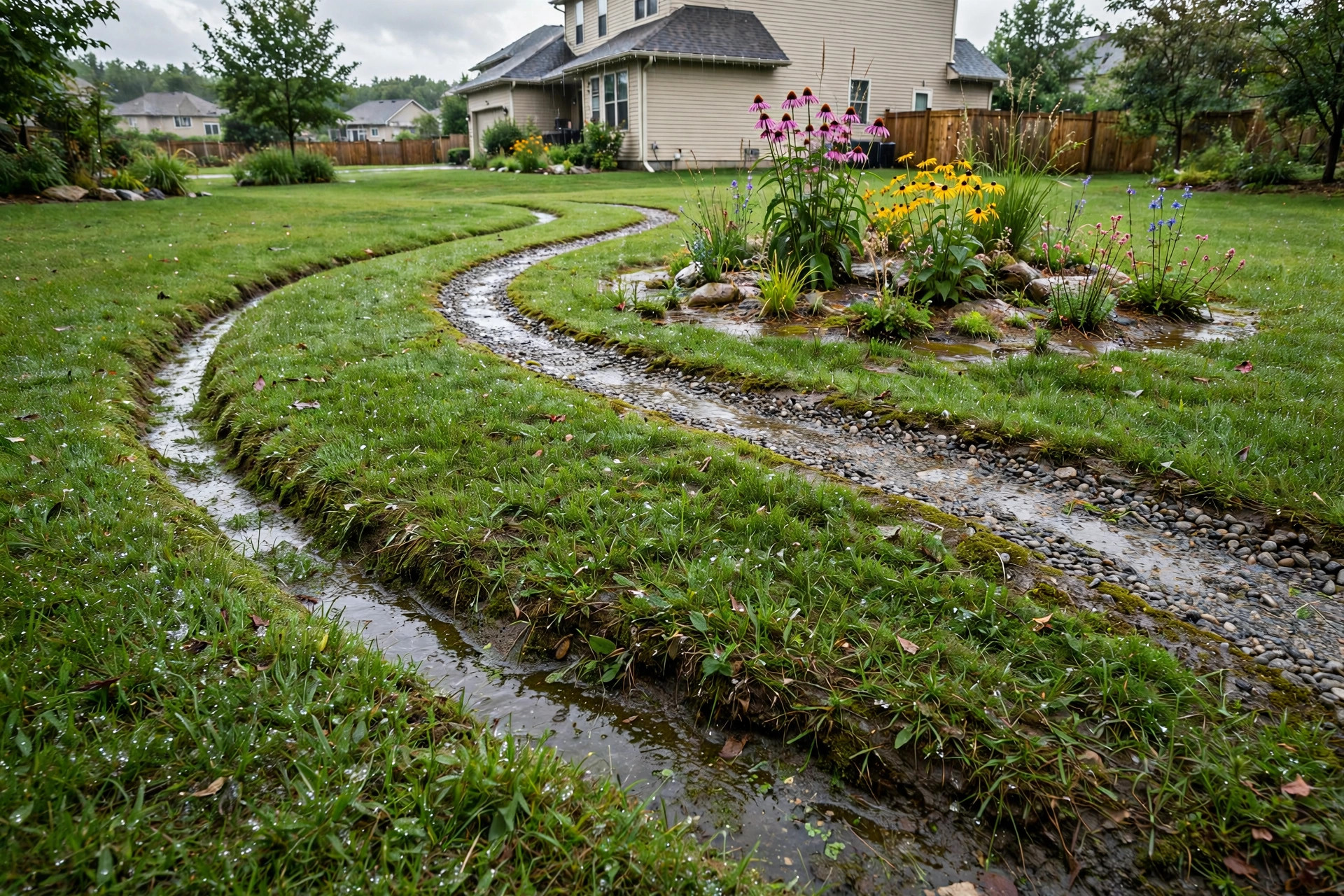
Many homes across the United States have yards that stay wet long after rain stops. Water stands in low spots. Grass turns yellow and dies in patches. Mud forms where children play and where dogs run. The problem is common, and it has more than one cure. This guide covers lawn drainage solutions for soggy yards in plain words, so any homeowner can weigh the choices before spending money.
A soggy yard is not only a sight problem. Standing water hurts the health of a lawn. It can breed mosquitoes. It can seep into basements and crawl spaces, and it can weaken the soil around foundations. Small fixes work in many cases. Some cases need a contractor and heavy work. The right choice depends on where the water comes from, how much of it there is, and what the soil is made of.
Why Soggy Yards Need Attention: Lawn Drainage Solutions for Soggy Yards
Water that stands for three days or more is a sign of poor drainage. Grass roots need air as well as water. When soil stays soaked, air leaves the root zone. Roots rot. The lawn thins, and weeds that like wet soil move in.
Wet soil near a house causes larger trouble. Water follows the path of least resistance, and a low spot near a foundation wall can send water into a basement. Many homeowners first notice a drainage problem not in the yard but in the house: a damp wall, a musty smell, or water on the basement floor after a storm. Fixing the yard often fixes the basement at the same time.
Mosquitoes are another reason to act. Still water in a yard is a breeding ground. A yard that drains within a day or two gives mosquitoes little chance to breed. This matters for comfort and for health.
Signs Your Yard Has a Drainage Problem
The signs are easy to read once you know them. Look for these after a normal rain.
Puddles that stay for more than two days mark low spots where water collects. Yellow or thin grass in those spots shows that roots are drowning. Moss often grows where grass dies from too much water. Soil that feels spongy under foot holds too much water.
Water marks on foundation walls, damp basement corners, or mildew smells point to water moving toward the house. Gutters that dump water at the base of the house make the problem worse. Every one of these signs should be checked before work begins.
How to Choose the Right Fix
Start with the cause, not the tool. Water problems come from a few clear sources. Rain falls on the yard and has nowhere to go. Roof water dumps at the foundation. A neighbor yard or a street sends runoff across the lot. The water table is high, and the soil cannot take more. Each cause points to a different cure.
Watch the yard in a hard rain. See where water comes from and where it gathers. This takes one storm and an umbrella. Mark the low spots with stakes. Note whether water flows toward the house or away from it. This one hour of study saves more money than any product.
Budget and skill set the last boundary. Some fixes need only a shovel, a load of soil, and a free weekend. Others need trenchers, pipe, gravel, and a licensed contractor. The sections below list the common options from simplest to largest.
Common Drainage Options
Surface Grading and Swales
Grading is the act of shaping the ground so water flows away from the house. Soil near the foundation should slope down and away for at least six feet. A shallow ditch called a swale can carry water across a yard to a street or a dry area. Grass grows in the swale, so it looks like a gentle dip in the lawn.
Grading is often the first fix to try. It is cheap if the yard needs only small changes. A few loads of topsoil and a rake can move water in the right direction. For bigger changes, a contractor brings in a machine. Many homeowners finish the job with a lawn roller for leveling uneven ground to press the new soil flat before seed goes down.
French Drains
A French drain is a trench filled with gravel around a pipe with holes in it. Water enters the pipe and flows downhill to a safe exit. The trench is covered with gravel and soil, so grass can grow over it. It is the most common fix for yards that stay wet along a foundation.
French drains work well when the problem is water moving across the surface or just under it. They need a place to send the water: a street gutter, a dry well, or a low corner of the lot. The pipe must slope down along its whole length, about one inch of fall for every eight feet. Without steady fall, water sits in the pipe.
Homeowners with skill can dig a French drain in a weekend. The trench is usually one to two feet deep. Gravel and pipe are cheap materials. Equipment makers such as Toro and John Deere sell and rent trenchers and compact tools used for this kind of job. When in doubt, hire a drainage contractor, since a poorly sloped drain is worse than none.
Dry Wells
A dry well is an underground pit filled with gravel or a plastic tank that holds water and lets it soak into the ground slowly. Roof downspouts often feed into dry wells. The well takes the burst of water from a storm and releases it over hours into the soil.
Dry wells fit yards where the soil drains fairly well but the surface cannot take a heavy burst. They fail in heavy clay, since the water has nowhere to go. Check with the city or county before digging, since local rules may limit where wells can go.
Downspout Extensions and Pop-Up Emitters
The cheapest fix of all is often the downspout. A roof sheds a huge amount of water in a storm. If downspouts end at the foundation, that water soaks the soil next to the house. Solid pipe can carry it ten or twenty feet away. A pop-up emitter at the end opens under water pressure and lets water spread on the lawn, then closes when the flow stops.
This fix costs little and works in a day. It solves many foundation wet spots by itself. Make sure the pipe slopes away from the house.
Rain Gardens
A rain garden is a shallow planted basin that catches runoff and lets it soak in. Native plants with deep roots drink the water. The garden holds water for a day or two after rain, then dries. It is the prettiest fix on this list and it helps the yard look planned rather than patched.
Rain gardens suit yards with a low spot away from the house. They need plants that survive both wet feet and dry spells. A rain garden will not cure a flooded basement, but it can take the edge off a wet lawn and it cuts runoff to the street.
Sump Pumps and Interior Fixes
When water reaches the basement, the fix moves inside. A sump pump sits in a pit in the basement floor. Water that seeps in collects in the pit, and the pump pushes it out through a pipe to a safe spot outside. This is standard work for wet basements and it is usually paired with outside grading or drains. This is contractor work for most homeowners.
Cost and Price
Costs vary by region and by the size of the job. The numbers below are broad United States ranges from recent years, given so you can plan. Get local bids before you decide.
Downspout extensions cost little. Pipe and fittings run a few dollars per foot, and a full house of extensions often lands between one and three hundred dollars in materials. Many homeowners do this work themselves in a weekend.
Grading small areas with topsoil costs a few hundred dollars in soil and seed. Machine grading of a whole yard runs from one thousand to five thousand dollars, depending on size and access. Many owners reseed after grading; check typical hydroseeding cost per square foot to compare with sod.
French drains usually cost between twenty and fifty dollars per foot installed. Doing it yourself cuts that roughly in half, with gravel and pipe as the main costs. Dry wells run from five hundred to two thousand dollars each installed. Rain gardens are modest in cost, often three to eight hundred dollars for plants and soil. Sump pump systems, including the pit, pump, and discharge line, usually cost between one and three thousand dollars installed.
Beware of cheap quotes that skip the hard parts. A French drain with no slope, a dry well in clay, or a grading job that sends water to the neighbor will fail. Ask how the contractor plans the fall of the pipe and where the water goes. Good answers beat low prices.
Care and Upkeep
Drainage systems need care like any part of the house. French drains can clog with silt and roots over years. Flush the pipe with a hose once a year through a cleanout if one was installed. Keep soil and mulch from burying the gravel surface.
Swales need mowing like the rest of the lawn. Do not fill them in with soil or garden beds, since that blocks the flow path. Regrading may be needed after a few years of settling.
Keep gutters and downspouts clear. Leaves and debris in gutters send water over the edge in sheets, which defeats the whole system. Clean gutters in fall and spring.
Rain gardens need the care any garden needs: weeding, mulch, and new plants as old ones age. Do not use harsh chemicals in a rain garden, since they wash into the ground with the water.
After any drainage job, the lawn itself needs repair. Wet years kill grass in low spots. Overseeding in fall rebuilds a thin lawn; a step-by-step guide to overseeding lawn in fall helps plan the timing. Water new seed lightly and often, and keep foot traffic off until it roots.
Safety
Digging is the main risk. Call the national dig-safe line, 811, before any digging deeper than a foot. Buried power, gas, water, and phone lines cross many yards. The service marks lines for free.
Trenches can cave in. Keep trenches narrow and never climb into a deep narrow trench. Wear boots with good grip on wet soil. Use eye protection when cutting pipe and gloves when handling gravel.
Electrical work needs care. Sump pumps plug into grounded outlets. Keep cords out of standing water. A licensed electrician should wire a new pump circuit.
Chemical safety matters too. Wet yards invite fungus, and some owners reach for strong treatments. Read labels and keep children and pets off treated areas until dry. In most cases, fixing the water fixes the fungus without chemicals.
Machines bring their own risks. Trenchers, compactors, and pumps are heavy and loud. Read the manual before renting. Briggs & Stratton publishes safety and maintenance guides for the engines that power much of this equipment. When a job feels too big for your skill, hire it out.
Frequently Asked Questions
How do I know if I need a French drain or just better grading?
If water flows across the yard on the surface toward the house, grading or a swale usually fixes it. If water seeps up in a low band or sits along a foundation even after grading, a French drain is the better tool. Watch the yard in rain and note whether the water moves or just sits.
Can I install a French drain myself?
Yes, many homeowners do. The hard parts are digging and keeping a steady slope. Renting a trencher speeds the digging. If the run is long, deep, or near utilities, hire a contractor.
Will a dry well work in clay soil?
Usually not. Clay drains too slowly for a dry well to empty between storms. In clay, send water to the street, a ditch, or a storm system if local rules allow. A contractor can test the soil first.
How long does a French drain last?
A well built drain with filter fabric and clean gravel can last twenty to thirty years. Drains without fabric clog with silt much sooner. Annual flushing through a cleanout extends the life.
Does my sprinkler system make the yard soggy?
It can. Overwatering is a common cause of wet spots. Most lawns need about one inch of water per week from rain and sprinklers together. If puddles form after the sprinklers run, cut back the time. Notes in many affordable sprinkler installation cost estimates cover controllers that skip watering after rain.
Should I fix drainage before or after landscaping?
Fix drainage first. New plants, patios, and sod all suffer if the water problem stays. Do the grading and pipes, let the soil settle through a few rains, then plant and sod.
A Short Final Word
A soggy yard is a solvable problem. Start by watching the water in a storm. Fix the downspouts, shape the ground to slope away from the house, and choose a drain or a well only if the simple steps fall short. Get the fall of the pipe right, send the water to a legal place, and keep the system clean.
References
Toro. (n.d.). Lawn and garden equipment. https://www.toro.com
Deere & Company. (n.d.). Lawn and grounds care. https://www.deere.com
Briggs & Stratton. (n.d.). Engines and outdoor power equipment. https://www.briggsandstratton.com
Was this guide helpful?

About Michael Thompson
The My Garden US editorial team writes practical, in-depth home and garden guides for American homeowners — tested advice, no fluff.
You May Also Like

White Grub Treatment Timing for Midwest Lawns
January 14, 2026 0 views
Affordable Retaining Wall Builders Near Me: How to Find Good Help at a Fair Price
April 29, 2026 0 views
Red Mulch vs Brown Mulch: Which Better for Your Garden Beds?
June 4, 2026 0 views