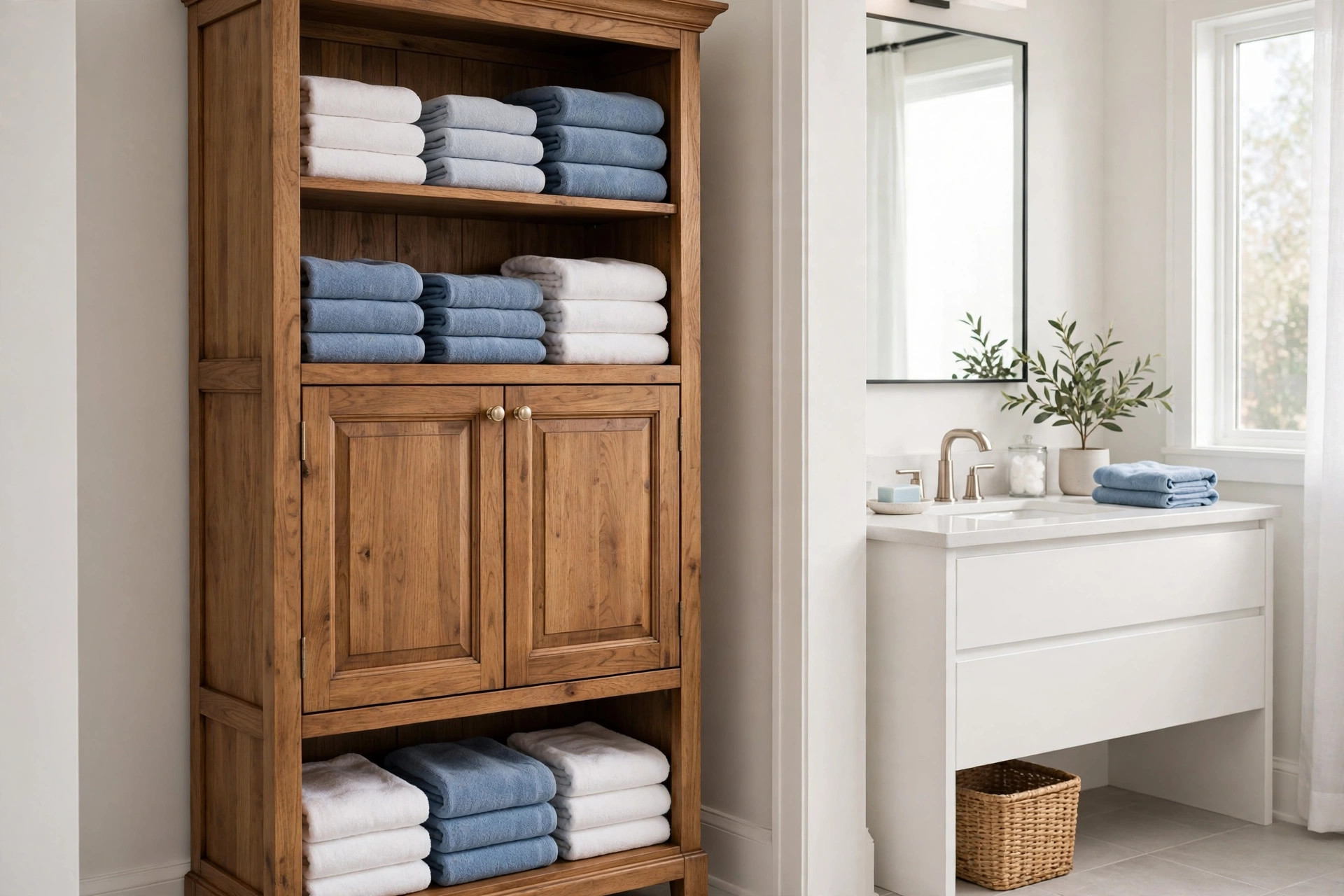

Shoppers who search for bathroom linen cabinets california homes usa buyers trust often want one thing. They want a tidy bathroom. They want clean towels within reach. They want a cabinet that fits the room and looks right. A linen cabinet is a tall, narrow piece of storage. It holds towels, sheets, and toiletries. It can stand on the floor or hang on the wall. Many California homes need this kind of storage. Bathrooms in the state are often small. Older homes in Los Angeles, San Francisco, and San Diego have little built-in space. A linen cabinet fills the gap. It gives every towel a home. This guide walks through why it matters, how to choose, the main types, the costs, the care, and the safety points. It also answers common questions at the end.
Why It Matters
A bathroom without storage gets messy fast. Towels pile on the floor. Bottles crowd the sink. A linen cabinet changes this. It keeps clean linens separate from damp ones. It keeps extra toilet paper, soap, and cleaning supplies in one place.
California homes have their own needs. Many are small. A tall, slim cabinet uses the vertical space that often goes to waste.
Humidity is another matter. Bathrooms get steamy after every shower. Linens stored in a damp place can smell musty. A good cabinet keeps air moving around the towels. Open shelves or slatted doors help. Closed cabinets with vented backs help too.
Style matters as well. California homes range from Spanish-style cottages to mid-century ranches to modern condos. A cabinet that matches the home adds value. It makes the bathroom feel planned, not patched together. Real estate agents often say storage sells homes. A well-placed linen cabinet can help a bathroom feel larger and more finished.
What to Look For: How to Choose: Bathroom Linen Cabinets California Homes Usa
Choosing the right cabinet takes a few steps. Start with the space. Measure the wall or corner where the cabinet will stand. Note the width, the depth, and the height. Leave room for the door to swing open. Leave room for yourself to reach the shelves. Many buyers skip this step and end up with a cabinet that blocks a door or hangs too low over the toilet.
Next, think about what you will store. Count your towels and sheets. Add space for medicines, first-aid kits, and cleaning supplies. A family of four needs more room than a single person.
Look at the material. Wood is classic and warm. But solid wood can warp in steam. Engineered wood with a sealed finish holds up better in a wet bathroom. Metal cabinets suit modern rooms. They do not rust if the coating is good. Plastic cabinets are light and cheap. They work well in a garage bath or a pool house.
Check the finish. A sealed or lacquered finish keeps moisture out. Unfinished wood will soak up steam and stain. In a California home near the coast, a strong finish matters even more.
Test the doors and drawers. Open them. Close them. They should move smooth and shut flat. Cheap hinges sag over time.
Think about the style match. A white cabinet pairs well with most bathroom sink vanities. A dark wood cabinet suits a room with warm tile. A glass-front cabinet shows off folded towels. It also shows off clutter, so keep that in mind.
Finally, check the mount. A tall cabinet full of towels gets heavy. It can tip over. Look for cabinets that bolt to the wall. This is a must in homes with small children.
Types and Options
Linen cabinets come in several forms. Each suits a different bathroom and budget.
Freestanding Tall Cabinets
These stand on the floor. They are the most common type. They range from five to seven feet tall. They are usually twelve to twenty inches wide. A freestanding unit needs no tools to install. You place it, level it, and anchor it to the wall. Many have a mix of open shelves and closed doors. The open top shows off rolled towels. The closed bottom hides cleaning supplies.
Over-the-Toilet Cabinets
These mount above the toilet tank. They use dead space that is otherwise wasted. They are slim and shallow. They hold light items like spare rolls and folded hand towels. Check the height before you buy. The bottom shelf should sit at least six inches above the tank lid.
Wall-Mounted Cabinets
These hang on the wall like a medicine cabinet, but larger. They keep the floor clear. That makes mopping easy. They suit very small bathrooms. They must be fixed to wall studs. Drywall anchors alone are not enough for a loaded cabinet. If your bathroom has tile walls, you will need a masonry bit and the right anchors.
Corner Cabinets
These fit into a corner. They turn an awkward angle into useful space. Many are triangular or have an angled front. They are smaller than tall freestanding units. They suit powder rooms and half baths. They hold a few towels and the guest supplies.
Built-In and Custom Cabinets
A built-in cabinet is framed into the wall or between studs. It looks clean and permanent. It adds resale value. A carpenter can build one to match the exact trim of the house. Custom work costs more. Talk to a local home remodeling advice source before you cut into a wall. Pipes and wires may run behind it.
Materials Compared
Wood, engineered wood, metal, and plastic each have trade-offs. Solid oak or maple looks rich and lasts for years. It costs the most. It needs a good sealant in a wet room. Plywood with a veneer is a strong middle choice. It resists warping better than solid boards. MDF with a laminate skin is the budget pick. It looks clean when new. But the edges swell if water gets in.
Powder-coated steel cabinets suit a modern bathroom. They wipe clean. Check that the coating covers every edge. Bare metal will rust in steam. When you compare finishes, read what bathroom fixture brands and bathroom product makers say about moisture. The same rules apply to cabinets. Seal every surface. Keep air flowing.
Cost and Price
Prices vary by size, material, and brand. A simple freestanding laminate cabinet costs between forty and one hundred dollars. A mid-range engineered wood cabinet runs from one hundred to three hundred dollars. This is the sweet spot for most buyers.
A solid wood or custom cabinet costs from three hundred to over one thousand dollars. Built-in custom work can run higher still. Wall-mounted and over-the-toilet units cost less. Many run from thirty to one hundred fifty dollars.
Watch for added costs. Delivery fees apply to heavy pieces. Anchors and mounting hardware may not be in the box. Large home improvement retailers and home improvement stores often run sales in January and during spring remodel season.
A linen cabinet is not a big-ticket item like a full remodel. But a bad pick wastes money. A warped forty-dollar cabinet that must be replaced in a year costs more than a solid two-hundred-dollar one that lasts ten.
Where to Place It
Placement shapes how useful the cabinet is. The best spot is near the shower or tub. You can grab a dry towel without dripping across the floor.
Avoid placing the cabinet where it blocks the swing of the bathroom door. Keep it away from direct spray. If the bathroom has no vent fan, add one. A vent fan pulls steam out. It protects the cabinet and the linens inside. Many home guides list vent fans as a top bathroom upgrade.
Care and Upkeep
A linen cabinet lasts long with simple care. Dust the shelves once a month. Wipe the outside with a damp cloth. Dry it after. Do not use harsh bleach on wood finishes. A mild soap and water mix is enough.
Check the hinges twice a year. Tighten loose screws. A drop of oil keeps them quiet. Look at the back panel. If it is swelling or soft, moisture is getting in. Move the cabinet away from the steam source. Run the vent fan longer after showers.
Wash stored linens often. Towels that sit for months can smell stale. Refold them twice a year. This also lets you check for mold spots on the shelves. In damp coastal areas, leave the cabinet doors open for an hour each week. Airflow keeps mold away.
If the finish chips, touch it up fast. A small chip lets water into the wood. Sand the spot lightly. Dab on matching paint or sealant. Let it dry fully before you close the door.
For glass fronts, use a streak-free cleaner. For open shelves, a quick wipe keeps dust off the folded towels. Many home and bathroom care guides suggest a spring check of all bathroom storage. Add your linen cabinet to that list.
Safety
Safety is easy to forget with furniture. A tall cabinet can tip. Anchor every freestanding unit to the wall. Use the anti-tip strap that comes in the box. This is vital in homes with toddlers. It also matters in California, where earthquakes can shake a room.
Do not store heavy items on the top shelf. Keep the heavy stacks low. This lowers the center of gravity. It also saves your back. You should not lift a tall stack of wet towels over your head.
Keep medicines in a locked box if children visit. A linen cabinet is at child height. Move pills and razors to a high, locked spot.
Make sure wall-mounted units are fixed to studs. A cabinet that pulls off the wall can injure someone. Follow the maker’s weight limit. It is printed in the manual or on the maker’s site. Overloading bends shelves. Bent shelves can snap and drop items on feet.
Linen Cabinets and the California Home Style
California homes have a look. Many buyers want storage that fits it. In a Spanish-style home, a cabinet with arched details or warm stain works well. In a mid-century ranch, clean lines and teak tones fit. In a modern condo, white or gray with flat fronts looks right.
Color choice affects the room feel. White cabinets make a small bath look larger. Dark wood adds warmth but can shrink the feel of a tiny room. Glass fronts add light. They also show clutter, so keep that in mind.
Small updates lift the whole room. A fresh coat of paint can make a dated cabinet look new. For a worn tub nearby, some owners also look at bathtub refinishing kits as a low-cost refresh. For more ideas, browse bathroom design ideas and fixture makers to find pieces that match the cabinet’s finish.
Think about the towels you will show. Rolled white towels look like a hotel. Folded colored towels add a soft accent. Keep the display simple. A cabinet stuffed too full looks messy even when it is clean.
Buying Tips for California Shoppers
California is a big state. Delivery times vary. If you order online, check the ship time to your zip code. Measure your doorways and halls. A tall cabinet may not turn a tight stair corner. Many returns happen for this reason.
Check the return policy. Some stores charge restocking fees on furniture. Keep the box until the cabinet is up and you are happy.
Read reviews with care. Look for reviews from buyers in humid or coastal areas. Their notes on warping and rust matter more to you than a review from a dry inland state. Reviews that mention long-term use are worth more than first-day photos.
Many shoppers pair a cabinet purchase with other updates. New rain shower heads change the feel of the shower. New bathroom hardware updates the sink area. Plan the room as a whole.
FAQ
How tall should a bathroom linen cabinet be?
Most stand between sixty and seventy-two inches tall. This gives four to six shelves. Match the height to your ceiling and your reach. You should reach the top shelf without a stool.
Can I put a linen cabinet in a very small bathroom?
Yes. Use a wall-mounted or over-the-toilet unit. A slim corner cabinet also works. Keep it shallow, around ten to twelve inches deep. Light colors help the room feel open.
What is the best material for a humid bathroom?
Engineered wood with a sealed finish is a strong pick. It resists warping and costs less than solid wood. Powder-coated metal is another good choice. It wipes clean and does not absorb moisture. Avoid raw MDF in a steamy room. Its edges swell when wet.
How do I keep towels fresh inside the cabinet?
Wash towels before you store them. Do not pack shelves too tight. Leave small gaps for air. Run the bath vent fan after every shower. Once a month, leave the doors open for an hour. In damp months, a small moisture absorber on the bottom shelf helps.
Do I need to anchor the cabinet to the wall?
Yes. Every tall freestanding cabinet should be anchored. Use the strap in the box or buy an anti-tip kit. Fix wall-mounted units to studs. This keeps the cabinet safe for kids. It also keeps it steady during a California earthquake.
How much should I spend?
A good mid-range cabinet costs one hundred to three hundred dollars. Cheaper units work for light use. Custom built-ins cost more but add lasting value. Spend what fits the room and your plans for the home.
A Short Final Word
A linen cabinet is a small buy with a big effect. Shoppers who compare bathroom linen cabinets california homes usa listings often find that simple storage brings real order to the room. Measure first. Pick a sealed material. Anchor it to the wall. Keep it clean. Do these simple things and the cabinet will serve you well for years.
References
American Standard. (n.d.). Bathroom and kitchen products. https://www.americanstandard.com Bob Vila. (n.d.). Home improvement advice. https://www.bobvila.com Delta Faucet. (n.d.). Kitchen and bathroom faucets. https://www.deltafaucet.com HGTV. (n.d.). Home and garden ideas. https://www.hgtv.com Kohler. (n.d.). Bathroom and kitchen fixtures. https://www.kohler.com Lowe’s. (n.d.). Home improvement products. https://www.lowes.com Moen. (n.d.). Faucets and plumbing fixtures. https://www.moen.com The Home Depot. (n.d.). Home improvement products. https://www.homedepot.com The Spruce. (n.d.). Home and garden advice. https://www.thespruce.com This Old House. (n.d.). Home renovation guidance. https://www.thisoldhouse.com
Was this guide helpful?

About Sarah Mitchell
The My Garden US editorial team writes practical, in-depth home and garden guides for American homeowners — tested advice, no fluff.
You May Also Like
Bidet Toilet Seats: Where to Buy in the USA
July 3, 2026 0 views
Brushed Nickel Faucets Buying Guide USA: How to Choose the Right Faucet for Your Home
August 17, 2026 0 views
Quiet Exhaust Fans Buying Guide USA
January 15, 2026 0 views